
Choosing between a 0.5mm and a 0.7mm mechanical pencil comes down to how you write, how hard you press, and the type of paper you use daily. There is no single superior option for everyone, as the ideal lead size is highly personal. If you have small, compact handwriting and need to squeeze detailed notes into tight margins, the 0.5mm size offers the precision you need. Conversely, if you write quickly, apply heavy pressure, or prefer bold, highly visible lines that are easy to read under classroom or office lighting, the 0.7mm size is generally the more reliable choice.
In the Philippines, daily writing conditions present unique challenges that make this decision even more important. High humidity levels can cause standard paper, such as that found in local school notebooks, exam sheets, and yellow pads, to absorb moisture from the air. Damp paper becomes softer and more fibrous, which changes how a pencil lead behaves. A thin, sharp lead might tear through humid paper, while a thicker lead might smudge more easily. By evaluating line precision, tactile feedback, and breakage resistance, you can find the perfect balance that keeps your daily note-taking neat, legible, and uninterrupted.
Core Differences in Line Thickness and Writing Feel
The physical difference of just 0.2 millimeters might seem negligible on paper, but it fundamentally alters the visual appearance of your writing. A 0.5mm lead produces thin, crisp, and highly defined lines. This level of precision is excellent for writing complex characters, mathematical subscripts, or fitting multiple lines of text into a single grid square of a graphing notebook. However, because the line is thin, it can sometimes appear faint, especially if you use a harder lead grade or write under dim light.
Products mentioned in this guide
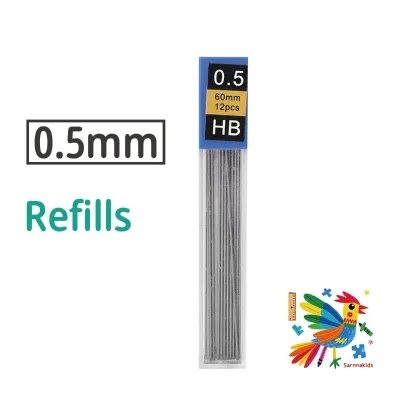
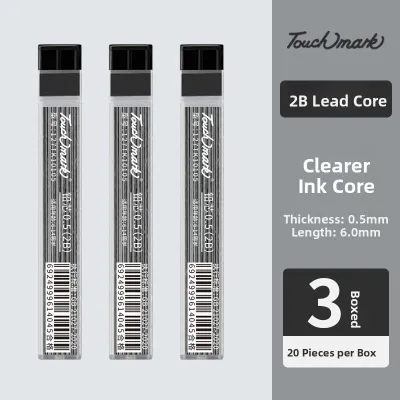
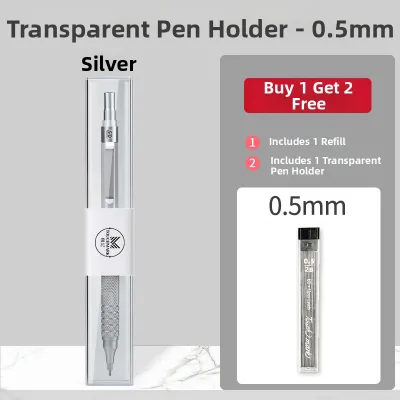
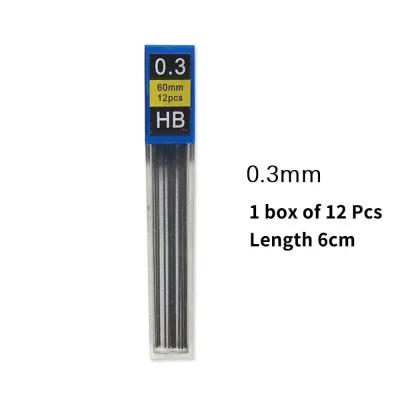
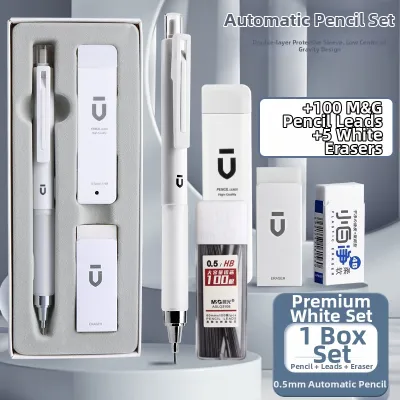
Prices are valid at publication and may change. Please refer to the product page for the latest price.
On the other hand, a 0.7mm lead creates a noticeably thicker, darker stroke. This added thickness makes your handwriting stand out clearly on the page, which is highly beneficial for quick scanning and reviewing your notes later. The broader line naturally fills out larger handwriting styles, preventing your letters from looking spindly or disconnected. The trade-off is that 0.7mm lines can quickly crowd small spaces, causing letters like “e,” “a,” and “o” to fill in and become illegible if your handwriting is naturally tiny.
The tactile feedback—how the pencil feels as it glides across the page—is another critical differentiator. A 0.5mm lead has a smaller surface area in contact with the paper, which increases the concentrated friction. On textured or toothy paper, this can result in a scratchy sensation, almost like writing with a fine-point needle. For some writers, this feedback provides a sense of control and precision. For others, it can feel sluggish and unpleasant, particularly during long writing sessions.
In contrast, the larger surface area of a 0.7mm lead distributes the writing pressure over a wider zone, resulting in a much smoother glide. It tends to float over the texture of the paper rather than catching on individual fibers. This smoothness is especially noticeable on standard local paper stocks, which may not have the premium coatings found on expensive imported stationery. To find your preference, it is highly recommended to test both sizes on your actual daily notebooks, as the specific tooth and moisture level of your paper will significantly alter how smooth or scratchy each lead feels.
Breakage Resistance and Lead Durability
Lead breakage is one of the most frustrating interruptions when you are in the middle of a fast-paced lecture or a timed exam. The structural difference between 0.5mm and 0.7mm leads directly dictates how much downward and angled pressure they can withstand before snapping. Because a 0.7mm lead is thicker, it possesses a significantly higher cross-sectional strength. This makes it inherently robust and highly forgiving for heavy-handed writers who tend to press down firmly when they are stressed or writing in a hurry.

A 0.5mm lead, being much thinner, is far more delicate. If you write with a steep angle or apply sudden, uneven force, a 0.5mm lead is prone to snapping. This can lead to wasted lead, constant clicking to extend more, and a cluttered page covered in tiny lead fragments. For students and professionals who write rapidly without constantly monitoring their hand pressure, the frequent breakage of a thin lead can quickly become a major annoyance.
However, lead durability is not solely determined by the thickness of the graphite itself. The internal mechanics of your mechanical pencil play a massive role in protecting the lead. Many modern mechanical pencils feature advanced clutch mechanisms and spring-loaded tip designs specifically engineered to absorb shock. These shock-absorbing systems retract the lead slightly when excessive vertical or lateral pressure is applied, which dramatically reduces breakage even for delicate 0.5mm leads.
Additionally, the grade of the lead you choose affects its physical strength. Harder leads, such as HB or H, contain more binder clay and are structurally tougher, making them less likely to break but lighter on the page. Softer leads, like B or 2B, contain more graphite, making them darker and smoother but significantly softer and more prone to crumbling or snapping. When choosing your lead size, considering how your writing grip, pencil body, and lead grade interact will help you achieve a seamless, break-free writing experience.
Matching Lead Size to Your Note-Taking Scenarios
Selecting the right lead size is ultimately about matching the tool to the specific tasks you perform throughout the day. For detailed academic and technical work, the 0.5mm mechanical pencil is often the preferred instrument. If you are solving complex algebraic equations, drawing intricate diagrams, or writing chemical formulas with multiple subscripts, the fine line of a 0.5mm lead ensures that every symbol remains distinct and readable. It is also the ideal choice for those who like to squeeze annotations into the narrow margins of textbooks or printed handouts.
For general note-taking, journaling, and administrative tasks, the 0.7mm mechanical pencil shines. When you are trying to keep up with a fast-talking professor or jotting down quick minutes during a meeting, you do not want to worry about delicate hand pressure. The 0.7mm lead allows you to write quickly and fluidly, producing bold, legible strokes that are easy to read even from a distance. It is also excellent for filling out official forms, signing documents, or writing on cheaper, more absorbent paper where a thin lead might tear the sheet.
To help you decide, you can use a simple decision framework based on your personal writing habits. Choose a 0.5mm mechanical pencil if you naturally write in small, compact letters, require high precision for math or drawing, and prefer a lighter, highly detailed look on the page. Choose a 0.7mm mechanical pencil if you have medium-to-large handwriting, write quickly under pressure, tend to break thinner leads, or prefer dark, bold lines that stand out clearly.
If your daily routine involves a mix of both detailed calculations and rapid writing, keeping one of each size in your pencil case is a practical solution. Many local students and office workers find that using a 0.5mm pencil for math and technical drawings, paired with a 0.7mm pencil for standard English or Filipino essay writing, provides the ultimate flexibility. This dual-pencil approach ensures you always have the right tool for the job without compromising on comfort or legibility.
Choosing the Right Mechanical Pencil Body
While the lead size determines the line on the paper, the physical body of the mechanical pencil determines how comfortable your hand remains during long writing sessions. A high-quality pencil body can elevate a simple writing tool into an ergonomic instrument that prevents hand fatigue and cramping. When shopping for a mechanical pencil, the grip section is the first area you should evaluate. Soft rubber or silicone grips provide excellent cushioning, which is highly beneficial for students who spend hours taking notes in humid classrooms where sweaty fingers can cause plastic barrels to slip.
For those who prefer a more solid, professional feel, knurled metal grips offer a textured surface that ensures a secure hold without slipping. However, metal grips can sometimes feel heavy or cold, which might not appeal to everyone. In addition to the grip material, you should look for built-in shock absorbers or lead-guard mechanisms. These internal spring systems are especially critical if you decide to use 0.5mm lead, as they actively cushion the lead against sudden impacts, allowing you to write with confidence.
The overall weight, balance, and barrel thickness of the pencil are also vital factors to consider. A pencil with a heavy brass tip and a lightweight plastic upper body shifts the center of gravity downward, making it easier to control and reducing the effort required to write. Conversely, a pencil that is too thick or too thin can cause your hand to cramp over time. Matching the barrel diameter to your hand size—thicker barrels for larger hands or those with joint pain, and standard barrels for average hands—will ensure a comfortable, sustainable writing experience.
Frequently Asked Questions (FAQ)
Can I use 0.5mm lead in a 0.7mm mechanical pencil?
No, you cannot use 0.5mm lead in a 0.7mm mechanical pencil. The internal clutch mechanism of a mechanical pencil is precisely engineered to grip a specific lead diameter. If you insert a 0.5mm lead into a 0.7mm pencil, the lead will simply slide straight through the tip without stopping, or it will wobble and snap instantly when you try to write. Always verify the exact lead size printed on the pencil barrel, clip, or cap before purchasing refill leads to avoid damaging the internal mechanism or wasting your supplies.
Which lead grade works best with 0.5mm and 0.7mm sizes?
The ideal lead grade depends on how you want to balance darkness, smoothness, and durability for each size. For a 0.5mm pencil, standard HB or slightly harder H leads work exceptionally well because they maintain a sharp point, resist crumbling, and minimize smudging on the page. For a 0.7mm pencil, softer grades like B or 2B are highly recommended. Because the 0.7mm lead is thicker and stronger, it can handle the softer composition of 2B graphite, allowing you to produce rich, dark, and incredibly smooth lines without the risk of rapid lead breakage.

Community discussion
Share your experience or ask a question. Comments are reviewed before publication.