
Selecting the right paper weight is a fundamental decision that directly impacts the efficiency of your daily printing operations, the longevity of your office equipment, and the professional image you project. The decision between 70gsm and 80gsm bond paper typically comes down to balancing print quality, equipment compatibility, and overall budget. While both are standard options for everyday document production, their differences in thickness, opacity, and tactile feel make them suited for different tasks.
For high-volume, single-sided internal drafts, a 70gsm hard copy bond paper ream offers a highly cost-effective, lightweight solution that minimizes storage bulk. Conversely, 80gsm paper provides the necessary thickness, opacity, and professional weight required for double-sided printing, official contracts, and client-facing documents. Understanding how these two weights behave under different printing conditions ensures you make an informed purchase that keeps your office running smoothly.
Understanding GSM: What 70gsm and 80gsm Mean for Your Prints
To make an informed decision, it is essential to understand what the term GSM represents in the stationery and printing industries. GSM stands for “grams per square meter,” which is the universal metric standard used to measure paper density and weight. Specifically, if you were to cut a sheet of paper to exactly one square meter in size, its weight in grams would equal its GSM rating. Therefore, a single square meter of 70gsm paper weighs exactly 70 grams, while the same area of 80gsm paper weighs 80 grams.
Products mentioned in this guide
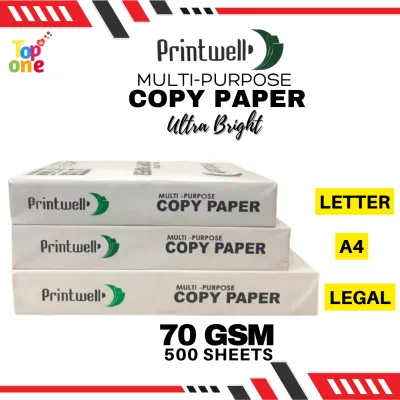
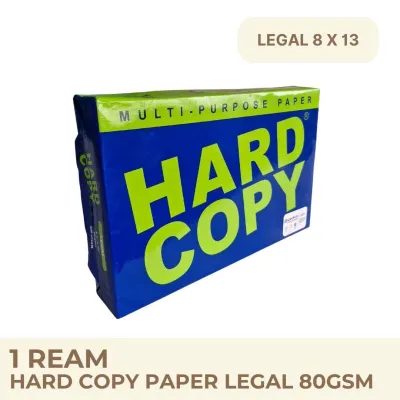
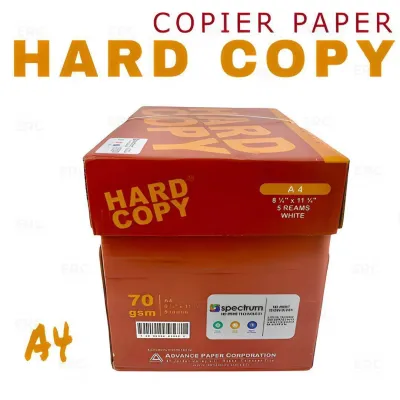
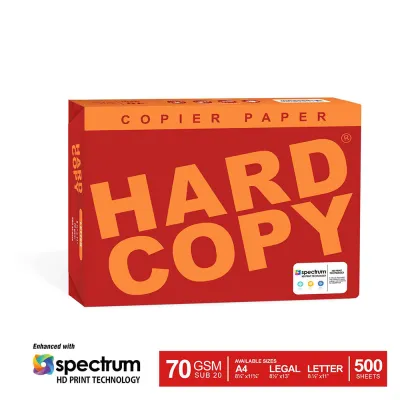
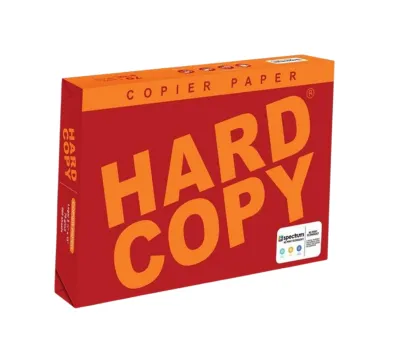
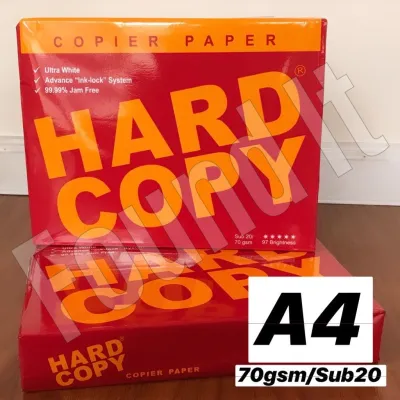
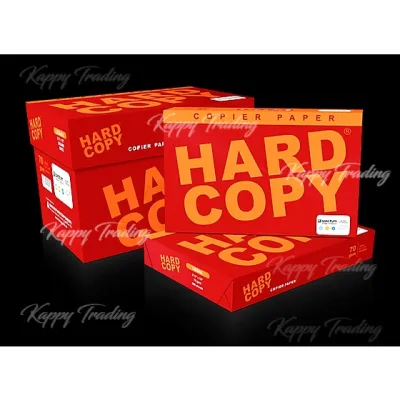
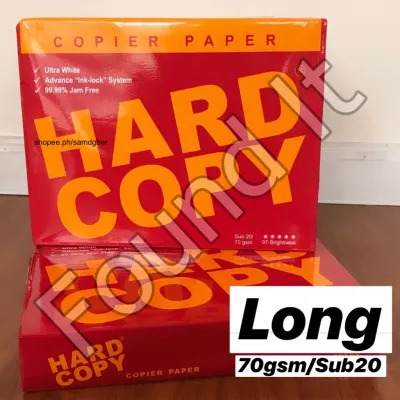
Prices are valid at publication and may change. Please refer to the product page for the latest price.
While GSM directly measures weight, it also serves as a reliable proxy for paper thickness and stiffness. Generally, a higher GSM indicates a heavier, denser, and thicker sheet of paper. However, actual physical thickness and stiffness can vary slightly depending on the manufacturer’s specific pulping, pressing, and calendering processes. For instance, paper made from highly compacted short fibers might feel thinner than paper made from loosely woven long fibers, even if both share the exact same GSM rating.
When evaluating a hard copy bond paper ream, the GSM rating tells you how the paper will behave when subjected to the mechanical forces of a printer. Lighter papers have less structural integrity, making them more flexible but also more susceptible to bending under heat and pressure. Heavier papers offer more resistance to bending, which affects how they travel through the complex paper paths of modern office copiers and desktop printers.
70gsm vs 80gsm: Key Physical and Functional Differences
The physical differences between 70gsm and 80gsm bond paper translate directly into distinct functional performances during daily printing tasks. Evaluating these differences across key performance areas helps clarify the practical trade-offs associated with each weight.

Thickness and Opacity
Opacity refers to the ability of paper to block light from passing through its fibers. Because 70gsm paper contains fewer fibers per square meter, it is thinner and more translucent than its 80gsm counterpart. When you hold a printed sheet of 70gsm paper up to the light, the text on the page is clearly visible from the reverse side. This high level of translucency creates a significant risk of text “show-through,” which can make reading double-sided documents highly distracting. In contrast, 80gsm paper offers superior opacity, providing a solid barrier that keeps printed text and images cleanly isolated to their respective sides.
Printer Compatibility and Humidity
Printer feed mechanisms rely on precise friction levels to pull a single sheet of paper from the tray at a time. In tropical climates where high relative humidity is a daily reality, paper acts like a sponge, absorbing moisture from the surrounding air. When 70gsm paper absorbs moisture, it quickly loses its already limited stiffness, becoming limp and prone to curling. This limpness often causes the printer’s feed rollers to grab multiple sheets simultaneously, leading to frequent paper jams and misfeeds. Because 80gsm paper is thicker and structurally more robust, it retains its stiffness much better in humid conditions, ensuring a smoother, more reliable feed through both high-speed copiers and standard desktop printers.
Double-Sided Printing
Duplex, or double-sided, printing places extreme demands on paper quality. During this process, the paper must withstand either the intense heat of a laser printer’s fuser unit or the liquid saturation of an inkjet printer’s ink nozzles on both sides. When using 70gsm paper for duplex printing, the liquid ink from an inkjet printer can easily saturate the thin fibers, causing the paper to warp, buckle, or bleed through to the other side. Even with dry toner from a laser printer, the lack of opacity in 70gsm paper makes the reverse side highly visible, rendering the document difficult to read. The extra density of 80gsm paper provides the necessary buffer to absorb liquid ink without warping and prevents toner show-through, making it the industry standard for professional duplex printing.
Tactile Feel and Professionalism
The physical sensation of handling a document plays a subtle but critical role in how the information is received. When a client, partner, or evaluator holds a document printed on 80gsm paper, the sheet feels crisp, stiff, and substantial. This tactile feedback unconsciously communicates attention to detail, quality, and professionalism. On the other hand, 70gsm paper feels noticeably lighter, softer, and more flexible. While perfectly acceptable for casual or internal reading, handling thin paper can leave an impression of cost-cutting or temporary importance, which may not align with the goals of formal business correspondence.
Matching Paper Weight to Your Daily Printing Tasks
To optimize your stationery budget and ensure high-quality output, it is highly effective to match specific paper weights to your most common document types and printing technologies.
High-Volume and Internal Use
For daily administrative tasks that do not require external presentation, 70gsm paper is often the most practical choice. It is highly suited for high-volume printing of internal memos, rough drafts, daily worksheets, and temporary reference sheets. Additionally, if your office maintains extensive physical archives, using 70gsm paper for bulk printing can save significant physical space. Because 70gsm sheets are thinner, a filing cabinet packed with documents printed on lighter paper can hold more pages and weigh less than one filled with 80gsm documents, reducing the physical strain on storage shelves and filing systems.
External and Professional Use
When your documents leave your office to represent your brand or complete a formal transaction, 80gsm paper is the preferred standard. This weight is essential for printing client-facing proposals, legal contracts, resumes, official certificates, and presentation handouts. Using 80gsm paper ensures that your printed materials look sharp, resist tearing during handling, and maintain their flat shape even when stored in folders or passed among multiple readers. It is also the ideal choice for printing high-resolution charts and diagrams where visual clarity and clean margins are paramount.
Inkjet vs. Laser Considerations
The type of printing technology you use should also influence your choice of paper weight. Laser printers use dry toner powder that is melted onto the paper surface using hot rollers. While both 70gsm and 80gsm papers are compatible with laser printers, the intense heat can cause thinner 70gsm paper to curl tightly as it exits the machine, making collation difficult. Inkjet printers, conversely, spray liquid-based inks that must dry through absorption into the paper fibers. Because 70gsm paper has less fiber mass to absorb this liquid, heavy ink coverage can cause the paper to buckle and warp. If your daily tasks involve printing colorful graphics, charts, or heavy text blocks using an inkjet printer, 80gsm paper is highly recommended to prevent fiber saturation and maintain a flat, professional finish.
Evaluating Cost and Value for Bond Paper Reams
Managing office overhead requires a careful analysis of the financial trade-offs between different paper weights. While the price difference between a single 70gsm and 80gsm hard copy bond paper ream may seem minor, these costs compound significantly over time in high-volume printing environments.
Generally, 70gsm bond paper is priced lower per ream than 80gsm paper of the same brand and size. For schools, large corporate offices, and copy centers that go through dozens of reams every week, opting for 70gsm paper can yield substantial direct savings on stationery procurement. This makes 70gsm an attractive option for organizations operating under strict budget constraints or those focused primarily on internal, single-use documentation.
However, evaluating the true value of your paper purchase requires looking beyond the initial price tag of the ream. Using 70gsm paper in printers that are not optimized for lighter weights can lead to indirect costs that quickly erode your initial savings. Frequent paper jams caused by limp, humidified 70gsm paper result in wasted toner, ruined sheets, and lost productivity as employees spend time clearing the printer feed paths. Furthermore, if a critical client proposal looks unprofessional due to ink bleed-through on thin paper, the long-term business cost can far outweigh the minor savings achieved by purchasing a lighter paper weight. A balanced approach involves auditing your office’s printing habits and allocating your budget strategically—using 70gsm for high-volume internal drafts and reserving 80gsm for high-value, external communications.
Final Verdict: Choosing the Right Hard Copy Bond Paper Ream
To simplify your purchasing decision, you can use a straightforward decision framework based on your primary printing priorities and equipment specifications.
Choose 70gsm if:
- Your primary printing tasks consist of high-volume, single-sided internal drafts, memos, or temporary worksheets.
- You are operating under strict budget constraints and need to minimize upfront stationery procurement costs in ₱.
- You want to reduce the physical weight and storage volume of archived paper documents in filing cabinets.
- Your printing setup consists of modern, well-maintained printers operating in a climate-controlled environment with low humidity.
Choose 80gsm if:
- You frequently print double-sided (duplex) documents and need to eliminate distracting text show-through or ink bleed-through.
- You are printing client-facing proposals, legal contracts, resumes, or official correspondence that require a premium, professional feel.
- Your office relies heavily on inkjet printers that deposit liquid ink, which can cause thinner paper to warp or buckle.
- You operate in a highly humid environment and need a stiffer paper that resists moisture absorption to prevent frequent printer jams.
Verify first if:
Before purchasing any hard copy bond paper ream in bulk, always consult your printer’s official user manual. Older, specialized, or high-speed multifunction printers often have strict minimum and maximum paper weight tolerances. Verifying that your equipment officially supports 70gsm or 80gsm paper will prevent mechanical issues and ensure optimal print quality across all your daily tasks.
Frequently Asked Questions (FAQ)
Can I use 70gsm paper for double-sided printing?
While it is physically possible to run 70gsm paper through a duplex printer, it is generally not recommended for professional or formal documents. The thinness and lower opacity of 70gsm paper create a high risk of text and images showing through to the opposite side, making the document difficult and distracting to read. If you must use 70gsm paper for double-sided printing, it is highly advisable to run a trial print with a single sheet first to observe how your specific printer’s ink or toner behaves on the thin medium. For clean, legible, and professional double-sided results, upgrading to 80gsm paper is the most reliable choice.
Will 80gsm paper cause my printer to jam?
No, 80gsm paper is highly unlikely to cause jams in modern office or home printers. In fact, 80gsm is considered the standard calibration weight for the vast majority of printing equipment on the market today. Jams are far more common with lighter 70gsm paper that has become limp from absorbing environmental humidity. To ensure trouble-free feeding with 80gsm paper, always store your unopened reams in a cool, dry place away from direct sunlight and moisture. Once a ream is opened, keep the paper stored in its original wrapper or a dedicated airtight container to maintain its optimal dryness and stiffness.

Community discussion
Share your experience or ask a question. Comments are reviewed before publication.