
Quick Answer: Which Envelope Size Do You Need?
Choosing between A3 and A4 envelopes depends entirely on the physical dimensions of your documents and whether your filing infrastructure can accommodate larger formats. As a primary rule, A4 envelopes are designed for standard letters, contracts, and everyday office paperwork that can remain flat or be folded. In contrast, A3 envelopes are built for large-format items like blueprints, posters, certificates, or technical drawings that must be preserved without any folds.
The main deciding factor is your willingness to fold your documents and the type of storage equipment you currently own. In the Philippines, high ambient humidity can cause folded papers to crease permanently or stick together over time, making flat storage highly desirable for important archives. If you possess specialized wide-format storage and need to keep large documents pristine, A3 envelopes are necessary. If space efficiency and standard filing cabinets are your priority, A4 envelopes are the practical choice.
Standard Dimensions and Capacity of A3 vs A4 Envelopes
To prevent sizing mismatches, it is essential to understand the physical boundaries of both envelope sizes. Envelope manufacturers typically follow the ISO 216 standard, which defines the dimensions of paper and the corresponding envelopes designed to hold them.
Products mentioned in this guide
Prices are valid at publication and may change. Please refer to the product page for the latest price.

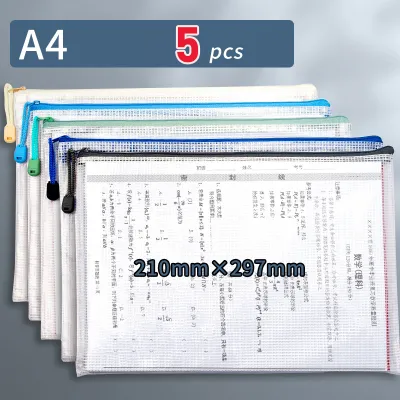
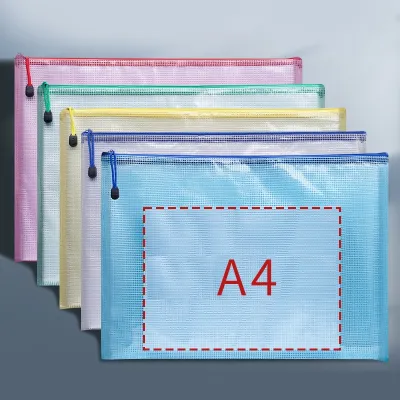
Standard A4 paper measures 210 x 297 mm. The corresponding envelope for A4 paper is typically a C4 size, measuring approximately 229 x 324 mm. This slight manufacturing allowance ensures that a stack of A4 sheets can slide into the envelope easily without bending the edges. A standard flat C4 envelope can comfortably hold about 10 to 15 sheets of standard 80 gsm paper. For larger document stacks, you will need gusseted envelopes, which feature expandable sides that can accommodate up to 100 sheets.
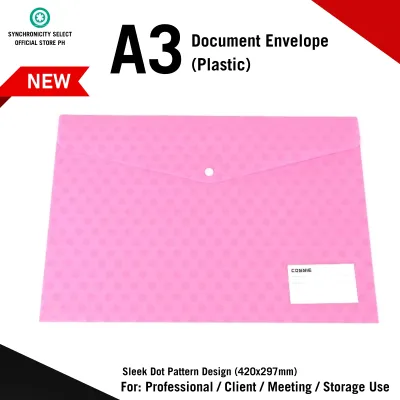
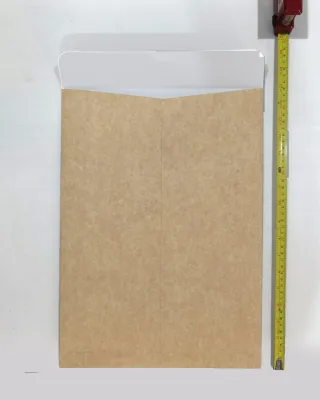
Standard A3 paper is twice the size of A4, measuring 297 x 420 mm. The corresponding envelope is typically a C3 size, measuring approximately 324 x 458 mm. This large footprint is designed to hold A3 sheets completely flat. Because of the larger surface area, standard flat A3 envelopes can become unwieldy if overloaded. While they can hold 10 to 15 flat A3 sheets, heavier stacks require gusseted A3 variants. Keep in mind that paper absorbs moisture in humid tropical climates, which slightly increases its thickness and weight, so leaving a generous margin inside the envelope is highly recommended.
How to Match Envelope Size to Your Documents
Matching the envelope to your specific document type is crucial for maintaining the integrity of your records. Standard corporate contracts, BIR tax forms, school records, and typical business letters are naturally suited for A4 envelopes. These documents are easily handled, scanned, and filed using standard office tools.
For specialized documents like architectural blueprints, engineering schematics, large-format certificates, and marketing materials, A3 envelopes are the standard. When deciding on the envelope size, evaluate the folding tolerance of the document. Folding an A3 sheet in half reduces it to A4 size, allowing it to fit into an A4 envelope. However, folding can damage high-value items, crack toner on heavy laser-printed cardstock, or ruin official embossed seals. If the document must remain in pristine, unfolded condition, you must use an A3 envelope.
Protection needs also dictate the material of the envelope. For fragile, high-value, or heavy items, standard paper envelopes may tear during handling. Consider using rigid cardboard envelopes, padded bubble mailers, or plastic-reinforced variants. In humid environments, plastic-lined or water-resistant envelopes help shield sensitive documents from moisture damage during transit or long-term storage.
Checking Filing System and Storage Compatibility
Before purchasing envelopes, you must verify if your existing physical storage setup can accommodate them. Standard vertical and lateral filing cabinets found in most offices are optimized for Letter and A4 sizes. An A4 envelope fits perfectly into standard drawers, hanging folders, and desktop magazine files without any modification.
A3 envelopes require significantly more physical space. Because they measure over 450 mm in length, they will not fit into standard filing cabinet drawers without being bent or jammed. Forcing a large envelope into a standard drawer defeats the purpose of using a large format, as it will inevitably damage the documents inside.
To store A3 envelopes properly, you need specialized wide-format storage solutions. These include flat-file drawers, plan chests, large-format binders, or deep open shelving. If your office is equipped only with standard vertical filing systems, A4 envelopes are the only practical choice, and any larger documents must be folded to fit. Always measure your drawer depths, shelf heights, and binder capacities before committing to a specific envelope size.
A3 vs A4 Envelopes: Side-by-Side Comparison
The following table summarizes the practical attributes and decision factors for both envelope sizes to help you evaluate your options.
| Feature | A4 Envelope (C4) | A3 Envelope (C3) | Verification Needed |
|---|---|---|---|
| Standard Dimensions | Approx. 229 x 324 mm | Approx. 324 x 458 mm | Check manufacturer specifications for exact internal dimensions. |
| Ideal Document Types | Standard letters, contracts, reports | Blueprints, posters, certificates | Confirm if documents can be folded without damage. |
| Folding Requirements | None for A4 paper; A3 must be folded | None; holds A3 sheets completely flat | Assess if folding ruins official seals or heavy ink. |
| Storage Compatibility | Standard filing cabinets, binders | Flat-file drawers, plan chests, deep shelves | Measure drawer depth and width before purchasing. |
| Moisture Vulnerability | Moderate; easy to store in sealed boxes | High; large surface area absorbs more humidity | Check if water-resistant materials are required. |
Decision Framework: When to Choose A3 or A4
To finalize your purchasing decision, apply this condition-based framework to your specific office or home setup.
Choose A4 envelopes if:
- You primarily handle standard office paperwork, legal documents, or school records.
- Your storage setup consists of standard vertical filing cabinets, lateral drawers, or standard binders.
- You prioritize space efficiency and want to minimize the physical footprint of your archives.
- The documents can be folded in half without losing their professional value or utility.
Choose A3 envelopes if:
- You are archiving large-format materials like architectural blueprints, engineering designs, or large certificates that must remain pristine.
- You have dedicated wide-format storage equipment, such as flat files, plan chests, or deep shelving.
- The documents cannot be folded due to official regulations, fragile paper, or heavy ink coverage.
Verify first if:
- You are dealing with mixed document sizes. In this case, a hybrid system using both sizes might be necessary.
- You are using non-standard archival boxes. Measure the internal dimensions of the boxes to ensure they can accommodate the larger A3 footprint without bending the corners.
Purchasing Tips and What to Verify Before Buying
When you are ready to purchase, keep a few practical quality checks in mind to ensure the envelopes meet your functional needs. First, check the material thickness, which is measured in grams per square meter (gsm). Standard envelopes are typically 80 to 100 gsm, which is suitable for light paperwork. For heavier documents or long-term archiving, look for 120 gsm or thicker kraft paper to prevent tearing.
Second, consider the closure type. Self-seal (peel-and-seal) envelopes are highly convenient for quick packing, but the adhesive can degrade faster in hot, humid tropical climates. Gummed envelopes require moisture to seal and offer a more permanent bond, while clasp envelopes allow for easy reopening and reuse.
Third, verify the exact internal dimensions. External dimensions can vary slightly by manufacturer, so check the seller’s specifications on your preferred online marketplace or local stationery store to ensure your documents will slide in easily. Finally, compare bulk pack prices. When outfitting an entire office filing system in the Philippines, buying a box of 100 or 250 envelopes is generally much more cost-effective than buying individual pieces. Keep a budget in mind (prices are typically quoted in ₱ per pack) and factor in the cost of matching storage folders or boxes.
Frequently Asked Questions (FAQ)
Can I fit multiple A4 documents inside a single A3 envelope?
Yes, you can fit multiple A4 documents inside a single A3 envelope. Because two A4 sheets placed side-by-side equal the surface area of one A3 sheet, you can easily arrange them flat or stack them. However, doing so increases the thickness and weight of the envelope. Ensure the total weight does not exceed the paper strength of the envelope, and use a gusseted A3 envelope if you plan to store thick stacks of A4 documents to prevent the seams from splitting.
Are A3 envelopes compatible with standard office printers for direct printing?
Most standard office printers, which are typically designed for A4 or Letter size media, cannot feed or print directly onto A3 envelopes due to their physical width and thickness. Attempting to force an A3 envelope through a standard printer can cause severe paper jams and roller damage. For addressing A3 envelopes, it is highly recommended to print onto adhesive labels using a standard printer and apply them to the envelope, or use a specialized wide-format printer designed to handle larger media.

Community discussion
Share your experience or ask a question. Comments are reviewed before publication.