
Choosing the right binder notebook is a balancing act between physical writing space and daily portability. The decision involves selecting a paper size—A4, A5, or US Letter—that accommodates your notes without crowding your desk, paired with a ring mechanism that secures your pages without adding unnecessary bulk. Finding the perfect combination depends on where you work, how often you commute, and how many sheets of paper you need to carry at any given time.
To help you decide, consider this quick decision framework based on your daily workflow and storage needs:
- Choose A5 if you prioritize portability, commute frequently, or want a lightweight notebook for daily journaling, meeting notes, and quick sketches on the go.
- Choose A4 or Letter if you require maximum writing space for complex diagrams, extensive study sessions, mind mapping, or archiving official documents at a stationary desk.
- Choose a smaller ring diameter (15mm to 20mm) if you prefer a slim, lightweight profile, write on both sides of the page comfortably, and only need to carry 80 to 100 sheets at a time.
- Choose a larger ring diameter (25mm to 50mm) if you need to store hundreds of pages, compile entire academic semesters, or prefer a long-term archival system with minimal page swapping.
Ultimately, the best binder notebook is one that matches your physical environment. A binder that is too large will end up left behind on your desk, while one that is too small will leave you constantly swapping out pages to make room for new notes.
Products mentioned in this guide
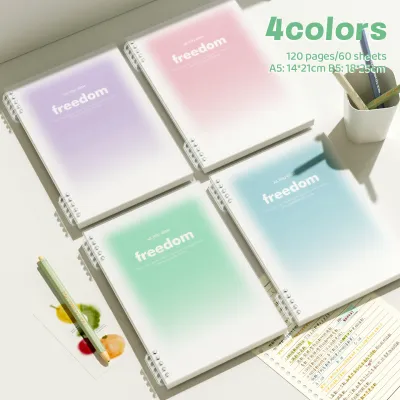
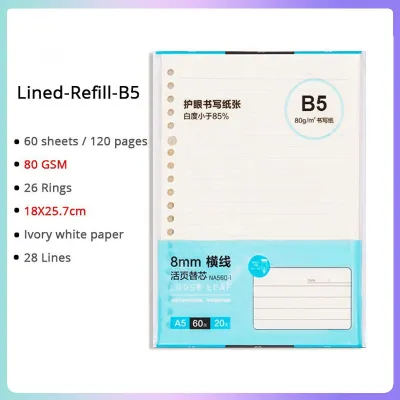
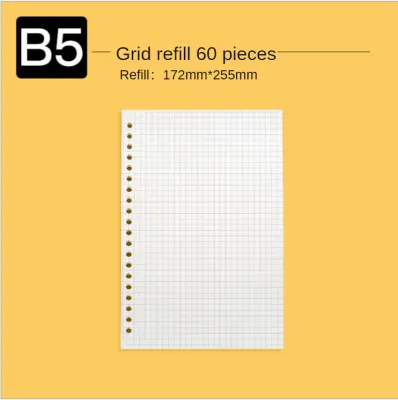
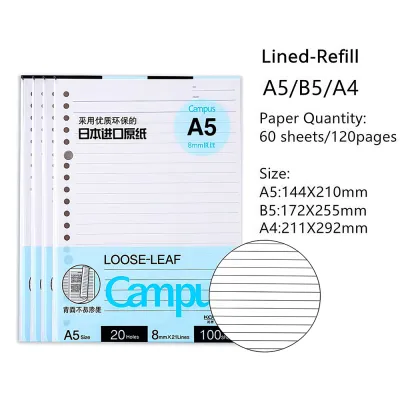
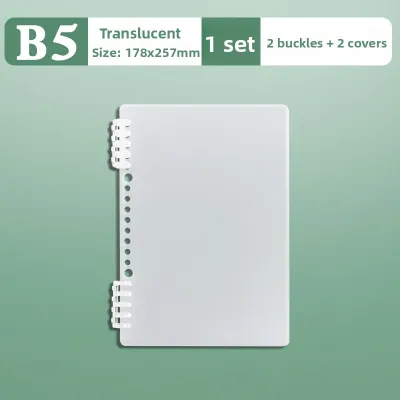
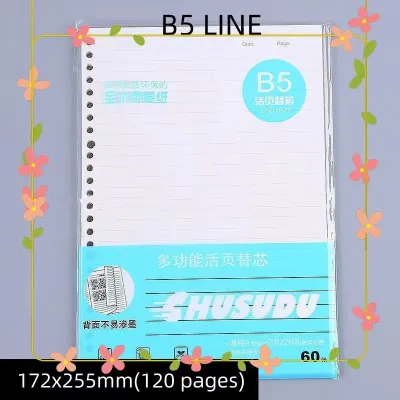
Prices are valid at publication and may change. Please refer to the product page for the latest price.
Paper Size Showdown: A4 vs. A5 vs. Letter
Paper size dictates the physical footprint of your binder notebook and determines how much information you can view at a single glance. The three most common sizes—A5, A4, and US Letter—each serve distinct writing habits and workspace environments.
A5 (Compact and Portable)
Measuring 148 mm × 210 mm, A5 is exactly half the size of an A4 sheet. This compact footprint makes A5 the preferred choice for those who value mobility. In the Philippines, where daily commutes on jeepneys, buses, or the MRT require packing light, an A5 binder notebook slips effortlessly into small backpacks, tote bags, or messenger bags without adding noticeable weight.
Writing on A5 paper is highly efficient for linear text, such as daily journaling, meeting minutes, vocabulary practice, and quick task lists. Because the page width is narrower, your hand travels less distance across the sheet, which can reduce hand fatigue during rapid note-taking. The primary limitation of A5 is its restricted space for expansive visual layouts, large flowcharts, or multi-column study guides.
A4 and Letter (Maximum Workspace)
For stationary desk setups, full-sized pages offer an unparalleled canvas. A4 measures 210 mm × 297 mm, making it the international standard for corporate documents, academic papers, and official records. US Letter, measuring 215.9 mm × 279.4 mm, is slightly wider and shorter than A4. In the Philippines, US Letter is deeply integrated into schools and offices, often corresponding to standard “short bond paper.”
These larger dimensions are ideal for detailed study sessions, complex mathematical equations, architectural sketching, and mind mapping. If you frequently receive printed handouts, worksheets, or PDF guides, an A4 or Letter binder allows you to punch holes and insert these documents directly without folding them. However, carrying a full-sized binder daily requires a large backpack or briefcase, and these notebooks can quickly crowd smaller tables in cafes or lecture halls.
Before committing to a full-sized binder, check your local printing habits and paper availability. If your school or office primarily distributes US Letter handouts, purchasing an A4 binder can lead to alignment issues, where the wider Letter pages may struggle to sit neatly within the narrower A4 cover.
| Paper Size | Dimensions (mm) | Portability Rating | Best Use Case | Bag Compatibility |
|---|---|---|---|---|
| A5 | 148 × 210 mm | High | Daily journaling, meeting notes, travel | Handbags, small backpacks, totes |
| A4 | 210 × 297 mm | Low | Detailed study, mind mapping, archiving | Large backpacks, messenger bags |
| Letter | 215.9 × 279.4 mm | Low | Office documents, school worksheets | Standard backpacks, briefcases |
Understanding Ring Sizes and Binder Mechanisms
The ring mechanism is the engine of your binder notebook. It determines how many pages your notebook can hold, how smoothly those pages turn, and how comfortable the binder is to write in when open.

Ring Diameter and Paper Capacity
Ring diameter is measured across the internal width of the rings, not the external spine of the binder. This measurement directly dictates the sheet capacity of your notebook.
- Small Rings (15mm to 20mm): These slim mechanisms typically hold between 80 and 120 sheets of standard paper. They keep the binder profile flat and lightweight, making them highly portable.
- Medium Rings (25mm to 30mm): A versatile middle ground, holding roughly 150 to 220 sheets. This capacity is usually sufficient for a single school subject or a quarterly project.
- Large Rings (38mm to 50mm+): Designed for heavy-duty storage, these can hold 300 to 500+ sheets. They are best reserved for archiving completed work or organizing multi-subject binders that stay on a desk.
When calculating capacity, always check the manufacturer’s specifications on the product label, as paper thickness—measured in Grams per Square Meter (GSM)—significantly impacts how many sheets will fit. Standard copy paper is usually 70 to 80 GSM, while premium, fountain-pen-friendly loose-leaf paper is often 100 to 120 GSM. Thicker paper takes up more physical space on the ring, reducing the total sheet count.
Furthermore, the tropical humidity in the Philippines can cause paper fibers to absorb moisture from the air, making the sheets swell slightly. In humid conditions, packing a binder to its absolute maximum capacity can cause the pages to stick together, leading to torn punch holes when you try to turn them. Leaving about 10% to 15% of the ring capacity empty ensures smooth page turning and preserves the life of your paper.
Hole Patterns and Mechanism Types
The number of rings and their spacing pattern determine page stability and turning smoothness.
For A5 binders, the most common standard is the 6-ring mechanism (divided into two groups of three rings). This layout is highly secure but can make writing near the center of the page difficult. Alternatively, many modern Japanese-style A5 binders utilize a 20-ring system. These high-density rings distribute the tension of page-turning evenly across the entire edge of the paper, virtually eliminating the risk of pages tearing out of the binder.
For A4 and Letter binders, the standard options include 3-ring and 4-ring systems, which are common in office settings, as well as high-density 30-ring systems for A4. While 3-ring and 4-ring binders make it incredibly easy to insert standard office-punched paper, they place high stress on just a few points, making the pages prone to tearing if turned quickly. Multi-ring systems (20-ring for A5, 30-ring for A4) offer the smoothest page-turning experience but require specialized, pre-punched loose-leaf paper or dedicated multi-hole punches.
Before purchasing a binder, verify that your preferred loose-leaf paper brand matches the exact hole pattern of the binder mechanism. A 6-hole A5 refill will not fit into a 20-ring A5 binder, and a standard 3-hole punched Letter sheet will not align with a 30-hole A4 binder.
Matching Your Binder to Your Daily Routine
Your binder notebook should adapt to your lifestyle, physical environment, and ergonomic needs. Choosing the wrong combination can lead to physical discomfort or an abandoned organization system.
Commuting and Travel
If your daily routine involves moving between home, coffee shops, co-working spaces, or school, a lightweight setup is essential. Carrying a heavy A4 binder with 30mm metal rings can contribute to shoulder and back strain over time.
For active commuters, pairing an A5 paper size with a slim 15mm or 20mm ring mechanism is highly recommended. This combination is compact enough to use on tiny cafe tables, library carrels, or even on your lap while waiting in transit. The reduced weight allows you to move freely without sacrificing the ability to reorganize your notes later.
Desk Study and Archiving
If your binder notebook rarely leaves your desk, physical weight and bulk cease to be limiting factors. An A4 or Letter binder with 30mm to 50mm rings is ideal for static setups.
This larger capacity allows you to compile extensive reference materials, printouts, and lecture notes in one place. These binders act as centralized databases for your projects or academic courses, allowing you to archive completed modules while keeping your active, daily-carry notebook slim and focused.
Ergonomics and Hand Placement
One of the most common complaints about binder notebooks is the physical barrier created by the ring mechanism. For right-handed writers, writing on the left-hand page requires resting your hand on top of the rings, which can cause discomfort and disrupt your handwriting. Left-handed writers experience the same issue on the right-hand page.
Larger ring diameters (30mm and above) exacerbate this ergonomic issue, creating a steep drop-off for your hand. To mitigate this, consider these practical options:
- Choose a binder with a D-ring mechanism: Unlike standard round O-rings, D-rings align the paper stack along the flat side of the "D," pushing the paper away from the curve and providing a flatter writing surface.
- Use slim, low-profile rings: Rings under 20mm present a minimal barrier, allowing your hand to glide over them more comfortably.
- Remove the pages to write: The beauty of a binder notebook is the ability to remove sheets. If you find the rings uncomfortable, simply unclamp the mechanism, take out the sheet, write on a flat desk surface, and insert it back into the binder once you are finished.
An actionable rule of thumb is to start with a smaller capacity and paper size, such as an A5 binder with 15mm rings. Only upgrade to a larger paper size or a wider ring diameter if you find yourself running out of writing space daily or constantly swapping out pages to make room for new notes.
Paper Compatibility and Refill Standards
The long-term utility of your binder notebook depends heavily on how easily you can source refill paper and manage the logistics of adding new sheets.
Sourcing Pre-Punched Refills
Before purchasing a binder, research the availability of refill paper in your local market. In physical stationery stores and online marketplaces in the Philippines, standard A5 6-hole refills and Letter-sized 3-hole refills are widely available and affordable.
However, specialized formats—such as Japanese-style 20-hole A5 or 30-hole A4 loose-leaf paper—are typically found only in specialty stationery boutiques or dedicated online storefronts. If you opt for these high-density multi-ring systems, it is wise to purchase several packs of refill paper at the same time to avoid running out during peak study or work periods.
Managing Your Own Hole Punching
If you prefer using custom paper stocks—such as heavy mixed-media paper, watercolor paper, or specific grid layouts—you will need to punch your own holes.
- A5 Paper: Punching A5 paper is relatively easy. Compact, adjustable 6-hole desktop punches are inexpensive and take up very little space, making it simple to customize your A5 binder with colored cardstock or custom printed templates.
- A4 and Letter Paper: Punching full-sized sheets requires more effort. Standard 2-hole or 3-hole office punches are widely available and can handle thick stacks of paper. However, if you are using a 30-hole A4 binder, you will need a specialized multi-hole punch (such as a slide punch). These tools are larger, heavier, and more expensive, representing a significant additional investment.
Cover Overhang and Page Protection
When selecting a binder notebook, pay close attention to the dimensions of the cover relative to the paper size and ring mechanism. A high-quality binder cover must extend beyond the edge of the paper refills to protect them from dust, moisture, and physical damage inside your bag.
As a rule, the cover should provide at least 10mm to 15mm of overhang past the edge of the paper. If you plan to use plastic index tabs, colored dividers, or plastic sheet protectors, the cover must be even wider. If the cover is too narrow, these dividers will protrude past the edge of the binder, causing them to bend, fray, and tear when the notebook is packed into a tight bag.
Frequently Asked Questions (FAQ)
Can I use A4 paper in a Letter-sized binder?
While A4 and US Letter sizes appear similar at a glance, they are not interchangeable. A4 paper (210 mm × 297 mm) is taller and narrower than US Letter paper (215.9 mm × 279.4 mm). If you insert A4 paper into a binder designed specifically for US Letter, the top and bottom edges of the A4 paper will likely protrude past the binder cover, exposing them to bending and tearing inside your bag. Additionally, standard 3-hole punches designed for US Letter paper will not align correctly with A4 paper dimensions without manual adjustments, which can result in off-center holes and misaligned pages.
Does a larger ring size mean the binder cover is also larger?
An increase in ring size does not change the height or width of the front and back covers, which remain standard to match the designated paper size (A4, A5, or Letter). However, a larger ring diameter requires a significantly wider spine to accommodate the bulk of the metal mechanism and the thicker stack of paper. This wider spine makes the closed binder notebook substantially thicker and heavier, which can make it more difficult to slide into narrow bag compartments or backpack sleeves, even though the face of the binder covers the same surface area.

Community discussion
Share your experience or ask a question. Comments are reviewed before publication.