
Selecting the right A5 bond paper weight depends entirely on your specific task, as there is no single weight that excels at everything. For standard printing, a weight of 70 to 80 GSM prevents paper jams and feeds smoothly through most office machines. For handwriting with gel pens or fountain pens, a heavier 100 to 120 GSM paper is necessary to prevent ink from bleeding through the page. If you are preparing loose-leaf notebook refills, a mid-range weight of 80 to 100 GSM offers the ideal balance between durability at the punched holes and overall binder capacity.
In tropical climates like the Philippines, high humidity can cause thin paper to absorb moisture from the air, making it limp and highly susceptible to printer jams or ink feathering. Understanding how different paper weights interact with your tools—whether they are printer rollers, fountain pen nibs, or binder rings—ensures you get clean, professional results without wasting paper.
Matching Paper Weight to Your Printer Specifications
Before loading A5 bond paper into your printer, check the manufacturer’s specifications or user manual for the supported paper weight range. Most standard home and office printers easily handle weights between 70 GSM and 90 GSM, but going too light or too heavy can trigger frequent paper jams.
Products mentioned in this guide
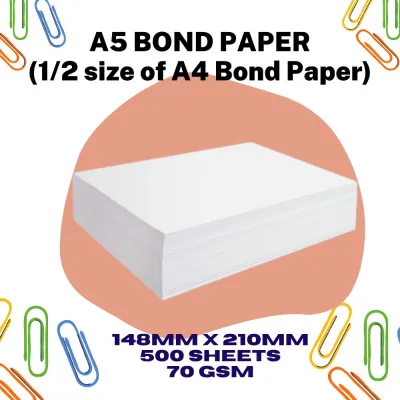
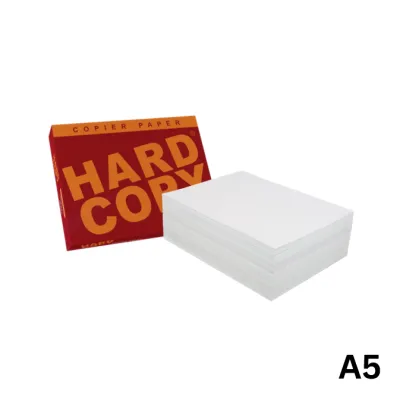
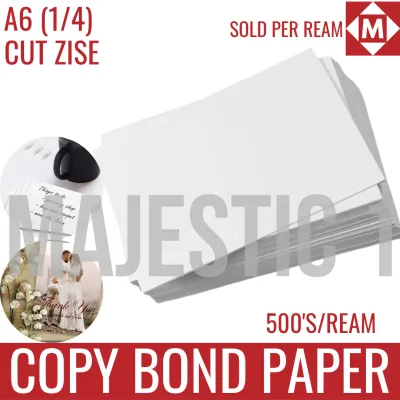
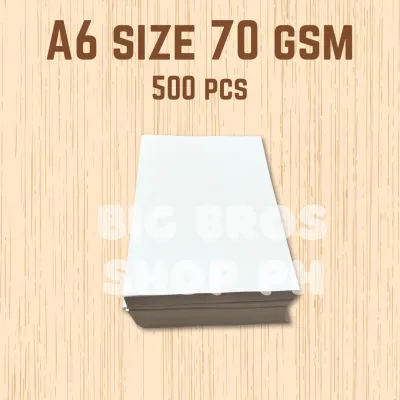
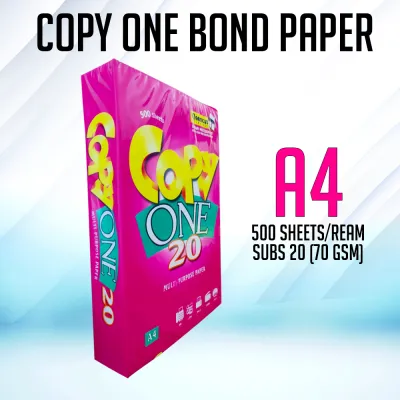
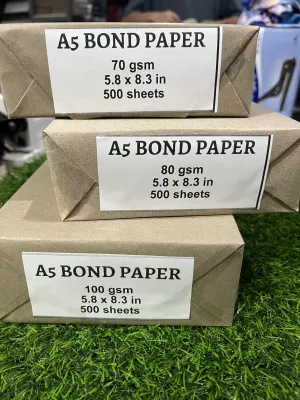
Prices are valid at publication and may change. Please refer to the product page for the latest price.
The printer’s feed path plays a critical role in how well different paper weights pass through the machine. Printers with a curved feed path, where the paper must loop around rollers, often struggle with stiff, heavy sheets like 120 GSM or higher, leading to misfeeds or roller wear. If you plan to use thicker paper, a straight-through manual feed slot is usually the safer option.
For double-sided or duplex printing, paper density is vital to prevent distracting show-through. Thin 70 GSM sheets often allow ink or toner to be highly visible from the reverse side, making documents difficult to read. Upgrading to 80 GSM or 90 GSM provides the necessary opacity for clean, professional double-sided prints.
In humid environments, paper absorbs moisture from the air, which can make lightweight sheets limp and more prone to static sticking. Storing your A5 paper in a dry, airtight container and choosing a slightly heavier 80 GSM sheet can significantly reduce multi-sheet feeding errors in your printer.
Selecting GSM for Handwriting and Ink Compatibility
Your choice of writing instrument should directly dictate the thickness of your A5 bond paper. Standard ballpoint pens work well on almost any weight, including budget-friendly 70 GSM sheets, because their oil-based ink does not easily saturate the fibers.

If you prefer gel pens, rollerballs, or fountain pens, lightweight paper often leads to feathering—where the ink spreads sideways along the paper fibers—and bleed-through to the other side. For these wet-ink pens, a minimum of 100 GSM is generally recommended to ensure clean, sharp lines.
To verify compatibility before buying a large batch of paper, perform a simple ink test on a single sample sheet. Write a few lines using your heaviest gel pen or fountain pen, then observe the reverse side for ghosting (where you can see the shadow of the writing) or actual bleed-through (where ink physically penetrates the sheet).
The paper’s surface texture and sizing—the chemical treatment applied during manufacturing to control water absorption—also affect your writing experience. Highly absorbent, unsized paper might dry quickly but cause ink to feather, while smooth, heavily sized paper keeps lines crisp but requires a longer drying time to prevent smudging.
Choosing the Right Thickness for Loose-Leaf Notebook Refills
Creating or buying A5 loose-leaf refills requires a careful balance between paper durability and the physical capacity of your binder. Standard A5 binders with 15mm or 20mm rings can hold a large number of thin sheets, but the capacity drops dramatically if you switch to thick, heavy paper.
If you use a disc-bound system or standard multi-ring binder, the paper must be strong enough to withstand constant page-turning without tearing at the punched holes. Extremely thin 70 GSM paper easily rips out of binder rings under daily use, whereas 100 GSM or 120 GSM paper offers excellent structural integrity at the punched margins.
However, filling an entire binder with 120 GSM paper makes the notebook heavy and bulky to carry in a backpack or bag. For a portable daily planner or school notebook, 80 GSM to 90 GSM paper provides a practical middle ground, offering decent tear resistance without making your binder excessively thick.
Consider how often you rearrange your pages; if you frequently pull sheets out and snap them back into a disc or ring system, the reinforced edges or heavier 100 GSM paper will prevent the holes from fraying and losing their grip over time.
Cross-Scenario Compatibility: Finding a Versatile Middle Ground
If you want to simplify your stationery setup and avoid storing multiple paper packs, a versatile mid-weight paper is the most practical solution. An 80 GSM or 90 GSM A5 bond paper serves as an excellent all-rounder, performing reliably in most home printers while remaining sturdy enough for everyday handwriting with ballpoints and fine gel pens.
Buying a single, high-quality ream of 80 GSM or 90 GSM multipurpose paper is highly cost-effective and saves valuable storage space in your home office or study desk. It eliminates the need to purchase separate, expensive specialty packs for printing and journaling, saving you from spending extra ₱ on specialty packs.
However, a single-weight compromise does have its limits. If your daily routine involves heavy fountain pen sketching or double-sided printing with high-saturation color ink, a standard 80 GSM sheet will likely disappoint you with significant bleed-through. In these specific cases, keeping a small pack of specialized 120 GSM paper alongside your standard ream is necessary to achieve clean, professional results.
Frequently Asked Questions (FAQ)
How can I determine the GSM if the A5 paper packaging lacks clear labeling?
If your A5 paper packaging does not list the GSM, you can estimate the weight using a digital kitchen scale. Weigh a stack of 10 or 20 sheets in grams, then divide that total weight by the number of sheets to find the weight of a single A5 sheet. Since an A5 sheet is exactly one-sixteenth of a square meter (0.0625 square meters), multiply the single-sheet weight by 16 to calculate the approximate GSM. Alternatively, you can feel and compare the thickness of the unlabeled sheet directly against a known reference sheet, such as a standard 80 GSM printer paper.
Is thicker bond paper always the better choice for everyday school or office notes?
Thicker bond paper is not always ideal for daily school or office notes because of the added bulk and cost. High-GSM paper, such as 100 GSM or 120 GSM, takes up significantly more physical space, meaning you can fit fewer pages into your binder or folder, and it adds unnecessary weight to your bag. Additionally, heavier paper is generally more expensive per sheet, which can quickly add up if you take high-volume notes every day. For routine note-taking where you primarily use standard ballpoint pens or pencils, a lighter 80 GSM paper is more practical, portable, and economical.

Community discussion
Share your experience or ask a question. Comments are reviewed before publication.