
Choosing the right binder notebook size can transform your daily productivity, study habits, and physical comfort. When standing in the stationery aisle or browsing online, the choice between A4 and A5 sizes often seems like a simple matter of surface area. However, this decision dictates how heavy your bag will be during a long commute, how much space you will have left on your desk for a laptop, and how easily you can organize printed documents alongside your handwritten notes.
Quick Answer: A4 vs A5 Binder Notebooks at a Glance
The choice between an A4 and an A5 binder notebook depends entirely on your physical workspace and how your notebook will travel with you. If your work is primarily desk-bound, requires organizing full-size printed documents, or involves complex visual planning like mind maps and large diagrams, the A4 binder notebook is the superior choice. Its expansive page size provides the necessary canvas for detailed, uninterrupted writing and professional archiving.
Conversely, if you are constantly on the move, commuting through busy transit systems, or working on cramped desks in coffee shops and lecture halls, the A5 binder notebook is the ideal companion. It offers unmatched portability, fitting easily into standard backpacks and everyday totes without adding excessive weight. The compact format encourages concise note-taking and is highly practical for daily journaling, meeting minutes, and rapid task tracking.
Products mentioned in this guide
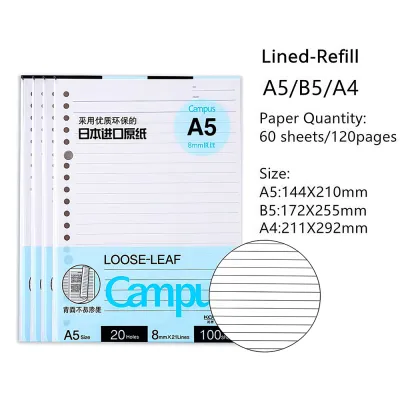
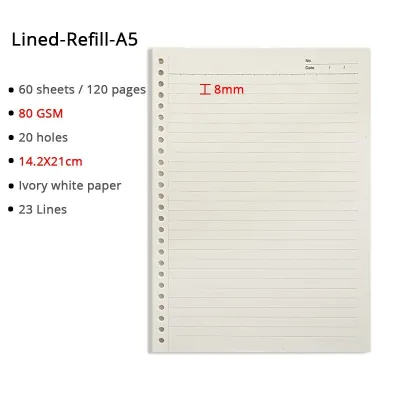
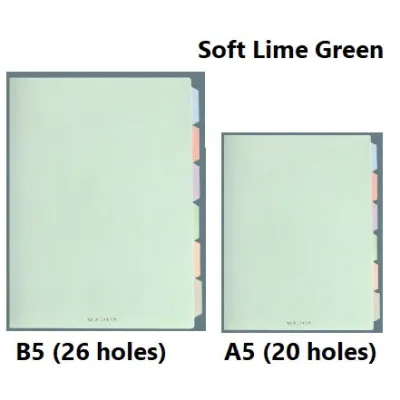
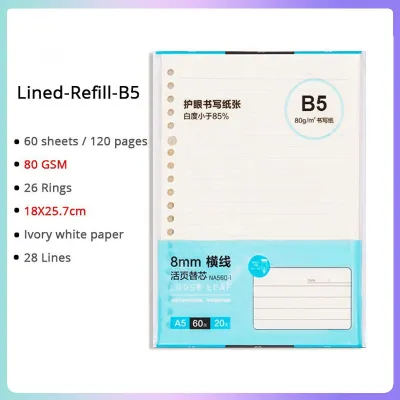
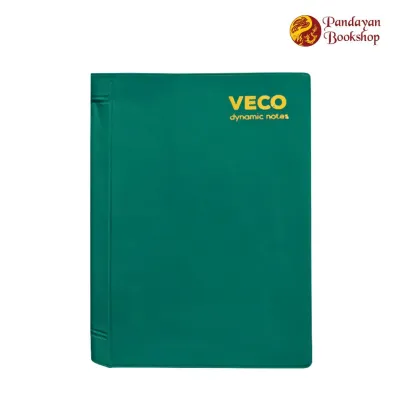
Prices are valid at publication and may change. Please refer to the product page for the latest price.
Ultimately, the “best” size is not about which paper is objectively better, but which format seamlessly integrates into your daily workflow without causing physical strain or workspace clutter.
Core Differences: Dimensions, Weight, and Capacity
To make an informed decision, it is essential to understand the physical baselines of both formats. The international standard ISO 216 governs these sizes, ensuring that paper dimensions remain consistent across different brands and manufacturers.

An A4 sheet measures exactly 210 by 297 millimeters. This is the standard size for most office documents, school handouts, and printer paper. An A5 sheet is exactly half the size of an A4 sheet, measuring 148 by 210 millimeters. Because of this mathematical relationship, folding an A4 sheet cleanly in half yields the exact dimensions of an A5 page.
While a two-to-one size ratio sounds simple, the difference in weight and bulk becomes highly noticeable once these papers are housed inside a binder. A4 binders require larger, thicker covers—often made of heavy-duty polypropylene, thick cardboard, or leatherette—to keep the massive pages from sagging or bending. When empty, an A4 binder is already significantly heavier than its A5 counterpart. Once fully loaded with 100 sheets of standard 80gsm paper, an A4 binder can easily weigh over a kilogram. An A5 binder, even when packed to its maximum capacity, remains light enough to carry in one hand without fatigue.
The ring mechanisms also differ significantly between the two sizes, which directly affects paper capacity and page-turning smoothness. A4 binder notebooks typically utilize 30-ring, 4-ring, or 2-ring systems, while A5 binders generally use 20-ring or 6-ring mechanisms. A higher number of rings, such as the 30-ring A4 or 20-ring A5 systems popular in Japanese-style stationery, distributes the tension evenly along the edge of the paper. This prevents the holes from tearing during frequent page turning. However, these multi-ring mechanisms add mechanical weight to the binder.
| Feature | A4 Binder Notebook | A5 Binder Notebook |
|---|---|---|
| Dimensions | 210 x 297 mm | 148 x 210 mm |
| Standard Ring Counts | 30-ring, 4-ring, 2-ring | 20-ring, 6-ring |
| Average Sheet Capacity | 90 to 110 sheets (15mm ring) | 90 to 110 sheets (15mm ring) |
| Average Empty Weight | 350 to 500 grams | 180 to 250 grams |
| Average Filled Weight | 850 to 1,100 grams (100 sheets) | 450 to 550 grams (100 sheets) |
| Primary Portability | Desk-heavy / Large backpacks | Highly portable / Small bags & totes |
Portability and Workspace: Bag Fit and Desk Footprint
Evaluating how a binder fits into your physical environment is crucial for long-term satisfaction. A notebook that is too large for your bag or too bulky for your desk will eventually be left at home, defeating its purpose as an active productivity tool.
Bag compatibility is a major pain point for students and professionals who commute daily. In the Philippines, navigating a packed MRT-3 train, squeezing into a UV Express shuttle, or walking through sudden tropical downpours requires a bag that is compact and easy to manage. An A5 binder notebook slips effortlessly into standard backpacks, casual tote bags, and medium-sized messenger bags. Its compact dimensions mean you can quickly slide it out to review notes while standing or sitting in transit.
An A4 binder, however, demands a large, structured bag. Because the binder cover must be wider and taller than the 210 x 297 mm paper to protect the edges, the actual footprint of an A4 binder is often closer to 230 x 315 mm. This size frequently exceeds the capacity of standard everyday totes and smaller fashion backpacks, forcing you to carry a bulky laptop bag or a dedicated document sleeve. If forced into an undersized bag, the corners of the binder cover will inevitably bend, and the zipper may strain or fail to close, exposing your notes to the elements.
Desk footprint is another critical factor. When opened flat, an A4 binder notebook requires a massive horizontal space of at least 450 mm. If you are studying at a cramped university library cubicle, sharing a small table at a busy coffee shop in Bonifacio Global City or Katipunan, or working from a compact home office desk, an open A4 binder can dominate your entire workspace. This leaves almost no room for your laptop, reference textbooks, or a cup of coffee.
An A5 binder opens to a neat width of approximately 310 mm. This compact footprint allows you to place the notebook directly alongside a laptop or keyboard, enabling a highly efficient dual-screen workflow. You can easily type on your computer while keeping your handwritten tasks or meeting notes open and visible right next to your hand.
Furthermore, the handling comfort of each size dictates how you write. Writing on an A5 binder is highly comfortable even when a flat surface is unavailable. You can easily fold the cover back (especially with flexible ring binders) and write while holding the notebook on your lap or standing up. Writing on an A4 binder requires a solid, stable desk; attempting to write on your lap with a large A4 binder is awkward, unstable, and physically tiring due to the wide, heavy covers.
Best Use Cases: Matching the Size to Your Workflow
To determine which binder size will serve you best, it is helpful to analyze your specific daily tasks and workflows. Each size excels in distinct environments and supports different cognitive styles of writing and organizing.
When an A4 Binder Notebook is the Better Choice
The primary advantage of the A4 format is its compatibility with standard printed media. In professional offices, academic institutions, and legal settings, handouts, syllabi, contracts, and reports are almost universally printed on A4 or Letter-sized paper. If your workflow involves collecting these external documents, an A4 binder allows you to integrate them seamlessly. You can use a standard hole puncher to insert these documents directly into your binder, or slide them into clear plastic sheet protectors, keeping all your reference materials and handwritten notes in a single, unified system without folding or trimming the edges.
For creative and analytical thinkers, the expansive canvas of an A4 page is incredibly liberating. If your study or work sessions involve creating detailed mind maps, complex flowcharts, large-scale sketches, or multi-column project planners, the A5 format will feel suffocatingly small. A4 pages allow you to write long, continuous lines of text, which is highly beneficial for transcribing mathematical formulas, coding logic, or detailed lecture notes where continuity is key.
Finally, A4 binders are excellent as stationary filing systems. If you maintain a home recipe archive, a centralized family document organizer, or a master reference manual for your business that stays permanently on a shelf or desk, the weight of the binder is irrelevant. In these scenarios, the maximum page capacity and the ability to read large-format prints without squinting make the A4 binder the undisputed winner.
When an A5 Binder Notebook is the Better Choice
The A5 binder notebook is designed for dynamic, fast-paced workflows where mobility is a priority. For students attending back-to-back lectures across a large campus or professionals moving between meeting rooms, the ability to quickly pack and unpack is invaluable. An A5 binder takes up minimal space on a lecture hall arm table, allowing you to take notes comfortably without encroaching on your neighbor’s space.
In terms of personal organization, the A5 size is the global standard for bullet journaling, daily planning, and personal diaries. The smaller page layout is psychologically less intimidating to fill. On an A4 page, a short daily task list or a brief journal entry can look sparse and incomplete, surrounded by vast oceans of empty white space. On an A5 page, the same amount of writing feels balanced, structured, and satisfyingly complete. This makes the A5 binder highly motivating for daily habit tracking, language learning vocabulary logs, and creative journaling.
Furthermore, the A5 size is exceptionally well-suited for active, on-the-go reading and annotation. If you need to review your notes, study flashcard-style summaries, or plan your day while riding commuter trains or waiting in lines, the lightweight and compact nature of the A5 binder allows you to hold and read it comfortably with one hand. It acts as an extension of your thoughts rather than a heavy piece of luggage.
Refills, Accessories, and Long-Term Maintenance
A binder system is a long-term investment. Unlike bound notebooks, which must be replaced entirely once filled, a binder can be used indefinitely by simply swapping out the paper refills and reorganizing the internal accessories. However, the long-term maintenance experience differs significantly between A4 and A5 formats.
Refill paper availability is a major consideration. Because the A5 binder format has gained massive popularity among stationery hobbyists and students, local stationery stores and online marketplaces offer an incredibly diverse selection of specialized A5 paper. You can easily purchase refills with various line spacings, dot grids, graph grids, Cornell note-taking layouts, and even specialized thick paper designed for fountain pens. A4 refills, while widely available, are often restricted to standard wide-ruled or college-ruled lines, with far fewer options for specialized grids or premium paper textures in local retail outlets.
In the tropical climate of the Philippines, high humidity can significantly affect paper quality and the writing experience. Paper fibers naturally absorb moisture from the air, which can lead to feathering (where ink spreads out like a spiderweb) and bleed-through (where ink seeps through to the back of the page). Because smoothness, bleed resistance, drying speed, and water resistance depend heavily on the exact combination of your pen’s ink and the paper’s fiber density, it is highly recommended to perform a simple test on an inconspicuous corner of a single sheet before purchasing large quantities of refills. For humid environments, look for high-density paper refills—ideally 80gsm to 100gsm—and store your binders in dry, well-ventilated areas to prevent the pages from curling or developing a musty odor.
Cost is another factor to keep in mind. Standard A5 refill packs are highly economical, often ranging from ‛50 to ‛150, making them accessible for daily high-volume note-taking. A4 refills and binders require more raw materials to manufacture, resulting in higher prices, with premium A4 binders and specialized refills often costing between ‛300 and ‛600 or more. Over several semesters of study or years of professional use, the cost difference can become substantial.
Accessory compatibility also requires careful attention. To maximize the utility of your binder, you will likely want to add dividers, zipper pouches, plastic sheet protectors, and page-marker rulers. These accessories must be matched precisely to both the paper size and the specific ring configuration of your binder. Standard A5 20-ring accessories are highly standardized and widely available, but you must ensure that the hole spacing of your chosen accessories matches your specific binder brand, as some European-style 6-ring systems differ from Japanese-style 20-ring standards. Similarly, A4 30-ring accessories are highly specific and cannot be used in standard 2-ring or 3-ring binders without manual modification.
Final Decision Framework: Choose A4 or A5?
To finalize your decision and ensure you purchase the perfect binder notebook for your daily routine, use the following structured framework to assess your needs.
Choose an A4 Binder Notebook if:
- Your primary workflow involves collecting, organizing, and archiving standard printed documents, hand-outs, or official forms alongside your notes.
- You work almost exclusively at a large, dedicated desk at home or in an office, and rarely need to transport your binder.
- You prefer large-scale visual thinking, requiring expansive space for mind maps, complex diagrams, flowcharts, or long lines of mathematical equations.
- You do not mind carrying a larger, heavier bag to accommodate the wide, protective cover of an A4 binder.
Choose an A5 Binder Notebook if:
- You are a commuter, student, or mobile professional who needs a lightweight, compact notebook that fits easily into standard bags and backpacks.
- You frequently work in cramped spaces, such as small coffee shop tables, lecture hall armchairs, or shared hot-desks.
- Your writing consists primarily of daily lists, meeting minutes, journal entries, vocabulary logs, or structured bullet journaling.
- You want access to a wider variety of specialized paper refills (such as dot grid, kraft paper, or premium fountain-pen-friendly sheets) and affordable accessories.
Verify First Before Committing to a Purchase:
- Measure your bag: Check the interior dimensions of your daily backpack or tote. If the bag cannot comfortably accommodate a width of 230 mm and a height of 315 mm, avoid the A4 binder.
- Check your printer settings: If you plan to print your own custom templates or grid layouts, verify that your home or office printer can easily feed and print on A5 paper sizes without paper jams.
- Assess your desk space: Measure your active writing area while your laptop is open. If you have less than 50 cm of horizontal clearance, an A5 binder will provide a much more comfortable writing experience.
Frequently Asked Questions (FAQ)
Can I use A5 paper in an A4 binder?
While it is physically possible to insert A5 paper into some A4 binders if the ring spacing aligns, it is highly impractical for daily use. Because A5 paper is exactly half the size of A4, it will sit awkwardly in the middle of the large A4 rings. The shorter paper will slide up and down along the rings, lacking the top and bottom structural support provided by a properly sized binder. This causes the pages to sag, makes turning pages smoothly incredibly difficult, and risks tearing the paper holes. Additionally, the massive A4 binder cover will extend far beyond the edges of the A5 paper, defeating the portability benefits of the smaller paper size while still consuming maximum desk and bag space.
Do A4 and A5 binders use the same hole punchers?
Hole punch compatibility depends entirely on the specific ring system of your binder rather than the physical size of the paper. For example, a standard 2-hole puncher can often be adjusted to punch holes for both A4 and A5 paper, provided the binder utilizes a standard 2-ring mechanism. However, if you are using multi-ring binders—such as a Japanese-style 30-ring A4 binder or a 20-ring A5 binder—you will need a specialized multi-ring puncher designed specifically for those ring counts. When purchasing a hole puncher, always verify that the puncher’s margin guides and hole spacing match the exact ring alignment and ring count of your specific binder model to avoid misaligned pages.

Community discussion
Share your experience or ask a question. Comments are reviewed before publication.