
Choosing the right document file organizer depends on three main variables: how much paper you have, how often you need to access it, and where you plan to store it. There is no single universal solution. Accordion folders are the go-to for portable, multi-pocket sorting of loose sheets. Binders offer unmatched flexibility for documents you need to flip through, rearrange, or update regularly. Box files serve as sturdy, high-capacity vaults for long-term archiving on shelves. Matching these tools to your specific workflow prevents cluttered desks and lost paperwork.
Understanding Your Document Storage Needs
Before purchasing any organizer, take a realistic inventory of your paperwork. Start by assessing the physical volume. A stack of monthly utility bills, birth certificates, and school report cards requires a different capacity than years of tax records or corporate contracts. Gather your documents and measure their combined thickness in centimeters to establish a baseline.
Next, consider your access frequency. Do you need to retrieve these papers daily, weekly, or only once a year? Active documents, such as ongoing school worksheets or current project drafts, require quick-access systems where pages can be inserted or removed without hassle. Archival documents, like land titles or historical receipts, can be sealed away in high-capacity storage that prioritizes protection over immediate accessibility.
Products mentioned in this guide
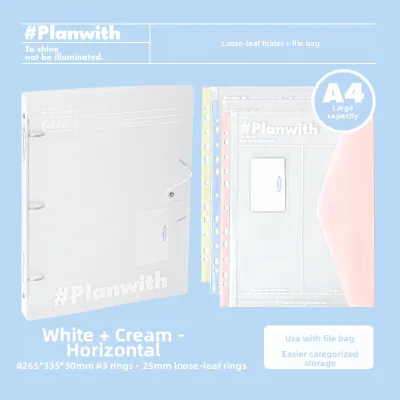
Prices are valid at publication and may change. Please refer to the product page for the latest price.
Finally, evaluate your physical storage environment. In tropical climates like the Philippines, high relative humidity is a constant challenge for paper preservation. Moisture in the air softens paper fibers, making them prone to tearing, while also encouraging mold growth and attracting paper-eating pests. Therefore, your storage choice must not only organize your files but also shield them from environmental degradation. Measure your available space—whether it is a deep desk drawer, an open wooden bookshelf, or a backpack for daily commuting—to ensure your organizer fits without awkward overhangs.
Accordion Folders: Best for Portable and Categorized Storage
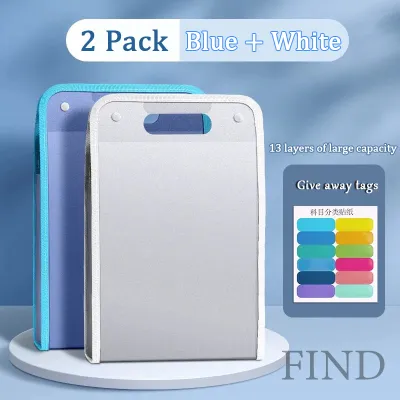
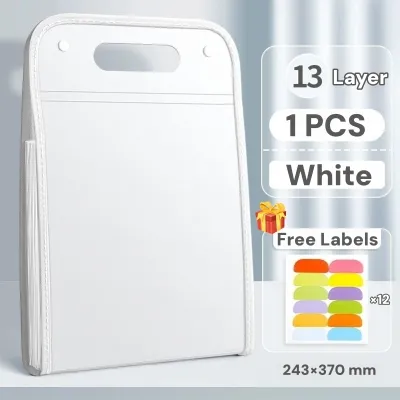
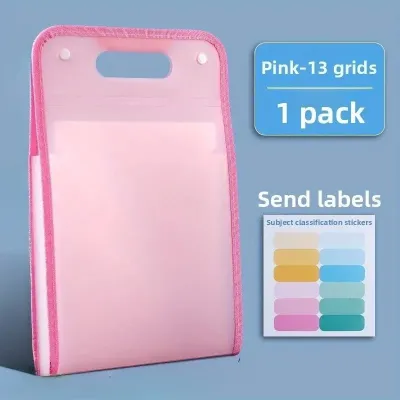
An accordion folder is an expandable document file organizer featuring multiple internal pockets arranged like the bellows of an accordion. This design is highly efficient for sorting loose, unpunched papers into distinct categories within a single, self-contained unit. If you need to carry documents between home, school, or the office, this format provides excellent mobility without the risk of pages falling out.

When selecting an accordion folder, pay close attention to the structural details. Look for models made from thick, flexible polypropylene, which resists moisture and humidity better than paper-based alternatives. Verify the number of pockets—typically ranging from 5 to 24—to ensure you have enough slots for your categorization system. Examine the closure mechanism: elastic bands offer quick access but can stretch out over time, while snap buttons and plastic buckles provide a more secure lock for heavy loads.
Most accordion folders come with built-in tab dividers and small paper inserts for labeling. To maximize this system, use a consistent color-coding or alphabetical indexing method. For instance, you can dedicate specific pockets to monthly utility bills, medical records, and academic certificates. Some advanced models feature a tiered design where the tabs are cut at different heights, allowing you to read all category labels at a single glance without having to pull the pockets apart.
However, accordion folders have distinct limitations. They are not designed for thick, heavy stacks of paper in a single section, as overfilling can distort the plastic and prevent the outer flap from closing. Additionally, retrieving a single page from the middle of a packed pocket can be cumbersome, making this format less suitable for documents you need to reference and edit constantly throughout the day.
Binders: Best for Frequent Access and Customizable Organization
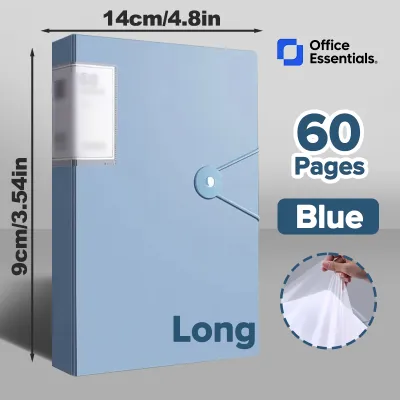
Ring binders and lever arch files are the standard for active, highly customizable document management. They allow you to flip through pages like a book, making them ideal for training manuals, recipe collections, or school subject notes. Because pages are held securely by metal or plastic rings, you can easily insert, remove, or rearrange sheets at any point in the stack.
The core of any binder is its ring mechanism. O-ring binders are common and budget-friendly, but the pages ride up on the curve, which can cause uneven wear. D-ring binders keep pages flat against a straight edge, maximizing capacity and reducing tear risk at the punched holes. For heavy-duty archiving, lever arch binders feature a robust locking mechanism operated by a metal lever, allowing you to secure thick stacks of paper with minimal effort.
Binders come in various materials, from lightweight, flexible plastic covers to heavy-duty, paperboard-core binders wrapped in vinyl. For daily school use or light office tasks, a flexible plastic binder is highly portable and resists water splashes. However, for heavy reference manuals that stand upright on shelves, a rigid vinyl-wrapped binder is essential to prevent the covers from bowing under the weight of the paper. Additionally, look for binders with clear plastic overlays on the spine and front cover, which allow you to slide in custom printed labels for a highly professional look.
While binders offer superior accessibility, they require a commitment to preparation. You must either use pre-punched paper, invest in a reliable hole puncher, or use plastic sheet protectors. Sheet protectors are highly recommended in humid environments to prevent ink transfer and page sticking, though they increase the overall thickness of your files. Keep in mind that binders have a rigid, wedge-shaped footprint that occupies significant shelf space even when only partially filled.
Box Files: Best for High-Volume Archiving and Shelf Storage
Box files are rigid, deep containers designed to sit upright on bookshelves or filing racks. They function as protective shells for large volumes of documents, keeping them free from dust, light, and physical damage. This makes them the premier choice for long-term archiving, such as storing tax returns, completed project files, or historical family records.
When evaluating box files, check the internal dimensions to ensure they accommodate your specific paper sizes, such as short (letter), A4, or long (legal) formats. Many high-quality box files feature internal spring clips or metal clamps to hold loose papers flat and prevent them from slumping to the bottom. Look for practical external features like a clear spine label window for easy identification and a metal-reinforced finger pull hole, which allows you to slide the box off a crowded shelf easily.
Traditional box files are made of thick, rigid paperboard covered in a protective paper or plastic laminate. They often feature a secure lid with a locking catch or a magnetic closure to keep the box tightly shut. When storing box files, always place them vertically like books. Stacking them horizontally on top of one another can crush the lower boxes over time, damaging the structural integrity of the frames and making it difficult to open the lids. If you use suspension files (hanging folders) inside your box files, verify that the box has internal rails designed to support them.
The primary trade-off with box files is their lack of portability and desktop convenience. They are heavy, bulky, and awkward to transport in a bag. Retrieving a single document from a box file usually requires taking the entire box off the shelf, opening the lid, releasing the internal clamp, and sorting through a loose stack. They are stationary storage units, built for preservation rather than rapid daily interaction.
Decision Framework: Matching the Organizer to Your Workflow
To choose the right document file organizer, you must balance your capacity needs against your portability and access requirements. The following comparison table outlines how each format performs across key operational criteria:
| Feature | Accordion Folder | Ring Binder | Box File |
|---|---|---|---|
| Primary Material | Polypropylene / Plastic | Cardboard / Plastic-wrapped | Rigid Paperboard / Plastic |
| Paper Preparation | None (Loose sheets) | Requires punching or protectors | None (Loose or sub-folder) |
| Portability | High (Lightweight & compact) | Moderate (Bulky but transportable) | Low (Stationary shelf storage) |
| Access Frequency | Moderate (Good for retrieval) | High (Easy to flip and edit) | Low (Best for archiving) |
| Capacity Limit | Small to Medium (approx. 150–500 sheets) | Medium to Large (approx. 100–600 sheets) | Very High (approx. 500–800+ sheets) |
| Humidity Resistance | High (if fully plastic) | Moderate (metal rings may rust) | Low to Moderate (depends on coating) |
Use this conditional framework to make your final decision:
- Choose an Accordion Folder if you are a student or mobile professional who needs to carry categorized, unpunched documents (like forms, receipts, or homework) between different locations daily.
- Choose a Binder if you are managing active projects, study guides, or reference manuals that require you to frequently add, remove, or rearrange pages in a specific order.
- Choose a Box File if you need to clear clutter off your desk and archive thick stacks of completed paperwork that you only need to reference a few times a year.
If your storage needs exceed these standard formats, consider a hybrid approach. For example, you can use an accordion folder on your desk to sort incoming mail and bills, then transfer those documents into a labeled box file at the end of the month. For massive, multi-year archives, standard organizers may need to be paired with heavy-duty plastic storage bins or dedicated filing cabinets to protect your paperwork from tropical pests and moisture.
What to Check Before Buying a Document Organizer
Before finalizing your purchase at a local stationery store or an online marketplace, perform a few quality checks to ensure your document file organizer lasts. First, inspect the seams and edges. For plastic accordion folders, look for reinforced fabric borders or double-welded seams; sharp, thin plastic edges tend to split quickly under pressure. For binders, check that the plastic cover material is tightly sealed over the internal cardboard core without air bubbles or peeling edges.
Second, test the mechanical components. Open and close binder rings several times to verify they align perfectly; even a millimeter of misalignment will catch and tear your papers when you turn the pages. For box files, test the tension of the internal wire clasp to ensure it holds sheets firmly without crushing them. If buying online, read user reviews specifically mentioning hinge durability and clasp strength.
Finally, verify the exact dimensions against your documents and storage furniture. Standard paper sizes often include both A4 and longer legal formats. Ensure the organizer’s specifications explicitly state compatibility with your longest documents to prevent bent corners or flaps that refuse to close. Spending a few extra pesos on a properly sized, durable organizer prevents the frustration of damaged files later.
Frequently Asked Questions (FAQ)
Can I mix different organizers for the same project?
Yes, combining different formats is an excellent way to manage complex workflows. You can use a portable accordion folder to collect raw notes, receipts, and loose drafts while working in the field or attending classes. Once a phase of the project is complete, compile the finalized documents, punch them, and organize them into a binder for active reference. For long-term preservation, transfer the entire completed project into a labeled box file on your shelf, freeing up your binder and accordion folder for the next task. Consistent labeling across all three formats ensures you can track a document’s journey from active draft to archived record.
How do I prevent paper from tearing inside a binder?
Paper tearing is usually caused by overfilling or misaligned rings. Always respect the stated capacity of your binder; if the pages do not slide smoothly around the rings when you close the cover, the binder is too full. To protect delicate or frequently accessed pages, insert them into plastic sheet protectors instead of punching holes directly into the paper. If you prefer punched paper, apply self-adhesive reinforcement rings to the holes of high-traffic sheets. Finally, always use the page lifters—the plastic curved sheets that come with many binders—to guide the paper safely over the rings when opening and closing the binder.

Community discussion
Share your experience or ask a question. Comments are reviewed before publication.