
The best modeling material depends entirely on your project’s goal. Traditional playdough is ideal for reusable, temporary sensory play, especially for young children. Air-dry clay offers a permanent, paintable finish without needing an oven, making it perfect for school projects and basic crafts. Polymer clay provides the highest detail and durability but requires oven-baking, suiting jewelry and miniature sculpting. This guide compares their texture, drying behavior, and reusability to help you choose the right option.
When selecting a modeling medium in the Philippines, local environmental factors like high tropical humidity and warm temperatures play a significant role in how these materials behave. High humidity can prolong the drying time of water-based clays, while intense heat can affect the shelf life of unbaked polymer formulas. Understanding these physical characteristics ensures your creative projects turn out exactly as planned, whether you are setting up a sensory bin for toddlers or crafting intricate accessories to sell online.
Key Differences in Texture, Drying Behavior, and Reusability
The physical properties of these three materials dictate how they feel in your hands, how long you can work with them, and whether your creations can last forever. Each material has a distinct chemical or water base that determines its lifecycle from raw compound to finished piece.
Products mentioned in this guide
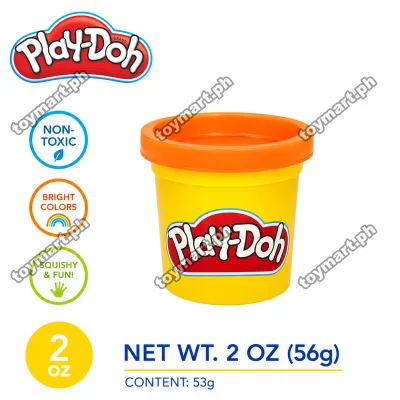
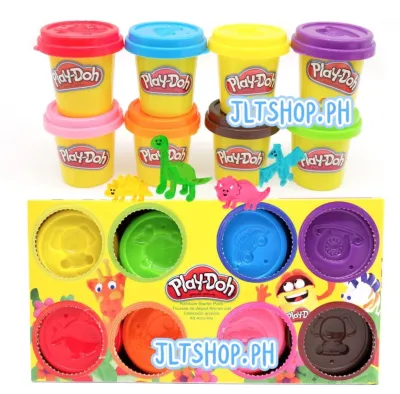
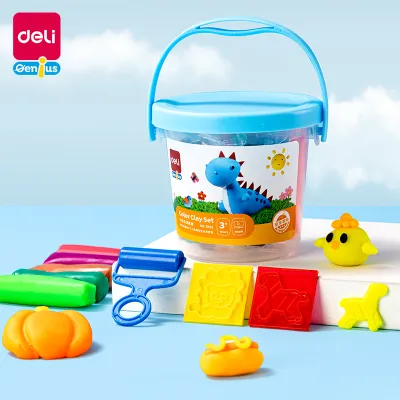
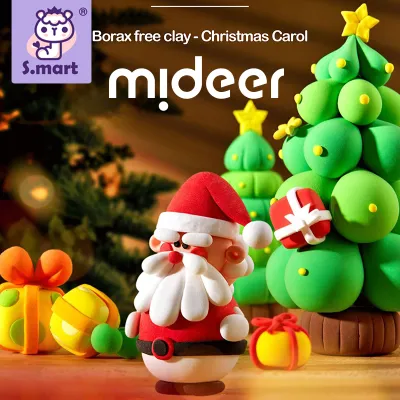
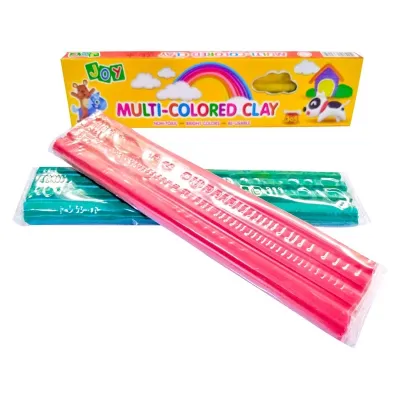
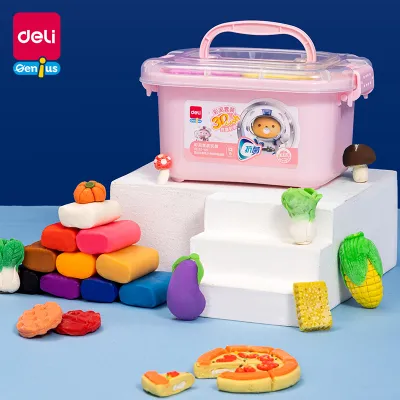
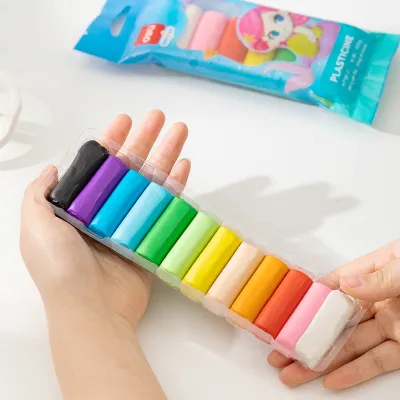
Prices are valid at publication and may change. Please refer to the product page for the latest price.
Traditional playdough is highly pliable, soft, and slightly salty to the touch. It is designed specifically for repeated squeezing, rolling, and shaping. Because it is water-based and contains salt and flour, it remains soft as long as it is kept in an airtight container. If left out in the open, the water evaporates, leaving behind a dry, crumbly, and brittle structure that cannot easily be salvaged once fully hardened. Its primary appeal is this indefinite reusability during supervised play sessions.
Air-dry clay is also water-based but contains paper fibers, glue, or resin to give it structural integrity. When wet, it has a slightly spongy, smooth, and cool texture that is easy to mold but can stick to hands or work surfaces. As the water evaporates in the air, the clay shrinks slightly and hardens into a lightweight, matte, and somewhat porous solid. In humid tropical climates, this drying process can take anywhere from 24 hours to several days. Once fully dry, it cannot be reworked, though minor cracks can sometimes be patched with wet clay before painting.
Polymer clay is an entirely different medium, formulated from polyvinyl chloride (PVC) plastic and liquid plasticizer. It feels firm, dense, and sometimes crumbly when first sliced from the block, requiring the warmth of your hands or a conditioning machine to become pliable. Because it contains no water, it will never dry out or shrink when left exposed to the air, allowing you to work on a sculpture for weeks. It only hardens, or cures, when subjected to the precise heat of a household oven. Once baked, it becomes a durable, water-resistant plastic that retains its exact sculpted dimensions.
Ideal Projects and Use Cases for Each Material
Matching the material to the user’s age and the intended project prevents frustration and ensures safety. Each compound excels in a specific niche, from early childhood development to professional crafting.

Traditional playdough is the classic choice for sensory play, early childhood education, and fine motor skill development. It is highly forgiving, easy for small hands to compress, and completely non-toxic, making it suitable for toddlers under close supervision. Children can use plastic rollers, cookie cutters, and stamps to create temporary shapes, squish them back into a ball, and start over. Because it does not yield permanent or durable items, it is not meant for keepsake crafts or functional household objects.
Air-dry clay is highly popular for school dioramas, classroom art projects, pinch pots, and casual home decor. Since it requires no baking, it is a safe option for older children and teenagers working independently. Once dry, the surface can be sanded smooth and painted with acrylics, poster paints, or markers, followed by a clear varnish to seal out moisture. It is excellent for making decorative bowls, wall hangings, and relief sculptures, though finished pieces remain sensitive to water and should not be used for holding liquids or outdoor display.
Polymer clay is the preferred medium for detailed sculpting, jewelry making, custom beads, and miniature figurines. Its ability to hold incredibly fine details without drooping or shrinking makes it ideal for intricate work like millefiori canes, tiny realistic food models, and delicate earrings. Because cured polymer clay is highly durable, slightly flexible, and completely waterproof, the finished pieces can withstand daily wear and tear. However, because it requires baking in an oven and can release mild fumes if overheated, it is best suited for adults, older teens, or children under direct adult supervision.
Side-by-Side Comparison of Modeling Clays
To help you quickly evaluate which material fits your immediate needs, the table below summarizes the core characteristics, curing methods, and tool requirements for each option.
| Feature | Traditional Playdough | Air-Dry Clay | Polymer Clay |
|---|---|---|---|
| Drying/Curing Method | Non-drying (must be sealed); air-dries to a crumbly state if left out | Air-dries naturally over 24 to 72 hours depending on thickness | Requires oven-baking at low temperatures (typically 110°C to 130°C) |
| Reusability | Indefinitely reusable if stored in airtight containers | One-time use; cannot be reworked once dry | Reusable indefinitely until baked in an oven |
| Durability After Setting | Low; crumbles easily and dissolves in water | Moderate; lightweight but fragile if dropped; susceptible to moisture | High; durable, slightly flexible plastic; highly water-resistant |
| Detail Level | Low; soft texture does not hold fine lines or sharp edges | Moderate; good for basic shapes, textures, and painted details | Very High; holds microscopic details, fingerprints, and complex patterns |
| Required Tools | Plastic cutters, rollers, and simple molds | Basic wooden modeling tools, sandpaper, acrylic paints, and sealer | Clay blades, conditioning rollers, detail needles, and a dedicated oven |
Please note that specific drying times, baking temperatures, and safety certifications vary by brand. Always verify the instructions and safety guidelines printed on the individual product packaging before beginning your project.
How to Decide: Which Clay Fits Your Project?
Making the final purchase decision comes down to balancing your project goals, the age of the crafter, and the tools you have at home. By asking a few practical questions, you can select the material that ensures a successful crafting experience.
If your primary goal is open-ended, mess-free play that can be enjoyed day after day, traditional playdough is the clear choice. It is affordable, widely available in multi-color packs, and requires no specialized tools or cleanup. This makes it the perfect option for preschool activities, rainy-day entertainment, and sensory therapy where the process of creation is more important than keeping the final product.
If you want to create permanent, painted crafts—such as a handmade jewelry dish, a school science model, or a decorative tile—but do not own a baking oven, air-dry clay is your best option. It provides a satisfying, clay-like working experience and cures naturally on your counter. Just keep in mind that in humid tropical environments, you may need to wait an extra day or two for the piece to dry completely before applying paint or sealant.
If you are looking to craft high-quality, detailed items like custom earrings, keychains, or miniature collectibles that need to withstand handling, polymer clay is the correct investment. While it requires a higher upfront cost for tools and access to a standard home oven, the durability and professional finish of the cured plastic are unmatched. You can mix custom colors directly, carve micro-details, and trust that the finished piece will not warp or crack over time.
Regardless of which material you choose, always verify if your project involves food-safe items or prolonged skin contact. Standard modeling clays, playdoughs, and polymer clays are generally not food-safe and should never be used for functional plates, cups, or utensils that touch food or drink. Always check the manufacturer’s specifications on the label to confirm safety guidelines and age recommendations for your specific craft.
Frequently Asked Questions (FAQ)
Can you mix different types of modeling clay together?
Mixing different bases, such as water-based air-dry clay with oil-based polymer clay or salty playdough, generally fails and compromises the structural integrity of your work. Because water-based clays dry by evaporation and polymer clays cure through heat, combining them prevents proper setting, leading to severe cracking, peeling, or a sticky, uncured mess. If you want to combine materials, it is best to use them as separate, fully cured layers joined by appropriate adhesives, or check the manufacturer’s instructions before attempting to mix different brands or formulas.
Is modeling clay safe for young children?
Traditional playdough is formulated to be non-toxic and is generally safe for young children, though close supervision is always recommended to prevent choking hazards or ingestion. In contrast, polymer clay and certain heavy-duty air-dry clays are not recommended for unsupervised use by young children due to the chemical plasticizers, preservatives, or fine fibers they contain. When working with polymer clay, ensure the baking area is well-ventilated, and always check product labels for specific age recommendations, non-toxic certifications, and safety guidelines.
How do you store unused clay to prevent it from drying out?
To prevent water-based materials like playdough and air-dry clay from hardening prematurely, store them in airtight plastic bags or tightly sealed containers, squeezing out as much excess air as possible. In warm, humid climates, adding a slightly damp paper towel inside the container can help maintain moisture levels for air-dry clay, though too much moisture can cause mold. Polymer clay does not dry out in the air, but it should be wrapped in wax paper or plastic wrap and stored in a cool, dark drawer away from direct sunlight and heat to prevent it from attracting dust or becoming partially cured.

Community discussion
Share your experience or ask a question. Comments are reviewed before publication.