
Choosing the right clay sculpting set depends entirely on your project goals, available workspace, and skill level. While air-dry clay offers convenience for large or painted pieces, polymer clay provides the durability needed for fine details and jewelry, and plasticine remains the standard for reusable practice and animation. Selecting the ideal material requires understanding how each type behaves during shaping, curing, and long-term display, especially when working in warm or humid environments.
In tropical climates like the Philippines, ambient humidity and temperature play a significant role in how sculpting materials behave. High humidity can prolong the drying time of water-based clays, while elevated room temperatures can soften oil-based modeling clays. By evaluating these environmental factors alongside your creative objectives, you can select a clay sculpting set that minimizes frustration and ensures your finished pieces hold their shape over time.
Understanding the Core Differences in Clay Materials
To choose the right sculpting medium, you must first understand the fundamental curing mechanisms and physical properties of the three primary clay types. Each material relies on a distinct chemical or structural composition that dictates how it transitions from a pliable state to a finished form.
Products mentioned in this guide
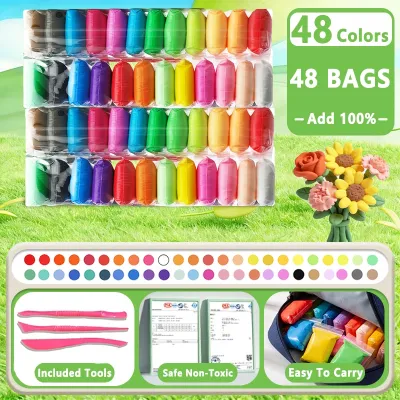
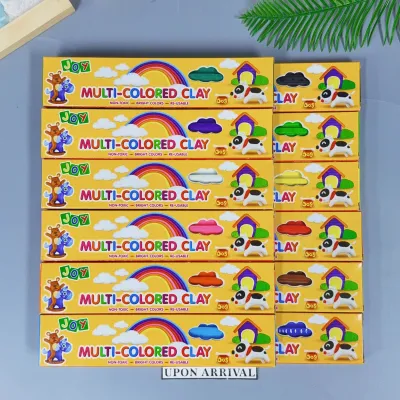
Prices are valid at publication and may change. Please refer to the product page for the latest price.
Air-dry clay is a water-based material composed of natural clays, paper fibers, or synthetic binders. It cures through simple evaporation, meaning it hardens naturally when exposed to the air over a period of hours or days. Because it relies on water loss to cure, air-dry clay naturally shrinks slightly as it dries. This shrinkage can lead to minor warping or cracking if the piece is dried too quickly or unevenly. In high-humidity regions, the evaporation process slows down significantly, requiring patience and a well-ventilated drying area.
Polymer clay is a synthetic material formulated from polyvinyl chloride (PVC) resin and liquid plasticizers. Unlike water-based options, polymer clay does not dry out at room temperature and remains workable indefinitely until it is exposed to heat. It requires heat curing, typically in a home oven, to fuse the plastic particles into a solid, durable state. Because it contains no water, polymer clay exhibits minimal to no shrinkage during the baking process, allowing you to preserve highly intricate details and precise dimensions from the sculpting stage to the final cured piece.
Plasticine, often referred to as oil-based modeling clay, is a non-hardening material made from a combination of oils, waxes, and clay minerals. It is designed to remain permanently pliable at room temperature and cannot be cured or hardened by air exposure or baking. This unique formulation makes plasticine infinitely reusable. However, because it relies on wax and oil binders, its firmness is highly sensitive to ambient temperatures. In warm environments, it can become exceptionally soft and sticky, while cooler temperatures will make it firmer and more resistant to shaping.
Before starting any project, always verify the specific drying times, baking temperatures, and material safety labels on the manufacturer’s packaging. Different brands formulate their clays with proprietary additives that can alter curing requirements and handling characteristics.
Matching Clay Types to Your Sculpting Goals
Aligning your specific project outcomes and end-use requirements with the correct material is essential for a successful sculpting experience. Choosing a clay that matches your final goal prevents structural failures and ensures your hard work lasts.

For permanent displays, miniatures, and wearable jewelry, polymer clay is highly suitable. Its post-cure durability is exceptional, allowing finished pieces to withstand light handling, dropping, and moisture. Once baked, polymer clay can be sanded, drilled, carved, and painted with acrylics. Its dense structure holds fine details, sharp edges, and delicate textures, making it the preferred choice for creating intricate earrings, gaming miniatures, and small decorative figurines.
For large sculptures, school projects, and painted crafts, air-dry clay is an excellent option. It is highly practical for shaping substantial forms because it does not require an oven to cure, allowing you to work on scales that would not fit inside a standard baking appliance. Once fully dry, air-dry clay has a lightweight, porous finish that readily accepts standard acrylic paints, water-based markers, and protective sealants. It is ideal for creating decorative bowls, wall hangings, and relief sculptures.
For stop-motion animation, continuous practice, and temporary prototyping, plasticine is the industry standard. Because it never hardens, animators can make micro-adjustments to characters between camera frames without the material cracking or drying out. It is also highly valuable for students and beginners who want to practice anatomy, form, and proportion without consuming raw materials, as a single block of plasticine can be kneaded down and reused indefinitely.
When planning your sculpture, keep in mind that structural integrity for load-bearing or tall pieces requires careful planning. Always check the manufacturer’s specifications and consider using internal armatures, such as aluminum wire or crumpled foil cores, to support the weight of the clay and prevent sagging during both the sculpting and curing phases.
Evaluating Your Workspace, Tools, and Skill Level
Before committing to a specific clay sculpting set, you must assess your practical constraints, equipment availability, and personal experience level. The physical environment in which you work will heavily influence your success with each clay type.
An equipment check is the first step in evaluating your workspace. Polymer clay requires a dedicated, temperature-controlled oven or a toaster oven equipped with an accurate standalone thermometer. It should never be baked in a microwave, and baking vessels should ideally be kept separate from food preparation tools. In contrast, air-dry clay requires no specialized heating equipment. It simply needs a clean, flat, well-ventilated drying space away from direct sunlight, drafts, or extreme heat sources, which can cause the clay to dry too rapidly and crack.
Storage requirements also differ significantly between these materials. Air-dry clay is highly sensitive to ambient air and must be sealed in airtight plastic bags, wrapped in damp cloths, or stored in airtight plastic containers immediately after opening to prevent premature hardening. Polymer clay and plasticine do not dry out when exposed to air, but their slightly tacky surfaces easily attract dust, pet hair, and lint. They should be stored in clean, covered containers or wrapped in wax paper to keep them pristine between sculpting sessions.
Your current skill level and working pace should also guide your choice. Plasticine is incredibly forgiving for beginners because there is no time pressure; you can leave a project unfinished for weeks and return to find the clay in the exact same workable state. Polymer clay also offers unlimited working time but requires physical effort to condition and soften before shaping. Air-dry clay demands more precision and speed, as it begins to skin over and lose its pliability as you work. Beginners using air-dry clay must learn to manage their time and use a light mist of water to keep the surface workable.
Side-by-Side Comparison of Clay Sculpting Materials
To help you quickly evaluate your options, the following matrix compares the key decision-defining dimensions across the three primary clay types.
Comparison Matrix: Air-Dry vs Polymer vs Plasticine
| Material Type | Curing Method | Post-Cure Durability | Shrinkage Risk | Ideal Project Scale |
|---|---|---|---|---|
| Air-Dry Clay | Air exposure (evaporation) | Moderate (can be brittle if thin) | Low to Moderate (shrinks as it dries) | Medium to Large |
| Polymer Clay | Oven baking (heat) | High (slightly flexible to rigid) | Minimal (retains original dimensions) | Small to Medium |
| Plasticine | Non-hardening (reusable) | None (remains permanently soft) | None | Small to Medium (temporary) |
Note that exact durability, curing times, and shrinkage percentages vary by brand and formulation. Always verify these details via the product specifications on your specific clay sculpting set rather than assuming performance based on the material category alone.
Decision Framework for Buying a Clay Sculpting Set
To select the right clay sculpting set for your needs, use this structured decision framework based on your project profile, workspace, and budget.
Choose Air-Dry Clay if:
- You do not have access to a dedicated baking oven or prefer not to use heat sources.
- You are working on large-scale sculptures, home decor items, or school projects.
- You want a lightweight finished product that can be easily painted with standard acrylics.
- The project is intended for children or group activities where simple cleanup is preferred.
Choose Polymer Clay if:
- You want to create durable, long-lasting keepsakes, detailed miniatures, or wearable jewelry.
- You require a material that holds extremely fine details and does not shrink or warp during curing.
- You have a reliable oven and a thermometer to monitor precise baking temperatures.
- You plan to sand, drill, or carve your finished pieces after they have hardened.
Choose Plasticine if:
- Your primary goal is skill-building, practicing sculpting techniques, or teaching children.
- You are working on stop-motion animation or creating temporary prototypes and molds.
- You want a highly reusable material that will not dry out or go to waste if left uncovered.
- You do not need a permanent, hardened finished product.
When Standard Sculpting Clays May Not Fit
Neither of these materials is suitable if you require a food-safe item for functional dishware, such as mugs, plates, or bowls. Standard sculpting clays are generally not food-safe and cannot withstand the heat or moisture of food service. For functional kitchenware, you must use traditional ceramic clay that is fired in a high-temperature kiln and finished with certified food-safe glazes.
Set Evaluation Checklist
When purchasing a complete clay sculpting set, evaluate the following factors to ensure you get the best value for your budget:
- Included Tools: Check if the set includes essential shaping tools, such as loop tools for carving, needle tools for fine details, silicone shapers, and an acrylic rolling pin. Purchasing these as a bundle is often more cost-effective than buying them individually.
- Net Weight and Color Variety: Compare the price-to-content ratio in ₱ based on the total net weight of the clay provided. Some sets offer many small color blocks, which are excellent for colorful miniatures, while others offer large single-color blocks better suited for substantial sculptures.
- Storage and Accessories: Look for sets that include reusable storage cases to keep your clay clean, as well as starter sealants or findings (like earring hooks or keychains) if you plan to make jewelry.
Frequently Asked Questions (FAQ)
Can I mix air-dry, polymer, and plasticine clays in one project?
Mixing water-based (air-dry), oil-based (plasticine), and PVC-based (polymer) clays directly within a single sculpture is not recommended. Because these materials rely on entirely different chemical bases, they will not bond together naturally. Attempting to mix them can result in severe adhesion failures, uneven curing, and structural weakness. For example, the water evaporating from air-dry clay will be trapped by adjacent polymer clay, leading to bubbles, cracking, and peeling.
If your project requires the unique properties of different materials, use mechanical connections rather than direct mixing. You can construct a rigid internal support using wire armatures or cured foil cores, and then apply a single type of clay over the top. If you must combine cured pieces of different clay types, join them using specialized mechanical fasteners or check the manufacturer’s guidelines for compatible heavy-duty adhesives and mixed-media sealants after each material has been cured separately.

Community discussion
Share your experience or ask a question. Comments are reviewed before publication.