
Choosing the ideal crafting material from the wide variety of options available can be challenging, especially when looking at bulk assortments. A 48-piece clay set is an excellent entry point for crafters, offering a vast palette of colors in a single package. However, the utility of these sets depends entirely on the type of clay they contain. Air-dry clay, polymer clay, and soft modeling clay serve completely different artistic purposes, require distinct working environments, and yield vastly different finished products.
To make the right choice, you must evaluate your project goals, your workspace, and your patience. If you want to create lightweight, paintable decorative items without using specialized equipment, air-dry clay is your best option. For durable, highly detailed, and waterproof items like jewelry or miniatures, polymer clay is the correct choice, provided you have a dedicated home oven for baking. If your goal is temporary practice, color-mixing exercises, or stop-motion animation, reusable soft modeling clay is the most practical and mess-free solution.
Drying and Curing: How Each Clay Hardens
Understanding how different clays transition from a pliable state to their final form is essential for planning your crafting workflow. The curing mechanism determines not only the time required to complete a project but also how the material behaves during the creation process.
Products mentioned in this guide
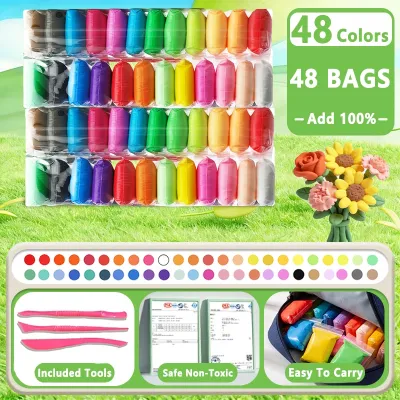
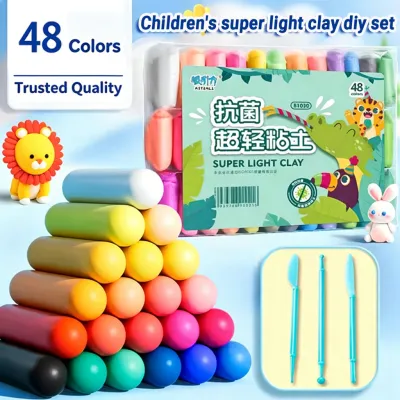
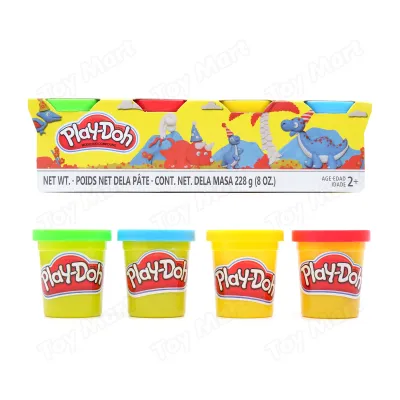
Prices are valid at publication and may change. Please refer to the product page for the latest price.
Air-Dry Clay (Water-Based)
Air-dry clay cures through the simple evaporation of its water content. When exposed to the air, the moisture inside the clay gradually escapes, leaving behind a solid, lightweight structure. This process requires no external heat source, making it highly accessible for casual crafters and home environments.
In humid or tropical climates, such as the rainy seasons in the Philippines, the evaporation process slows down significantly. High ambient humidity prevents moisture from leaving the clay quickly, extending the typical 24-hour drying time to 48 or even 72 hours. To prevent warping or uneven drying, you must turn the piece periodically to expose all sides to the air. Placing the drying pieces on a wire rack can improve airflow underneath the base.
As the water evaporates, air-dry clay experiences natural volumetric shrinkage, typically ranging from 5% to 10% depending on the specific brand formulation. This shrinkage can cause structural tension, leading to cracks if the piece dries too rapidly or if it is wrapped around a rigid, non-yielding internal support armature like thick wire or glass. To minimize cracking, keep drying pieces away from direct heat sources, air conditioning vents, or intense sunlight.
Polymer Clay (PVC-Based)
Polymer clay is a synthetic material composed of polyvinyl chloride (PVC) binders, plasticizers, and color pigments. Unlike water-based clays, it does not cure through evaporation. Instead, it requires heat to trigger a chemical reaction called polymerization, which fuses the plastic molecules into a durable, solid plastic.
Curing polymer clay requires baking it in a standard home oven or a dedicated toaster oven, typically at temperatures ranging from 110°C to 130°C, according to the manufacturer’s exact specifications. Because it does not dry out at room temperature, you can leave your unfinished projects on your work table for days or weeks without worrying about the material hardening. This makes it highly forgiving for intricate, slow-paced sculpting.
Because polymer clay contains no water, it does not shrink significantly during the baking process. Your finished piece will retain almost the exact dimensions and fine details of the raw sculpture. However, precise temperature control is critical during baking. Under-baking results in a brittle, easily broken piece, while over-baking can scorch the clay, ruin the color, and release irritating hydrochloric acid fumes.
Soft Modeling Clay (Oil/Wax-Based)
Soft modeling clay, often referred to as plastiline or traditional play dough, is formulated with a mixture of oils, waxes, and clay minerals. This composition prevents the material from ever hardening or curing, regardless of how long it is exposed to the air or left at room temperature.
The clay remains permanently pliable and reusable. It responds directly to temperature variations: warm environments or prolonged physical handling will soften the clay, while cooler temperatures will make it firmer. In warm tropical climates, the clay can become exceptionally soft and sticky during peak daylight hours, which may require you to work in an air-conditioned space or place the clay in a refrigerator briefly to restore its firmness.
Because it never cures, soft modeling clay does not undergo any shrinkage, warping, or cracking. It is designed entirely for temporary modeling, structural prototyping, and physical practice rather than permanent display.
Best Projects and Skill Levels for Each Type
Matching the clay type to your specific crafting goals and experience level prevents frustration and ensures your finished pieces perform as expected.

Air-Dry Clay Projects
Air-dry clay is highly suited for beginners, young students, and casual hobbyists who want to explore three-dimensional sculpting without a steep learning curve. Its soft, yielding texture is easy to manipulate with basic hand tools or kitchen utensils.
This material is ideal for creating larger, rustic items such as decorative trinket dishes, small plant pots, wall hangings, and coarse figurines. Once the clay is completely dry, you can refine the surface using fine-grit sandpaper, carve away excess material with woodcarving tools, and paint the surface with acrylic paints or multi-surface markers to add vibrant details.
However, air-dry clay has distinct functional limitations. It is inherently porous and water-soluble even after it dries. It should never be used to create functional planters that hold damp soil, vases meant to hold standing water, or outdoor decorations exposed to rain, unless it is thoroughly coated with a high-quality, water-resistant synthetic sealant. Additionally, air-dry clay is not food-safe and must not be used for functional tableware like plates, bowls, or cups.
Polymer Clay Projects
Polymer clay is best suited for intermediate to advanced crafters, jewelry makers, and detailed modelers. The material’s dense, fine-grained structure allows it to hold incredibly sharp details, fine textures, and complex color patterns, such as those used in millefiori canes.
This clay is the industry standard for creating handmade jewelry like earrings, pendants, and beads, as well as highly detailed figurines, custom keychains, and decorative charms. Once properly baked, polymer clay is completely waterproof, slightly flexible, and highly durable. It can withstand being dropped, handled frequently, and exposed to moisture without degrading.
Working with polymer clay involves a moderate learning curve. Before sculpting, you must thoroughly condition the clay by kneading and rolling it to warm up the plasticizers and ensure structural integrity. Unconditioned polymer clay remains stiff, resists blending, and often becomes brittle and crumbly after baking. You must also learn to manage oven temperatures carefully, using an independent oven thermometer to verify that your oven’s internal temperature matches the clay package instructions.
Soft Modeling Clay Projects
Soft modeling clay is the primary choice for early childhood classrooms, sensory play, and professional animators. Its permanent pliability makes it a low-stress material for young children who are still developing their fine motor skills.
This clay is perfect for temporary educational activities, such as building simple geographic landforms, practicing basic geometric shapes, and teaching color-mixing principles. Because a 48-piece set provides a wide spectrum of colors, users can blend small portions together to learn color theory without permanently consuming the material. It is also the standard medium for claymation and stop-motion animation, allowing animators to make micro-adjustments to a character’s facial expressions and body positions frame by frame.
Because soft modeling clay never hardens, it is entirely unsuitable for creating permanent keepsakes, wearable jewelry, or functional household items. It cannot be painted, sanded, or varnished, as the oil-and-wax base will repel water-based acrylic paints and prevent sealants from drying.
Tools, Storage, and Safety Considerations
Managing a large 48-piece clay set requires proper workspace preparation, systematic storage habits, and adherence to safety guidelines to protect both the crafter and the materials.
Essential Tools and Workspace
Each clay type demands a specific set of tools and environmental conditions to maintain its quality and ease of use:
- Air-Dry Clay: Requires a clean, non-porous work surface like a silicone mat or plastic sheet to prevent sticking. Keep a small spray bottle of clean water nearby; misting the clay occasionally helps smooth out surface cracks and joins separate pieces together. Leftover clay must be wrapped tightly in plastic wrap and stored inside an airtight container or a heavy-duty ziplock bag immediately to prevent it from drying out in storage.
- Polymer Clay: Needs a very smooth, rigid work surface such as a ceramic tile, a glass plate, or a polished metal sheet. Avoid working directly on unfinished wood or certain plastics, as the plasticizers in raw polymer clay can react with and damage these surfaces over time. You will need a dedicated baking tray, parchment paper to prevent shiny spots on the clay during baking, and an independent oven thermometer. Store raw polymer clay in its original packaging or wrapped in wax paper inside a cool, dark drawer away from direct sunlight and heat sources.
- Soft Modeling Clay: Works well on standard plastic or laminated tabletops. Basic plastic sculpting tools, rolling pins, and cookie cutters are sufficient for shaping. Because it does not dry out, storage is simple; place the blocks back into their designated compartments in the 48-piece container to keep them free from household dust, pet hair, and lint.
Safety and Cleanup
Safety practices vary depending on the chemical composition of the clay, especially when kits are used by children or in shared household spaces:
- Toxicity and Certifications: Air-dry and soft modeling clays are generally formulated to be non-toxic, making them safe for young children. However, you should always check the product packaging for recognized safety certifications, such as the ASTM D-4236 (Standard Practice for Labeling Art Materials for Chronic Health Hazards) or EN71 (European Standard for Toy Safety) marks. Do not assume a bulk 48-piece set is automatically safe for toddlers without verifying these labels.
- Polymer Clay Safety: Polymer clay is non-toxic when handled and baked according to manufacturer directions, but it requires strict cross-contamination protocols. Do not use kitchen utensils, rolling pins, or baking trays for food preparation once they have been used for polymer clay. Work in a well-ventilated room when baking, and never exceed the recommended baking temperature. If you accidentally burn polymer clay, open all windows, leave the room immediately, and allow the oven to vent completely before cleaning it.
- General Hygiene: Wash your hands thoroughly with warm water and soap after working with any clay type. Polymer clay can leave a slight residue on your hands, which can be easily removed by wiping your fingers with rubbing alcohol or baby wipes before washing.
How to Choose the Right 48-Piece Clay Set
To select the perfect 48-piece clay set from an online marketplace or local craft store, apply this conditional decision framework to match your practical needs.
Choose Air-Dry Clay if:
- You want to create medium-to-large decorative home decor items, such as trinket dishes, small sculptural busts, or textured wall art.
- You do not own a baking oven or prefer not to deal with the thermal curing process.
- You enjoy painting your finished creations with custom acrylic color schemes, washes, and protective varnishes.
- You want an easy, water-based cleanup process that is safe for family crafting sessions.
Choose Polymer Clay if:
- Your primary goal is making durable, professional-grade items like statement earrings, detailed figurines, keychains, or miniature charms.
- You require a material that yields highly precise details, crisp edges, and smooth surfaces that do not shrink or warp.
- You have access to a reliable home oven or a dedicated crafting toaster oven equipped with an independent thermometer.
- You need the finished pieces to be completely waterproof, physically resilient, and long-lasting.
Choose Soft Modeling Clay if:
- You are purchasing a set for young children, classroom activities, or sensory play where the process of building is more important than the final product.
- You are an animator or hobbyist practicing character design, 3D sketching, or stop-motion filming.
- You want a highly reusable material that can be packed away and reshaped indefinitely without drying out or requiring replacement.
- You want to practice color-mixing techniques without wasting permanent crafting supplies.
Verify the Set Specifications Before Purchasing
Before finalizing your purchase of a 48-piece set, which typically ranges in price from ₱200 to ₱600 on local ecommerce platforms, check the detailed product specifications. Pay close attention to the net weight of the entire package and the weight of the individual clay blocks. Many 48-piece sets are designed for high color variety but contain very small individual blocks, often weighing only 10 to 20 grams each. While a 15-gram block is more than enough for a pair of polymer clay earrings or a miniature figurine, it will not yield enough material to complete a single medium-sized air-dry clay bowl.
Additionally, inspect the color distribution listed on the packaging or product description. Some budget sets achieve their 48-piece count by including multiple duplicate blocks of basic colors like white, black, red, and blue, rather than offering 48 unique shades. If your project relies on a subtle gradient or a wide variety of pastel tones, verify that the set contains a true spectrum of distinct colors rather than repetitive duplicates.
Frequently Asked Questions (FAQ)
Can I mix different types of clay in one project?
No, you should not mix different types of clay, such as air-dry clay and polymer clay, together in their raw states. They have completely incompatible physical properties, drying mechanisms, and shrinkage rates. If you mix them, the water-based air-dry clay will shrink as it dries, while the polymer clay will remain stable. This difference in shrinkage will cause the raw mixture to crack, warp, and fall apart before it can even be cured. Furthermore, baking raw air-dry clay inside polymer clay can trap moisture, causing steam bubbles to form and ruin your piece.
However, you can successfully combine different clays after they have been cured separately. For example, you can sculpt a sturdy base out of air-dry clay, allow it to dry completely, and then attach separately baked polymer clay details to it using a strong structural adhesive, such as epoxy glue or heavy-duty jewelry cement.
Are 48-piece clay sets good value for beginners?
Yes, 48-piece clay sets generally offer excellent value for beginners, but this value depends on your project scale. These sets provide an affordable way to acquire a massive spectrum of colors without buying dozens of expensive individual blocks. This variety is incredibly helpful for beginners who want to experiment with color theory, learn blending techniques, and discover which shades they prefer working with.
The primary trade-off is the small size of each individual block. If you plan to sculpt a single, large monochromatic item, buying a bulk 48-piece set is inefficient because you will quickly run out of your primary color while leaving the other 47 colors untouched. For large-scale projects, purchasing a single, large 500-gram or 1-kilogram block of monochrome air-dry clay is much more cost-effective. Use the 48-piece sets for multi-colored designs, miniatures, jewelry, and detailed accent pieces where color variety is more valuable than raw volume.

Community discussion
Share your experience or ask a question. Comments are reviewed before publication.