
The choice between alcohol-based and water-based colored markers depends entirely on your primary creative tasks and workspace constraints. If your goal is professional-grade illustration, seamless blending, and fast-drying workflows, alcohol-based markers are the industry standard. However, they require proper ventilation and specialized paper to prevent bleed-through. Conversely, water-based markers are ideal for journaling, calligraphy, casual coloring, and use by children, offering an odorless experience with minimal bleed, though they struggle with smooth layering.
In warm, humid climates like the Philippines, high relative humidity can significantly influence how inks dry and how paper behaves. Water-based inks may remain damp longer on humid days, increasing the risk of smudging, while alcohol-based inks evaporate quickly regardless of the ambient moisture. Understanding these physical properties will help you choose the right markers set colored pens for your specific creative environment.
Core Differences in Ink Composition and Paper Interaction
Alcohol-based markers use an isopropyl alcohol or ethanol solvent to carry dye pigments. This solvent has a low surface tension, allowing the ink to flow rapidly and penetrate deep into the paper fibers. Because the alcohol evaporates almost instantly, the dye is deposited quickly, but it also spreads outward and downward through the paper structure.
Products mentioned in this guide
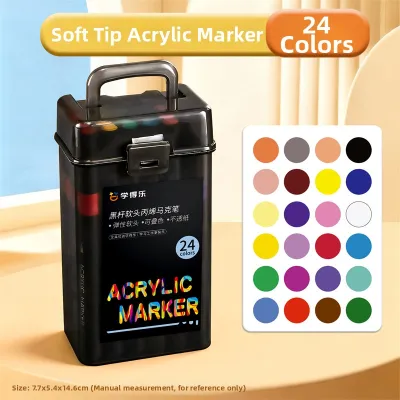
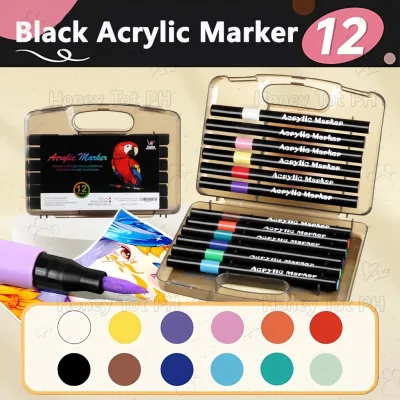
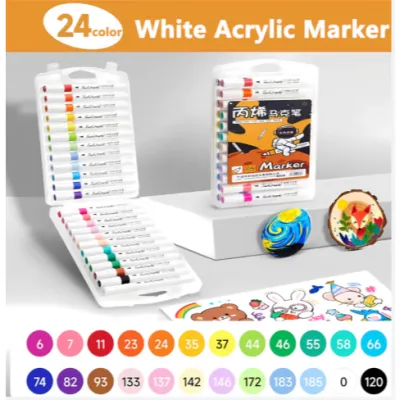
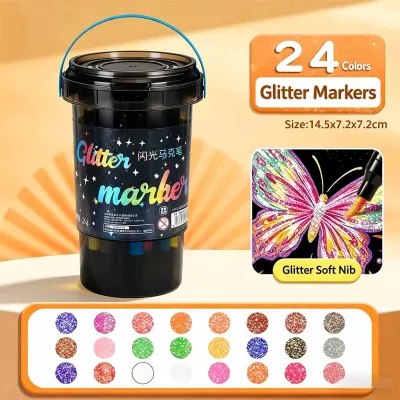
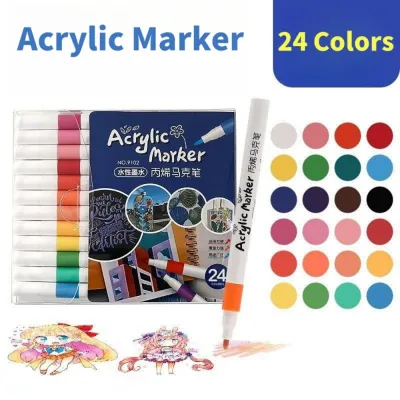
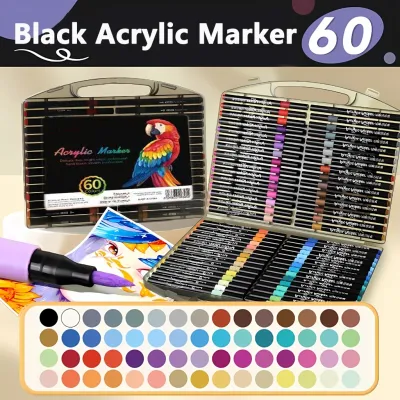
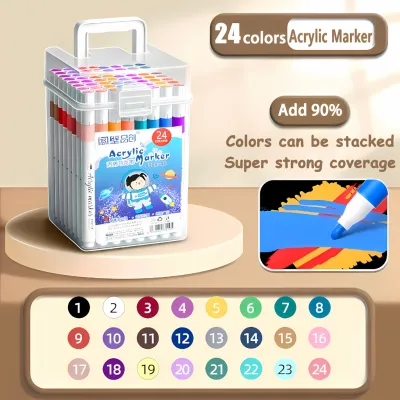
Prices are valid at publication and may change. Please refer to the product page for the latest price.
Water-based markers use water or a water-glycerin mix as the solvent. Water has a higher surface tension, meaning the ink tends to sit on top of the paper fibers rather than soaking through immediately. This makes water-based markers much gentler on standard paper, such as the pages of a bullet journal, a planner, or a standard coloring book.
To prevent bleed-through with alcohol markers, artists must use heavy, bleed-proof paper, often coated on the back, or cardstock weighing at least 200 gsm. Without this specialized medium, alcohol ink will bleed through multiple sheets, potentially ruining the pages underneath. When selecting a markers set colored pens, always verify your intended paper’s weight and sizing to ensure compatibility.
Blending, Layering, and Color Vibrancy
The blending capability of alcohol-based markers is their most celebrated feature. Because the alcohol solvent remains active for a short window, applying a second color next to or over a wet first color allows the solvents to mix. This dissolves the boundaries between the pigments, creating smooth, streak-free gradients and flawless transitions.

Water-based markers behave differently when layered. Because water softens paper fibers, repeatedly coloring over the same area can cause the paper surface to pill, tear, or warp. Instead of blending smoothly, water-based inks tend to leave visible overlap lines, often referred to as watermarks, where one stroke dried before the next was applied.
The visual finish also differs between the two types. Alcohol inks dry to a flat, matte, and highly vibrant finish that mimics printed graphics. Water-based inks can dry with slight variations in tone, sometimes appearing darker where the ink pooled. To achieve smooth gradients with water-based markers, artists often rely on specialized techniques, such as using a water brush to spread the pigment or working quickly on damp watercolor paper.
Drying Time, Smudge Resistance, and Odor
Drying time is a critical factor for workflow efficiency, particularly in humid environments. Alcohol-based inks dry almost instantly upon contact with the page. This rapid evaporation minimizes the risk of accidental smudging, making them highly favored by left-handed artists who must drag their hands across recently colored areas.
Water-based inks require more patience. Depending on the ambient humidity and the thickness of the application, water-based markers can take several seconds to a few minutes to dry completely. During this window, the wet ink is highly susceptible to smudging if touched or if a fine-line pen is drawn over it.
Odor and ventilation represent a major trade-off between the two types. Alcohol markers emit a distinct, sharp chemical smell from the evaporating solvents. Working with them for extended periods in a small, air-conditioned room without airflow can cause discomfort, meaning you must ensure adequate ventilation. Water-based markers, on the other hand, are virtually odorless and non-toxic, making them the preferred choice for classroom settings, family activities, and cozy indoor workspaces.
Matching the Marker Type to Your Creative Needs
To make an informed decision, you must align the marker’s properties with your specific projects. Choose alcohol-based markers if your primary focus is professional illustration, manga drawing, product design, or realistic portraiture. They are also the correct choice if you need to color on non-porous surfaces like plastics, metal, or glossy cardstock, where water-based inks would simply bead up and slide off.
Choose water-based markers if your creative outlet involves bullet journaling, hand lettering, calligraphy, or casual coloring books. Because they do not bleed through standard paper, they are perfect for double-sided journal pages. They are also the ideal option for children’s art projects, as they wash out of most fabrics easily and do not produce strong chemical fumes.
It is important to note that neither type may fit your needs if you require highly opaque, light-colored coverage over dark paper or textured surfaces. In such cases, neither alcohol nor water-based dye inks will perform well, as they are inherently translucent. For those specific applications, you should verify paint-based or acrylic markers instead, which lay down an opaque layer of pigment that sits entirely on top of the surface.
What to Check Before Buying a Colored Marker Set
Before investing your budget—whether spending ₱500 on a starter set or upwards of ₱3,000 on a professional collection—you should evaluate several physical specifications. First, examine the nib configuration. Dual-tip markers, which typically feature a flexible brush tip on one end and a broad chisel or fine bullet tip on the other, offer the greatest versatility. Check if the manufacturer sells replacement nibs, as worn-out tips can ruin an otherwise perfectly functional marker.
Second, consider ink capacity and refillability. High-quality marker brands often sell separate ink refill bottles. Purchasing refills is highly cost-effective over time and significantly reduces plastic waste, turning your initial purchase into a long-term creative investment.
Third, review the color range and lightfastness ratings. Ensure the set you choose contains the specific color families required for your work, such as a wide selection of gray tones for industrial design or soft skin tones for character illustration. If you plan to display or sell your physical artwork, check the packaging for lightfastness ratings to ensure the colors will not fade rapidly when exposed to ambient light.
Finally, verify the storage requirements of the set. Many dual-tip markers must be stored horizontally to ensure an even distribution of ink to both ends. Storing them vertically can cause the ink to pool at the bottom tip, leaving the top tip dry and unusable.
Frequently Asked Questions (FAQ)
Can I use alcohol and water-based markers together on the same page?
Yes, you can combine both types on a single piece of paper, but the order of application is critical. Always apply your water-based markers first and allow the ink to dry completely before layering alcohol-based markers on top. Because water-based ink sits on the paper surface, the alcohol solvent can glide over it without reactivating the water-soluble pigments. If you attempt the reverse—applying water-based ink over a fresh layer of alcohol ink—the water-based ink will often bead up, resist adhesion, or create muddy, unpredictable textures.
How do I revive a dried-out colored marker?
The revival method depends entirely on the solvent base of the marker. For water-based markers, you can often restore ink flow by adding a few drops of distilled water directly to the nib or dipping the tip quickly into water, then storing the marker tip-down in a sealed container overnight. For alcohol-based markers, water will permanently ruin the ink chemistry, causing the pigments to separate. Instead, you must use a few drops of the manufacturer’s specific colorless blending solution or high-percentage isopropyl alcohol applied directly to the nib to re-solubilize the dried dyes.

Community discussion
Share your experience or ask a question. Comments are reviewed before publication.