
Choosing the right color marker set depends entirely on your project requirements and the paper you plan to use. If your goal is to create professional illustrations, seamless gradients, and rich, streak-free art, alcohol-based markers are your best option. On the other hand, if you are focusing on bullet journaling, everyday writing, school projects, or working on standard notebook paper, water-based markers are much more practical.
To make the right choice, you need to evaluate three core dimensions: paper compatibility, blending capabilities, and safety or odor constraints. Understanding how these factors interact with your creative habits will prevent ruined pages and help you get the most value out of your stationery investment.
Core Differences in Ink Composition and Behavior
At the heart of the comparison is the solvent used to carry the colorant. Alcohol-based markers use fast-evaporating alcohol as their primary carrier. This chemical makeup allows the ink to dry almost instantly upon contact with the page. In tropical climates like the Philippines, where high humidity can slow down the drying process of other mediums, the rapid evaporation of alcohol markers remains highly reliable. However, this quick evaporation releases distinct chemical fumes, which can be strong or irritating in enclosed spaces.
Products mentioned in this guide
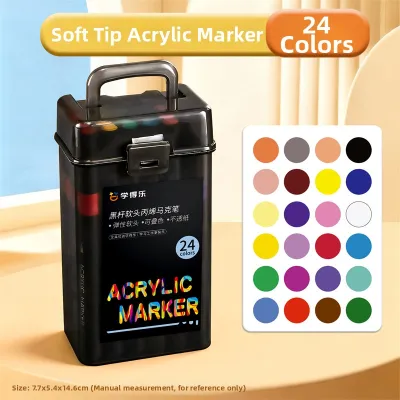
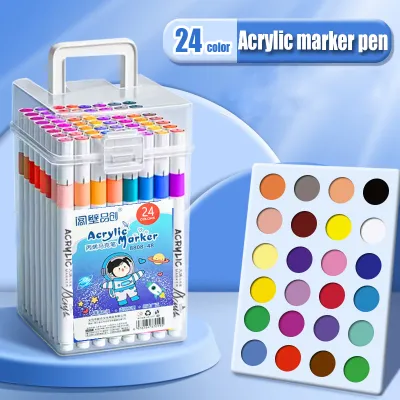
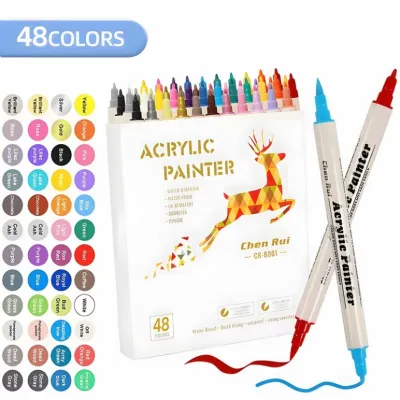
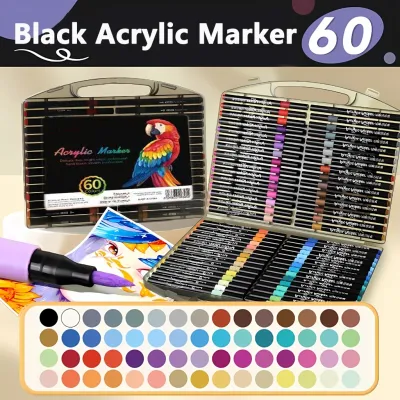
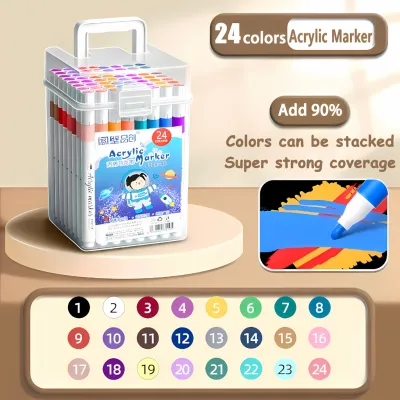
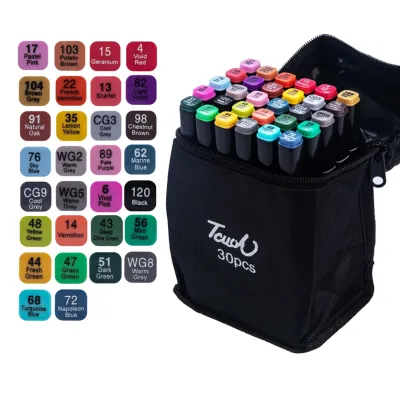
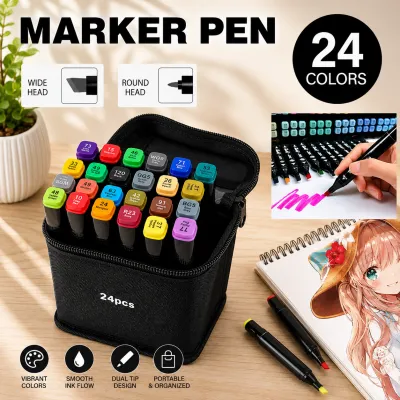
Prices are valid at publication and may change. Please refer to the product page for the latest price.
Water-based markers rely on water, sometimes mixed with glycerin or acid-free binders, to distribute the ink. Because water evaporates much slower than alcohol, these markers have a longer drying time, which can be further extended on humid days. The major advantage of this composition is that it is virtually odorless, making it highly comfortable for long drawing sessions in small, air-conditioned rooms.
The visual finish of these two ink types also differs significantly once dry. Alcohol inks typically dry to a very flat, highly saturated, and matte finish, leaving no visible stroke marks if applied correctly. Water-based inks, conversely, can sometimes leave visible overlapping lines or “streaks” where the wet ink layers over dry ink, occasionally resulting in a slightly uneven or chalky appearance.
Because exact drying times, odor intensity, and final finishes vary widely across different brands and formulations, it is always wise to verify these traits. Checking product labels for solvent details and performing a quick swatch test on your preferred paper will give you the most accurate expectation of how the ink behaves.
Paper Compatibility and Bleed-Through
How each ink type interacts with paper fibers is a critical factor in protecting your work. Alcohol-based inks are highly fluid and designed to sink deep into paper fibers to allow for smooth color transitions. This deep penetration means they have a very high risk of bleeding through to the back of the page, and often onto the surface underneath. To use them successfully, you must pair them with specialized, bleed-proof marker paper or heavy cardstock.

Water-based inks behave differently by sitting primarily on top of the paper fibers rather than soaking completely through them. While this means they are much less likely to bleed through to the reverse side of your page, the water content can easily saturate and weaken standard paper. If you apply multiple layers of water-based ink on thin paper, the surface can buckle, warp, or begin “pilling”—a frustrating process where the paper fibers rub off into tiny clumps.
To avoid ruining your sketchbooks, you must match your color marker set to the correct paper weight and coating. For alcohol markers, look for coated marker pads (often around 70 to 150 gsm with a special barrier backing) or heavy mixed-media paper. For water-based markers, smooth, heavy cardstock or watercolor paper works best to absorb the moisture without warping or tearing.
Before committing to a full-page illustration, always check the manufacturer’s paper recommendations on the packaging. Performing a quick, hidden corner test on a scrap piece of your chosen paper is the safest way to verify bleed-through and warping risks before you begin.
Blending, Layering, and Color Vibrancy
If your projects require advanced color manipulation, understanding how these inks blend and layer is essential. Alcohol markers are celebrated for their superior blending capabilities. Because the alcohol solvent temporarily re-wets the underlying dry ink without damaging the paper, you can easily merge two colors to create seamless, professional-looking gradients and soft transitions.
Water-based markers are much more challenging to blend smoothly. Attempting to blend them often requires adding more water-based ink to the page, which quickly overworks the paper. This can lead to harsh, distinct edges where your strokes overlap, and can easily damage the paper surface if you try to force a smooth transition.
Layering limits also differ between the two types. With water-based markers, adding a new layer of ink can reactivate and lift the dry pigment underneath, which can muddy your colors or erase fine details. Alcohol markers layer beautifully, allowing you to build up depth and shadows gradually, though you must be careful not to over-apply the ink, as saturating the paper completely can cause the colors to spread or turn muddy.
It is important to remember that terms like “smoothness” and “vibrancy” are highly subjective and depend heavily on the quality of the ink and the type of nib. A flexible brush nib allows for delicate blending and varied line weights, while a rigid chisel nib is better for filling in large, flat areas. Relying on personal swatch tests rather than marketing claims will help you find the exact performance you need.
Ideal Use Cases: Art, Journaling, and Schoolwork
Mapping the technical traits of these markers to your daily activities makes the selection process straightforward. For professional art, illustration, manga, and architectural rendering, an alcohol-based color marker set is the industry standard. The ability to render smooth skin tones, realistic shadows, and streak-free backgrounds is unmatched, making them indispensable for serious artists.
For journaling, planners, and everyday writing, water-based markers are almost always the better choice. Since journal and planner pages are typically thin, water-based ink allows you to color-code, draw, and write without the fear of ruining the notes on the opposite side of the page. They are also excellent for hand-lettering and calligraphy, as many water-based brush pens offer excellent tip bounce and control.
When it comes to schoolwork, kids’ crafts, and classroom activities, water-based options are highly preferred for safety and convenience. They are generally washable from skin and most fabrics, saving parents and teachers from permanent stains. Furthermore, look for water-based sets that carry non-toxic certifications, such as the ACMI AP (Approved Product) seal, which ensures they are safe for children and comfortable to use in enclosed classrooms.
How to Choose the Right Color Marker Set
To finalize your decision, use this conditional framework to match your creative needs, budget, and workspace to the right color marker set.
Choose Alcohol-Based If…
- Your primary goal is professional illustration, character design, or creating smooth, seamless color gradients.
- You are prepared to invest in specialized, heavy, or bleed-proof paper to support the ink.
- You have a well-ventilated workspace or do not mind the distinct chemical odor of alcohol solvents.
Choose Water-Based If…
- You are using the markers for bullet journaling, planners, hand-lettering, or double-sided notebook pages.
- The markers will be used by children, in classrooms, or in small, unventilated rooms.
- You require easy clean-up, washable ink, and a completely odorless drawing experience.
Verify First If…
- Before purchasing a large, expensive color marker set—which can easily cost ₱1,000 or more—verify if the brand offers replaceable nibs and ink refills. This check ensures your investment lasts for years rather than drying out permanently.
- Check the product packaging for specific safety certifications, especially if the markers are intended for young students or prolonged body contact.
If you are still undecided, avoid buying a massive color marker set right away. Instead, start with a small, budget-friendly test set of 6 to 12 primary colors. This allows you to evaluate the ink behavior, paper compatibility, and nib comfort firsthand before making a larger financial commitment.
Frequently Asked Questions (FAQ)
Can I use alcohol and water-based markers together on the same page?
Yes, you can combine them, but the order of application is critical. You should always apply your alcohol-based markers first to establish your base colors and smooth gradients. Once the alcohol ink is completely dry, you can use water-based markers on top for fine details, outlines, or highlights. If you try to apply alcohol markers over water-based ink, the alcohol solvent can dissolve and smear the water-based pigment underneath, which can ruin your marker nibs and muddy your artwork. Always test your specific combination on a scrap piece of paper first to ensure compatibility.
How should I store my color marker sets to prevent them from drying out?
To maximize the lifespan of your color marker set, always store dual-tip markers horizontally. Storing them vertically causes gravity to pull the ink to one end, leaving one nib dry and the other oversaturated. Keeping them flat ensures an even ink flow to both tips. Additionally, always press the caps firmly until you hear a distinct click to prevent the solvent or water from evaporating. If a marker does dry out, reviving it depends entirely on the solvent type; follow the manufacturer’s specific care instructions, as using the wrong reviving agent can permanently ruin the ink formulation.

Community discussion
Share your experience or ask a question. Comments are reviewed before publication.