
Deli twistable crayons are a highly practical and smart choice for school art classes, particularly for primary and intermediate students who need a clean, reliable, and low-maintenance coloring tool. By enclosing a wax core within a protective, mechanical plastic barrel, these tools address the most common frustrations associated with traditional crayons, such as frequent breakage, messy paper wrappers, and wax transfer to hands and clothing. For parents and educators looking to optimize classroom time and keep student supplies organized, these twistable options offer an efficient balance of durability and ease of use.
In tropical environments where high humidity and warm temperatures can soften traditional wax, a protective casing becomes even more valuable. This structural shield helps maintain the integrity of the crayon, preventing it from bending or melting during storage in a school bag. Evaluating how these tools align with classroom needs involves looking closely at their physical design, practical advantages, inherent limitations, and the specific requirements of the school curriculum.
Evaluating Core Design for Classroom Needs
The physical construction of a twistable crayon directly influences how well it survives the daily rigors of a school environment. Traditional wax crayons are notoriously fragile, often snapping in half during their first week of use when dropped from a desk or subjected to heavy-handed pressure. A twistable crayon addresses this vulnerability through a rigid plastic outer barrel. This casing acts as a protective exoskeleton, absorbing the impact of accidental drops onto hard classroom floors and preventing the inner wax core from breaking into unusable fragments.
Products mentioned in this guide
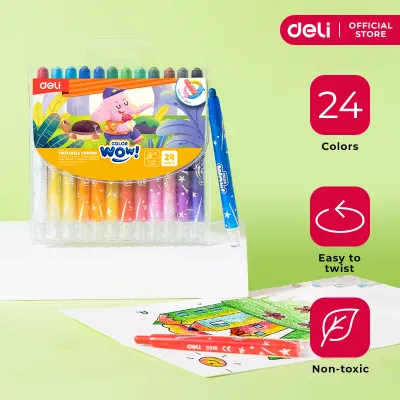
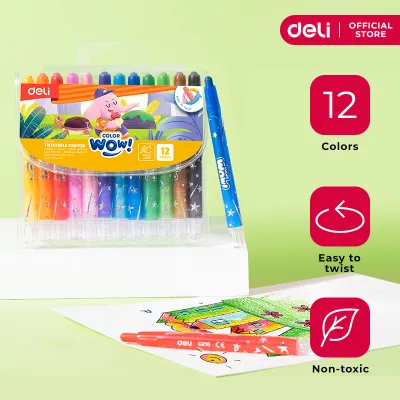
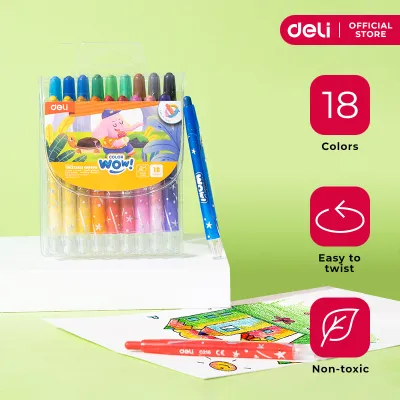
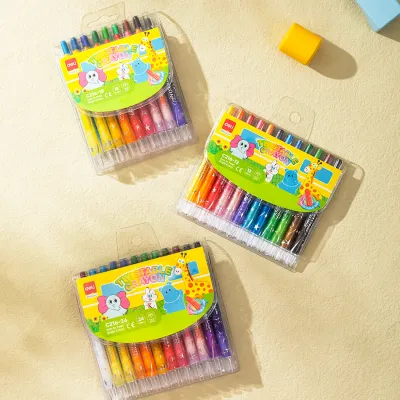
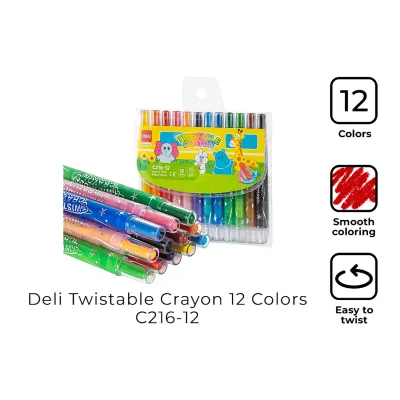
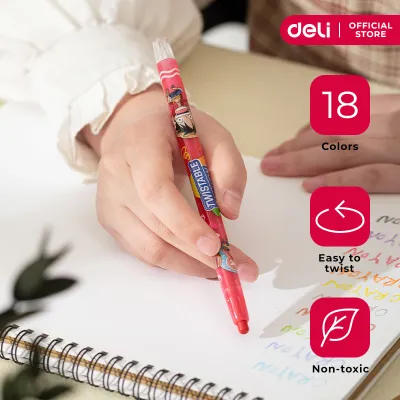
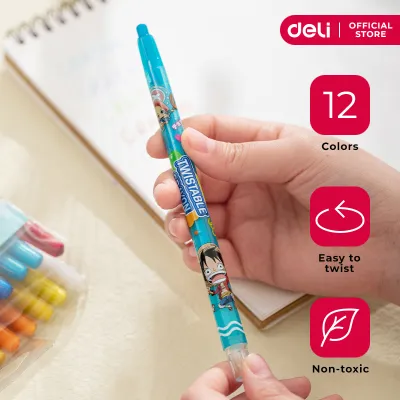
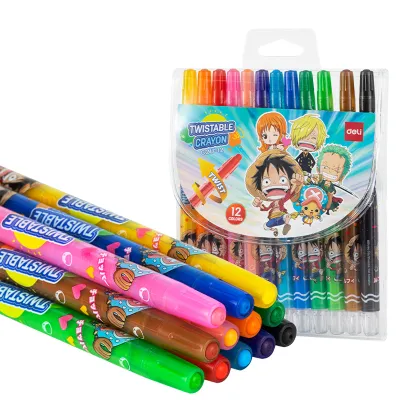
Prices are valid at publication and may change. Please refer to the product page for the latest price.
The mechanical twist function operates via a simple rotary mechanism at the base of the barrel. By turning this mechanism, the student can advance the wax core as it wears down, or retract it back into the casing when the art lesson is over. This control allows students to expose only a small portion of the wax tip at a time, which significantly reduces the leverage that causes traditional crayons to snap under pressure. The smooth operation of this mechanism is essential, as a stiff or poorly aligned track can frustrate younger children who lack the hand strength to adjust their tools independently.
Beyond the mechanical housing, the composition of the wax core itself determines the quality of the coloring experience. School-grade twistable crayons typically utilize a formulated wax blend that balances hardness with color deposition. If the wax is too hard, the color payoff on paper will be faint, forcing the student to apply excessive pressure that can strain their hand or tear the paper. Conversely, if the wax is too soft, it will wear down rapidly, leave thick clumps on the page, and smudge easily under a student’s sleeve. Observing how the crayon glides across standard school drawing paper can help you assess whether the wax formulation provides a smooth, consistent laydown without requiring excessive effort.
The physical dimensions of the barrel also play a critical role in usability, particularly concerning the developmental stage of the student. Standard twistable crayons are generally thicker and longer than traditional unwrapped crayons, closely resembling the profile of a standard pen or marker. This larger size can be highly beneficial for younger students who are still transitioning from a palmar grasp to a mature tripod grasp. The thicker barrel provides a more substantial surface area to hold, reducing hand fatigue during extended coloring sessions. For older students, the familiar pen-like shape offers a sense of precision and control that traditional, stubby crayons often fail to provide.
In warm, tropical classrooms where air conditioning may not always be present or fully active, students’ hands can easily become sweaty. A smooth plastic barrel can sometimes become slippery, making it harder to maintain a steady grip. Some twistable crayons feature textured grip zones or ribbed patterns near the tip to mitigate this issue. Checking for these small design details can make a significant difference in a student’s comfort during long art sessions.
Everyday Advantages for Students and Teachers
In an active classroom setting, time is a precious commodity, and supply maintenance can quickly eat into valuable instructional minutes. One of the most immediate advantages of twistable crayons is the complete elimination of the need for sharpening. Traditional colored pencils and standard crayons require frequent maintenance to keep a usable tip, leading to constant interruptions as students line up at the pencil sharpener or trash bin. With twistable crayons, a simple twist keeps the drawing tip ready for action, allowing students to remain focused on their art projects and enabling teachers to maintain a structured, uninterrupted lesson flow.

The reduction of classroom mess is another significant benefit that appeals to both teachers and parents. Traditional crayons are wrapped in paper that students tend to peel off as the crayon wears down, leaving a trail of shredded paper scraps across desks and floors. Furthermore, bare wax crayons easily transfer color to the student’s fingers, which then spreads to their clothes, school bags, and other schoolwork. Because the wax core of a twistable crayon is fully enclosed, the student’s hands only make contact with the clean plastic barrel. This design keeps fingers clean and prevents the accidental transfer of wax to desks, uniforms, and adjacent pages in their sketchbooks.
Portability and storage efficiency are also crucial factors for students who must carry their supplies between home and school. School bags can become incredibly crowded, and loose art supplies are easily damaged or lost. Many twistable crayon sets are designed with secure, snap-on caps that protect the wax tip when not in use. This prevents the wax from rubbing against other stationery items inside a pencil case. Additionally, the uniform shape of the plastic barrels allows them to be packed neatly into compact cases, making them much easier to organize and transport than an assortment of irregular, broken traditional crayon pieces.
In tropical climates, environmental factors like high humidity and elevated temperatures present unique challenges for wax-based art supplies. Traditional wax crayons can become soft, sticky, or even melt slightly if left in a warm classroom or a backpack during the hotter months. The plastic barrel of a twistable crayon provides a physical barrier that helps contain the wax, preventing it from fusing with neighboring crayons or leaving greasy stains on fabric and paper. While they should still be kept away from direct heat, the mechanical housing offers an extra layer of defense against climate-induced damage.
From a financial perspective, parents often weigh the initial purchase price against the long-term value of school supplies. While a basic box of traditional wax crayons is highly affordable, their high rate of breakage means they often need to be replaced multiple times throughout the school year. A quality set of twistable crayons, typically priced between ₱150 and ₱250 depending on the color count, represents a slightly higher upfront investment. However, because the protective casing prevents breakage and extends the usable life of each crayon, a single set can often last the entire school year, making it a highly cost-effective choice in the long run.
Understanding Limitations Before You Buy
While twistable crayons offer numerous practical advantages for general classroom use, they do have specific functional limitations that may affect their suitability for advanced art projects. The wax formulation used in these crayons is generally harder than that found in professional-grade soft pastels or premium artist crayons. This hardness, while beneficial for durability and cleanliness, makes complex artistic techniques like smooth color blending, heavy layering, and gradient transitions more difficult to achieve. Students attempting to build up multiple layers of color may find that the wax resists adhering to itself after a certain point, resulting in a slick surface that slides rather than blends.
Paper compatibility is another important consideration when integrating twistable crayons into an art curriculum. These tools perform best on standard, uncoated paper surfaces with a moderate amount of texture, such as sketchpad paper, construction paper, or standard copy paper. However, on highly textured watercolor papers, the wax may only coat the raised ridges, leaving white gaps in the valleys of the paper texture. Conversely, on glossy or heavily coated surfaces, the wax core may struggle to grip the paper at all, leading to faint color payoff or excessive smudging. Understanding these material interactions helps set realistic expectations for different art assignments.
The mechanical nature of the plastic barrel also introduces a potential point of failure that does not exist with solid wax crayons. If a student over-twists the mechanism, forces the core past its intended limit, or drops the crayon while the wax is fully extended, the internal tracking system can become damaged or stripped. Once the mechanism is broken, it may no longer be possible to advance or retract the wax core, rendering the crayon difficult or impossible to use. Furthermore, unlike mechanical pencils which support standardized lead refills, twistable crayons are almost universally designed as single-use items. Once the wax core is completely depleted, the entire plastic barrel must be discarded, which may be a drawback for environmentally conscious families or those looking for a long-term, refillable solution.
The plastic construction of twistable crayons introduces an environmental trade-off. Traditional crayons are biodegradable and wrapped in simple paper, whereas twistable crayons rely on single-use plastic barrels that contribute to plastic waste once the wax is depleted. While some schools and communities have specialized recycling programs for stationery items, many of these barrels end up in landfills. Families looking to minimize their environmental footprint should weigh this factor, perhaps balancing the use of twistables for school with more eco-friendly options for home use.
Selecting the Right Set for Your Art Toolkit
Choosing the right configuration of twistable crayons depends largely on the student’s grade level, the specific requirements of their school’s art curriculum, and their daily storage needs. These crayons are commonly available in various set sizes, typically ranging from 12 to 36 colors. For younger students in early primary grades, a basic 12-pack is often the most practical choice. It provides all the primary and secondary colors needed for fundamental color recognition and simple drawing exercises without adding unnecessary weight or bulk to their school bag. For older students in intermediate grades, a 24 or 36-pack offers a wider spectrum of shades, allowing for more creative expression, basic shading, and realistic color representation in their school projects.
The type of packaging is another critical factor that influences the longevity and organization of the art set. Many budget-friendly options are packaged in simple cardboard boxes, which tend to tear, crush, and deteriorate quickly under the daily wear and tear of a student’s backpack. Once the box fails, loose crayons are easily lost or damaged. Opting for sets packaged in rigid plastic cases, snap-close pouches, or slide-out trays is highly recommended. These durable containers keep the crayons organized in their designated slots, protect them from external pressure inside a school bag, and are easy to wipe clean if any wax residue accumulates over time.
Finally, safety should always be a primary consideration when selecting art supplies for children. Parents and educators should carefully inspect the product packaging for recognized safety certifications and non-toxic labels. Look for standards such as ASTM D-4236 or EN71, which indicate that the materials have been evaluated and deemed safe for children’s use. It is also important to check the manufacturer’s recommended age rating, as the small plastic caps on twistable crayons can pose a choking hazard for very young children. Ensuring that the selected set aligns with these safety guidelines provides peace of mind while fostering a creative and worry-free learning environment.
Before sending a new set of twistable crayons to school, it is highly recommended to perform a quick quality check at home. Gently twist each crayon to ensure the mechanism advances and retracts smoothly without sticking or slipping. Check that the wax core is securely anchored inside the internal cup and does not wobble or fall out when extended. This simple verification step prevents students from encountering frustrating supply failures during a timed art class and ensures they have fully functional tools ready for their projects.
Frequently Asked Questions (FAQ)
Can twistable crayon wax cores be replaced once they run out?
Most standard twistable crayons are designed as single-use mechanical units rather than refillable systems. You should check the manufacturer’s packaging or official product specifications to verify if a specific model supports refills. In most cases, sourcing individual wax refills is not widely supported or cost-effective compared to purchasing a new set. For typical school use, treating the crayons as complete, disposable units is the standard practice, making it important to monitor usage and replace the set when the majority of the core colors are depleted.
Are twistable crayons suitable for detailed drawing and fine lines?
Because twistable crayons have a fixed core diameter, they are less suited for extremely fine lines or intricate detailing compared to sharpened colored pencils or fine-tip markers. However, students can achieve finer details by using the edge of the wax tip when it is relatively new or by rotating the crayon during use to maintain a slight bevel on the tip. It is important to instruct students not to apply excessive pressure to force a fine line, as this can damage the mechanical barrel or cause the wax core to break.
How should students store twistable crayons to prevent melting or damage?
Wax-based art supplies are sensitive to temperature and should be stored in a cool, dry place away from direct sunlight, hot windows, or parked vehicles. In warm climates, keeping the crayons inside a standard school bag stored in a shaded classroom is usually sufficient, provided they are not exposed to direct heat sources. Always ensure that the caps are securely clicked into place after use and that the wax cores are fully retracted. This prevents the wax from sticking to the inside of the cap or jamming the twist mechanism during transport.

Community discussion
Share your experience or ask a question. Comments are reviewed before publication.