
When signing a crucial contract, a land title, or a notarized deed in the Philippines, the choice of writing instrument directly impacts both the immediate presentation and the long-term validity of your signature. The core difference lies in the ink formulation and delivery: a traditional ballpen uses a thick, oil-based paste ink that resists water and dries instantly, while a sign pen typically utilizes a fluid, water-based or liquid ink that delivers a bold, dark line with minimal hand pressure. Choosing between them requires balancing the visual authority of a dark, smooth signature against the practical demands of paper compatibility, drying speed, and environmental resistance.
Core Functional Differences Between Ballpens and Sign Pens
To make an informed choice, you must first understand the mechanical and chemical differences that define these two writing instruments. A standard ballpen relies on a tiny, rotating ball made of brass, steel, or tungsten carbide housed in a tight socket. As you write, this ball rolls across the paper, transferring a highly viscous, oil-based paste ink from the reservoir. Because this ink is thick and greasy, it requires physical friction and downward pressure to flow smoothly, but it adheres tenaciously to almost any dry surface.
In contrast, a sign pen—often categorized as a rollerball or a fine-line fiber-tip pen—uses a highly fluid, low-viscosity ink that is typically water-based or glycol-based. The delivery mechanism is designed to let the ink flow freely via capillary action, requiring almost no downward pressure to leave a mark. This fluid ink quickly saturates the paper fibers, creating a deeply saturated line that looks exceptionally bold. However, this high fluidity also means the ink behaves very differently depending on the texture and porosity of the paper you are signing.
Products mentioned in this guide
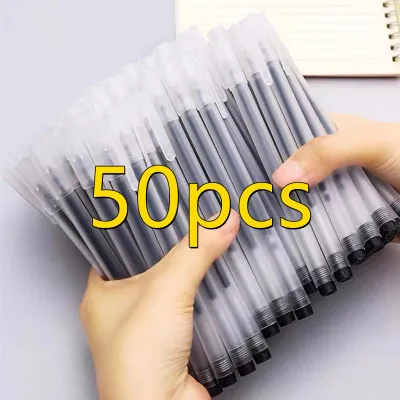

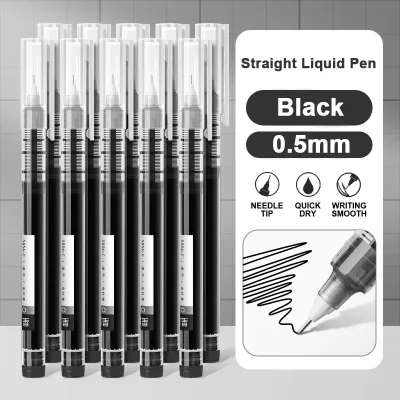
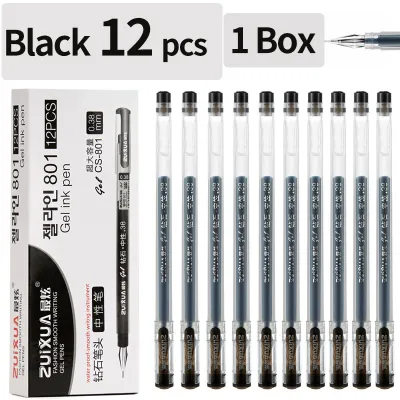
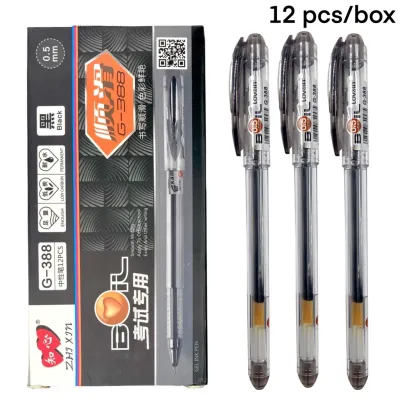
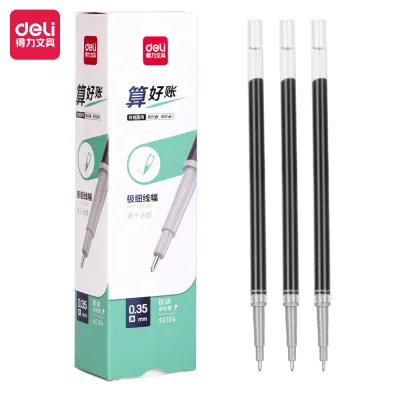
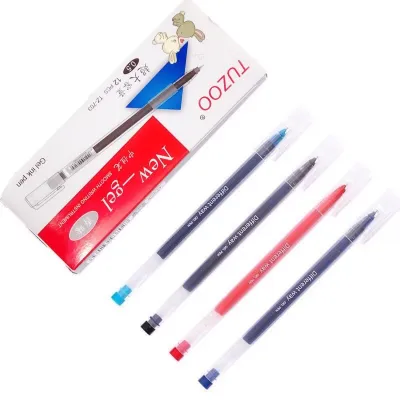
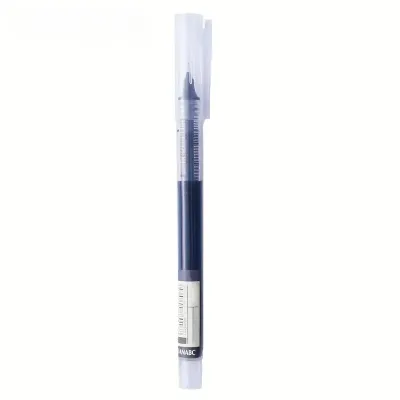
Prices are valid at publication and may change. Please refer to the product page for the latest price.
When writing on standard office paper, the porous fibers act like a sponge for the fluid ink of a sign pen, pulling it deep into the page. While this creates a highly visible signature, it can also lead to feathering if the paper quality is low or if the ambient humidity is high. A ballpen, with its thick paste ink, sits primarily on the surface of the paper fibers, bonding through pressure rather than deep absorption. This makes the ballpen far more forgiving on cheap, highly porous, or slightly damp paper.
When shopping for a document pen, it is essential to check the manufacturer’s specifications on the packaging. Look for terms like “oil-based ink” or “ballpoint” to ensure you are getting a traditional ballpen. For sign pens, look for labels indicating “liquid ink,” “rollerball,” or “water-based pigment.” Understanding these terms helps you avoid buying a pen that might perform unpredictably on important legal documents.
Signature Appearance and Professionalism on Paper
The visual impact of your signature carries significant weight on official documents, and the two pen types produce vastly different aesthetic results. A sign pen is widely favored for executive signatures because it offers unparalleled line consistency and a rich, opaque color. Because the fluid ink flows continuously, your signature maintains a uniform thickness and deep contrast from the first stroke to the last, even during rapid, sweeping hand motions. This bold appearance projects confidence and makes the signature highly legible.

A ballpen, on the other hand, can sometimes struggle with consistency during fast or deliberate signing motions. Because the thick paste ink relies on the physical rotation of the ball, rapid directional changes can cause temporary skipping, leaving faint or broken lines in your signature. Furthermore, ballpens are prone to blobbing, where excess paste ink accumulates around the metal collar of the tip and suddenly deposits as a dark smudge on the paper. These smudges can look untidy and detract from the professional appearance of a formal document.
The choice of pen also affects how well your signature stands up to modern digital archiving. Official forms, bank checks, and government applications are almost always scanned or photocopied for digital storage. A sign pen signature, with its high contrast and deep opacity, scans beautifully, maintaining sharp edges and clear definition. A ballpen signature, particularly one written with a fine-point tip, can appear faint, gray, or broken under a scanner, which may raise legibility issues during administrative reviews.
However, the physical condition of the paper plays a critical role in this visual outcome. In the tropical climate of the Philippines, paper stored in non-air-conditioned offices often absorbs ambient moisture, becoming slightly damp. When you sign damp paper with a fluid sign pen, the water-based ink can feather, spreading outward along the wet fibers and making your signature look blurry or fuzzy. A ballpen is unaffected by this moisture, maintaining a clean, sharp line even on humid days.
Archival Quality and Document Longevity
For documents that must be preserved for decades, such as land titles, marriage certificates, or long-term contracts, archival quality is a paramount consideration. The primary threat to a signature over time is environmental degradation, specifically exposure to ultraviolet (UV) light, ambient moisture, and heat. Standard dye-based liquid inks, which are common in cheaper sign pens, are highly susceptible to fading when exposed to light, meaning your signature could virtually disappear over several years if the document is stored in a brightly lit area.
Water resistance is another critical factor, especially in tropical regions prone to high humidity, heavy rains, and accidental spills. If a document signed with a standard water-based sign pen comes into contact with water, the ink can dissolve and run instantly, completely obliterating the signature. Oil-based ballpen ink is naturally hydrophobic, meaning it repels water. Even if a document is completely submerged, a ballpen signature will generally remain intact and legible, making it the superior choice for disaster-resilient record-keeping.
Beyond natural degradation, documents can also be targets for fraudulent alteration or signature washing, where criminals use solvents to erase signatures. Many standard liquid and gel inks can be easily dissolved with common household chemicals. To protect high-value documents, such as a check worth ₱100,000 or a property deed, you must verify that your pen uses fraud-resistant, archival-grade ink. These specialized inks contain microscopic pigments that bind permanently to the cellulose fibers of the paper, resisting both water and chemical solvents.
To guarantee that a pen is suitable for archival purposes, look for specific international standards on the packaging. For ballpoint pens, look for the ISO 12757-2 certification, which designates the ink as document-proof and resistant to light, water, and erasing. For rollerballs and sign pens, look for the ISO 14145-2 certification. If a pen does not explicitly state compliance with these standards or claim archival or document-proof properties, you should assume it is not safe for long-term legal documents.
Decision Framework: Choosing the Right Pen for Your Document
Selecting the right pen requires a systematic approach based on the specific requirements of the document and the signing environment. You should choose a ballpen if the document involves multi-part carbon copies, as the physical pressure required to roll the ball is necessary to transfer the writing to the underlying sheets. Ballpens are also the correct choice for signing on glossy, coated, or laminated papers, such as thermal paper receipts or plastic-coated ID cards, where fluid liquid ink would fail to dry and immediately smudge.
Conversely, you should choose a sign pen if your primary goal is to produce a bold, highly visible signature on high-quality, matte bond paper. Sign pens are also highly recommended for individuals who must sign large volumes of documents in a single session, such as corporate secretaries, lawyers, or notary publics. Because the fluid ink flows effortlessly, it minimizes hand fatigue and cramping, allowing you to maintain a consistent, professional signature across dozens of pages.
Before making your final choice, you must verify if the receiving institution, notary, or government agency mandates a specific ink color or pen type. In the Philippines, many banks and government offices strictly require signatures to be in blue ink to easily distinguish the original document from a black-and-white photocopy. Some agencies may also specify “ballpen only” on their forms to prevent the smudging and bleeding associated with cheap liquid ink pens during high-speed scanning processes.
Ultimately, the decision comes down to balancing presentation with security. For everyday administrative tasks, internal office memos, and certificates where visual impact is key, a high-quality sign pen is excellent. For high-stakes legal agreements, bank checks, and permanent public records where longevity and water resistance are non-negotiable, a certified archival ballpen remains the safest and most reliable choice.
Pre-Signing Verification and Testing Checklist
Never apply a final signature to an important document without performing a quick pre-signing test. Start by obtaining a scrap piece of the exact same paper stock as the document, or use an inconspicuous margin on the document itself if no scrap is available. Write a few test strokes to check the ink flow, opacity, and drying time. This is especially important in humid conditions, where drying times can be significantly prolonged.
Next, check for ink bleed-through by turning the test paper over. If you are signing a double-sided document, a fluid sign pen may bleed through the page, obscuring the text on the reverse side and potentially invalidating the document. If you observe any bleed-through or heavy ghosting, switch to a ballpen immediately to preserve the legibility of both sides of the paper.
Finally, confirm that the ink color strictly matches the legal or institutional requirements of the transaction. Ensure the pen does not skip, leak, or leave blobs during the test. Taking two minutes to verify your pen’s performance prevents costly mistakes, ruined documents, and the administrative headache of having to reprint and re-sign official paperwork.
Frequently Asked Questions (FAQ)
Can I use a gel pen instead of a ballpen or sign pen for legal documents?
Gel pens occupy a middle ground, using a water-based gel that holds pigments smoothly. While they offer excellent contrast and a wide variety of colors, standard gel pens can be highly vulnerable to smudging if they do not dry completely, and some cheap gel inks are water-soluble. If you wish to use a gel pen for legal documents, you must verify that the packaging explicitly states it is archival, pigment-based, or document-proof. Additionally, always confirm that the receiving institution accepts gel ink, as some conservative banking and government systems still prefer traditional ballpoint signatures.
Why does my sign pen skip on certain official forms?
If your sign pen skips or fails to write on an official form, the issue is likely the paper’s surface treatment rather than the pen itself. Many high-quality certificates, government forms, and ID cards are treated with heavy sizing agents or glossy coatings to resist moisture and wear. Because sign pen ink is water-based, it cannot penetrate these slick coatings, causing the ink to bead up, skip, or pool on the surface. To resolve this, switch to a medium-point oil-based ballpen, which uses physical pressure and hydrophobic paste ink to cut through the coating and bond directly with the underlying paper.

Community discussion
Share your experience or ask a question. Comments are reviewed before publication.