
Choosing your first fountain pen can feel overwhelming, but focusing on a reliable brand makes the transition from standard ballpoints smooth and enjoyable. If you are looking for the best Pilot fountain pen to start your writing journey in the Philippines, the Pilot Kakuno stands out as the ultimate overall choice for students and casual writers due to its user-friendly ergonomic grip and specialized alignment indicators. For those who require a more formal aesthetic for office environments, the brass-bodied Pilot Metropolitan (MR) offers a sophisticated, durable alternative that writes beautifully right out of the box.
Your final decision should depend on where you plan to write, your preferred grip style, and the type of paper you use daily. Because fountain pen ink behaves differently than gel or ballpoint ink, matching the pen’s nib and design to your specific environment is key to avoiding common beginner frustrations like ink feathering or hand fatigue.
Why Pilot Is the Go-To Brand for First-Time Fountain Pen Users
Pilot has earned a global reputation for manufacturing some of the most consistent and reliable nibs in the stationery industry. Unlike many budget brands where quality control can be inconsistent, Pilot ensures that even their most affordable entry-level models deliver a smooth, skip-free writing experience immediately. This consistency is highly reassuring for beginners who might otherwise struggle to diagnose whether a poor writing experience is caused by their technique, the ink, or a defective pen.
Products mentioned in this guide
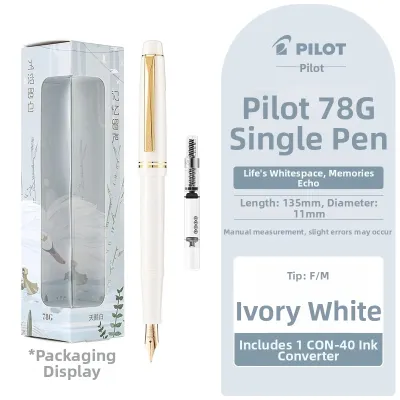
Prices are valid at publication and may change. Please refer to the product page for the latest price.
Another major advantage for writers in the Philippines is the exceptional local availability of Pilot’s proprietary refills and accessories. Standard Pilot ink cartridges and converters are widely stocked in major physical bookstores and authorized online stationery shops across the country. This widespread availability means you will not have to search obscure specialty sites or pay high international shipping fees just to keep your pen fueled.
Finally, Pilot offers an excellent balance of affordability and long-term durability. Transitioning to a fountain pen does not require a massive financial commitment. Pilot’s entry-level lineup provides premium writing performance at price points that are highly competitive with standard multi-packs of gel pens, making it a low-risk investment for students, hobbyists, and professionals alike.
Key Features to Check Before Buying Your First Pilot Pen
Before purchasing your first fountain pen, it is important to understand how different specifications will affect your daily writing, especially when dealing with local paper standards and tropical humidity.

Nib Size and Paper Compatibility
Japanese nib sizes run significantly finer than Western counterparts. A Pilot Fine (F) nib produces a very delicate line, while a Pilot Medium (M) is closer to a Western Fine.
For daily writing in the Philippines, where standard school intermediate pads, exam sheets, and office copy papers are often thin and highly absorbent, a Fine (F) or Medium-Fine nib is highly recommended. These finer tips deposit less ink onto the page, which drastically reduces the chances of feathering (ink spreading out like tiny branches) and bleed-through (ink showing through to the back of the page).
Filling Mechanisms: Cartridges vs. Converters
Fountain pens use either disposable ink cartridges or a reusable converter that draws bottled ink.
- Proprietary Cartridges: These are plastic tubes pre-filled with ink. They are incredibly convenient, completely mess-free, and perfect for students or professionals who need to replace ink quickly during a busy day. However, you are limited to Pilot's proprietary cartridge shape and standard color range.
- Converters: These are mechanical inserts that allow you to fill your pen from any brand of bottled fountain pen ink. This opening gives you access to thousands of custom ink colors. Pilot pens typically use either the CON-40 converter (a small rotary vacuum style) or the CON-70 converter (a larger, button-pump style). Always check which converter is compatible with your chosen pen body, as the larger CON-70 will not physically fit into slimmer models like the Metropolitan.
Grip Shape and Overall Weight
How a pen feels in your hand determines how long you can write without discomfort. Beginners often benefit from molded, ergonomic grip sections (such as triangular or hexagonal shapes) that naturally guide your fingers into the correct tripod writing stance.
Weight is another critical factor. Lightweight resin pens (weighing around 11 to 13 grams) are excellent for long, continuous note-taking sessions because they put minimal strain on your hand. Heavier metal-bodied pens (weighing 26 grams or more) provide a premium, stable feel that many writers prefer for short signatures or quick notes, though they can cause hand fatigue during marathon writing sessions in warm, humid weather.
Aesthetic and Environmental Fit
Consider where you will use the pen most often. A brightly colored, playful plastic pen is perfect for journaling at home or taking notes in a classroom, but it might look out of place in a corporate boardroom. Choosing a design that matches your daily environment ensures you will feel comfortable using your pen in public.
The Best Pilot Fountain Pens for Beginners: Top Picks
Each of Pilot’s entry-level models is designed with a specific user profile in mind. Below is a detailed breakdown of the most popular options available in the local market.
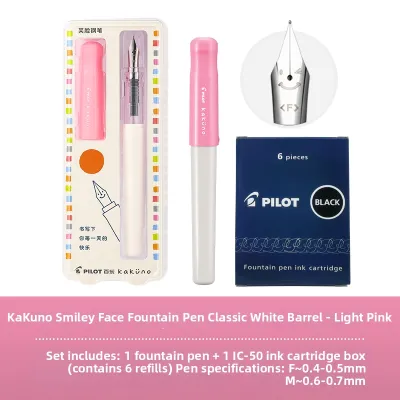
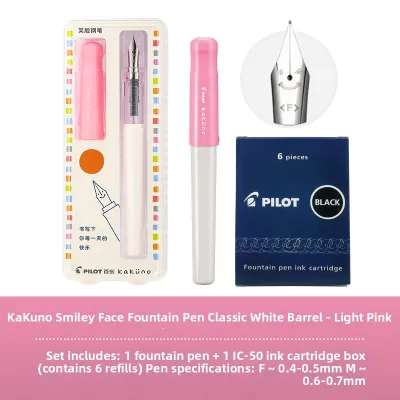
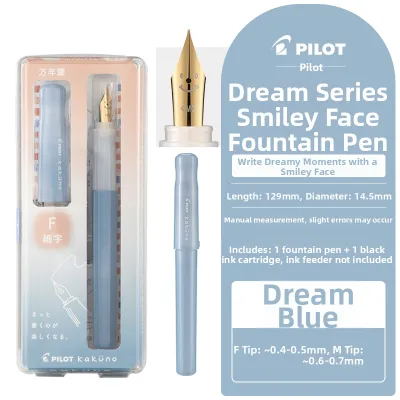
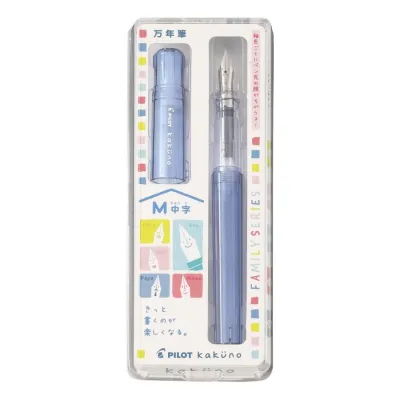
Pilot Kakuno: The Best for Students and Casual Writers
Designed originally to teach children and students how to write with a fountain pen, the Pilot Kakuno has become a favorite for writers of all ages.
- Why it works: The Kakuno features a subtle triangular grip section that naturally guides your thumb, index, and middle fingers into the ideal writing position. Additionally, the stainless steel nib is engraved with a cheerful "smiley face" designed to face upward during writing, providing an instant visual confirmation that you are holding the pen at the correct angle.
- Best for: Students, journalers, and anyone who wants a lightweight, comfortable pen for extended daily writing.
- Limitations: The playful, pastel, or transparent plastic design lacks a pocket clip, meaning it can easily roll off slanted desks if not placed carefully, and it may not fit the aesthetic of formal corporate environments. The cap also does not post (attach to the back of the pen) with a heavy mechanical click, though it stays in place reasonably well.
- Pre-purchase check: Ensure the package includes at least one black or blue-black Pilot cartridge. If you want to use bottled ink, verify that you purchase a compatible CON-40 or the high-capacity CON-70 converter separately.
Pilot Metropolitan (MR): The Best for Professionals and Office Use
Known in the Asian market primarily as the Pilot MR, this pen is widely considered the gold standard for budget-friendly executive writing instruments.
- Why it works: The Metropolitan features a durable brass barrel and cap, giving it a reassuring weight and a premium, high-end feel. It comes in a wide variety of elegant matte finishes, accented by stylish middle bands featuring animal prints or geometric patterns. The nib is exceptionally smooth and reliable, making it perfect for signing documents or taking meeting notes.
- Best for: Corporate professionals, office workers, and anyone who prefers a heavier, metal-bodied writing instrument.
- Limitations: The transition step between the metal barrel and the plastic grip section is quite pronounced; if you grip your pens very high up, this "step" might feel sharp or uncomfortable. Additionally, the heavier brass body can cause hand fatigue during long, multi-page writing sessions.
- Pre-purchase check: The Metropolitan does not fit the large CON-70 converter due to its tapered metal barrel. You must use standard Pilot cartridges or the smaller CON-40 converter. Note that some European versions of the MR use standard international cartridges, but the models sold by authorized retailers in the Philippines almost exclusively use proprietary Pilot fittings; always check the packaging to confirm.
Pilot Explorer: The Best Lightweight and Modern Option
If you want the modern, sleek look of a professional pen without the heavy weight of metal, the Pilot Explorer is an exceptional middle ground.
- Why it works: The Explorer is constructed from a lightweight resin finished with a matte, metallic-look coating. It features a modern, aerodynamic silhouette with a secure, deep-carrying pocket clip. Because it is incredibly light, it glides effortlessly across the page without straining your wrist.
- Best for: Writers who want a modern, professional-looking pen that is comfortable enough for hours of continuous note-taking.
- Limitations: The price point is slightly higher than the Kakuno. While the matte finish looks premium, the resin body can show scratches over time if carried loose in a bag alongside keys or metal items.
- Pre-purchase check: The Explorer has a spacious barrel that easily accommodates the large, push-button CON-70 converter. Check if your retailer offers a bundle that includes this converter, as its large ink capacity is highly beneficial for heavy writers.
Pilot Penmanship: The Best for Calligraphy and Handwriting Practice
For those who are specifically interested in drawing, fine detailing, or practicing precise handwriting styles, the Pilot Penmanship offers a unique, specialized design.
- Why it works: The Penmanship features an elongated, desk-pen style body with a highly pronounced ergonomic grip. It is famous for its Extra Fine (EF) steel nib, which writes an incredibly thin, crisp line. This allows for absolute precision when practicing cursive, architectural lettering, or detailed sketching.
- Best for: Calligraphy beginners, artists, and individuals who want to practice deliberate, controlled handwriting.
- Limitations: The ultra-fine nib can feel somewhat scratchy on rough or low-quality paper due to the incredibly small surface area of the tip. The long, tapered tail of the pen also makes it impractical to carry in standard, compact pen cases or shirt pockets.
- Pre-purchase check: Ensure you understand that the Extra Fine nib is designed for precision, not rapid daily note-taking. If you require a smoother, faster writing experience, a standard Fine or Medium nib on a Kakuno or Metropolitan is a safer choice.
Quick Comparison: Which Pilot Model Fits Your Writing Style?
To help you make a quick and informed decision, the table below summarizes how these four beginner-friendly Pilot models compare across key categories.
| Model | Best Suited For | Body Material | Standard Nib Options | Compatible Converters |
|---|---|---|---|---|
| Pilot Kakuno | Students & Casual Writing | Lightweight Resin | EF, F, M | CON-40, CON-70 |
| Pilot Metropolitan (MR) | Professionals & Office | Heavy Brass | F, M | CON-40 |
| Pilot Explorer | Long Writing Sessions | Matte Resin | F, M | CON-40, CON-70 |
| Pilot Penmanship | Fine Detail & Calligraphy | Lightweight Resin | EF | CON-40 |
When making your final selection, prioritize grip comfort and your typical writing environment over minor aesthetic differences. If you write for hours at a time, a lightweight resin model like the Kakuno or Explorer will serve you better. If you only write brief notes or want a pen that looks elegant on an office desk, the Metropolitan is your best option.
Where to Safely Buy Pilot Pens and Inks in the Philippines
To ensure you receive an authentic product with high-quality manufacturing standards, it is important to purchase from verified sources.
Physical Retailers
Visiting a physical store is highly recommended for first-time buyers. Major national bookstore chains, such as National Book Store and SM Stationery, regularly stock entry-level Pilot fountain pens, ink cartridges, and bottled inks. Specialty stationery boutiques like Scribe Writing Essentials offer a wider selection of colors and models, and their staff can often assist you in testing the weight and grip comfort of different pens before you buy.
Online Marketplaces
If you prefer shopping online, always purchase from official brand stores or authorized flagship dealers on major e-commerce platforms. Be highly cautious of unverified third-party listings offering Pilot pens at unusually low prices. These listings often feature counterfeit nibs, gray-market items with damaged feeds, or old, dried-out stock that will not write properly.
Ink and Cartridge Availability
Standard Pilot ink cartridges (available in black, blue, and blue-black) are highly affordable and widely distributed throughout the Philippines. For those using converters, a bottle of Pilot Namiki Ink (available in 30ml or larger 350ml bottles) is one of the most cost-effective, well-behaved, and water-resistant everyday inks you can buy locally.
Essential Care and Maintenance for Your New Fountain Pen
Unlike ballpoint pens, fountain pens rely on capillary action and liquid water-based ink. Proper maintenance is essential to keep your pen writing smoothly and to prevent common issues like ink clogging.
Regular Cleaning Routine
To maintain consistent ink flow, you should flush your fountain pen with room-temperature water approximately once every month, or whenever you change ink colors.
- Disassemble the pen by unscrewing the barrel from the grip section.
- Remove the cartridge or converter.
- Submerge the grip section (with the nib attached) in a cup of clean, room-temperature water.
- If using a converter, insert it and draw water up through the nib and flush it out repeatedly until the water runs completely clear.
- Gently pat the nib dry with a soft, lint-free cloth or paper towel, and let it air-dry completely before reassembling.
Safety Warning: Never use hot water, rubbing alcohol, acetone, or household detergents to clean your pen. These substances can easily melt the internal plastic feed, warp the resin body, or strip away protective coatings.
Safe Ink Selection
For your first few months, stick to standard, water-based dye inks, such as Pilot’s standard bottled inks or cartridges. Avoid highly pigmented inks, iron gall inks, or inks containing heavy shimmer particles. While these specialty inks look beautiful, they contain micro-particles that can easily clog the fine feeds of beginner pens, requiring deep mechanical cleaning that can be difficult for newcomers to perform safely.
Storage and Handling
Always store your fountain pen with the nib pointing upward or laying completely flat when not in use. Storing a pen nib-down can cause ink to pool in the cap, leading to messy leaks when you uncapped it. Finally, always handle your pen with care; dropping a fountain pen, even from a short distance onto a desk, can easily bend or misalign the delicate metal tines of the nib, which will ruin the smooth writing feel.
Frequently Asked Questions (FAQ)
Do I need to buy a converter for my Pilot fountain pen?
No, you do not need to buy a converter to start writing. All beginner Pilot fountain pens come packaged with at least one disposable, pre-filled ink cartridge. A converter is only necessary if you want to transition away from cartridges so you can use bottled ink from different brands.
Will Pilot fountain pen ink bleed through standard notebook paper?
Whether ink bleeds depends heavily on the thickness and quality of your paper. Standard Pilot ink is water-based and highly fluid. If you must write on thin, absorbent school notebooks or cheap office copy paper, choose a Fine (F) nib, which deposits less ink onto the page, and perform a quick test on a single back page first to check for bleed-through.

Community discussion
Share your experience or ask a question. Comments are reviewed before publication.