
Choosing the right Play-Doh set requires balancing a child’s current motor skills with the complexity of the toy’s accessories. While modeling compound is a staple of early childhood play, a set that is too complex can frustrate a toddler, while one that is too simple will quickly lose the interest of an older child. By matching the physical design of the tools, the volume of the compound, and the theme of the set to specific developmental milestones, you can select an option that encourages independent play and skill progression.
To make an informed purchase, parents must look beyond the colorful packaging and evaluate the physical demands of each toy. This guide breaks down the developmental stages of childhood play, analyzing how different modeling sets support fine motor control, cognitive growth, and creative expression from toddlerhood through the early school years.
Play-Doh Safety Basics and Developmental Benefits
Before introducing modeling compound to your home, understanding its material properties and safety guidelines is essential. Standard Play-Doh is a non-toxic, reusable modeling compound primarily made of water, salt, and wheat flour. Because it contains wheat, it is not suitable for children with celiac disease or severe gluten sensitivities, who may experience adverse reactions from accidental ingestion or hand-to-mouth contact. While the compound is formulated to be non-toxic, it is not a food product and requires active adult supervision, particularly for younger children who are still in the sensory phase of mouthing objects.
Products mentioned in this guide
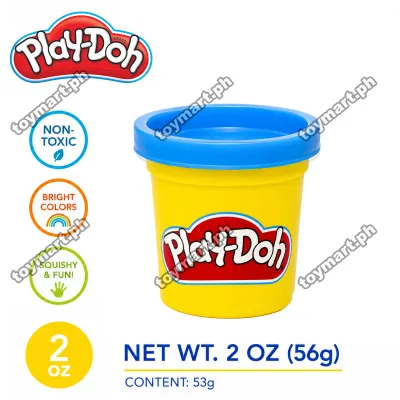
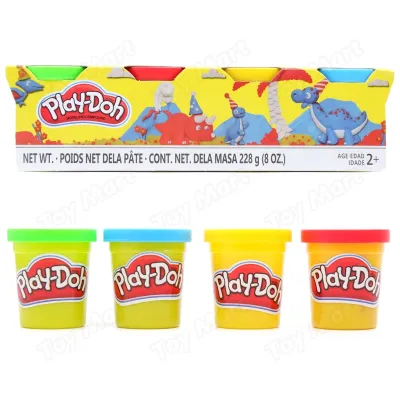
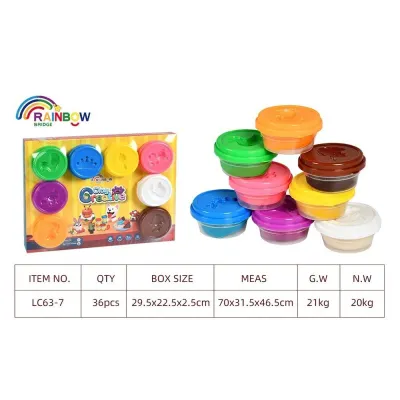
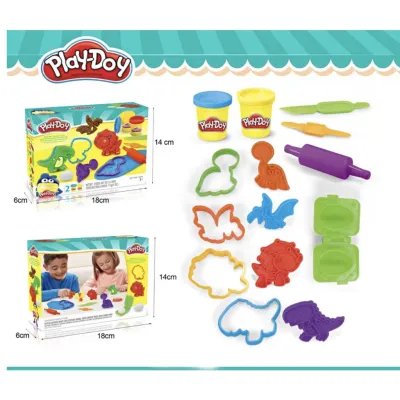
Prices are valid at publication and may change. Please refer to the product page for the latest price.
Choking hazards are the primary safety concern when dealing with specialized playsets. Many themed sets include small accessories, plastic cutters, molds, and decorative parts that can easily fit inside a child’s airway. Manufacturers place explicit age recommendations on every box, typically starting at age two or three, depending on the size and shape of the included tools. Checking these safety labels is a critical first step to ensure that no small parts pose a risk to your child.
From a developmental perspective, playing with modeling compound is an exceptional workout for young hands. Squeezing, flattening, rolling, and pinching the dough builds the intrinsic muscles of the fingers and palms. These physical movements develop the hand strength and dexterity required for later real-world tasks, such as holding a pencil, using safety scissors, and buttoning a shirt. Additionally, manipulating tools and dough simultaneously fosters bilateral coordination, which is the ability to use both hands together in a controlled, cooperative manner.
Visual-spatial awareness also receives a significant boost during play. As children transform flat, two-dimensional pieces of dough into three-dimensional spheres, cylinders, and characters, they learn to understand volume, scale, and spatial relationships. To maximize these benefits safely, always verify that the product carries recognized safety certifications, such as the CE mark or ASTM D-4236, which confirm the materials have been tested for toxicological safety.
Toddler-Friendly Play-Doh Sets (Ages 1.5 to 3): Sensory and Grasping
For children between 18 months and three years of age, play is primarily sensory and exploratory. Toddlers at this stage are transitioning from using a primitive palmar grasp—where they hold objects with their entire fist—to developing more controlled finger movements. The best sets for this age group focus on tactile feedback and basic physical manipulation rather than complex assembly or detailed sculpting.

When selecting sets for toddlers, prioritize basic, multi-color packs that feature large, soft dough cans. The compound in these starter packs is often formulated to be exceptionally soft, making it easy for weak, developing hands to squeeze and shape. Avoid specialized themed sets with intricate mechanical parts, as toddlers lack the coordination to operate them and will likely become frustrated. Instead, look for sets that offer high-contrast, bright primary colors that provide strong visual stimulation and help children learn to distinguish different shades.
Tools for this age group must be chunky, lightweight, and easy to grip. Look for thick, wide-diameter rolling pins, large stampers with rounded handles, and simple, sturdy shape cutters that do not have sharp edges or small, detachable components. These oversized tools encourage the use of the whole hand, allowing toddlers to practice pressing down and rolling forward without requiring precise finger control. The lack of small parts also ensures that the play environment remains safe during moments of independent exploration.
Before purchasing, parents should run through a quick safety and usability checklist. First, verify that the set contains no accessories smaller than the child’s fist. Second, test the dough texture to ensure it is soft enough for a weak grip; if the dough has hardened slightly, it will be too difficult for a two-year-old to enjoy. Third, confirm that the set requires minimal setup and cleanup, as toddlers have short attention spans and will lose interest if they have to wait for an adult to assemble a complicated plastic structure.
Refill cans and basic starter sets are widely available at official toy retailers and authorized online marketplaces in the Philippines. Buying from reputable sources ensures you receive genuine, non-toxic products that comply with local consumer safety standards. Keeping a steady supply of basic colors on hand allows you to rotate the dough frequently, ensuring the texture remains soft and hygienic for sensory play.
Preschool Play-Doh Sets (Ages 3 to 5): Imagination and Basic Tools
Preschoolers aged three to five are developing rapidly, both physically and cognitively. At this stage, children begin to transition from simple sensory exploration to imaginative, symbolic play. They are also refining their fine motor skills, moving from a full-fist grasp to a digital grasp, and eventually toward a mature tripod grasp. This physical progression allows them to use more detailed tools and operate basic mechanical devices.
During these preschool years, children enjoy themed sets that mimic real-life activities, such as cooking, baking, or caring for animals. Sets that feature basic extruders—devices where dough is pushed through a template to create long, noodle-like shapes—are highly engaging for this age group. Using a plunger-style extruder or a simple hand-press helps develop bilateral coordination, as the child must hold the base of the toy with one hand while applying downward force with the other.
When evaluating themed playsets for preschoolers, look for intuitive designs that do not require excessive physical strength. A four-year-old should be able to operate the levers and presses independently. If a hand-crank or lever is too stiff, the child will constantly rely on an adult to help, which interrupts their creative flow and limits their sense of independence. Look for sets with large, stable bases that stay flat on the table during operation.
Storytelling and role-play become central to the play experience at this stage. A basic kitchen set with plates, plastic forks, and food molds allows preschoolers to act as chefs, serving colorful creations to family members. This type of play supports language development and social skills as children describe what they are making and share their toys with playmates. The physical act of cutting dough with plastic safety scissors also refines the hand-eye coordination needed for preschool crafts.
To ensure a frustration-free experience, choose sets that include a generous volume of compound. Themed activities often require multiple colors and large quantities of dough to complete the designs shown on the packaging. If a set only includes two or three small cans, consider purchasing a separate multi-pack of medium or large cans to ensure your child has enough material to build, create, and experiment without running out of compound mid-play.
Early School-Age Play-Doh Sets (Ages 5 to 8): Complex Themes and Mechanics
Children between the ages of five and eight possess highly refined fine motor skills, a longer attention span, and a strong desire to create detailed, realistic structures. They are capable of following multi-step instructions and enjoy toys that feature complex mechanical movements, gears, or electronic components. At this stage, play shifts from simple imitation to planned, goal-oriented projects.
For this group, look for large-scale themed sets that feature intricate molds, multi-part assembly, and functional mechanical features. Popular choices include detailed dental play systems, elaborate hair-growing salons, and complex construction vehicle sets. These toys require children to perform precise tasks, such as using plastic tweezers to place small dough shapes, turning gears to extrude textured patterns, or assembling multi-piece plastic structures before play can begin.
These advanced sets support cognitive development by encouraging problem-solving and planning. A child must think ahead to decide which color to use for specific parts, how much dough to load into a mechanical chamber, and how hard to press a lever to achieve the desired effect. If a mechanical part jams, the child must analyze the cause—often a piece of dried dough blocking the mechanism—and figure out how to clear it, promoting critical thinking and patience.
When selecting a set for an early school-age child, evaluate the durability of the moving parts. Plastic gears, levers, and hinges must be robust enough to withstand repetitive, sometimes forceful use. If your child tends to play roughly, avoid sets with delicate, battery-operated electronic components that can break if dropped or stuffed with too much dough. Instead, opt for sturdy, manual mechanical systems that rely on physical levers and gears, which are more durable and offer excellent tactile feedback.
At this age, there is a delicate balance between guided play and open-ended creativity. While children enjoy using the specialized molds and tools to complete the set’s specific theme, they also need the freedom to deviate from the instructions. Encourage your child to mix the tools from different sets or use the mechanical components to create entirely custom designs. This hybrid approach keeps the toys relevant and engaging long after the novelty of the initial theme has worn off.
Advanced Play-Doh Options for Older Children (Ages 8+): Bulk and Sculpting
Older children, aged eight and above, have largely outgrown structured, character-themed playsets. Instead, their interest shifts toward artistic expression, detailed sculpting, and large-scale building projects. They view modeling compound as a creative medium rather than a simple toy, using it to design complex figures, architectural models, or stop-motion animation props.
For this age group, bulk color packs and large individual cans are much more useful than specialized plastic playsets. Older kids require a high volume of compound in a wide variety of colors to bring their detailed visions to life. Buying bulk packs—such as 12-packs or 24-packs of standard cans—is highly cost-effective and provides the raw material needed for substantial projects. Look for packs that offer a diverse palette, including neon, metallic, or pastel shades, which allow for more sophisticated color schemes.
To support their artistic development, introduce advanced sculpting tools, fine texture mats, and color-mixing guides. While standard plastic tools are sufficient for younger kids, older children benefit from using fine-tipped plastic modeling knives, clay rollers, and embossing tools that allow them to add intricate textures like scales, fur, or brick patterns to their sculptures. They can also learn the basics of color theory by kneading different ratios of primary colors together to create custom shades and gradients.
It is important to discuss the material limitations of standard Play-Doh with older children. Because the compound is water-based, it is designed to remain soft when sealed but will dry out, shrink, and crack if left exposed to the air. If your child wants to create permanent sculptures, keepsakes, or jewelry that will last indefinitely, standard modeling compound is not the right choice. In these instances, transition them to air-dry clay or oven-bake polymer clay, which harden permanently and can be painted or varnished.
When deciding between buying a themed set or a bulk pack, parents should calculate the cost-efficiency of the purchase. Compare the total weight of the dough in a themed set against the weight offered in a bulk refill pack. In most cases, if your child already owns a collection of plastic tools and rollers, purchasing bulk compound offers significantly better value per gram, ensuring they have plenty of material to fuel their creative projects without paying a premium for unnecessary plastic accessories.
Quick Comparison: Matching Play-Doh Features to Age Groups
To help you quickly identify the most suitable set type for your child’s developmental stage, the following table summarizes the key features, motor skill focuses, and supervision requirements for each age bracket.
| Age Group | Primary Motor Skill Focus | Ideal Set Features | Supervision Level |
|---|---|---|---|
| Toddlers (Ages 1.5 to 3) | Palmar grasp, basic squeezing, sensory exploration | Large, ultra-soft cans; chunky, one-piece tools; high-contrast colors | High: Active adult supervision required to prevent mouthing |
| Preschool (Ages 3 to 5) | Digital grasp, bilateral coordination, simple cutting | Intuitive themed sets; basic extruders and presses; plastic safety scissors | Moderate: Adult assistance needed for setup and stiff levers |
| Early School-Age (Ages 5 to 8) | Fine finger control, tool manipulation, multi-step tasks | Complex mechanical sets; detailed molds; gear-driven accessories | Low: Independent play with occasional help for cleaning jams |
| Older Children (Ages 8+) | Artistic sculpting, precise detailing, color mixing | Bulk color packs; fine texturing tools; open-ended building materials | Minimal: Independent play; guidance needed if transitioning to permanent clays |
Frequently Asked Questions (FAQ)
How to revive dried-out Play-Doh
If your modeling compound has been left out of its container and has become dry or slightly crusty, you can often restore its pliable texture. Add a few drops of clean water directly to the dough, knead it thoroughly for several minutes to distribute the moisture, and place it back inside its airtight plastic can. Seal the lid tightly and let it sit undisturbed overnight; by morning, the compound should have absorbed the water and regained its softness. Note that if the dough has completely crystallized, turned into a hard rock, or started to crumble into dust, the salt-and-starch structure has broken down permanently, and the compound must be replaced.
What to do if a child accidentally ingests Play-Doh
Standard Play-Doh is non-toxic and formulated primarily from food-grade ingredients like flour, water, and salt. If a child swallows a small, pea-sized amount, it will generally pass through their digestive system without causing any medical harm. Give the child a glass of water to help wash down the salty taste, and monitor them for any unusual behavior or mild stomach upset. However, because the compound contains a very high concentration of salt, ingesting large quantities can lead to sodium imbalance or dehydration. If a significant amount has been consumed, or if your child has a known wheat allergy or celiac disease, contact your pediatrician or a local medical professional immediately for guidance.
Storing Play-Doh in humid climates
In tropical, high-humidity environments like the Philippines, proper storage is crucial to prevent your modeling compound from spoiling. High humidity can cause the salt-based compound to absorb excess moisture from the air, making it sticky, slimy, or prone to developing mold. Always store the compound in its original plastic cans, ensuring the lids are pressed down firmly until they click shut. Keep the containers in a cool, dry cabinet away from direct sunlight and heat sources, which can cause condensation to form inside the cans. If you live in an exceptionally humid area, placing the sealed cans inside a secondary airtight plastic storage bin with a few food-safe silica gel packets will help absorb ambient moisture and extend the shelf life of the dough.

Community discussion
Share your experience or ask a question. Comments are reviewed before publication.