
Organizing receipts, bills, and small financial documents in the Philippines requires storage solutions that can withstand both daily handling and the challenges of a tropical climate. Small plastic envelopes made of durable, acid-free polypropylene (PP) are the most effective tools for this task. They protect sensitive thermal paper and printed invoices from high humidity, accidental spills, and physical wear. When selecting the ideal plastic envelope, the choice comes down to matching the closure type—such as secure sliders, quick-access buttons, or multi-pocket accordion designs—to your specific filing frequency and document volume. By choosing the right size and material, you can establish a reliable, long-lasting system that keeps your financial records legible, organized, and easily accessible.
Key Features to Evaluate for Financial Documents
To build an efficient filing system, you must look closely at the physical specifications of the envelopes. The first consideration is material thickness, typically measured in microns. Thicker plastic sheets offer greater rigidity, preventing the envelope from bending or creasing when tucked into a drawer or bag. For daily receipt collection, look for heavy-duty polypropylene that resists tearing along the edges. Thin, flimsy plastics tend to warp quickly under the weight of multiple documents and can split at the seams when handled frequently.
Transparency is another critical factor that directly impacts your workflow. Clear plastic envelopes allow for instant visual verification, enabling you to see the top receipt or a label insert without opening the closure. This is highly beneficial for active files, such as current-month utility bills or pending business expenses. On the other hand, frosted or semi-opaque envelopes offer a level of privacy, obscuring sensitive financial details like account numbers, transaction amounts, and personal information from casual onlookers. A balanced system often utilizes clear envelopes for quick-sorting tasks and frosted or colored options for archived records.
Products mentioned in this guide
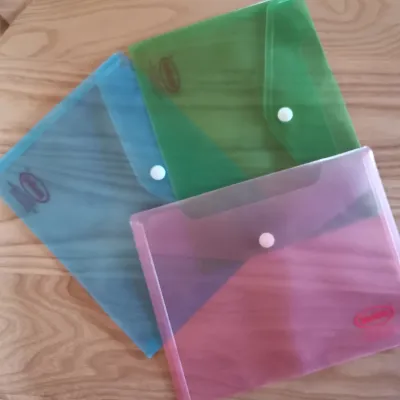
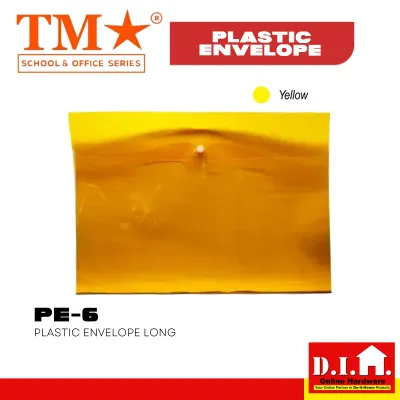
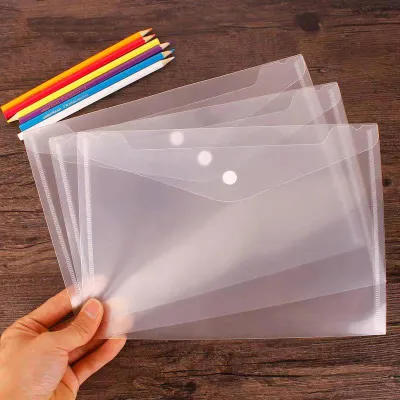
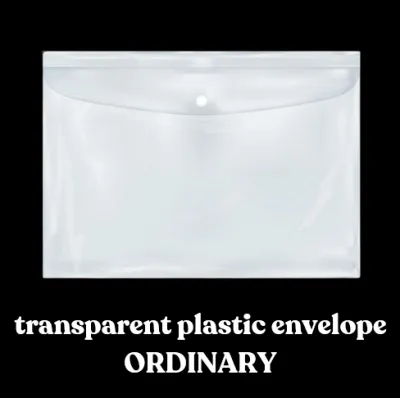
Prices are valid at publication and may change. Please refer to the product page for the latest price.
Edge reinforcement and seam strength determine the lifespan of your organizing tools. High-quality plastic envelopes feature wide, heat-sealed borders or stitched fabric edges that distribute stress evenly. When envelopes are stuffed with folded bills or long thermal receipts, the pressure concentrates on the bottom corners and side seams. If these areas are poorly sealed, they will split, rendering the envelope useless. Inspecting the seams for a clean, uniform weld before purchasing ensures the envelope can handle the expansion of growing document stacks.
In the Philippines, environmental factors play a significant role in document preservation. High relative humidity can cause standard paper bills to absorb moisture, making them soft, limp, and prone to tearing or mold growth. Plastic envelopes act as an effective barrier against ambient moisture, protecting your documents from damp air and accidental water spills on desks. However, because plastic traps air, you must ensure that documents are completely dry before sealing them inside to prevent trapping moisture that could damage the paper over time.
Recommended Types of Small Plastic Envelopes
Selecting the right envelope style depends on how often you add, retrieve, or sort your documents. Different closure mechanisms offer distinct balances between security, access speed, and storage capacity. Matching these styles to your personal filing habits ensures that maintaining your financial records remains a seamless, low-friction task rather than a chore.

Ziplock and Slider Closure Envelopes
Ziplock and slider closure envelopes provide the highest level of environmental protection for your financial documents. The continuous seal along the opening acts as a barrier against dust, dirt, and moisture, making these envelopes ideal for long-term storage or for carrying receipts in a bag. Slider closures are particularly user-friendly, allowing you to zip the envelope shut with a single, smooth motion. This ease of use encourages immediate filing, as you can quickly slide the zipper open, drop in a daily transaction receipt, and seal it back up in seconds.
These envelopes are highly effective for managing monthly utility bills, such as electricity, water, and internet statements. Because these bills are often referenced during disputes or tax filings, keeping them in a dust-free, sealed environment preserves the paper quality. The secure seal also prevents small, loose slips—such as credit card charge slips or parking tickets—from slipping out of the sides when the envelope is moved or stored horizontally in a drawer.
When choosing slider envelopes, pay close attention to the quality of the plastic zipper mechanism. The slider tab should glide smoothly along the track without catching or jumping off the rails. Press-to-close ziplock styles are also reliable but require careful alignment of the tracks to ensure a complete seal. For high-frequency use, a sturdy plastic slider is generally preferred over a press-to-close seal, as it requires less precision and physical effort to operate repeatedly.
Button, Snap, and Flap Closures
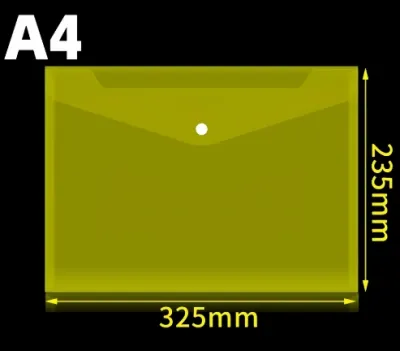
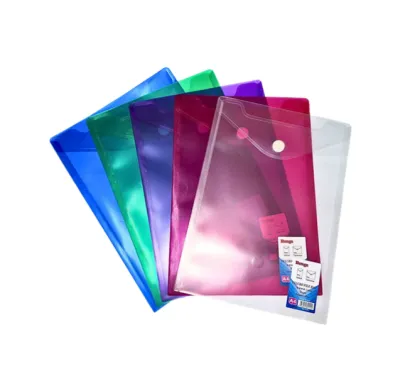
Button and snap closure envelopes utilize a fold-over flap secured by a plastic press-stud or a string-and-button tie. This design prioritizes rapid access and simplicity. If your primary goal is to quickly drop receipts into an envelope at the end of each day without fussing with a zipper track, a snap button closure is an excellent choice. With a simple press, the envelope pops open, and a firm push clicks it shut.
The flap design also provides a natural expansion point, allowing the envelope to accommodate slightly thicker contents than a flat ziplock envelope. However, because the sides of the flap are not completely sealed, these envelopes do not offer the same level of dust and moisture protection as zipped options. There is a small risk that tiny paper slips could slide out of the top corners if the envelope is turned upside down or shaken vigorously.
Over time, the physical stress of snapping and unsnapping can cause wear on the surrounding plastic. To prevent the snap button from tearing away from the flap, look for envelopes where the button area is reinforced with an extra layer of plastic or a metal washer. String-and-button closures, while classic and highly adjustable for varying thicknesses, require more time to wind and unwind, making them better suited for weekly or monthly archiving rather than rapid daily sorting.
Expandable and Multi-Pocket Options
For households or small businesses with a high volume of financial transactions, flat envelopes can quickly become overstuffed and distorted. Expandable plastic envelopes feature a gusseted bottom and sides, allowing the envelope to expand horizontally as you add more documents. This design is essential for storing thick stacks of thermal paper receipts, which tend to curl and bunch up, taking up significantly more physical space than flat utility bills.
Multi-pocket accordion envelopes take organization a step further by incorporating internal dividers. These dividers create separate compartments within a single, compact folder, allowing you to categorize your documents systematically. You can dedicate individual pockets to different expense categories—such as groceries, transportation, utilities, and medical expenses—or organize them chronologically by month. This eliminates the need to maintain multiple separate envelopes, consolidating your entire filing system into a single, portable unit.
When evaluating multi-pocket options, check the durability of the internal dividers and the indexing tabs. The dividers should be flexible yet sturdy enough to keep documents upright and separated. Many accordion envelopes come with small paper tab inserts, allowing you to write custom labels for each section. Ensure the outer closure—usually an elastic band or a latch—is strong enough to keep the entire expanded folder securely closed when fully loaded.
Sizing Guide for Standard Receipts and Bills
Choosing the correct envelope size is crucial for maintaining an orderly filing system without damaging your documents. In the Philippines, financial documents come in a wide variety of shapes and sizes. Standard supermarket and retail receipts printed on thermal paper are typically narrow but can be exceptionally long. To store these without excessive folding—which makes them bulky and difficult to read—look for envelopes designated as “cheque size” or A6. These dimensions easily accommodate long, rolled, or folded thermal slips.
For larger documents like monthly utility bills, A5 or DL (dimension lengthwise) envelopes are highly suitable. A standard A4 or letter-sized utility bill can be folded into thirds to fit perfectly inside a DL envelope, which matches the size of a standard business envelope. If you prefer to store your bills flat or folded only once, an A5 envelope provides the ideal dimensions. Using envelopes that are too large for small receipts leads to clutter, as the papers slide around and bunch up at the bottom, while envelopes that are too small force you to fold documents multiple times, creating thick, unmanageable creases.
Before purchasing, always verify the internal usable dimensions of the envelope rather than relying solely on the external measurements. Heat-sealed borders, zipper tracks, and snap mechanisms can reduce the actual usable space by up to a centimeter on each side. If you are filing standard half-letter invoices or official receipts from local businesses, ensure the internal width and height allow the documents to slide in and out smoothly without catching on the seams or requiring forced folding.
Tips for Organizing and Maintaining Your Filing System
An organized filing system is only as good as your ability to maintain it over time. To make retrieval effortless, implement a clear labeling strategy. Use waterproof permanent markers to write directly on the envelope’s designated label area, or use adhesive color-coded labels to distinguish between different years or document types. For example, you might use blue labels for utility bills, green for business expenses, and yellow for personal shopping receipts. This visual coding allows you to locate the correct envelope at a glance.
Preserving thermal receipts requires specific environmental precautions, especially in a warm, humid climate. Thermal paper is highly sensitive to heat, light, and friction. Storing your plastic envelopes in a cool, dark place—such as a desk drawer, filing cabinet, or closet—is essential to prevent the printed text from fading prematurely. Avoid leaving envelopes on window sills, near electronic appliances that generate heat, or inside hot vehicles, as elevated temperatures can turn the entire thermal sheet black or erase the ink completely.
Additionally, establish a regular purging schedule to prevent your envelopes from becoming overstuffed. While some financial documents must be kept for extended periods—such as business tax records, which local regulations may require you to retain for several years—many personal receipts can be discarded much sooner. Set aside time at the end of each quarter or year to review your files. Safely shred and discard expired warranty receipts, old grocery slips, and utility bills that have been fully paid and reconciled with your bank statements. This practice keeps your filing system compact, manageable, and highly efficient.
Frequently Asked Questions (FAQ)
Can plastic envelopes prevent thermal receipts from fading?
Plastic envelopes cannot stop thermal receipts from fading if they are exposed to heat or direct sunlight. Thermal paper relies on a chemical reaction triggered by heat to display text, making it highly sensitive to environmental temperatures. While a plastic envelope protects the paper from physical wear, dust, and moisture, it does not provide thermal insulation. To prevent fading, you must store the envelopes in a cool, dark drawer or cabinet. Furthermore, avoid using envelopes made of low-grade plastics that contain plasticizers, as these chemicals can migrate onto the thermal paper and accelerate the degradation of the printed ink.
Are PVC or PP plastic envelopes better for long-term document storage?
For long-term document storage, polypropylene (PP) envelopes are significantly better than polyvinyl chloride (PVC) options. Polypropylene is an acid-free, chemically inert material that does not react with inks or paper over time. PVC, on the other hand, often contains plasticizers to make it flexible. These chemicals can leach out over time, causing the plastic to become sticky and transferring ink from your receipts onto the envelope walls. When archiving important financial records, always check the manufacturer’s specifications to ensure the envelopes are labeled as acid-free, archival-safe, or made from 100% polypropylene.

Community discussion
Share your experience or ask a question. Comments are reviewed before publication.