
Finding the right tool for your daily writing can transform how you study, work, and organize your thoughts. The choice between a binder notebook with fillers and a traditional bound notebook is not just about aesthetics; it directly impacts your daily workflow, your budget, and how you retrieve information weeks or months down the line. While one system prioritizes ultimate flexibility and modular organization, the other champions simplicity, portability, and an uninterrupted writing flow.
To make an informed decision, you must look closely at your personal writing habits, your typical environment, and how you prefer to archive your thoughts. For instance, a student managing multiple subjects simultaneously has vastly different organizational needs than a creative writer who prefers a continuous, chronological journal. By evaluating how each system handles structural changes, long-term costs, and daily wear, you can select a notebook that feels like a natural extension of your mind rather than a daily hassle.
How Structure and Flexibility Compare
The fundamental difference between these two systems lies in how they secure your pages. Traditional bound notebooks utilize fixed binding methods such as glue, thread stitching, or spiral coils. Once a page is bound into these books, its position is permanent. This fixed structure is excellent for chronological record-keeping, as it prevents pages from being lost, misplaced, or accidentally torn out. However, it also means you cannot easily rearrange your notes, insert a forgotten diagram, or remove a ruined page without leaving a noticeable gap or compromising the integrity of the spine.
Products mentioned in this guide
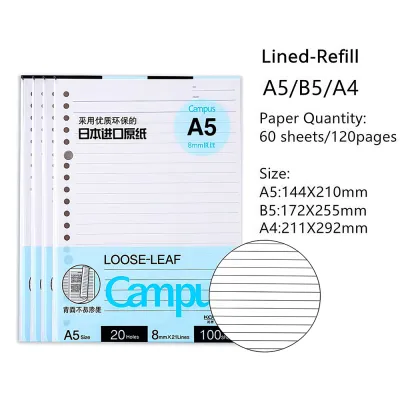
![Focus Filler Notebook A5 Size [5/ 10/ 25pcs per pack]](https://img.lazcdn.com/g/p/df81d8040e40b074d62fa1931d4f461d.jpg_400x400q80.jpg_.webp)
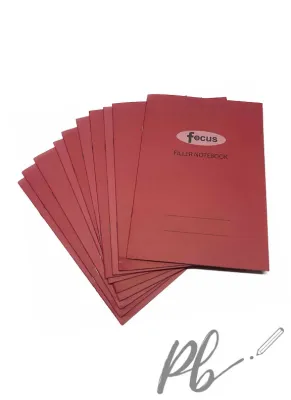
![Focus Filler Notebook B5 Size [7x10 inches] [ 5 | 10 | 25 pcs per pack ]](https://img.lazcdn.com/g/p/7934f33630e115620f86b87802766244.jpg_400x400q80.jpg_.webp)
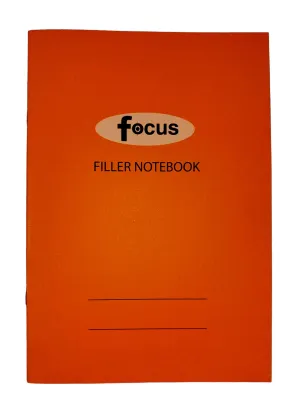
![[WHOLESALE] focus filler notebook filler](https://img.lazcdn.com/g/p/8551beaa86029348751ff4c694c75faf.png_400x400q80.png_.webp)
Prices are valid at publication and may change. Please refer to the product page for the latest price.
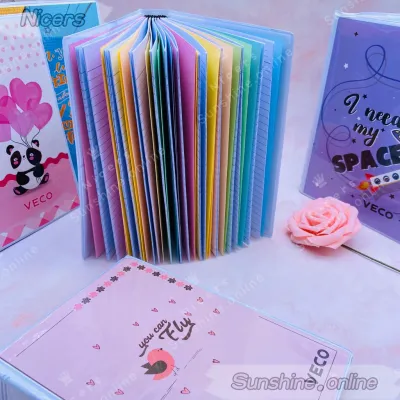
In contrast, binder notebooks rely on a mechanical ring or disc system that allows you to open and close the binding at will. This mechanism unlocks a high level of customization. By using loose-leaf fillers, you can mix and match different paper styles—such as ruled lines for lecture notes, grid patterns for diagrams, and blank sheets for sketching—all within a single cover. You can also insert plastic dividers, pocket folders, and specialized calendar inserts to build a highly personalized organizational system tailored to your specific projects.
This modularity is particularly useful when it comes to managing and archiving your work. If a section of your notes is complete, you can easily remove those pages and transfer them to a storage binder at home, freeing up space in your daily carry. If you make a mistake or spill a drink on a page, you can replace that single sheet without affecting the rest of your notebook. This flexibility ensures that your active notebook only contains relevant, up-to-date information, preventing clutter from accumulating in your bag.
Evaluating Upfront Costs and Long-Term Value
When looking at the financial aspect, the initial investment for these two systems differs significantly. A high-quality binder notebook usually requires a higher upfront cost because you are purchasing a durable outer shell—often made of thick plastic, synthetic leather, or fabric—along with the mechanical ring system and an initial pack of filler paper. A traditional bound notebook, on the other hand, generally has a much lower entry price. You can easily find basic stitched or spiral notebooks for a modest sum, making them highly accessible for quick purchases.

However, the long-term economics tell a different story, especially when you factor in ongoing usage. Once you fill a traditional bound notebook, you must purchase an entirely new book, paying for both the cover and the paper again. With a binder system, the durable cover is a one-time purchase designed to last for multiple years. When you run out of space, you only need to buy packs of loose-leaf filler paper, which are typically priced very affordably in the local market, often starting at around ₱50 to ₱150 depending on the paper quality and sheet count.
Over several semesters of university or years in an office, the cost of repeatedly buying premium bound notebooks can quickly surpass the initial expense of a single, sturdy binder cover paired with regular filler refills. To maximize this value, it is wise to invest in a binder cover with robust rings that will not easily misalign over time. This approach not only saves money in the long run but also reduces waste, as you are not discarding heavy covers and unused pages every time you finish a notebook.
Daily Carry, Durability, and Writing Experience
How a notebook performs in your bag and on your desk is crucial for daily satisfaction. Traditional bound notebooks are generally slimmer and lighter, making them incredibly easy to slide into a backpack or tote bag. Their smooth, flat spines do not snag on other items, and they take up minimal space on cramped desks or lecture hall armrests. Binder notebooks, because of their internal metal or plastic ring mechanisms, tend to be bulkier and heavier. The rings add physical depth to the spine, which can make the binder feel cumbersome during a daily commute.
Durability is another area where the two systems diverge, particularly under different environmental conditions. In tropical climates with high humidity, paper can absorb moisture from the air, making it softer and more prone to tearing. In a binder notebook, this humidity can weaken the paper around the punched holes, leading to pages tearing free from the rings during rapid flipping. To prevent this, you may need to use reinforcing stickers or opt for heavier paper weights. Bound notebooks do not suffer from this specific vulnerability, though cheap glued spines can crack or lose pages if exposed to extreme heat and moisture over time.
The physical writing experience also changes depending on the binding. When writing in a binder, the central rings can create a significant obstacle for your hand, especially when you are writing near the inner margin on the left side of a page (for right-handed writers) or the right side (for left-handed writers). This often forces you to remove the page from the rings to write comfortably and then snap it back in when finished. Bound notebooks, particularly those designed with lay-flat thread binding, offer a much smoother, uninterrupted surface across the entire width of the page, allowing your hand to glide naturally from edge to edge.
Decision Framework: Which Notebook Fits Your Habits?
To choose the system that will serve you best, evaluate your daily routine, your organizational style, and your specific writing environment.
Choose a binder notebook with fillers if:
- You manage multiple distinct subjects or projects simultaneously and want to keep them all in one place without carrying multiple heavy books.
- You prefer to customize your page layouts, frequently switching between lined paper for writing, dot-grid for bullet journaling, and blank sheets for sketching.
- You like to archive older notes at home while keeping your daily carry light and focused only on active tasks.
- You want a long-term, reusable cover that reduces paper waste over several years.
Choose a traditional bound notebook if:
- You prioritize a lightweight, slim profile that easily fits into small bags for a fast-paced daily commute.
- You write sequentially, such as keeping a chronological daily journal, a single-subject log, or a continuous diary where page order never needs to change.
- You dislike the physical obstruction of rings and want a smooth, flat writing surface across the entire page.
- You want a simple, grab-and-go tool that requires no assembly, hole-punching, or refill management.
Verify first if:
- Your school, university, or workplace has strict formatting guidelines regarding the type of paper or notebook you are allowed to submit for grading or official records.
- You can easily source the correct refill sizes in your local area, as multi-hole binder standards (such as 20-ring A5 or 26-ring B5 patterns) require matching filler paper that aligns perfectly with your binder's ring spacing.
- The paper weight of the fillers you choose is compatible with your favorite writing instruments, as thinner paper may bleed or feather when using gel pens or fountain pens.
Frequently Asked Questions (FAQ)
Can I use standard printer paper in a binder notebook?
Yes, you can use standard printer paper in a binder notebook, but it requires some preparation. You must first cut the paper down to match your binder’s dimensions (such as A5 or B5) and use a compatible multi-hole punch to align with the ring spacing. Additionally, standard printer paper is often thin (typically 70gsm to 80gsm), which makes it highly susceptible to tearing at the punched holes under the stress of daily page-turning. If you choose to make your own fillers, using a slightly heavier paper stock or applying reinforcing ring labels can help prevent the pages from pulling free.
Do binder notebooks lay flat when open?
Binder notebooks naturally lay completely flat when opened because the loose-leaf pages slide freely along the circular rings or discs. This allows you to write on a flat surface or even fold the cover completely back on itself to save desk space. Traditional bound notebooks, however, vary widely in their lay-flat ability. While high-quality thread-stitched notebooks are designed to open flat, cheaper glued or tightly bound spines often resist staying open, requiring you to hold the pages down with your hand or a paperweight while writing.

Community discussion
Share your experience or ask a question. Comments are reviewed before publication.