
Selecting the right music sheet folder is a critical decision for any musician, directly affecting how smoothly a rehearsal runs and how well performance materials are preserved. The choice between a ring binder, a portfolio, and an accordion folder depends on whether you prioritize rapid page reorganization, sleek transport, or high-volume storage. Ring binders offer unmatched flexibility for active rehearsals where setlists change constantly, while portfolios provide a professional, low-profile look that protects loose sheets from wear and environmental moisture. Accordion folders, on the other hand, act as portable filing systems designed to organize massive repertoires across multiple categories.
In tropical climates like the Philippines, high humidity can quickly soften paper fibers, causing loose sheets to sag on a music stand or tear at the binding holes. Sudden afternoon downpours also make water-resistant materials and secure closures essential for commuting musicians. Understanding how each folder type handles these environmental challenges, alongside your specific performance habits, will help you choose the ideal organizational tool for your sheet music.
Evaluating Your Sheet Music Handling and Storage Needs
Before choosing a folder, you must evaluate your daily routine, transport habits, and performance environments. A musician who primarily practices in a dedicated home studio has very different storage requirements than a gigging instrumentalist or a choral singer who commutes weekly to rehearsals. If you frequently travel with your music, consider the physical demands of your commute. Navigating public transit or walking between venues during the rainy season requires a folder with robust edge protection and water-resistant outer covers to keep your scores dry and crisp.
Products mentioned in this guide
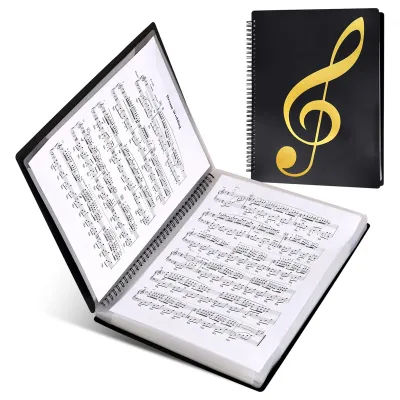
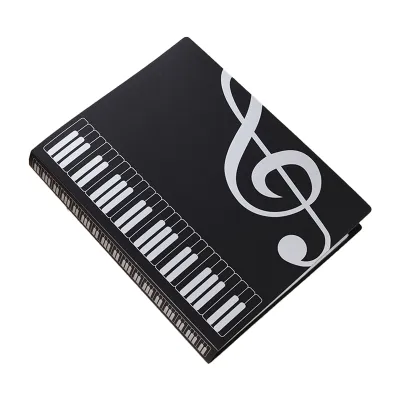
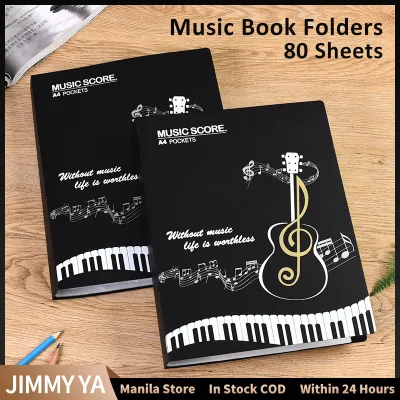
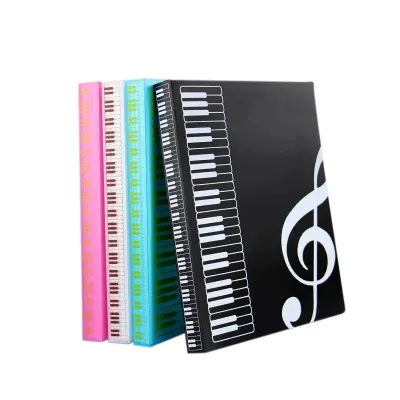
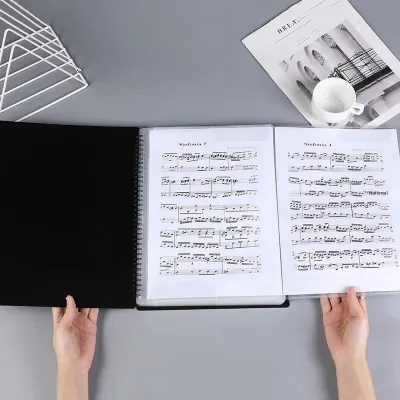
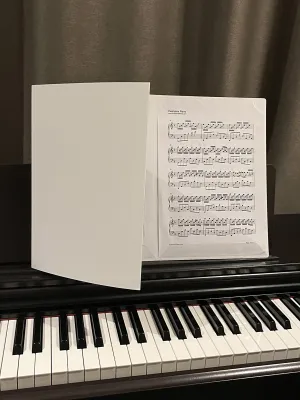
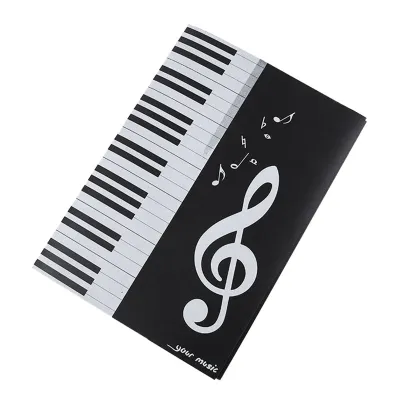
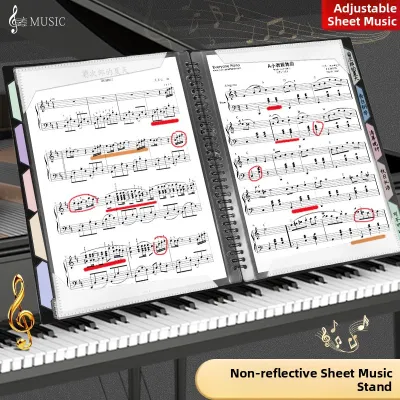
Prices are valid at publication and may change. Please refer to the product page for the latest price.
The total volume of your sheet music collection also dictates the structural support you need. A single classical sonata requires minimal space, whereas a complete seasonal repertoire for a choir or orchestra can easily span dozens of multi-page scores. If you regularly add, remove, or reorder pages to match changing setlists, a fixed-capacity storage system will quickly become frustrating. Conversely, if your repertoire remains static for months at a time, a permanent, secure binding method is often more reliable than loose storage.
Finally, consider your performance environment and the physical limitations of your music stand. Lightweight, folding wire stands have narrow lips and limited weight capacities, meaning a heavy, overstuffed folder can easily cause the stand to tip over. Sturdier wooden or metal orchestral stands can support heavier folders but still require a design that lies completely flat. A folder that constantly tries to spring shut during a performance is a major distraction that can lead to missed cues and interrupted play.
Ring Binders for Custom Ordering and Frequent Revisions
Ring binders are the industry standard for musicians who require maximum flexibility during rehearsals and practice sessions. The primary advantage of a ring binder is the ability to instantly insert, remove, or rearrange pages. This makes them indispensable for orchestral players, session musicians, and students who constantly receive new handouts, exercises, or warm-up sheets that must be integrated into an existing practice regimen.

When selecting a ring binder, the shape of the ring mechanism plays a significant role in how easily you can turn pages. Standard O-ring binders are common, but they tend to cause pages to bunch up near the spine, increasing the risk of paper friction and tearing over time. D-ring binders, which feature a straight edge on one side of the ring, allow pages to lie completely flat and stack evenly on the right side of the binder. This design minimizes wear on the punched holes and ensures smoother, quieter page turns during quiet performance passages.
To use a ring binder effectively, you must also consider compatibility with standard stationery tools. Standard three-hole or two-hole punches are required to prep loose sheets, but punching original scores directly can damage the musical notation near the inner margin. Many musicians prefer using plastic sheet protectors to avoid punching holes in their music. If you choose this route, look for non-glare or matte-finish sheet protectors to prevent harsh reflections from overhead stage lights, which can make reading notes difficult. Keep in mind that binders can be bulky, and a wide spine may overhang the lip of a standard music stand, requiring careful positioning to remain stable.
Portfolios for Sleek Transport and Flat Storage
Portfolios offer a highly professional, streamlined alternative for musicians who prioritize a clean presentation and flat storage. Unlike bulky ring binders, portfolios typically feature a slim profile without heavy internal metal mechanisms. This makes them exceptionally comfortable to hold during choral performances or to pack into a crowded gig bag. They are designed to keep your music flat, organized, and protected from external elements without the need for hole punching.
The closure mechanism of a portfolio is a key factor in protecting your sheet music during transit. Portfolios with zippered closures provide the highest level of security, sealing out dust, humidity, and rain while ensuring that loose sheets cannot slide out and get lost. Snaps and elastic ties offer quicker access but leave the edges of the paper slightly more exposed to the elements. For musicians commuting in humid tropical environments, a fully zippered, water-resistant portfolio is often the safest choice to prevent paper from absorbing moisture and warping.
Inside a portfolio, you will typically find either stitched-in plastic sleeves or loose internal pockets. Stitched-in sleeves keep your pages in a fixed, chronological order and prevent wind from blowing them during outdoor performances. However, standard plastic sleeves make it impossible to write quick pencil annotations on your scores without sliding the paper completely out of the sleeve. To solve this, some specialized music portfolios feature open-style sleeves with top and bottom plastic bands that hold the paper securely while leaving the center of the page exposed for easy writing.
Accordion Folders for High-Volume Repertoires
Accordion folders, also known as expanding files, are designed for high-volume storage and systematic organization rather than direct performance use. If you are a music teacher, a choral director, or a gigging musician with a vast library of hundreds of songs, an accordion folder serves as an excellent portable filing cabinet. It allows you to keep your entire catalog sorted and accessible in one place.
The defining feature of an accordion folder is its set of tabbed dividers and flexible expansion gussets. These gussets allow the folder to expand as you add more paper, accommodating thick stacks of sheet music, method books, and reference materials. By labeling the tabs by genre, composer, difficulty level, or instrument, you can locate specific scores in seconds. This level of categorization is difficult to achieve with standard binders or portfolios without adding significant bulk.
However, accordion folders have distinct trade-offs that make them unsuitable for use on a music stand. Because of their thick, expanding design and heavy weight when full, they cannot sit flat on a stand lip. Attempting to play directly from an accordion folder is highly impractical, as you cannot easily turn pages. Instead, you must use the folder to transport your library, extract the specific sheets you need for a session, and place those individual sheets on your stand. Additionally, the expansion gussets and bottom seams are subject to high stress; choosing a model with reinforced fabric edges can prevent the plastic from cracking or splitting over time.
Decision Guide: Matching the Folder to Your Routine
To finalize your choice, match the structural characteristics of each folder type to your specific musical routine and performance environment.
Choose a Ring Binder if:
- You are in a rehearsal-heavy environment where setlists, arrangements, and exercises change weekly.
- You need to make frequent pencil annotations and prefer using non-glare sheet protectors to organize your pages.
- You perform using sturdy, professional music stands that can easily support a rigid, heavier spine.
Choose a Portfolio if:
- You perform finished repertoires that do not require frequent page reordering.
- You need a sleek, professional appearance for solo recitals, auditions, or formal gigs.
- You want a lightweight, slim folder that fits easily into a backpack and protects your music from humidity and light rain.
Choose an Accordion Folder if:
- You need to store and organize a large library of sheet music across multiple categories or instruments.
- You primarily use the folder for transport and storage, rather than reading music directly during a performance.
- You want a centralized filing system that can expand to hold hundreds of pages of reference material.
Before making a purchase, perform a few quick verification steps. Measure the depth of your music stand’s lip to ensure it can accommodate the spine thickness of your chosen folder. Confirm the internal dimensions of the folder’s pockets or sleeves against your sheet music; standard office folders may not fully cover oversized concert scores, which often measure 9 by 12 inches or larger. Finally, check that the folder’s outer material is durable enough to withstand daily handling and environmental humidity without warping or cracking.
Frequently Asked Questions (FAQ)
How do I prevent sheet music from tearing in a ring binder?
To prevent sheet music from tearing in a ring binder, avoid punching holes directly into thin, standard-weight paper. Instead, print or copy your music onto heavier paper stock, such as 80 gsm or higher, which offers better resistance to tearing at the punch points. Alternatively, place your sheets inside high-quality, non-glare plastic sheet protectors, which eliminate the need for punching entirely and protect the paper edges from friction. If you must punch holes directly into original scores, apply self-adhesive reinforcement rings to both sides of each punched hole to distribute the stress evenly when turning pages.
Can I use a standard office folder for oversized sheet music?
Using a standard office folder for oversized sheet music is generally not recommended because standard folders are sized for A4 or Letter documents. Classical scores and professional sheet music are frequently printed on larger formats, such as concert size (9 by 12 inches) or orchestral size (10 by 13 inches). Placing these larger sheets in a standard office folder will cause the edges and corners of the paper to overhang, leaving them vulnerable to bending, fraying, and moisture damage. Always check the manufacturer’s specified internal pocket dimensions and gusset expansion limits to ensure your specific sheet sizes are fully enclosed and protected.

Community discussion
Share your experience or ask a question. Comments are reviewed before publication.