
The choice between a bound notebook and a loose-leaf notepad comes down to whether you prioritize chronological permanence or modular flexibility. If you need an unalterable, sequential record of your thoughts, a bound notebook is a highly practical choice. Conversely, if you prefer to rearrange, discard, or categorize your notes dynamically across different subjects, a loose-leaf notepad offers the adaptability you need.
In the humid tropical climate of the Philippines, daily commutes and environmental factors also play a significant role in how paper and bindings hold up. A student rushing between university classes in Manila or a professional working in a bustling office environment will find that each format responds differently to daily wear and tear. By examining how these two formats handle daily writing, portability, long-term archiving, and paper performance, you can select the tool that seamlessly integrates into your daily routine.
Core Differences in Structure and Daily Workflow
Traditional bound notebooks rely on stitched, glued, or stapled spines. This creates a permanent, book-like structure where pages are fixed in place. On the other hand, loose-leaf systems utilize rings, wire coils, or plastic discs that can be opened and closed to insert or remove paper. This structural difference fundamentally changes how you interact with your written notes on a daily basis.
Products mentioned in this guide
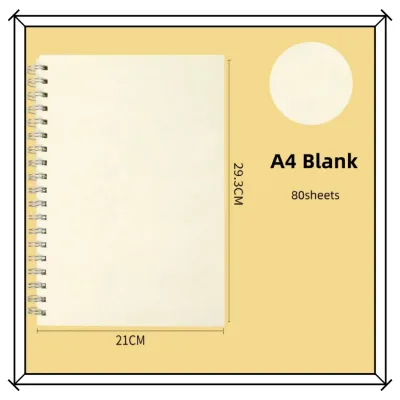
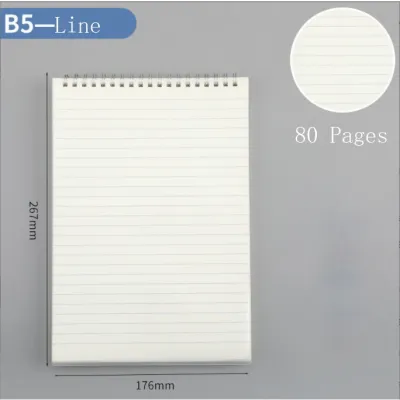
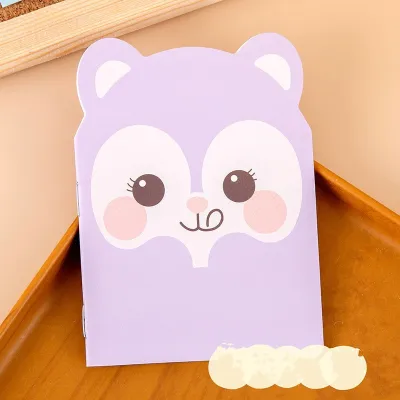
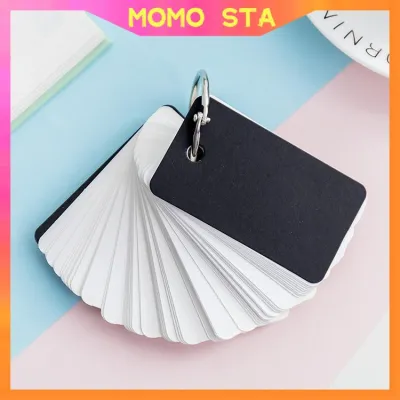
Prices are valid at publication and may change. Please refer to the product page for the latest price.
The physical inability to remove sheets without damaging a bound notebook encourages a continuous, chronological flow of information. This is excellent for journaling, lab notes, or meeting logs where the sequence of entries matters. A loose-leaf notepad, however, treats every sheet as an independent unit of information that can be discarded, filed away, or shared with a colleague at any moment.
Writing comfort is heavily influenced by the binding mechanism. High-quality thread-bound notebooks can lay completely flat on a desk, providing an unobstructed surface for both left- and right-handed writers. Loose-leaf binders, especially those with large metal rings, can create a physical barrier that obstructs your hand when writing near the inner margins, often requiring you to remove the page entirely to write comfortably.
Evaluating Portability and Durability for On-the-Go Use
Bound notebooks often feature sturdy hardcovers made of thick cardboard, book cloth, or synthetic leather, which provide excellent edge protection and a firm writing surface when a desk is unavailable. Loose-leaf binders frequently use flexible plastic or lightweight cardboard covers that may bend easily inside a packed bag.

During a hectic commute on a crowded jeepney or train, stationery is subjected to constant pressure. The metal or plastic rings of a loose-leaf binder can snag on loose threads, bend under pressure, or catch on other items in your backpack. A bound notebook presents a smooth, self-contained profile that slides easily in and out of bag compartments without catching.
Carrying multiple subjects in separate bound notebooks can quickly add weight to your daily carry. A loose-leaf notepad allows you to carry a single, slim binder containing only the active pages you need for the day, leaving completed work safely at home. This modular approach significantly reduces physical strain during long travel times.
In tropical climates with high humidity, paper absorbs moisture from the air, making it softer and more prone to tearing at stress points. The punched holes of loose-leaf sheets are particularly vulnerable to tearing under these conditions, whereas the sewn signatures of a bound notebook distribute tension more evenly across the entire spine.
Organization, Refilling, and Long-Term Storage
The primary advantage of a loose-leaf notepad is its high level of customizability. You can insert a forgotten diagram, move a meeting agenda to a different section, or group related project notes together without tearing out pages or ruining the layout. Bound notebooks force you to rely on indexes, page numbers, or color-coded tabs to find non-sequential information.
Loose-leaf systems excel at multi-subject organization through the use of plastic or paper dividers, pocket folders, and sticky tabs. This allows a single binder to function as a comprehensive planner, notebook, and document holder simultaneously. While you can add sticky tabs to a bound notebook, the fixed page count limits how much each section can expand.
Once a bound notebook is full, it can be labeled on the spine and placed on a bookshelf as a permanent, chronological archive. Loose-leaf pages must be transferred to storage binders, box files, or scanned digitally to free up space in your daily binder. This archiving process requires more active maintenance and storage accessories, such as reinforcement rings and storage boxes, which can add to your long-term stationery budget. When planning your stationery budget, consider that while a high-quality binder is a one-time purchase, refill packs can range from ₱100 to ₱300 depending on the paper weight and sheet count.
Paper Quality and Writing Experience Verification
Before purchasing any notepad, check the manufacturer’s label for paper weight, typically measured in grams per square meter (gsm). Standard daily writing paper ranges from 70 gsm to 100 gsm or higher. Heavier paper generally offers better resistance to ink penetration, but it also increases the overall thickness and weight of your notebook or refill pack.
Different writing instruments interact uniquely with various paper coatings and fibers. If you prefer using wet inks, such as those in fountain pens or heavy gel pens, you must verify how the paper handles moisture. Smooth, coated papers slow down drying times but prevent ink from spreading, while highly absorbent papers dry quickly but can cause lines to look fuzzy.
Perform a simple physical test on a corner of the page using your favorite pen. Look closely for feathering (where ink spreads along the paper fibers) and bleed-through (where ink penetrates completely to the reverse side). In humid tropical environments, paper can absorb ambient moisture, which may temporarily increase its susceptibility to feathering and show-through, making high-quality paper selection even more critical.
Decision Framework: Which Notepad Format Fits Your Routine?
Opt for a bound notebook if your daily work relies on chronological journaling, creative writing, or maintaining a secure, unalterable record. The permanent binding ensures no pages are lost, and the sleek, self-contained design is highly durable for daily travel. It is a suitable option for those who appreciate the tactile feel of a traditional book and do not need to share physical pages.
Select a loose-leaf notepad if your daily tasks involve multi-subject studying, project management, or collaborative work where pages must be frequently rearranged, shared, or discarded. This format is ideal for keeping your daily carry light by carrying only active sheets and organizing them into dedicated binders later.
If your work requires precise technical drafting, outdoor writing in wet weather, or instant digital backup, standard paper formats may fall short. In these cases, look for specialized waterproof paper notebooks or digital smart writing pads that bridge the gap between physical handwriting and digital storage.
Always inspect the product packaging or manufacturer specifications to ensure compatibility between your paper size (such as A5 or B5) and your binder’s ring configuration. Additionally, check that the paper weight matches your preferred writing tool to avoid ink bleeding through your daily notes.
Frequently Asked Questions (FAQ)
Can I convert a bound notebook into a loose-leaf system?
Converting a bound notebook into a loose-leaf system is possible but carries significant risks of damaging the pages. Cutting the stitched or glued spine requires a sharp utility knife and a steady hand, which can easily result in uneven margins or torn sheets. Additionally, altering the notebook in this manner voids any manufacturer warranties or return policies. A safer alternative is to carefully remove pages using a built-in perforation line, if available, and then use a heavy-duty single or multi-hole punch designed for the specific ring spacing of your binder.
Are disc-bound notepads considered loose-leaf?
Yes, disc-bound notepads are a highly customizable subset of loose-leaf systems. Instead of traditional rings that open and close via a lever, disc-bound systems use individual plastic or metal discs with raised rims. The paper is punched with unique T-shaped slots that snap securely around the edges of these discs. This design allows you to pull pages out and press them back in at any location without opening a mechanical binding, offering the same modular flexibility as traditional loose-leaf binders with a slimmer, more compact profile. However, you must ensure that any refill paper or hole punches you purchase are specifically designed for disc-bound systems, as standard round-hole refills are incompatible.

Community discussion
Share your experience or ask a question. Comments are reviewed before publication.