
Choosing the right physical format for your Bureau of Internal Revenue (BIR) books of accounts is a foundational step in establishing a compliant business in the Philippines. While the primary goal of these records is to satisfy tax regulations, the physical medium you select directly influences your accounting team’s daily productivity and the long-term preservation of your financial history. Both bound and loose-leaf formats are widely accepted for manual record-keeping, but they cater to vastly different operational scales and administrative workflows.
Making an incorrect choice can lead to administrative bottlenecks, messy record-keeping, or compliance issues during a tax audit. For instance, a high-volume retail business attempting to handwrite every transaction in a bound ledger will quickly overwhelm its staff, while a micro-business using loose-leaf pages might find the printing and annual binding requirements unnecessarily complex. Understanding the physical characteristics, paper durability, and regulatory steps associated with each format allows you to make an informed decision that aligns with your business size and growth trajectory.
Understanding BIR Compliance Requirements for Books of Accounts
Before purchasing any stationery or office supplies for your accounting department, you must verify the baseline regulatory acceptance and labeling requirements for both formats. The BIR mandates that all manual books of accounts—including the General Journal, General Ledger, Cash Receipts Book, and Cash Disbursements Book—must be registered and stamped before any transactions are recorded. For traditional bound books, this registration process involves presenting the physical books to your local Revenue District Office (RDO) to receive an official stamp or sticker on the cover or first page.
Products mentioned in this guide
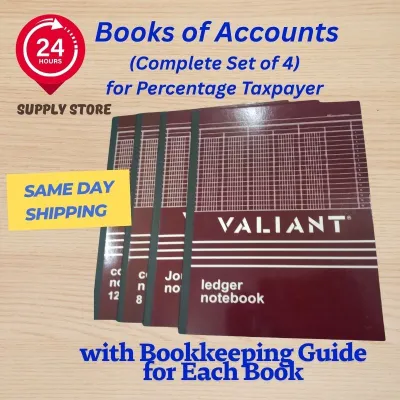
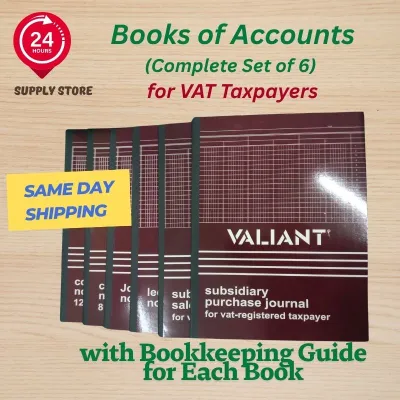
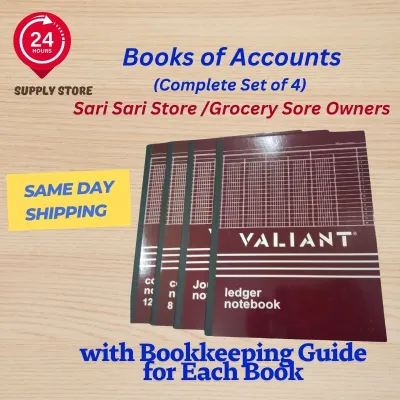
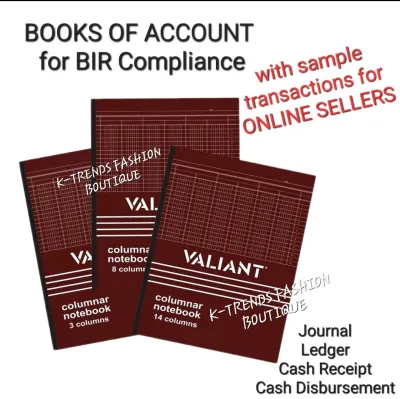
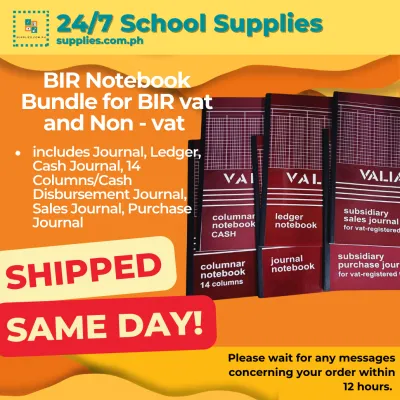
Prices are valid at publication and may change. Please refer to the product page for the latest price.
In contrast, loose-leaf books of accounts require a formal Permit to Use (PTU) before you can begin printing your records. This means you cannot simply print your accounting entries on loose sheets of paper and bind them later without prior authorization. You must submit an application to your RDO, detailing the layout of your journals and ledgers, and wait for the official permit to be issued. Once approved, you are required to print your transactions regularly and have them permanently bound into volumes at the end of each taxable year.
It is also essential to verify if your specific business registration type or size requires a particular format, or if you are mandated to use a Computerized Accounting System (CAS). Large taxpayers and certain high-revenue industries are often required to adopt CAS, which bypasses manual and loose-leaf physical books entirely in favor of digital databases. To ensure you are choosing the correct path, consult a certified public accountant (CPA) or review the latest BIR revenue regulations to confirm current record-keeping mandates, registration procedures, and the mandatory retention periods for your physical books.
Bound Books of Accounts: Features and Ideal Use Cases
Bound books of accounts are traditional, permanently bound ledgers and journals featuring stitched or glued pages that cannot be removed without destroying the binding. This physical design provides an exceptionally high level of audit security, as any attempt to tear out a page or insert unauthorized sheets will leave obvious, tamper-evident marks. For tax examiners, this structural integrity offers immediate assurance that the chronological record has not been altered or manipulated after the fact.

The tamper-evident nature of bound books simplifies internal controls for business owners who may not have sophisticated security systems or dedicated IT departments. Because every page is pre-numbered and bound securely, you can easily verify that no financial records have been misplaced or intentionally discarded. This makes bound books a highly reliable option for maintaining a clean, chronological history of your business transactions.
However, the physical bulk and weight of these permanently bound volumes can present significant storage and handling challenges. Writing hundreds of daily transactions by hand into a thick, heavy ledger is not only labor-intensive but also increases the likelihood of manual entry errors and illegible handwriting. Furthermore, if your office is located in a high-humidity area of the Philippines, the thick paper and heavy cardboard covers of bound books can absorb moisture over time, making them susceptible to mold, page warping, and musty odors during long-term storage.
Despite these physical limitations, bound books are highly suitable for sole proprietorships, professional practices, and small to medium enterprises (SMEs) with manageable, consistent manual entries. If your business handles a relatively low volume of transactions—such as a local consulting firm or a boutique retail shop—the straightforward archiving, low upfront cost, and lack of complex permit requirements make bound books a practical and hassle-free choice.
Loose-Leaf Books of Accounts: Features and Ideal Use Cases
Loose-leaf books of accounts offer a flexible, modern alternative to traditional bound ledgers by allowing businesses to print computer-generated entries onto loose sheets of paper. Instead of handwriting every transaction, your accounting team can input data into standard spreadsheet software or a localized accounting program, format the journals, and print them out on standard office paper. At the end of the fiscal year, these printed sheets are gathered, organized chronologically, and permanently bound into hardcovers.
One of the greatest operational advantages of the loose-leaf format is the ease of correcting errors and replacing damaged pages. If a printing error occurs, or if a page is accidentally stained or torn, you can simply reprint that specific sheet before the final annual binding takes place. This eliminates the need for messy erasures, liquid paper corrections, or crossing out entire lines, resulting in a highly professional, clean, and legible set of financial records for your annual audits.
However, this flexibility comes with an inherent risk of page loss, misplacement, or unauthorized removal before the final binding occurs. Because the pages remain loose throughout the taxable year, businesses must establish strict internal controls to secure the sheets. This includes implementing sequential page numbering, maintaining a secure digital backup of all printed files, and restricting physical access to the printing area and the storage binders where the loose sheets are kept before they are sent to the bookbinder.
Loose-leaf books are ideal for growing businesses with fluctuating transaction volumes, multiple branches consolidating their records, or companies that require modular archiving. For example, a business with separate departments for sales, purchasing, and payroll can have each team print their respective journals independently. These separate records can then be easily consolidated and bound into organized, professional volumes, making the loose-leaf format highly scalable and adaptable to complex corporate structures.
Comparing Bound and Loose-Leaf Formats for Daily Operations
When comparing these two formats for daily office operations, several practical factors must be evaluated, including page capacity, paper quality, and ink compatibility. In the tropical climate of the Philippines, high humidity can severely affect paper preservation and ink stability. Thin, low-quality paper tends to absorb moisture from the air, which can cause ink from gel pens or inkjet printers to feather, bleed, and smudge over time, rendering critical financial records illegible.
For bound books, it is crucial to inspect the paper weight and smoothness before purchasing. Look for ledgers with a paper weight of at least 70 to 80 gsm, which provides sufficient thickness to prevent ink bleed-through when using standard ballpoint or gel pens. For loose-leaf systems, you have the freedom to select high-quality, moisture-resistant copy paper (such as 80 gsm or higher) that is compatible with your office laser printer, ensuring sharp, permanent text that will not fade or smudge during years of storage.
The long-term cost in Philippine Pesos (₱) also differs significantly between the two formats. Bound books are highly cost-effective upfront, with individual journals and ledgers available for a few hundred Pesos at local office supply stores. However, if your transaction volume grows, the cost of purchasing, registering, and manually filling multiple bound books can add up. Loose-leaf systems require a higher initial investment for heavy-duty binders, high-quality printer paper, and printing equipment, but they offer lower long-term operational costs and greater time savings for high-volume businesses.
Physical storage, archiving, and retrieval efficiency are also critical considerations for annual tax audits and internal reviews. Bound books must be stored in their original, bulky formats, which can quickly consume valuable shelf space in a small office. Loose-leaf binders, on the other hand, allow for more efficient space utilization, as you can compress printed pages and store them in standard filing cabinets or archive boxes, making it much easier to locate and retrieve specific transaction records when requested by tax examiners.
To help you visualize these operational trade-offs, the following comparison matrix highlights the key physical dimensions, handling characteristics, and practical differences between the two formats:
| Feature | Bound Books of Accounts | Loose-Leaf Books of Accounts |
|---|---|---|
| Primary Entry Method | Manual handwriting (ballpoint or gel pen) | Computer input and laser/inkjet printing |
| Tamper Resistance | High (permanently stitched or glued pages) | Moderate (requires strict internal controls before binding) |
| Paper Quality & Weight | Fixed (typically 70-80 gsm ledger paper) | Customizable (standard 80 gsm copy paper recommended) |
| Climate Durability | Susceptible to mold and page warping in high humidity | Easier to preserve in climate-controlled storage |
| Initial Cost (₱) | Low (affordable per-book purchase) | Moderate (cost of binders, paper, and printing equipment) |
| Ideal Transaction Volume | Low to medium | Medium to high |
Decision Framework: Choosing the Right Format for Your Business
Choosing the right format requires a careful analysis of your business profile, transaction volume, and accounting workflow. You should choose bound books if your primary concern is maximum tamper resistance, you have a stable, low-to-medium volume of manual entries, and you prefer a simple, straightforward storage solution. Bound books require no special permits to use, making them the fastest and most accessible option for newly registered micro-businesses and sole proprietors who want to start operations immediately.
Conversely, you should choose loose-leaf books if your business handles a high volume of transactions, requires the speed and accuracy of computer-generated entries, or benefits from modular archiving across multiple departments. While the loose-leaf format requires more administrative preparation—including securing a Permit to Use (PTU) from the BIR and arranging for annual professional bookbinding—the operational efficiency and professional presentation it offers are well worth the extra steps for growing enterprises.
Before making your final decision, always verify if your business is required to transition to a BIR-accredited Computerized Accounting System (CAS). If your company falls under the category of large taxpayers or operates in an industry where CAS is mandatory, you will eventually need to transition to a fully digital accounting workflow. In such cases, investing heavily in a physical loose-leaf or bound book system may only serve as a temporary measure before your digital transition is complete.
Frequently Asked Questions (FAQ)
Can I use both bound and loose-leaf books for the same accounting period?
Maintaining a consistent, unbroken chronological record is a fundamental rule of accounting compliance. Generally, you should not mix bound and loose-leaf formats for the same type of book (such as the General Ledger) within a single fiscal year. If you plan to transition from manual bound books to loose-leaf books, you must obtain the necessary BIR permits and timing approvals, usually effective at the start of the next taxable year. Always consult a CPA or your local RDO to ensure a compliant transition.
What should I do if I run out of pages before the year ends?
If a physical bound book or a loose-leaf volume reaches its capacity before the end of the taxable year, you must carry forward the balances to a new book. Ensure the new book of accounts is properly registered and stamped by the BIR before you begin writing or printing in it. Clearly cross-reference the old and new books by noting the page numbers and volume numbers where the balances are carried from and carried to, maintaining a clear audit trail for tax examiners.

Community discussion
Share your experience or ask a question. Comments are reviewed before publication.