
Choosing between a bound diary notebook and a loose-leaf system ultimately depends on whether you value chronological permanence or modular flexibility. A bound notebook offers a structured, tamper-evident record of your thoughts, making it ideal for linear journaling and long-term archiving. Conversely, a loose-leaf system allows you to rearrange pages, integrate different paper types, and expand your diary as your needs change. By understanding how your writing environment, pen preferences, and organizational habits interact with these formats, you can select a diary notebook that supports your daily routine.
Assessing Your Journaling Habits and Daily Needs
Before investing in a new diary notebook, take a close look at your daily writing routine and where you actually put pen to paper. If you find yourself writing at a dedicated desk at home, a heavier, more substantial notebook is perfectly manageable. However, if you commute through busy transit systems or write in local coffee shops, portability becomes a primary concern. A lightweight, compact format that fits easily into a bag without adding unnecessary bulk will serve you much better on the go.
Consider also the climate in which you live and write. In tropical environments with high humidity, such as the Philippines, paper can absorb moisture from the air over time, affecting how ink behaves on the page. A diary that remains sealed or stored in a protective cover may resist environmental wear better than one constantly exposed to ambient air. Your physical writing environment dictates not just the size of your notebook, but also how well the materials hold up over months of daily use.
Products mentioned in this guide
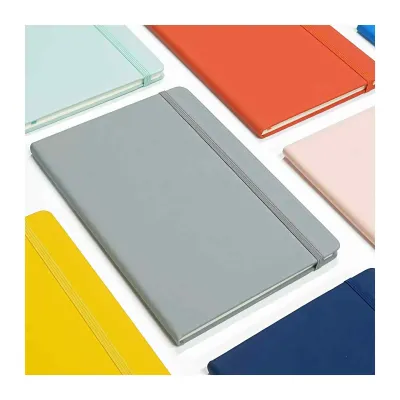
![[COD] Retro Refillable PU Leather Notebook A7 Loose-Leaf Notepad Thick Kraft Blank Binder Sketchbook](https://img.lazcdn.com/g/p/2a31ab0376d3b09284240aa9b70788ae.jpg_400x400q80.jpg_.webp)
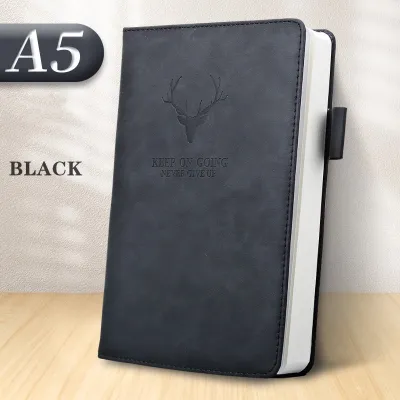
![[A5 Size] Stationery 25K Moleskin Rubber Diary Strap Notebook w/ String Lock](https://img.lazcdn.com/g/p/08767f5921c9c9d01e69076fe785e988.jpg_400x400q80.jpg_.webp)
Prices are valid at publication and may change. Please refer to the product page for the latest price.
The volume and consistency of your entries should also guide your decision. If you write a single page every day without fail, a fixed-page notebook provides a satisfying, predictable structure. If your writing habits are more sporadic—ranging from multiple pages of stream-of-consciousness thoughts on one day to weeks of silence—a flexible format prevents the discouragement of blank pages. Deciding whether you prefer a strict chronological record or a modular, reorganizable layout is the first step in narrowing down your options.
Finally, think about your archival preferences. Some writers find immense satisfaction in seeing a row of identical, completed journals lined up on a bookshelf, representing distinct chapters of their lives. Others prefer a single, ongoing system where older pages are archived in storage boxes while the active binder remains in daily use. Clarifying these habits early on prevents you from buying a beautiful notebook that ultimately clashes with your actual lifestyle.
Bound Diary Notebooks: Evaluating Structure and Permanence
Bound diary notebooks are celebrated for their classic aesthetic and structural integrity. The pages are sewn or glued directly into the spine, creating a permanent, tamper-evident record of your personal history. This fixed structure means you cannot easily remove a page without leaving a visible trace or risking the stability of the surrounding sheets. For many journalers, this limitation is actually a benefit, encouraging a mindset of acceptance where mistakes are kept as part of the authentic journey rather than torn out and discarded.

The durability of the spine and cover is critical when evaluating a bound notebook. High-quality thread-bound books, often referred to as Smyth-sewn, allow the notebook to open relatively flat while keeping the pages securely attached. Glued spines, while often more budget-friendly, can become brittle over time, especially when exposed to fluctuating temperatures and humidity. If you plan to carry your diary everywhere, look for hardcovers or durable synthetic covers that protect the edges of the paper from fraying inside your bag.
Because the page count is fixed, a bound notebook has a natural lifespan. You know exactly how many pages you have to work with, which can help you pace your journaling or plan a year-long diary. This format is highly suited for daily gratitude logs, continuous narrative journaling, and permanent archival keepsakes. Once filled, these notebooks sit neatly on a bookshelf, forming a physical library of your thoughts that is easy to store and reference years down the line.
However, the fixed nature of bound books presents clear limitations. If you make a mistake, spill ink, or simply dislike a page, you must either live with it or find a creative way to cover it up. Additionally, if your journaling volume varies wildly, you may find yourself running out of space much faster than anticipated, forcing you to transition to a new book mid-year. This lack of adaptability requires a level of commitment to the format that not every writer is comfortable maintaining.
Loose-Leaf Diary Systems: Evaluating Flexibility and Customization
Loose-leaf diary systems offer unparalleled flexibility for writers who refuse to be confined by a rigid, pre-determined structure. These systems utilize various binding mechanisms, such as multi-ring binders, disc-bound systems, or snap-in rings, allowing you to insert, remove, and rearrange pages at will. This modularity means you can mix different paper templates—such as lined pages for journaling, dotted pages for bullet journaling, and blank pages for sketching—all within a single cover.
The type of binding mechanism you choose significantly impacts your writing comfort. Traditional ring binders can be bulky, and the metal rings may obstruct your hand when writing near the inner margins, particularly if you are left-handed. Disc-bound systems offer a lower profile and allow you to fold the cover completely back on itself, saving desk space. However, the punched notches on disc-bound pages can wear down with frequent page turning, requiring reinforcement or careful handling to prevent pages from slipping out of the binder.
For those who enjoy mixed-media journaling, scrapbooking, or keeping track of multiple projects, a loose-leaf system is highly practical. You can easily punch and insert external items like ticket stubs, receipts, or printed photos without swelling the spine of a bound book to its breaking point. If a page does not turn out the way you planned, you can simply remove it and start fresh, ensuring your diary remains organized and visually satisfying according to your personal standards.
The primary trade-off with loose-leaf systems is their bulk and complexity. Binders are generally thicker and heavier than bound notebooks of the same page capacity due to the physical rings and cover mechanisms. Additionally, managing refills, page punches, and storage binders for archived pages requires more active organization. If you prefer a simple, grab-and-go writing experience, the administrative overhead of a loose-leaf system might feel more like a chore than a benefit.
Key Comparison Dimensions for Your Diary Notebook
When choosing between these two formats, several practical dimensions should guide your decision, starting with lay-flat capability. A notebook that lies completely flat on your desk ensures a comfortable writing experience from the first page to the last. Many bound notebooks require you to hold the pages down with your hand or a clip, especially near the beginning and end of the book. Loose-leaf binders can lie flat, but the physical rings can create a raised barrier that disrupts your natural writing posture depending on which side of the page you are on.
Paper specifications are another critical factor, particularly if you prefer using fountain pens, gel pens, or wet inks. Look for paper weight measured in grams per square meter (GSM); heavier paper (typically 100 GSM or higher) generally resists ink bleed-through and ghosting better than thinner sheets. Additionally, some papers feature specialized coatings that slow ink absorption, which enhances color vibrancy and sheen but increases drying times. In humid climates, longer drying times can lead to accidental smudging, so testing your preferred pen and ink combination on a sample sheet is always recommended.
Long-term storage and ongoing costs also differ significantly between the two formats. While a bound notebook is a one-time purchase, a high-quality loose-leaf cover is an investment that you reuse by purchasing paper refills. While a premium binder cover might require an initial investment of ₱1,500 or more, the long-term cost of paper refills (often under ₱200 per pack) can make it highly economical over several years. Consider how you plan to archive your completed pages; bound books are ready for the shelf immediately, whereas loose-leaf pages must either remain in their binder or be transferred to storage boxes or temporary binding rings.
| Comparison Dimension | Bound Diary Notebooks | Loose-Leaf Diary Systems |
|---|---|---|
| Page Flexibility | Fixed chronological order; pages cannot be added or rearranged. | High modularity; pages can be added, removed, or reorganized. |
| Writing Comfort | Smooth surface, but may require clips to lie completely flat. | Flat writing surface, but rings or discs can obstruct your hand. |
| Archival Storage | Easy to store on bookshelves as individual, completed volumes. | Requires transfer rings, storage boxes, or dedicated storage binders. |
| Ongoing Cost | One-time purchase per notebook; costs scale with volume of writing. | Higher initial cover cost; lower ongoing cost for paper refills. |
| Mixed-Media Use | Limited; adding thick items can warp the spine and cover. | Excellent; pages can be punched and inserted without spine damage. |
How to Choose the Right Diary Notebook Format
To make your final decision, match your primary journaling goals with the strengths of each format. Choose a bound diary notebook if you prioritize chronological integrity, simplicity, and the tactile feel of a traditional book. This format is perfect for those who want a straightforward, pick-up-and-write experience without the distraction of organizing pages or managing binder rings. It provides a clear, unalterable timeline of your life, making it a beautiful, self-contained keepsake once completed.
On the other hand, choose a loose-leaf diary system if you require modularity, custom layouts, and the ability to reorganize your thoughts as your workflow evolves. This format is ideal if you like to combine daily journaling with project tracking, habit logs, and creative sketches, or if you frequently make mistakes and prefer to start pages over. It allows you to carry only the pages you need for the week, keeping your daily carry light while retaining the ability to archive older pages at home.
Before purchasing, always verify the manufacturer’s specifications for paper weight and binding compatibility. If you have a favorite pen, check if the notebook or refill paper is rated for wet inks to avoid feathering and bleed-through. If you choose a loose-leaf system, ensure that refills are readily available in your preferred size, whether standard A5, personal size, or proprietary formats, so you are never left without a place to write.
Frequently Asked Questions (FAQ)
Can I convert a bound diary into a loose-leaf system later?
Converting a bound diary into a loose-leaf system is physically possible but carries significant structural risks. To do so, you must carefully cut the spine or threads holding the signatures together, which can easily tear the inner margins of the pages. Once separated, the individual sheets will have very narrow margins, making it difficult to punch holes for rings or discs without cutting into your written text. If you want to preserve a completed bound diary in a digital format, scanning the pages with a high-resolution mobile app is a much safer alternative that preserves the physical integrity of the original book.
Which format is better for preventing ink bleed-through?
The binding format itself does not affect ink bleed-through; instead, performance depends entirely on the paper’s weight, fiber composition, and surface coating. When shopping for either bound notebooks or loose-leaf refills, check the product label for the paper’s GSM rating, aiming for at least 100 GSM to 120 GSM if you use fountain pens or heavy gel inks. Because paper manufacturing processes vary widely, the most reliable way to prevent bleed-through is to perform a quick ink test on the very last page of a new notebook or on a single loose-leaf sheet before committing to your main journal entries.

Community discussion
Share your experience or ask a question. Comments are reviewed before publication.