
Choosing the right plastic folder is a matter of matching your daily workflow, document volume, and protection needs to the correct structural design. In the Philippines, where high humidity and sudden tropical downpours are constant challenges for students and professionals alike, keeping physical documents safe requires more than just throwing them into a bag. The ideal folder type depends on how often you need to access your papers, how many sheets you are handling, and where you plan to store them. By understanding the distinct advantages of button folders, L-folders, and clear books, you can prevent crumpled edges, ink transfer, and water damage.
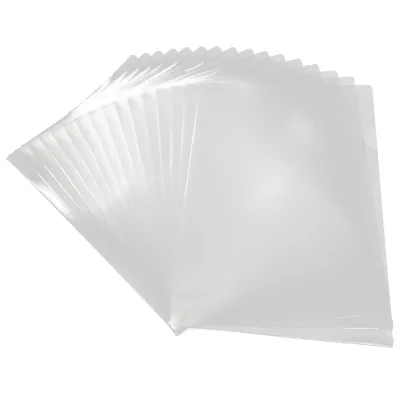
An L-folder serves as a lightweight, open-access sleeve designed for quick, single-handed document insertion and retrieval. It is the go-to choice for active, daily tasks where papers are constantly moving in and out of use.
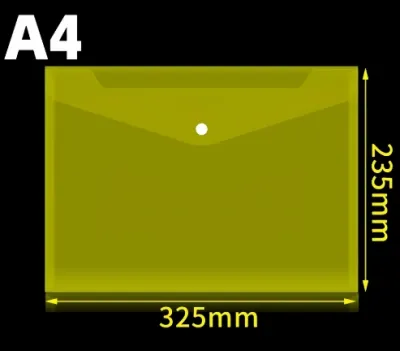
A button folder, designed like a plastic envelope with a secure snap closure, acts as a protective transport pouch. It excels at keeping medium-sized stacks of loose papers completely contained and shielded from external elements during commutes.
Products mentioned in this guide
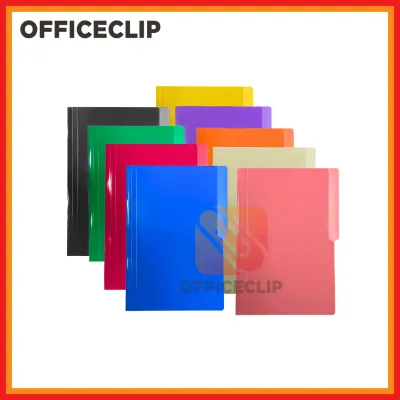
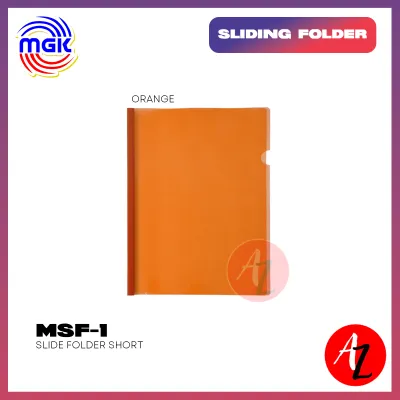
Prices are valid at publication and may change. Please refer to the product page for the latest price.
A clear book functions as a bound presentation portfolio, featuring multiple transparent inner sleeves that allow you to flip through pages like a book. This style is built for archiving, presenting, or referencing structured documents without exposing the paper to direct handling.
Selecting the wrong style can lead to lost pages, torn pockets, or ruined printouts. To make an informed decision, you must look closely at how each folder handles paper capacity, physical security, and ease of viewing.
Core Features of Each Plastic Folder Type
To choose the best tool for your filing system, you must first understand the physical anatomy of these three common plastic folder styles. Each design prioritizes a different balance between accessibility and containment.
Button Folders
Button folders, often referred to as plastic envelope folders, feature a three-sided sealed pocket with a top or side flap that folds over to close. The defining feature is a physical snap button, usually made of durable plastic, which clicks securely into place to seal the opening. This envelope-style design is specifically built to hold loose sheets of paper together without requiring any hole punching or binding.
When selecting a button folder, it is essential to check the quality of the snap mechanism and the flexibility of the plastic weld along the edges. Some button folders feature a flat profile, while others include an expandable gusset along the sides and bottom. If you plan to carry thicker stacks of documents, look for a folder with a pre-folded spine or expandable gusset, as forcing too many sheets into a flat envelope will strain the snap closure and eventually split the plastic seams.
L-Folders
L-folders are incredibly simple, minimalist sleeves constructed from a single sheet of plastic folded in half. They are sealed along the bottom edge and one side edge, forming an “L” shape of sealed borders, while the top and remaining side remain completely open. This design allows you to slide papers in and out with a single, swift motion, making them highly efficient for active desk work.
Because L-folders lack any flap, zipper, or snap closure, they do not offer complete containment on their own. If you hold an L-folder upside down or drop it, the contents will slide out immediately. For this reason, they are best used for temporary organization on a desk, or as dividers placed inside a secondary, more secure container like a briefcase, drawer, or zippered bag.
Clear Books
Clear books, also known as display books or pocket folders, consist of a rigid or semi-flexible outer plastic spine with several transparent plastic sleeves bound permanently inside. Each sleeve is open only at the top, allowing you to slide documents back-to-back so that two pages are visible per pocket. This structure keeps your documents in a fixed, chronological, or thematic order that cannot be easily shuffled or lost.
When evaluating a clear book, you should check the pocket count—typically ranging from 10 to 40 pockets—and whether the inner sleeves are made of non-glare, copy-safe material. Because the pages are bound to the spine, clear books are not designed for rapid, bulk document swapping. Instead, they are ideal for reference materials, certificates, menus, or school portfolios that need to remain clean, flat, and in a precise sequence.
Key Comparison Dimensions for Document Storage
To determine which plastic folder fits your specific routine, you need to evaluate how each type performs across three critical dimensions: capacity, protection, and accessibility.

Capacity and Thickness
The volume of paper you need to store dictates your folder choice. L-folders are strictly designed for low-capacity storage, typically holding between 1 to 30 sheets of standard paper. Overloading an L-folder causes the open edges to flare outward, which compromises its grip on the papers and increases the risk of sheets slipping out.
Button folders offer a much wider capacity range. A standard flat button folder can comfortably hold up to 50 to 100 sheets, while expandable gusseted versions can accommodate up to 200 sheets or more, making them suitable for entire project files or thick school modules.
Clear books have a fixed capacity determined by the number of bound sleeves. While you can slide two sheets back-to-back into a single pocket, attempting to stuff multiple pages into one sleeve will stretch the plastic, distort the visibility, and potentially tear the seams.
Protection and Security
In tropical environments, humidity and sudden rain can easily damage paper documents. Button folders provide the highest level of transport security among the three, as the protective flap and snap closure keep dust, light splashes, and humidity away from the paper edges.
L-folders offer minimal protection against environmental factors because two entire sides are exposed to the air. If you carry an L-folder in a backpack during a rainy commute, water can easily seep into the open edges and ruin your documents.
Clear books offer excellent surface protection for individual pages, shielding them from fingerprints, spills, and dust while they are inside the sleeves. However, because the tops of the sleeves are open, they should still be stored upright in a dry place to prevent moisture from settling inside the pockets.
Accessibility and Viewing
If your workflow requires you to constantly write on, edit, or sign papers, accessibility is paramount. L-folders excel here, allowing you to slide a document out, make a quick note, and slide it back in within seconds.
Button folders require you to unclick the snap, open the flap, and pull out the entire stack to find a specific page, which can be cumbersome if you need to reference documents frequently throughout the day.
Clear books offer the best viewing experience because you can read both sides of a document through the transparent sleeves without ever touching the paper. However, if you need to physically write on the document, you must slide it completely out of the pocket, which can become tedious if done repeatedly.
Quick Comparison of Plastic Folder Types
To help you quickly identify the right tool for your desk, this table summarizes how each plastic folder type performs across key structural and functional dimensions.
| Folder Type | Physical Structure | Best For | Document Security | Capacity Check |
|---|---|---|---|---|
| Button Folder | Envelope with snap flap | Transporting loose stacks | High (fully enclosed) | Check gusset width |
| L-Folder | Two-sided open sleeve | Quick desk access | Low (open edges) | Limit to 30 sheets |
| Clear Book | Bound transparent sleeves | Presentations & archives | Medium (sleeves open at top) | Check pocket count |
Decision Framework: Which Plastic Folder Should You Choose?
To make your final selection, match your specific document handling scenario to the following practical guidelines.
Choose an L-Folder if:
- You are organizing active, daily paperwork on your desk that you need to grab instantly.
- You need to separate different subjects, clients, or tasks into color-coded categories.
- You plan to store these folders inside a larger, secure container like a filing cabinet, drawer, or zippered portfolio.
- Your document stacks are thin, typically under 20 sheets per folder.
Choose a Button Folder if:
- You need to transport documents safely between home, school, or the office in a backpack or tote bag.
- You are handling medium-to-large stacks of loose papers that must not get mixed up or lost.
- You need protection against dust, light rain, or accidental spills during your daily commute.
- You want a reusable, durable envelope that can hold various paper sizes without requiring hole punches.
Choose a Clear Book if:
- You need to present certificates, portfolios, menus, or project proposals to clients or teachers.
- You have reference sheets, such as standard operating procedures or study guides, that you consult frequently.
- You want to preserve the pristine condition of your papers and protect them from fingerprints and dust.
- The order of your documents must remain fixed and chronological.
Verify first if:
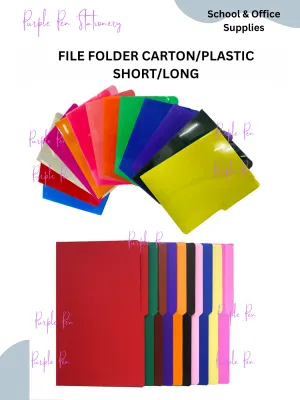
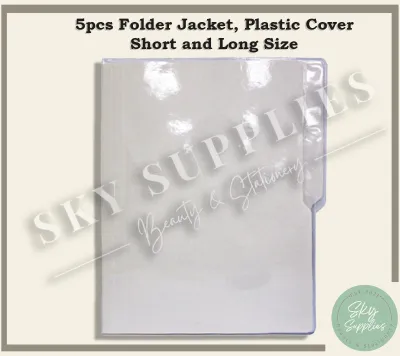
- Your papers match local standard dimensions. In the Philippines, office and school documents commonly use either Short Letter (8.5 x 11 inches), Long Letter (8.5 x 13 inches), or A4 size. Ensure the folder you buy explicitly fits your paper size to prevent edges from bending.
- Your printed documents use heavy ink or toner. Look for "copy-safe" or acid-free polypropylene materials to prevent the ink from lifting off the paper and sticking to the plastic over time. To verify if your printed documents will stick to the plastic, perform a quick observable trial: press a small, printed scrap of paper against the inside of the folder under a heavy book for 24 hours. If the ink peels or transfers to the plastic, the material is not copy-safe.
- You need to store heavily punched papers. If your documents are already hole-punched, a ring binder might be a more suitable alternative than a clear book or button folder.
Frequently Asked Questions (FAQ)
Can I use an L-folder for long-term archival storage?
L-folders are not recommended for long-term archival storage. Because two sides of the folder are completely open, the enclosed papers remain exposed to ambient dust, light, and atmospheric humidity over time. In tropical climates, this exposure can accelerate paper yellowing and cause sheets to curl. For long-term preservation, choose a fully enclosed storage option, and always check the product label to ensure the plastic is acid-free and archival-safe.
How do I prevent papers from falling out of a button folder?
To keep your documents secure, always check the tension of the snap button before transport; a loose or damaged snap can easily pop open inside a bag. Avoid overfilling the folder beyond its intended capacity, as excessive pressure on the seams can cause the plastic to split or the button to fail. If you regularly carry large stacks, opt for a button folder with an expandable gusset and a reinforced fabric border to distribute the weight evenly.

Community discussion
Share your experience or ask a question. Comments are reviewed before publication.