
Choosing the right acknowledgement receipt book for your business comes down to balancing transaction speed, physical handling, and your operational budget. While traditional carbon copy books rely on a physical sheet of carbon paper placed between pages to transfer your handwriting, modern carbonless (no carbon required, or NCR) books use a chemical coating that reacts directly to the pressure of your pen. For fast-paced operations where clean hands and rapid transactions are essential, carbonless receipts offer a seamless, mess-free solution. Conversely, if your business operates in rugged environments where upfront cost is the primary constraint, traditional carbon copy books remain a highly practical and reliable option.
Understanding How Each Receipt Technology Works
To make an informed decision, it is helpful to understand the mechanics behind how each paper type duplicates your writing. Carbonless paper, often referred to as NCR paper, relies on microscopic dye capsules coated on the back and front of the sheets. When you write on the top sheet, the pressure of your pen tip ruptures these microcapsules, releasing a colorless dye that reacts with a clay-like receptor coating on the sheet below to form a visible image. This chemical reaction happens instantly, creating a clean duplicate without any intermediate sheets.
Traditional carbon copy books, on the other hand, use a purely mechanical transfer method. A separate sheet of paper coated with a dark, waxy carbon pigment is placed manually between the original receipt and the duplicate page. As you write on the top page, the physical pressure of your pen transfers the carbon wax from the insert sheet onto the page underneath.
Products mentioned in this guide
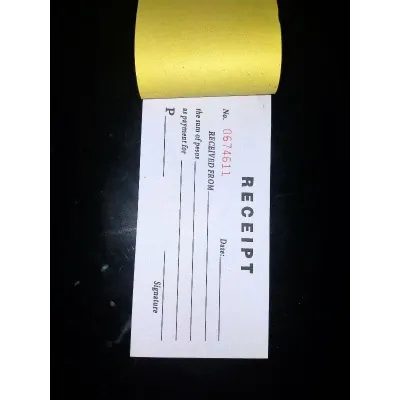
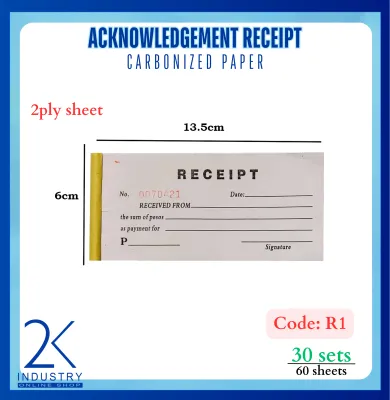
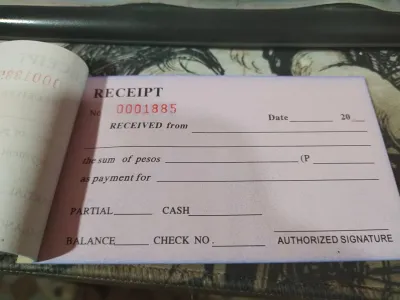
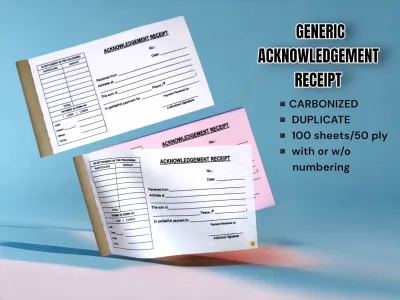
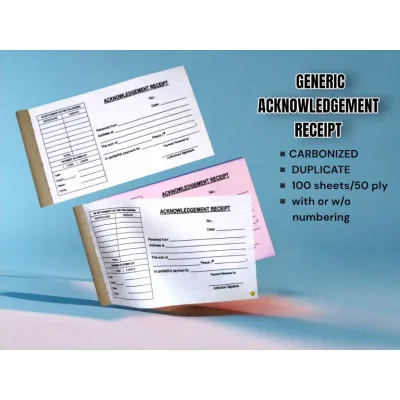
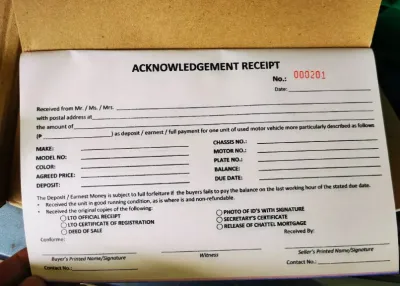
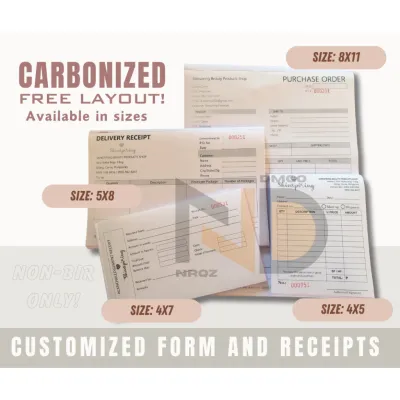
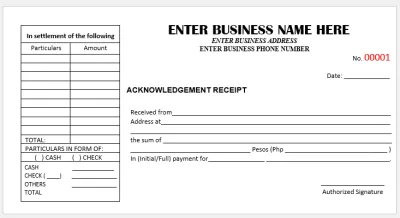
Prices are valid at publication and may change. Please refer to the product page for the latest price.
This mechanical difference directly impacts daily handling. With carbonless books, you simply write on the top sheet of a pre-collated set, and the copy appears automatically on the pages below. With traditional carbon copy books, you must manually insert and align the loose carbon sheet before writing, and then carefully remove it afterward to avoid smudging your hands or the document.
Comparing Carbonless and Carbon Copy Receipts for Daily Use
Evaluating these two formats for daily business operations requires looking at how they perform under real-world conditions. Factors such as legibility, copy volume, physical handling, and environmental resilience will determine which book keeps your documentation clear and organized.

Because performance can vary based on paper weight, coating quality, and manufacturer specifications, understanding these core differences will help you select the right tool for your office or field staff.
Image Clarity and Number of Copies
The clarity of your duplicate receipts depends heavily on the transfer technology and the number of copies you need to generate at once. Carbonless receipt books are typically sold in pre-collated sets, such as 2-part (duplicate), 3-part (triplicate), or 4-part (quadruplicate) configurations. Because the chemical reaction relies on pressure, the sharpness of the image can decrease on lower copies. The first duplicate is usually very sharp, but by the third or fourth copy, the lines may appear fainter if light writing pressure is applied.
Traditional carbon copy sheets transfer a physical layer of wax, which often produces highly legible, dark lines on the first duplicate. However, because the carbon sheet itself degrades with repeated use, the transfer quality will decline over time as the wax is worn away. If you regularly require three or more copies, carbonless sets are generally more reliable because each set uses fresh, unused chemical coatings, whereas a worn carbon sheet in a traditional book can result in patchy, unreadable duplicates.
To ensure legible records, always check the manufacturer’s specifications for the maximum recommended number of parts. If your business workflow requires sharing copies with multiple departments, verifying that the lower sheets maintain high contrast under normal writing pressure is a critical step before purchasing in bulk.
Cost and Budget Considerations
When managing business expenses, evaluating the financial impact of your stationery choices involves looking beyond the initial purchase price. Traditional carbon copy receipt books generally feature a lower upfront unit cost, making them highly attractive for small businesses, startups, or low-volume operations. Because the manufacturing process for standard paper and carbon sheets is simpler than coating paper with microcapsules, these books are highly budget-friendly.
However, carbonless receipt books, while carrying a higher initial price per book, can offer long-term cost savings through increased operational efficiency. The time spent manually inserting, aligning, and removing carbon sheets adds up over hundreds of transactions, potentially slowing down customer service. Additionally, misplaced or worn-out carbon sheets can lead to ruined copies, requiring staff to void and rewrite receipts, which wastes paper and time.
To determine the most cost-effective option for your business, compare the price per set or price per book in ₱ using current supplier catalogs. Weighing the upfront savings of traditional books against the labor efficiency and reduced waste of carbonless books will help you identify the true value for your specific transaction volume.
Handling, Storage, and Environmental Factors
The physical environment of your workspace plays a significant role in how well your receipt books perform and last over time. Traditional carbon copy books can be messy to handle, especially in warm, humid tropical climates where the waxy carbon coating on the transfer sheets can soften. This softening often leads to smudged fingers, stained clothes, and dark streaks across your clean receipt pages during handling.
Carbonless paper avoids the mess of carbon wax, but its chemical coatings are sensitive to environmental conditions. High humidity, extreme heat, and prolonged exposure to direct sunlight can cause the chemical microcapsules to degrade or react prematurely, leading to faded copies or yellowed pages over time. If your business requires archiving physical receipts for several years, you must store carbonless documents in a controlled environment to preserve the legibility of the chemical transfer.
Before purchasing, it is wise to check the storage instructions on the product packaging. Ensuring your storage area is dry and shielded from direct light will help maintain the quality of both carbonless chemical coatings and traditional carbon sheets, preventing premature degradation of your business records.
When to Choose Carbonless (NCR) Acknowledgement Receipts
Carbonless acknowledgement receipt books are the ideal choice for modern, professional business environments where speed, presentation, and cleanliness are top priorities. If your staff interacts directly with clients in an office, retail store, or professional service setting, presenting a clean, smudge-free receipt is essential for maintaining a polished brand image. NCR books eliminate the risk of ink-stained fingers and messy carbon sheets, ensuring that both your staff and your customers handle clean paper.
These books are also highly recommended for high-volume operations where transaction speed is critical. Because the sheets are pre-collated and ready to write on, cashiers or administrative staff can fill out a receipt and hand over the duplicate instantly, without the delay of adjusting carbon inserts. This efficiency is particularly valuable during peak business hours when reducing customer wait times is a priority.
Furthermore, if your internal accounting workflow requires distributing copies to multiple departments—such as sales, inventory, and bookkeeping—carbonless triplicate or quadruplicate books streamline the process. The absence of loose carbon sheets means there is no waste to collect and discard after every transaction, keeping your workspace tidy and reducing daily trash.
When to Choose Traditional Carbon Copy Receipt Books
Despite the convenience of carbonless technology, traditional carbon copy receipt books remain highly practical for specific business models and working environments. If your business operates in rugged, outdoor, or dusty settings—such as construction sites, open-air markets, or delivery routes—traditional books are exceptionally resilient. The physical carbon transfer mechanism is less sensitive to rough handling and does not rely on delicate chemical coatings that can be compromised by environmental exposure.
Traditional books are also the most logical choice for strict, low-budget operations where minimizing upfront expenses is the primary goal. For micro-businesses, sole proprietorships, or community-based enterprises with low transaction volumes, the lower cost per book allows you to maintain official documentation without overextending your operating budget.
Additionally, if your business only requires a single duplicate (a 2-part set) and your transaction volume is low, the effort of moving a carbon sheet is minimal. In these scenarios, the minor inconvenience of handling carbon paper is easily offset by the cost savings, making traditional books a highly sensible and functional choice.
Verifying Specifications and Binding Before You Buy
Before committing to a bulk order of acknowledgement receipt books, verifying their physical specifications ensures they will withstand daily use without tearing or failing. Start by checking the paper weight, measured in grams per square meter (GSM). For the top sheet, a weight of 70 GSM to 80 GSM provides a sturdy writing surface, while the duplicate sheets should be thick enough to resist tearing but thin enough to allow pressure to transfer clearly.
Next, examine the binding type, as this determines how well the book holds together under frequent handling. Stitched or spiral bindings are highly durable and prevent pages from falling out prematurely, making them ideal for books that must remain intact as a permanent record. If you need to tear out receipts frequently, look for books with clean, deep perforations near the spine, which allow pages to be removed smoothly without ripping the document.
Finally, confirm the exact page count and the numbering sequence with your supplier. Sequential numbering is crucial for internal auditing, tracking sales, and preventing fraud, so ensuring that your books arrive with accurate, consecutive numbers is essential. Taking the time to verify these physical details will guarantee that your receipt books serve as reliable, professional records for your business.
Frequently Asked Questions (FAQ)
Can I use a standard ballpoint pen on carbonless receipt paper?
Yes, a standard ballpoint pen is the best writing instrument for carbonless receipt paper. Because NCR paper relies on physical pressure to rupture the microcapsules and transfer the image, the hard, focused tip of a ballpoint pen provides the necessary force to create a sharp, clear copy on the sheets below.
You should avoid using gel pens, fountain pens, or felt-tip markers on carbonless paper. These instruments distribute liquid ink that sits on the surface of the paper without applying concentrated pressure, resulting in faint or non-existent copies on the duplicate sheets, while also increasing the risk of smearing on the top page.
Before purchasing a large batch of receipt books, it is always a good practice to test a single book with your preferred office pens to ensure the transfer is clear and legible across all copies.
How should I store unused acknowledgement receipt books to maintain quality?
To preserve the quality of your unused receipt books, store them flat in a cool, dry place away from direct sunlight and high humidity. Keeping them in a closed cabinet or plastic storage container protects the chemical coatings of carbonless paper from environmental degradation and prevents traditional carbon sheets from drying out.
Avoid placing heavy boxes or office equipment on top of stored carbonless books. Excessive weight can apply accidental pressure to the pages, causing the microcapsules to rupture prematurely and leaving dark, unsightly marks or blue-purple stains on the duplicate sheets before they are even used.
Additionally, check the manufacturer’s packaging for any specific shelf-life recommendations, as carbonless paper is generally best used within a few years of manufacture to ensure optimal chemical reactivity.

Community discussion
Share your experience or ask a question. Comments are reviewed before publication.