
Selecting the right delivery receipt book is a foundational decision for any business handling physical logistics, retail distribution, or field services. The choice between modern carbonless (NCR) paper and traditional carbon paper directly impacts your daily operational speed, the professionalism of your customer interactions, and the long-term legibility of your financial records. While both materials serve the same primary purpose—creating instant duplicates of a transaction—they rely on entirely different technologies that perform uniquely under daily wear and tear.
How Carbonless and Carbon Paper Receipts Work
Carbonless paper, often referred to as NCR (No Carbon Required) paper, relies on a clever chemical reaction to duplicate your writing. The sheets in an NCR book are treated with invisible chemical coatings. The back of the top sheet is coated with micro-encapsulated dye, while the front of the sheet below it is coated with a reactive developer clay or resin. When you write on the top sheet, the localized pressure of your pen tip ruptures these microscopic capsules. The released dye mixes with the developer on the sheet below, creating a sharp, highly defined image of your handwriting without the need for any physical ink sheet in between.
In contrast, traditional carbon paper relies on a purely physical transfer process. This system uses a separate, loose sheet of paper coated with a dark, waxy pigment layer—typically black or blue carbon ink. You must manually place this carbon sheet between the original receipt page and the blank duplicate page below. When you write on the top sheet, the physical pressure of your pen transfers the waxy pigment from the carbon sheet onto the surface of the duplicate page. Because this process is entirely mechanical, it does not rely on chemical reactions and will transfer pigment under almost any type of pressure.
Products mentioned in this guide
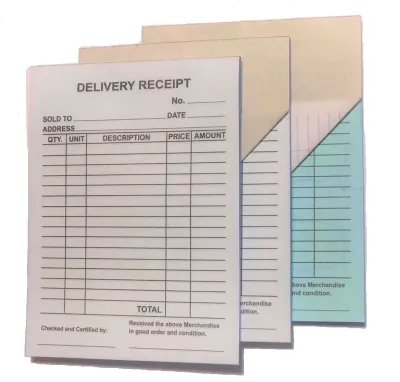
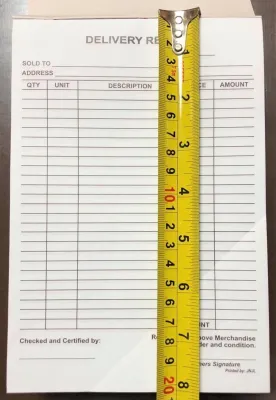
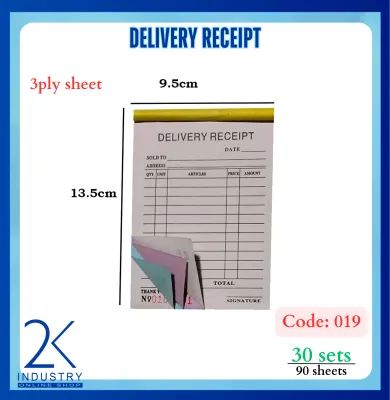
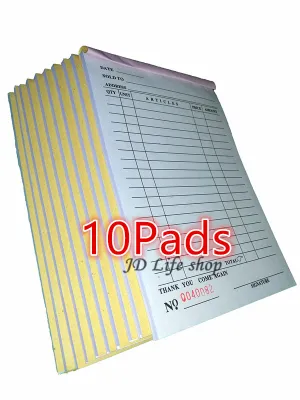
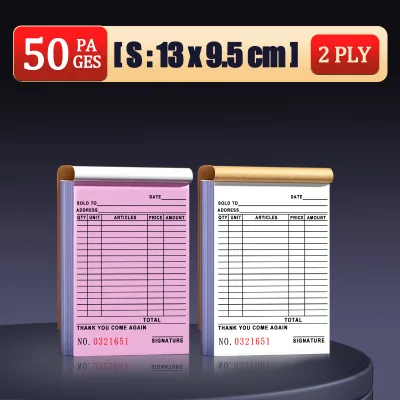
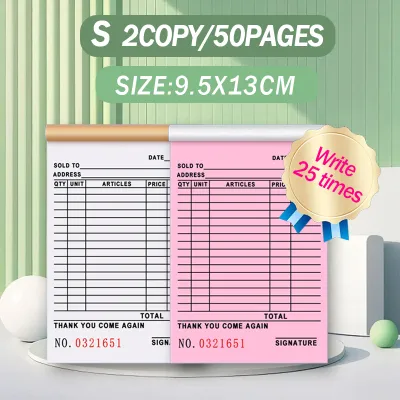
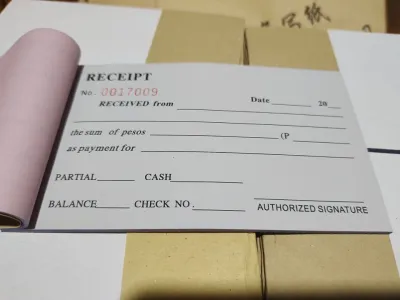
Prices are valid at publication and may change. Please refer to the product page for the latest price.
These distinct mechanisms dictate the types of writing tools and the amount of pressure required for daily use. Carbonless paper requires a firm, concentrated point of pressure to burst the micro-capsules, making fine-point ballpoint pens the ideal choice. Carbon paper, on the other hand, requires a heavier, more deliberate hand to transfer the physical wax layer, meaning that soft-tipped pens or light pressure may result in faint, incomplete duplicates.
Key Differences for Daily Business Operations
Cleanliness is one of the most immediate differences you will notice during daily business operations. Carbonless paper is completely dry and smudge-free, as the dye is locked inside microscopic capsules until targeted pressure is applied. This means your delivery riders, warehouse staff, and customers can handle the receipts without getting dark ink stains on their fingers, uniforms, or the goods being delivered. Traditional carbon paper, however, is notorious for transferring its waxy pigment onto hands, clothing, and surrounding surfaces. Over the course of a busy delivery route, carbon smudges can easily ruin the appearance of your receipts and leave unsightly marks on your inventory.

Copy clarity and volume are critical when you need to distribute multiple copies of a single delivery receipt to different departments, such as accounting, inventory, and the customer. Carbonless books excel at producing crisp, high-contrast duplicates, especially in standard two-part (duplicate) or three-part (triplicate) formats. Because the chemical reaction occurs exactly where the pen tip applies pressure, the lines remain thin and highly legible. Carbon paper can also produce multiple copies, but the clarity tends to degrade quickly with each subsequent layer. If the carbon sheet is reused multiple times, the pigment wears thin in frequently written areas, leading to patchy, illegible records that can cause disputes during audits.
The physical effort required to fill out receipts can affect employee fatigue and data accuracy over a long shift. Carbonless paper is designed to react to standard writing pressure, allowing your staff to write naturally without straining their hands. It is highly compatible with standard ballpoint pens, which provide the hard, rolling point necessary to activate the chemical layers. Carbon paper requires significantly more physical force to achieve a dark transfer, which can tire out staff who fill out dozens of receipts daily. Additionally, if a writer uses a gel pen or a felt-tip pen on carbon paper, the soft ink flow may not provide enough physical downward force to transfer the wax underneath, resulting in a blank duplicate.
In the tropical climate of the Philippines, environmental factors like high humidity, intense heat, and friction play a major role in the longevity of your records. Carbonless paper is sensitive to prolonged exposure to direct sunlight and extreme heat, which can cause the chemical coatings to react prematurely or fade over time. If you store NCR receipts in a hot delivery truck or a humid warehouse, the pages may yellow or the text may lose its contrast. Carbon paper copies are relatively stable in terms of chemical fading, but the transferred wax pigment is highly susceptible to friction and heat. In high-temperature environments, the wax can soften, causing the written text to smudge or bleed into the paper fibers if the sheets rub against each other in a filing cabinet.
Cost and Value Considerations
When evaluating the financial impact of your stationery choices, it is important to look beyond the initial purchase price. Carbonless receipt books generally carry a higher upfront cost per book, with prices in local office supply stores or online marketplaces typically ranging from ₱150 to ₱300 depending on the size, page count, and number of parts. Traditional carbon paper receipt books are significantly cheaper upfront, often retailing for under ₱100 per book, as they use standard paper and require only a few reusable carbon sheets.
However, carbon paper books introduce several hidden operational costs that can quickly erode those initial savings. The manual process of inserting, aligning, and moving the carbon sheet between pages takes up valuable seconds during every single transaction. For a business handling dozens or hundreds of deliveries a day, these lost seconds accumulate into hours of wasted labor over the course of a month. Furthermore, if a carbon sheet slips or wears out unnoticed, the resulting illegible duplicate can lead to costly delivery disputes, lost billing records, and administrative headaches that far outweigh the price difference of the books.
To find the true value for your business, you should calculate the cost per usable, legible copy rather than just the cost per book. A carbonless book ensures that every single page is ready to write on instantly, with zero setup time and a very low rate of failed transfers. When you factor in the speed of transactions, the reduction in administrative errors, and the professional image presented to your clients, the slightly higher upfront investment in carbonless books often yields a much lower total cost of operation.
Decision Framework: Choosing the Right Delivery Receipt Book
Choose Carbonless (NCR) if your business handles a high volume of daily transactions, operates in customer-facing environments, or requires clean, professional-looking documentation. It is the ideal choice for modern logistics companies, retail distributors, and professional service providers who want to streamline their workflows. If your delivery riders need to hand a clean, smudge-free receipt directly to a client at a corporate office or a residential doorstep, carbonless paper ensures a polished presentation that reflects well on your brand.
Choose Carbon Paper if your operations take place in highly rugged, dusty, or greasy environments where hands and tools are already dirty, such as automotive repair shops, industrial yards, or outdoor construction sites. In these settings, the pristine cleanliness of carbonless paper is less of a priority, and the heavy physical pressure typically applied by workers in these fields matches the requirements of carbon transfer. It is also a viable option for micro-businesses or startups operating on an extremely tight upfront budget with low daily transaction volumes.
Verify First if you plan to run your receipt forms through specialized printing equipment, such as dot matrix impact printers, or if your business must comply with strict long-term archival regulations. Always check the manufacturer’s product labels and specifications to ensure the paper weight, feed mechanism, and chemical stability align with your specific hardware and storage requirements before making a bulk purchase.
Best Practices for Handling and Storing Receipt Books
To preserve the integrity and legibility of your delivery records, proper handling and storage are essential, especially under tropical conditions. Keep your receipt books stored in a cool, dry place away from direct sunlight, high humidity, and localized heat sources like engines or office appliances. Excessive heat can degrade the wax on carbon paper or trigger the chemical developer on carbonless paper, leading to faded text or discolored pages.
When writing on either type of receipt book, always use a hard, flat writing surface such as a sturdy clipboard or a solid desk. A firm backing ensures that the pressure from your pen tip is distributed evenly across the page, resulting in a complete and highly legible transfer on all duplicate sheets.
Additionally, store your carbonless receipt books flat and avoid stacking heavy boxes or equipment on top of them. Because NCR paper reacts to physical pressure, heavy weight or sudden impacts can accidentally rupture the micro-capsules inside the book, leaving unwanted dark marks and smudges across multiple unused pages.
Frequently Asked Questions (FAQ)
Can I use any type of pen on carbonless receipt books?
While you can physically write with various pens, ballpoint pens are highly recommended for carbonless receipt books. The hard, rotating ball at the tip of a ballpoint pen provides the concentrated, localized pressure required to rupture the microscopic dye capsules on the paper. Gel pens, rollerballs, and felt-tip pens tend to distribute ink with much lighter physical pressure, which may fail to activate the chemical reaction on the duplicate sheets below. Always check the product packaging for specific manufacturer recommendations regarding compatible writing instruments.
How long do carbonless copies last compared to carbon paper?
Both carbonless and carbon paper copies can remain legible for several years if they are stored under optimal conditions. However, carbonless paper is more sensitive to environmental factors; exposure to direct sunlight, high temperatures, and certain plasticizers (found in some plastic folders) can cause the chemical image to fade over time. Carbon paper copies are highly resistant to chemical fading but can smudge easily if subjected to friction. For long-term record retention, look for receipt books explicitly labeled as archival-quality or fade-resistant, and store them in acid-free folders.
Are carbonless receipt books compatible with dot matrix printers?
Yes, carbonless receipt books and continuous forms are highly compatible with dot matrix printers. Because dot matrix printers use a physical impact mechanism—where tiny metal pins strike an ink ribbon against the paper—they provide the exact physical pressure needed to rupture the micro-capsules in NCR paper. Before printing, verify the paper thickness, number of parts, and tractor feed compatibility in your printer’s user manual to prevent paper jams and ensure clear transfers on all copies.

Community discussion
Share your experience or ask a question. Comments are reviewed before publication.