
Choosing between a carbonless receipt pad and a traditional carbon receipt pad comes down to balancing your daily transaction volume, your preferred workflow, and the level of presentation you want to offer your customers. While both serve as an ordinary receipt pad to document sales, they rely on completely different physical and chemical mechanisms to duplicate your writing. Carbonless pads offer a clean, modern, and smudge-free experience that streamlines fast-paced transactions, whereas traditional carbon pads remain a highly accessible, budget-friendly alternative for low-volume setups or specific manual record-keeping environments. By understanding how these two paper technologies perform under daily operational demands, you can select the format that best supports your business efficiency.
To make an informed decision, you must look beyond the simple act of writing a receipt. Factors such as local climate conditions, storage space, and the physical effort required to produce legible copies all play a role in how these pads perform over time. Whether you run a bustling boutique, a cozy neighborhood cafe, or a market stall, the right receipt pad ensures your financial records remain clear, organized, and professional.
Understanding How Carbon and Carbonless Pads Work
To choose the right ordinary receipt pad, it helps to understand the physical and chemical differences between traditional carbon paper inserts and carbonless technology. Traditional carbon receipt pads rely on a purely mechanical transfer of ink. This system uses a separate, loose sheet of paper coated with a dark, wax-based carbon pigment. When you write on the top sheet, the physical pressure of your pen transfers the carbon ink from the interleaved sheet onto the duplicate page directly beneath it. This requires you to manually place and align the carbon sheet between the pages before every single transaction.
Products mentioned in this guide
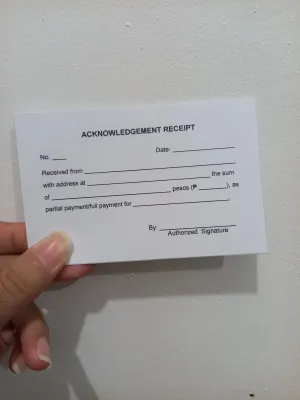
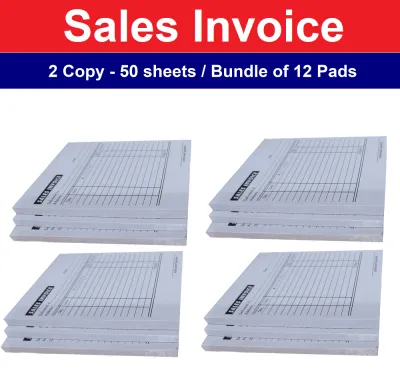
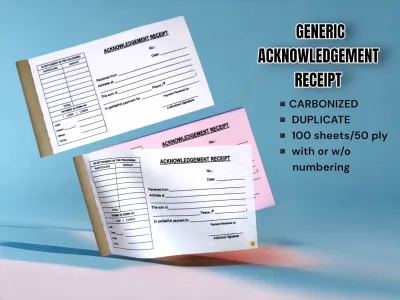
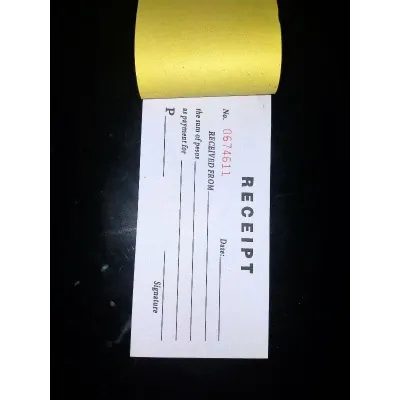
Prices are valid at publication and may change. Please refer to the product page for the latest price.
In contrast, carbonless paper—often referred to as NCR (No Carbon Required) paper—relies on a chemical reaction embedded directly within the paper plies. A standard multi-part carbonless pad consists of specially treated sheets. The back of the top sheet is coated with microscopic dye capsules, while the front of the bottom sheet is coated with a reactive clay layer. When you apply pressure with a pen, these microcapsules rupture, releasing a colorless dye that reacts with the clay coating on the sheet below to form a highly visible, sharp image. For triplicate or quadruplicate forms, intermediate sheets are coated with clay on the front and microcapsules on the back to continue the chain reaction.
These mechanical differences directly affect the physical structure and handling of the receipt pad. Traditional carbon pads are naturally bulkier because they must accommodate the extra carbon inserts, which can easily slip, wrinkle, or tear during busy shifts. Carbonless pads are bound as pre-collated, self-contained plies. This makes the entire pad thinner, lighter, and much easier to handle, store, or carry around a retail space or service environment.
Key Comparison Dimensions for Daily Transactions
Evaluating how both receipt types perform across practical metrics will help you understand their impact on your daily business operations, efficiency, and record-keeping.

Print and Copy Clarity
Carbonless copies generally provide excellent legibility with sharp, clean lines because the chemical reaction occurs exactly where the pressure is applied. However, because this process relies on a chemical reaction, you must apply firm, steady pressure to ensure the dye capsules rupture completely. Traditional carbon copies rely on physical ink transfer, which can produce a very dark and bold duplicate under heavy pressure. However, traditional carbon is highly prone to smudging if the paper shifts slightly during writing or if the sheets are handled with damp hands. In humid tropical climates, such as in the Philippines, high moisture levels in the air can make traditional carbon sheets slightly sticky, increasing the risk of ink bleeding and smudging across your records.
Number of Copies
Standard receipt pads are typically configured as duplicates (2-part) or triplicates (3-part). With carbonless pads, the copy quality naturally degrades on lower plies, such as the third or fourth sheet, because the physical pressure of your handwriting dissipates as it travels through the paper stack. Traditional carbon sheets can sometimes handle deeper stacks of copies if you use a hard backing board and a heavy-duty ballpoint pen, but the manual effort required to press hard enough increases significantly, which can tire out your staff during long shifts.
Equipment Compatibility
If your business uses impact machinery, such as dot matrix printers or vintage typewriters, both types of paper can work, but you must verify your specific device’s feed mechanism and pressure settings. Non-impact printing methods, such as standard inkjet or thermal printers, are entirely incompatible with both carbon and carbonless pads. For manual handwriting, a medium-point ballpoint pen is the ideal tool for both pad types, as it provides the concentrated physical pressure necessary to trigger either the chemical reaction in carbonless paper or the physical ink transfer in carbon sheets.
Archival and Storage Stability
Because smoothness, bleed resistance, and drying speed depend on the exact combination of paper weight and ink type, it is highly recommended to perform a quick manual test before purchasing receipt pads in bulk. Write on a sample sheet using your business’s standard pen to verify that the ink dries quickly without smudging and that the pressure transfers clearly to the duplicate copy without bleeding through the bottom sheet. This is especially important for long-term storage. Carbonless images can fade over several years if they are exposed to direct sunlight, high heat, or chemical vapors. Traditional carbon ink transfers are highly resistant to light fading, but the wax-based ink can smudge, transfer, or bleed if the stored documents are subjected to high humidity, friction, or heavy stacking in filing cabinets.
Evaluating Cost and Operational Value
Assessing the true cost of ownership of an ordinary receipt pad requires looking beyond the initial purchase price and evaluating how each option affects your daily business workflow.
Traditional carbon pads generally carry a lower upfront unit cost in ₱, making them highly attractive for micro-businesses, market stalls, or startups operating on a very tight stationery budget. If your transaction volume is low, the lower initial price of carbon pads can help keep your overhead minimal. Carbonless pads command a slightly higher upfront price due to the specialized chemical coatings and manufacturing processes involved in creating NCR paper.
However, traditional carbon pads introduce several hidden operational costs that can quickly add up. The time your employees spend manually inserting, aligning, and removing the carbon paper for every single transaction slows down the checkout process. During peak business hours, this delay can lead to longer customer queues and increased frustration. Additionally, used carbon sheets accumulate rapidly as waste, requiring constant disposal. This waste often leaves dark ink smudges on your employees’ hands, the service counter, and potentially even your customers’ clothing or purchased goods.
For businesses with moderate to high transaction volumes, the time saved by using carbonless pads easily offsets the minor difference in upfront cost. A clean, smudge-free receipt pad enhances your customer-facing professionalism, projecting an organized, modern, and reliable brand image. It also reduces administrative errors caused by illegible or smudged carbon copies, saving your accounting team valuable time during reconciliation.
Decision Framework: Which Pad Should Your Business Use?
To help you select the most appropriate ordinary receipt pad for your specific business workflow, consider the following conditional decision guidelines:
- Choose Carbonless (NCR) if: Your business handles a steady stream of daily transactions where speed, cleanliness, and efficiency are paramount. If you operate a boutique, a busy cafe, a professional service office, or a delivery service, the seamless workflow of carbonless paper keeps your operations moving quickly. It eliminates the mess of loose carbon sheets, ensuring your staff and customers do not end up with ink-stained fingers, and provides a neat, modern presentation.
- Choose Traditional Carbon if: You run a low-volume business, such as a small neighborhood retail store, a temporary pop-up shop, or an outdoor market stall where transactions are infrequent and upfront stationery costs must be kept to an absolute minimum. It is also a viable option if your workflow involves heavy-handed writing or legacy impact equipment that requires a physical ink barrier to create a highly visible duplicate.
- Verify First if: Your business must comply with strict, long-term document retention laws for tax or auditing purposes. Because chemical coatings on carbonless paper can degrade over several years when exposed to tropical heat and humidity, you should verify local archival standards. In many cases, digitizing your paper receipts by scanning or photographing them is the safest way to ensure a permanent, legible record, regardless of the paper medium you choose.
Frequently Asked Questions (FAQ)
Can I use a carbonless receipt pad in a standard thermal printer?
No, carbonless receipt pads are designed strictly for manual handwriting or impact-based printing. They require physical pressure to rupture the microcapsules and transfer the image. Standard thermal printers do not apply physical impact; instead, they use controlled heat elements that react only with specialized, heat-sensitive thermal paper rolls. Attempting to run carbonless paper through a thermal printer will not produce an image and could potentially damage the print head due to the chemical coatings on the paper.
How should I store unused ordinary receipt pads to maintain their quality?
To preserve the integrity of both carbonless and traditional carbon pads, store them in a cool, dry, and dark environment away from direct sunlight and high humidity. Avoid stacking heavy boxes or placing heavy objects on top of carbonless pads, as excessive pressure can prematurely rupture the microcapsules and ruin the sheets. For traditional carbon pads, keeping them away from high heat is crucial to prevent the wax-based carbon ink from melting, bleeding, or sticking to adjacent pages.
Are carbonless receipts legally valid for tax and audit purposes?
Yes, carbonless receipts are widely accepted as legally valid business records for tax and auditing purposes, provided they contain all the mandatory transaction details required by local regulations. However, because the chemical images on carbonless paper can fade over time when exposed to heat, light, or moisture, it is highly recommended to verify specific document retention guidelines with your accountant or local tax authority. Many businesses choose to scan and digitally archive their carbonless receipts to ensure long-term compliance and legibility.

Community discussion
Share your experience or ask a question. Comments are reviewed before publication.