
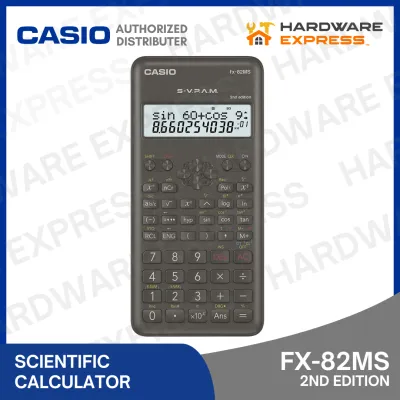
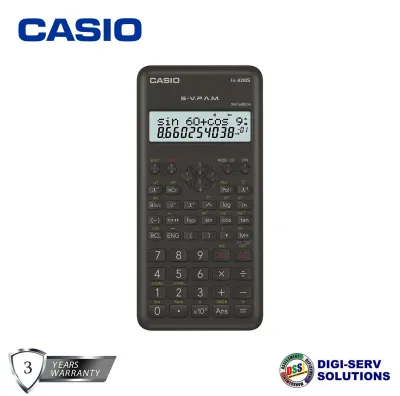
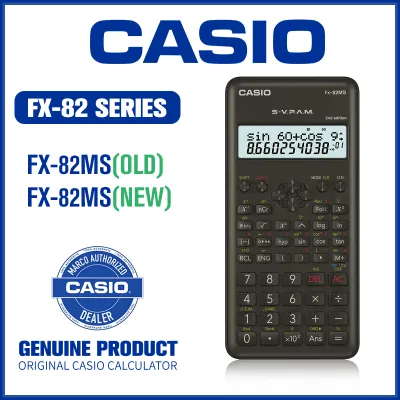
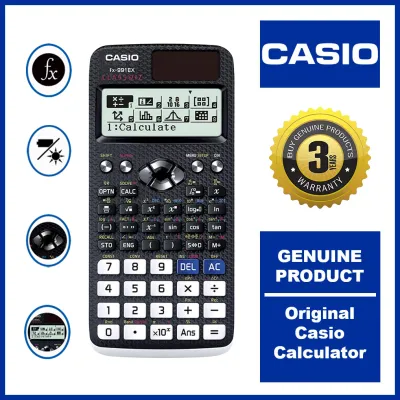
Choosing between the Casio fx-82MS and the Casio fx-991MS is a critical decision that directly impacts your academic performance, study habits, and exam readiness. While both devices are staples in classrooms worldwide, they serve entirely different stages of a student’s educational journey. The fx-82MS is a streamlined, highly reliable scientific calculator designed for foundational mathematics, making it the ideal companion for junior and senior high school students. Conversely, the fx-991MS is an advanced computational tool equipped with a vast array of complex functions, including equation solvers, matrix operations, and calculus capabilities, making it a necessity for college-level engineering, architecture, and science majors. Selecting the right model requires a careful evaluation of your current syllabus, your long-term academic goals, and the specific rules of your school or national examination boards.
Core Differences in Functions and Capabilities
To make an informed decision, you must first understand the functional gap between these two popular models. Both the fx-82MS and the fx-991MS share a solid foundation of standard scientific functions. These include basic trigonometric operations like sine, cosine, and tangent, along with their corresponding inverse functions. They also handle common and natural logarithms, exponential calculations, permutations, combinations, and basic single-variable statistical analysis, such as finding the mean and standard deviation of a dataset. For general science classes and introductory algebra, these shared capabilities are more than sufficient to get the job done.
However, the fx-991MS introduces a suite of advanced features that set it apart as a professional-grade tool. This model includes a built-in equation solver that can handle quadratic, cubic, and simultaneous linear equations with up to three unknowns. It also supports complex number calculations, which are vital for electrical engineering students analyzing alternating current circuits. Furthermore, the fx-991MS allows users to perform matrix and vector calculations, as well as numerical integration and differentiation. These advanced tools eliminate the need for tedious manual calculations, saving valuable time during complex exams.
Products mentioned in this guide
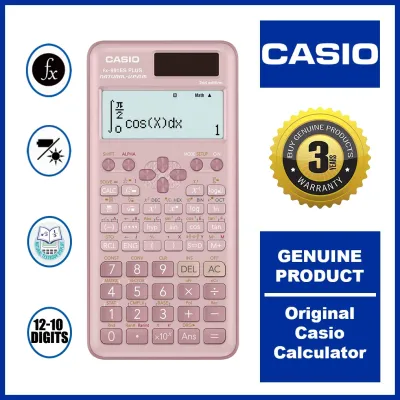
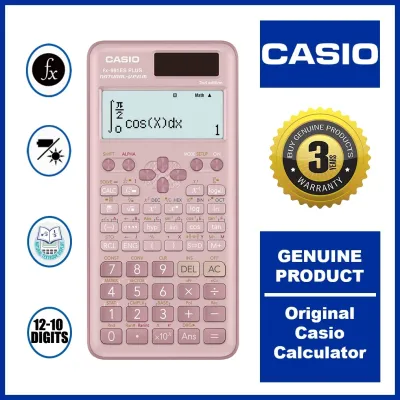
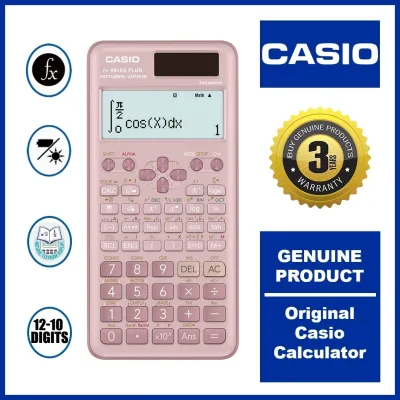
Prices are valid at publication and may change. Please refer to the product page for the latest price.
Because manufacturers occasionally update their product lines or release regional variations with slight modifications, you should always verify the exact function count and specific feature list on the product packaging or the manufacturer’s official label before purchasing. Checking these details ensures that the specific unit you buy contains all the mathematical operations required for your coursework.
Matching the Calculator to Your Academic Level
Aligning your calculator choice with your current academic level prevents unnecessary frustration and helps you study more efficiently. For junior and senior high school students, the fx-82MS is typically the most practical choice. High school curricula focus heavily on building a strong conceptual understanding of algebra, geometry, and basic trigonometry. At this stage, advanced features like matrix operations or automatic integration are not required, and using a simpler calculator encourages students to master the underlying mathematical principles manually.

For college students pursuing degrees in STEM fields, such as civil engineering, mechanical engineering, physics, or chemistry, the fx-991MS is almost always the superior option. College-level exams are often timed strictly, and the ability to quickly solve a system of linear equations or find the derivative of a function at a specific point can mean the difference between passing and failing. The advanced model acts as a vital verification tool, allowing you to double-check your manual derivations rapidly.
There are practical risks to buying the wrong model for your needs. Purchasing an overly complex calculator like the fx-991MS when you only need basic algebra can lead to a steep learning curve, as navigating the multi-layered menus can slow you down. Conversely, bringing an underpowered model like the fx-82MS into an advanced engineering exam can leave you at a severe disadvantage, as you will be forced to perform complex matrix multiplications or numerical integrations by hand while your peers complete them in seconds.
Power Source, Design, and Daily Usability
Beyond mathematical functions, the physical design and power configurations of these calculators play a significant role in their daily usability and long-term reliability. The fx-82MS typically operates on a single standard battery, such as an AA or AAA battery, depending on the specific hardware generation. This makes battery replacement straightforward, though it requires you to keep a spare battery in your bag just in case. In contrast, the fx-991MS often utilizes a dual-power system that combines a solar panel with a backup button cell battery. This dual-power setup ensures the calculator remains operational even under dim classroom lighting, automatically switching to battery power when light levels drop. You should verify the specific version’s power label on the packaging before making your purchase.
In terms of physical design, both models feature a clear, two-line display that shows the input formula on the top line and the calculated result on the bottom. This layout is highly beneficial for spotting input errors before hitting the equals key. Both calculators also come with a durable, slide-on hard case that protects the screen and keys from damage. In tropical environments where high humidity, sudden rain showers, and dust are common, keeping your calculator in its protective slide case inside your school bag is essential for preventing moisture from corroding the internal circuitry or dust from settling beneath the keys.
When shopping in physical stationery stores, it is highly recommended to perform a quick quality inspection of the display unit. Press several keys to ensure they have a responsive, tactile click and do not stick or wobble. Check the screen contrast from various viewing angles to confirm that the numbers are sharp and easy to read, and slide the protective cover on and off to ensure it fits securely without being too difficult to remove.
Price and Value Considerations
Weighing the cost of each model against your academic budget and long-term needs is essential for making a smart purchase. The fx-82MS is positioned as a highly cost-effective, budget-friendly option, making it an accessible choice for families and general education students who do not want to overspend on features they will never use. The fx-991MS carries a higher price tag, but it represents a valuable long-term investment for STEM majors, as a single unit can easily last from the first year of college through graduation and into professional board exams.
To find the best deal, you should compare current retail prices in ₱ across authorized stationery retailers, university bookstores, and official brand stores. Prices can vary slightly depending on seasonal promotions, back-to-school sales, or regional availability, so checking multiple physical and online storefronts can help you secure the best value.
Because these Casio models are incredibly popular, counterfeit calculators are highly prevalent on unverified online marketplaces. These counterfeit units are often sold at suspiciously low prices but suffer from poor build quality, unresponsive keys, dim screens, and even calculation errors that can ruin your exam scores. To ensure you are buying a genuine product, look for official authenticity holograms on the packaging, check the clarity of the printed Casio logo, and purchase only from reputable, authorized dealers.
How to Verify Exam Compatibility Before You Buy
Before committing to a purchase, you must ensure that your chosen calculator is permitted for use in your specific exams. Educational institutions, high school testing boards, and professional licensing commissions maintain strict guidelines regarding permitted calculator models to maintain academic integrity. Bringing an unauthorized calculator into a testing hall can result in immediate disqualification.
The general rule of thumb in local testing environments is that standard, non-programmable scientific calculators are permitted, while programmable or graphing models are strictly prohibited. Both the fx-82MS and the fx-991MS fall under the non-programmable category, but some highly restrictive exams may still ban the fx-991MS due to its advanced equation-solving and integration features. Certain boards publish a specific list of allowed model numbers, which is updated periodically.
To avoid any last-minute surprises on exam day, always consult your course syllabus or check the official website of your school’s examination board for the most current list of approved calculators. If the guidelines are unclear or seem outdated, do not hesitate to consult your course instructor or an examination proctor for clarification before purchasing your device.
Frequently Asked Questions (FAQ)
Can I use the advanced model for junior high school math?
While you can technically use the fx-991MS for junior high school math, it is often impractical and unnecessary. The advanced features can create a steep learning curve for younger students, potentially leading to confusion and input errors during basic algebra tests. Additionally, some teachers strictly prohibit advanced calculators in lower-level classes to ensure students learn how to perform calculations manually. Unless you plan to transition directly into advanced STEM courses soon, the budget-friendly fx-82MS is generally the more practical and cost-effective choice.
Are these calculators allowed in professional licensure exams?
Yes, both models are widely recognized, but their eligibility depends entirely on the specific rules of the professional examination board. While non-programmable scientific calculators are generally allowed, some licensing boards periodically update their list of banned models to exclude calculators with equation-solving or integration capabilities, which could affect the fx-991MS. Always visit the official website of your professional regulation board to verify the current list of allowed calculator models before starting your exam preparation.
What should I do if my calculator stops working during an exam?
To prevent exam-day disasters, always check your calculator’s battery levels or expose your dual-power model to bright light before entering the testing room. It is highly recommended to bring a permitted backup calculator if the exam rules allow it. If your calculator displays unusual characters or freezes, you can perform a standard reset procedure as outlined in the user manual—typically by pressing a specific key combination like Shift followed by the Reset key—to restore the device to its default factory settings.

Community discussion
Share your experience or ask a question. Comments are reviewed before publication.