
Selecting the right scientific calculator is one of the most practical decisions a student or professional can make. The choice between the Casio fx-350, fx-570, and fx-991 series ultimately depends on matching the device’s functional tier with your specific academic coursework, career path, and institutional examination rules. While it is tempting to simply buy the model with the most features, doing so can sometimes result in purchasing a device that is banned in your exam room or unnecessarily complex for your daily needs.
By understanding how these three popular model lines differ in processing power, mathematical capabilities, and physical design, you can make an informed purchase. Whether you are preparing for high school algebra, university-level engineering, or professional licensure exams in the Philippines, evaluating these models side-by-side ensures you get the exact tool required for your academic journey.
Core Differences and Model Positioning
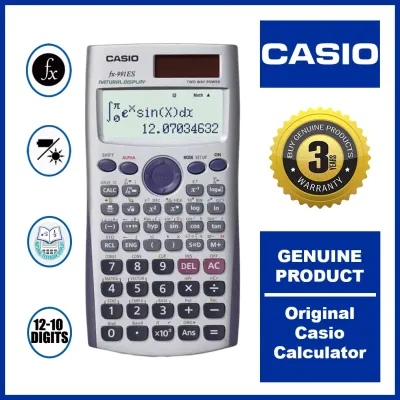
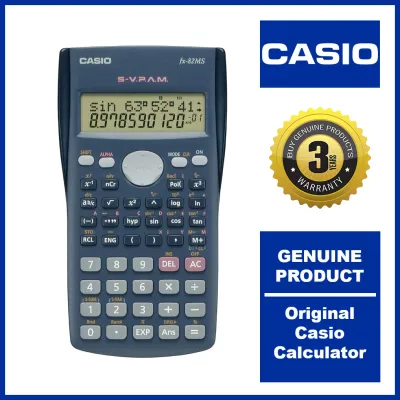
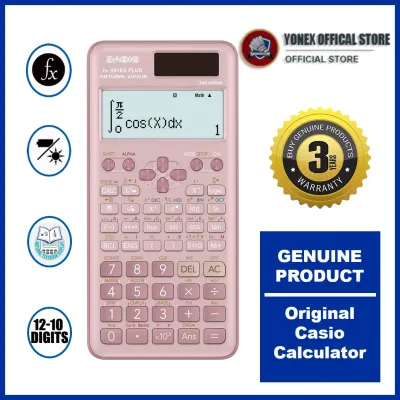
Casio structures its scientific calculator lineup into distinct functional tiers to serve different educational levels. The fx-350 represents the standard entry-level tier, designed primarily for junior high school and basic senior high school subjects. The fx-570 occupies the mid-tier space, offering a broader range of intermediate mathematical functions without some of the advanced capabilities found in the flagship models. The fx-991 stands as the comprehensive flagship model, packed with advanced matrix, vector, and calculus solvers intended for college-level science, technology, engineering, and mathematics (STEM) programs.
Products mentioned in this guide
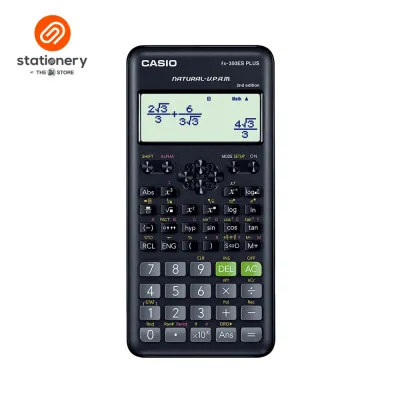
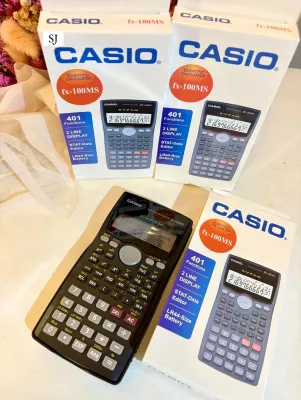
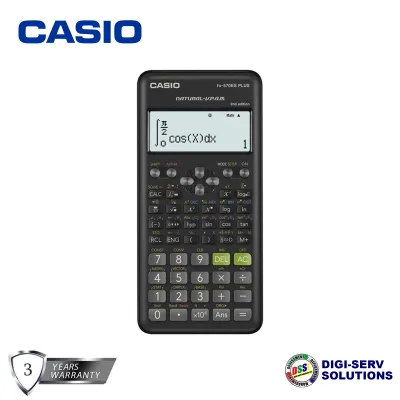
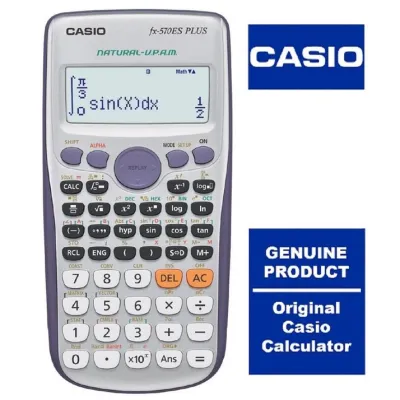
Prices are valid at publication and may change. Please refer to the product page for the latest price.
When comparing these models, it is crucial to look beyond the base model numbers and inspect the specific generation suffixes, such as ES PLUS, EX, or the newer CW (ClassWiz) editions. These suffixes indicate the technology generation of the calculator, which directly impacts processing speed, screen resolution, and menu navigation. For instance, older ES PLUS models utilize traditional text-based menus and slower processors, whereas the newer CW series features a redesigned, intuitive icon-based menu system and significantly faster calculation speeds.
Despite these generational differences, certain core features remain consistent across modern iterations of all three lines. Modern versions of the fx-350, fx-570, and fx-991 all feature a natural textbook display. This display technology ensures that fractions, exponents, logarithms, and square roots appear on the screen exactly as they are written in standard textbooks, making it much easier to verify your inputs and understand the steps of a calculation.
Matching Calculator Functions to Academic Requirements
Aligning your calculator choice with your current and future coursework prevents you from outgrowing your device too quickly. For junior high school students and those taking basic senior high school tracks, the fx-350 or fx-570 is typically more than sufficient. These models easily handle standard algebraic equations, trigonometry, basic statistics, coordinate geometry, and logarithmic functions. They provide a solid foundation for general mathematics without overwhelming the user with highly specialized engineering menus.

For students pursuing advanced mathematics, physics, chemistry, or engineering, the fx-991 series becomes almost indispensable. The fx-991 includes advanced mathematical operations that are absent from the fx-350 and limited on the fx-570. These include numerical integration and differentiation, matrix calculations up to four rows and columns, vector calculations, complex number calculations, and advanced equation solvers that can handle quadratic, cubic, and simultaneous linear equations.
Before making a purchase, it is vital to cross-reference your school syllabus or your examination board’s permitted calculator list. Many standardized tests, high school national exams, and university departments strictly prohibit calculators with advanced equation solvers or matrix capabilities to ensure students demonstrate manual competency. In such cases, choosing the fx-350 or a specific restricted version of the fx-570 is a necessity rather than a compromise.
Key Specifications and Usability Checks
When evaluating these calculators in a local bookstore or reviewing product listings online, pay close attention to the physical and technical specifications. Screen resolution is a major differentiator between generations. Newer ClassWiz (CW) models feature high-resolution liquid crystal displays that present numbers and symbols with sharp clarity, reducing eye strain during long study sessions. These newer models also replace crowded keyboard layouts with simplified, icon-driven menus that make finding specific functions much more straightforward.
Power source configuration is another critical specification to verify on the physical packaging. The fx-350 typically relies solely on a single battery (such as a AAA or button cell), whereas the fx-991 and certain fx-570 models feature dual-power systems. Dual-power models utilize a solar panel to run the calculator under classroom lighting, switching to the backup battery only when light levels are insufficient. This dual-power design offers peace of mind during crucial exams, ensuring the device will not suddenly lose power.
Take the time to evaluate the physical build quality and tactile feedback of the keys. The buttons should depress smoothly with a clear, tactile click, which helps prevent input errors during rapid calculations. Additionally, inspect the durability of the protective slide-on hard case. Because calculators spend a lot of time bouncing around inside crowded school bags, a sturdy, snug-fitting cover is essential for protecting the screen and keyboard from scratches, pressure damage, and the high humidity typical of tropical climates.
Evaluating Price and Long-Term Value
In the Philippine market, these three models follow a clear price hierarchy that reflects their functional capabilities. The fx-350 is the most budget-friendly option, making it highly accessible for families looking for a reliable school tool. The fx-570 sits at a moderate price point, while the fx-991 commands a distinct premium. When deciding which model to buy, consider the long-term value and how many years of schooling the device will support.
If you are currently in senior high school and plan to transition into a university engineering, architecture, mathematics, or science program, investing in the fx-991 early is highly practical. Although it carries a higher initial cost, its advanced feature set will support you all the way through complex college calculus and physics courses, saving you from having to purchase an upgraded calculator later. Conversely, if your academic path does not require advanced calculus or matrix algebra, the fx-350 offers excellent value and will serve you reliably for years.
Because of the popularity of these models, counterfeit units are common on online marketplaces and informal retail channels. Unusually low prices are often a primary indicator of a counterfeit calculator. Fake units frequently suffer from poor screen contrast, slow processing speeds, mushy keys, and even incorrect mathematical outputs. To ensure you are buying an authentic product, look for official store badges on e-commerce platforms, check for holographic security seals on the packaging, or purchase directly from authorized physical stationery retailers and department stores.
Final Decision Framework
To finalize your purchase, match your academic situation to the following practical guidelines:
- Choose the fx-350 if: You are in junior high school or a non-STEM senior high school track, require only standard scientific functions for foundational math and science, and want a highly reliable, budget-friendly calculator.
- Choose the fx-570 if: You need intermediate scientific and statistical functions but must comply with strict school or exam regulations that explicitly ban calculators with advanced equation solvers or matrix capabilities.
- Choose the fx-991 if: You are enrolled in STEM tracks, advanced calculus, physics, chemistry, or university engineering programs that demand matrix, vector, complex number, and numerical integration capabilities.
- Verify first if: Your specific school department, university, or professional licensing board has a list of approved calculator models. Always check the exact model suffix (such as CW or ES PLUS) against their official guidelines before buying.
Frequently Asked Questions (FAQ)
How can I tell if my Casio scientific calculator is authentic?
To verify authenticity, start by inspecting the packaging for a holographic security sticker and a QR code. Many authentic Casio calculators allow you to display a QR code on the screen by pressing a specific key sequence; scanning this code with a smartphone connects you to an official verification page. Additionally, check the physical build quality. Authentic models have crisp screen contrast, solid plastic casings, and keys that click cleanly, whereas counterfeits often have blurry displays, uneven lettering, and lightweight, flexible plastic.
Do these calculators require battery replacements, and how often?
Yes, all three models eventually require battery replacements, though the frequency depends on the power system. Battery-only models, like the fx-350, rely entirely on their internal battery, which typically lasts for several years under normal daily student use. Dual-powered models, like the fx-991, use solar energy when ambient light is sufficient, which greatly extends the lifespan of the backup battery. When the screen contrast begins to fade or calculations slow down, refer to the manufacturer’s instructions on the packaging to safely open the rear battery compartment and replace the cell.
Can I use the fx-991 for board exams in the Philippines?
Calculator guidelines for professional licensure examinations in the Philippines are determined and updated regularly by the Professional Regulation Commission (PRC). While the fx-991 series is highly popular among engineering and science students during college, certain sub-models or specific generations may be restricted or prohibited depending on the exact board exam you are taking. Always consult the latest official PRC resolutions or check with your review center to confirm which specific calculator models are permitted in the exam room before your test date.

Community discussion
Share your experience or ask a question. Comments are reviewed before publication.