
A clipboard file case bridges the gap between a rigid writing surface and a protective document organizer, making it an essential tool for mobile work and study. Rather than just holding papers, it provides a stable base for writing while keeping your documents, pens, and cards secure during transit. Because the ideal balance of rigidity, capacity, and portability varies significantly depending on your daily environment, selecting the right model requires matching specific design features to your actual use case. This guide breaks down the critical specifications to evaluate so you can build a reliable shortlist for your needs.
In tropical climates where humidity is consistently high and sudden downpours are a regular part of the daily commute, a standard paper folder often falls short. Paper documents can easily become damp, limp, or creased when carried in a basic backpack or tote bag. A well-designed clipboard file case acts as a protective shield, preserving the crispness of your forms, notes, and contracts while ensuring you always have a firm, dependable surface to write on, whether you are standing in a crowded hallway, riding transit, or working on-site.
Core Features to Evaluate Before You Buy
To find a clipboard file case that will serve you reliably over seasons of daily use, you must first understand the fundamental components that dictate its performance. The overall utility of the case relies on a balance of structural integrity, secure fastening, and smart interior organization.
Products mentioned in this guide
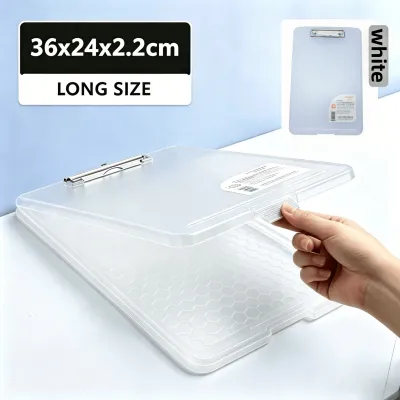
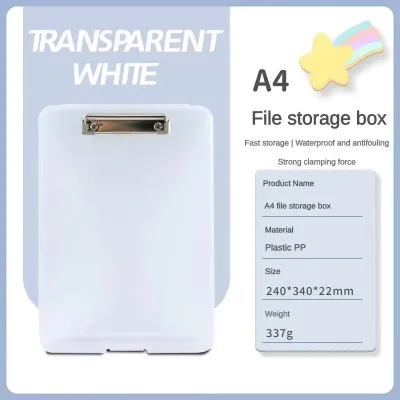
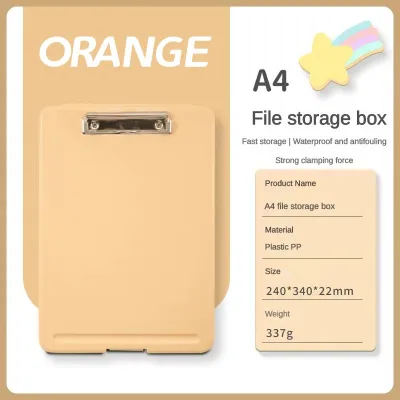
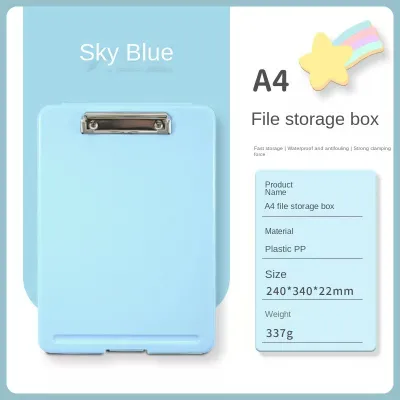
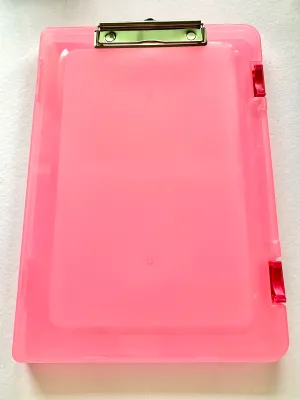
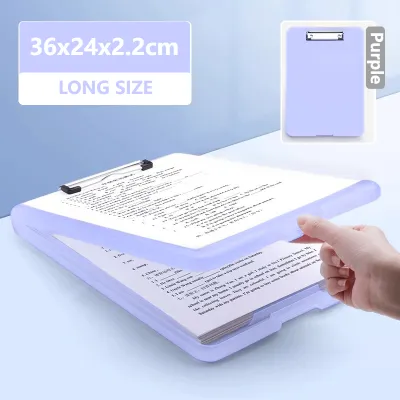
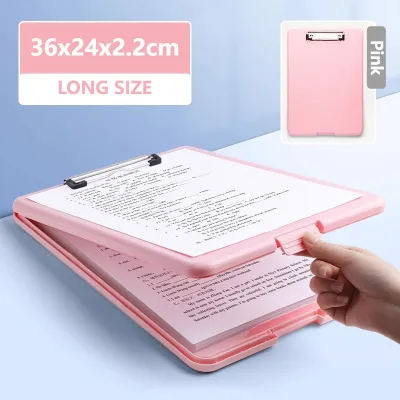
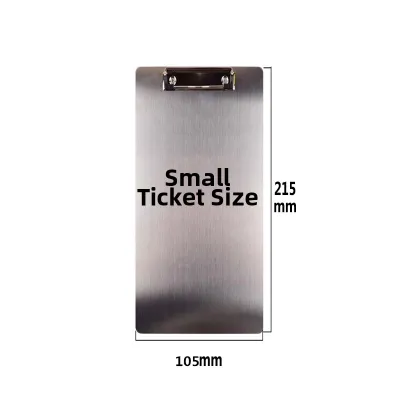
Prices are valid at publication and may change. Please refer to the product page for the latest price.
Board Material and Rigidity
The primary function of any clipboard is to provide a stable, unyielding surface for writing. The material of the board determines how much pressure you can apply without the surface flexing or bowing.
- Hardboard: Traditional high-density fiberboard offers excellent rigidity and a classic feel. However, in highly humid environments, untreated hardboard can absorb moisture over time, leading to warping or soft corners.
- Dense Plastic (Polypropylene): Heavy-duty polypropylene is highly resistant to moisture, lightweight, and virtually shatterproof. It provides a slight, comfortable give while remaining rigid enough for most writing tasks. It is also easy to wipe clean, making it highly practical for daily outdoor or clinical use.
- PU-Wrapped MDF: Medium-density fiberboard wrapped in polyurethane (faux leather) offers a smooth writing surface with a professional aesthetic. The wrap protects the inner wood core from moisture, though the edges must be well-sealed to prevent peeling over time.
Clip Mechanism Types and Grip Strength
The clip is the anchor of your workspace. It must hold your papers securely without tearing them or losing its tension over time.
- Low-Profile Spring Clips: These flat clips use a high-tension spring to hold papers flat against the board. They are excellent for stacking other items on top of the clipboard because they do not add significant bulk. Look for clips with rubberized corner grips to prevent papers from slipping out in a breeze.
- Lever-Arch or Wire Clips: These traditional mechanisms offer a wider opening angle, making it easier to insert thick stacks of paper. However, they protrude significantly, which can make the case bulkier to slide into a slim backpack.
- Sliding or Clamp Clips: Often found on minimalist folders, these slide along the edge to secure papers without punching or pressing hard on the sheet. They are ideal for delicate documents but generally hold fewer sheets securely.
Storage Layout Efficiency
Inside the case, organization is key to preventing your supplies from shifting during transit. A well-thought-out interior should feature dedicated compartments that maximize space without adding unnecessary thickness.
- Document Sleeves: Look for flexible internal pockets that can hold loose sheets, pamphlets, or reference guides without folding them.
- Pen Loops and Tool Slots: A dedicated elastic loop or molded plastic slot for your pen or pencil ensures you are never left searching for a writing instrument. Some cases also feature small compartments for paperclips, sticky notes, or a compact calculator.
- Card Slots: Business card holders or ID slots are highly useful for professionals who need to hand out contact information or display credentials quickly.
Closure Systems
The closure system keeps your contents secure when you are on the move. The right choice depends on how often you need to open the case and how hostile your environment is.
- Zippers: A full-zip closure offers a high level of security, completely sealing the edges to prevent dust, dirt, or light rain from reaching your documents. It is an excellent choice for active commuters and field workers.
- Snap Buttons and Latches: Plastic or metal snaps provide quick, one-handed access. They are highly durable but may leave the sides of the case slightly exposed to the elements.
- Elastic Bands: Simple and lightweight, elastic bands stretch over the corners or center of the case. While they are highly convenient for quick access, the elastic can stretch out and lose its tension over years of heavy use.
- Magnetic Clasps: These offer a sleek, modern look and satisfying closure. However, they may pop open if the case is overfilled beyond its intended capacity.
Matching Features to Your Daily Scenario
Not every user requires the same level of ruggedness or professional polish. By identifying your primary environment, you can prioritize the features that will make your daily tasks smoother and avoid paying for unnecessary extras.

For Students: Lightweight Storage and Quick Access
For students navigating busy campus schedules, library study sessions, and daily commutes, portability and speed are the most critical factors. Carrying heavy textbooks and a laptop means that every additional gram in your backpack matters.
- Material Choice: Opt for lightweight, flexible polypropylene (PP) cases. These plastics are resilient enough to survive being stuffed into a crowded backpack, yet light enough that they will not strain your shoulders during long walks between lecture halls.
- Internal Organization: Look for simple internal layouts with one or two flexible pockets. This allows you to separate your syllabus, homework assignments, and blank loose-leaf paper without adding bulk. A single, secure pen loop is usually sufficient for daily note-taking.
- Access Speed: Choose quick-open closures like elastic bands or simple snap latches. When a lecture starts, you want to be able to open your case, pull out your notes, and start writing within seconds, rather than wrestling with a heavy zipper.
For Office Workers: Professional Look and Document Protection
In a corporate office, boardroom, or client-facing meeting, your stationery choices contribute to your professional presentation. The goal is to keep your documents pristine while maintaining a polished, organized appearance.
- Aesthetic and Finish: Select cases with professional exterior finishes, such as high-quality faux leather, vegan leather, or sleek, matte-finished plastics in neutral tones. These materials blend seamlessly with corporate attire and formal business settings.
- Document Integrity: Ensure the internal sleeves are lined with soft fabric or smooth plastic to prevent your printed presentations, contracts, or reports from creasing, smudging, or sticking. The case should easily accommodate standard A4 or Letter-sized documents without bending the corners.
- Clip Design: Look for low-profile clips equipped with protective rubber or plastic guards. These guards distribute the clamping pressure evenly, preventing the metal clip from leaving deep, permanent indentations on important contracts or client proposals.
For Field Professionals: Durability and All-Weather Utility
For those working in construction, logistics, clinical environments, or outdoor research, a clipboard file case is a mobile workstation that must withstand harsh conditions. Durability, weather resistance, and absolute stability are non-negotiable.
- Weather and Environmental Resistance: Look for heavy-duty, water-resistant exterior materials that can withstand exposure to light rain, dust, and dirt. In clinical or laboratory settings, choose smooth, non-porous plastics that can be easily wiped down with sanitizing agents without degrading the material.
- Enclosed Protection: A fully enclosing zipper is highly recommended for field use. It ensures that even if the case is dropped or exposed to a sudden gust of wind, your documents, forms, and tools remain dry and securely contained inside. Reinforced rubber corners can also help absorb the impact of accidental drops on concrete or rough terrain.
- Writing Stability: The board must remain completely rigid when held against your arm or rested on an uneven surface like a vehicle hood or a wall. A thick, reinforced plastic or heavy-duty composite board is ideal for ensuring your handwriting remains legible even when you are standing for hours.
Building Your Shortlist: What to Check on the Product Page
When shopping on online marketplaces or e-commerce platforms, product descriptions can sometimes be misleading or incomplete. To ensure you receive a clipboard file case that meets your expectations, you must carefully verify specific technical details before making a purchase.
Verify Stated Paper Capacity vs. Clip Grip
Product listings often boast high paper capacities, such as “holds up to 100 sheets.” However, you must distinguish between the internal storage capacity and the external clip’s grip capacity.
- Internal Storage: This refers to how many sheets can comfortably sit inside the closed compartment. Check if the internal depth is specified (e.g., a depth of 20 mm typically holds around 150 sheets of standard 80 gsm paper).
- Clip Grip: The external clip may only be designed to hold 20 to 30 sheets securely at one time. Overloading a spring clip beyond its intended capacity can weaken the spring tension permanently, causing papers to slip out during use. Look for listings that specify the clip's maximum opening height.
Check Exact Internal Dimensions
Do not rely solely on generic terms like “A4 size” or “Letter size.” Standard paper sizes vary slightly, and a case designed strictly for European or Asian A4 paper (210 x 297 mm) might pinch or bend American Letter-sized paper (215.9 x 279.4 mm), which is wider.
- Measure your most frequently used paper types.
- Compare these measurements against the internal dimensions listed on the product page, not the external dimensions.
- Ensure there is at least a 5 to 10 mm clearance on all sides so that papers can be inserted and removed easily without catching on the zipper track or the edges of the case.
Analyze User Feedback for Longevity Indicators
Since you cannot physically handle the product before buying online, user reviews are invaluable for assessing long-term durability. Look for specific feedback regarding:
- Hinge Durability: Plastic living hinges (where the plastic simply bends to open) can fatigue and crack over time, especially in warm, humid climates. Look for cases with mechanical hinges or reinforced fabric seams.
- Clip Tension: Check if users report the clip losing its grip or becoming loose after a few weeks of use.
- Zipper and Latch Quality: Look for comments on whether the zipper teeth split easily or if the plastic latches snap off when the case is fully loaded.
Frequently Asked Questions (FAQ)
Can a clipboard file case replace a standard ring binder?
While a clipboard file case offers excellent portability and a built-in writing surface, it is generally designed to supplement rather than replace a standard ring binder. A ring binder is ideal for high-volume, long-term archiving of hole-punched documents that you need to flip through sequentially. In contrast, a clipboard file case excels at holding active, loose-leaf documents that you need to access, annotate, or hand out quickly while on the move. It provides immediate protection and a stable writing platform, but it lacks the massive storage capacity and structured page-turning capability of a multi-inch ring binder.
How do I prevent the clipboard clip from damaging my documents?
To protect important papers, contracts, or certificates from being creased or indented by a high-tension metal clip, you can use a few simple, low-risk techniques. Placing a sacrificial cover sheet—such as a piece of scrap paper or a blank sheet—on top of your primary document will distribute the clip’s pressure evenly and absorb any metal marks. Alternatively, you can keep your documents inside a clear plastic pocket or sheet protector before securing them under the clip. When inserting papers, always lift the clip fully rather than forcing the sheets underneath, which can tear or scuff the top edges of your documents.

Community discussion
Share your experience or ask a question. Comments are reviewed before publication.