
Securing a passing mark on a Professional Regulation Commission (PRC) licensure examination in the Philippines requires meticulous preparation, and choosing the right tools is a critical first step. For engineering, architecture, forestry, and other technical board exams, a reliable scientific calculator is indispensable. CASIO has long been a staple brand for Filipino students and reviewees, known for its durable build quality and intuitive layouts. However, not every CASIO scientific calculator is permitted inside the testing room. The PRC maintains strict guidelines on which calculator models are allowed, and bringing an unauthorized device can lead to immediate confiscation or even disqualification from the exam.
To ensure your calculator is compliant, you must verify its specific model number against the official list of allowed non-programmable calculators issued by the PRC. While CASIO produces a wide array of scientific calculators, only those classified as strictly non-programmable and lacking advanced data storage or graphing capabilities are permitted. Because the PRC updates its list of approved calculators periodically to address new technological features, relying on older review center advice or outdated online posts can be risky. Understanding the core criteria used by the commission and knowing how to verify your specific model will help you make a secure purchase and focus entirely on your exam preparation.
Understanding PRC Calculator Restrictions for Board Exams
The Professional Regulation Commission enforces strict rules on electronic devices to maintain a level playing field and prevent academic dishonesty. The primary distinction lies between programmable, graphing, and standard non-programmable scientific calculators. Programmable calculators allow users to input and store custom formulas, text files, or multi-step programs that can automate complex calculations. Graphing calculators feature large, high-resolution screens capable of plotting equations and visual functions. Both categories are universally prohibited in PRC licensure examinations because they can store unauthorized reference materials and bypass the manual problem-solving steps that the exams are designed to test.
Products mentioned in this guide
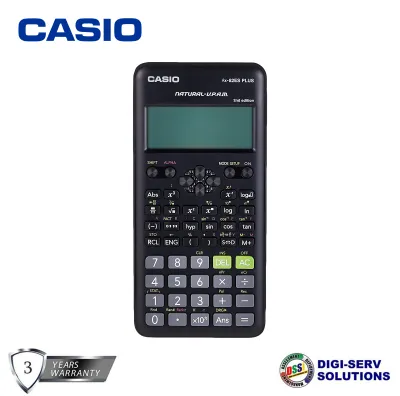
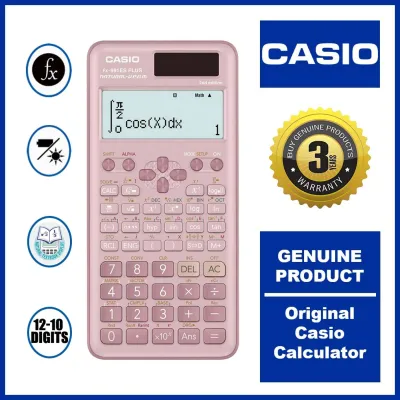
Prices are valid at publication and may change. Please refer to the product page for the latest price.
To be eligible for a board exam, a calculator must be strictly non-programmable. The PRC specifically targets features that facilitate data storage, external communication, or symbolic manipulation. Universally prohibited features include built-in text storage, wireless communication capabilities (such as infrared, Bluetooth, or Wi-Fi), and advanced symbolic algebra systems (often referred to as Computer Algebra Systems or CAS). Additionally, calculators with full QWERTY keyboards are banned, as they resemble computing devices rather than standard mathematical tools. Any device that can receive, transmit, or store alphanumeric strings beyond basic variable memory is flagged as non-compliant.
It is also important to recognize that different professional regulatory boards under the PRC may enforce distinct rules. While the general list of allowed calculators applies to most exams, specific boards—such as the Board of Civil Engineering, the Board of Electrical Engineering, or the Board of Accountancy—frequently issue their own memorandums. These board-specific guidelines can be significantly stricter. For instance, certain boards may prohibit calculators with equation-solving functions, matrix operations, or complex number capabilities, even if those models are allowed in other licensure exams. Reviewing the specific memorandum for your target profession is the only way to ensure complete compliance.
How to Verify Calculator Eligibility for Your Specific Licensure Exam
Verifying whether your CASIO calculator is allowed requires a systematic approach before you invest in a device or begin your intensive review sessions. The most reliable starting point is the official PRC website. The commission regularly publishes updated lists of allowed calculators, typically under its “Advisories” or “Announcements” sections. When a new memorandum is issued, it supersedes all previous lists. You should download the most recent PDF file directly from the official portal and search for the exact model number of the calculator you intend to use.

When reading these official advisories, pay close attention to the exact alphanumeric model codes. Manufacturers like CASIO often produce several variations of a single calculator model, indicated by suffixes such as “ES,” “MS,” “EX,” “CW,” “PLUS,” or “LA Plus.” A single letter or suffix difference can mean the difference between an approved non-programmable model and a prohibited programmable version. For example, while a basic model might be permitted, a version with an added wireless or programming feature will be banned. Additionally, take note of physical rules, such as the requirement to remove protective slide-on covers or casings before entering the examination room, as these covers often contain printed formulas or quick-reference guides.
If you find that your preferred CASIO model is not explicitly listed in the published guidelines, you must proceed with caution. Do not assume that a model is allowed simply because it is labeled “non-programmable” on the packaging. The safest course of action is to choose a model that is explicitly named on the PRC’s active list. If you must use an unlisted model, you can submit a formal inquiry to the PRC or your specific regulatory board well ahead of the exam date. However, to avoid last-minute stress or the risk of confiscation on the morning of the exam, most reviewees prefer to purchase a widely recognized, explicitly approved model from an authorized local office supplies retailer.
Navigating CASIO’s Non-Programmable Scientific Calculator Lines
CASIO organizes its scientific calculators into distinct series, each catering to different educational levels and functional requirements. Understanding these product lines helps you identify which models generally align with non-programmable standards. The classic MS (Matrix System) series represents the entry-level tier, featuring a traditional two-line display. These models are highly reliable, consume very little power, and are widely accepted across almost all PRC exams due to their straightforward, non-programmable nature. They lack advanced features like natural textbook display, meaning fractions and equations are entered using linear syntax.
For more advanced mathematical operations, the ES PLUS and ClassWiz (EX or CW) series are highly popular among engineering and science students. These series feature natural textbook displays, which show fractions, exponents, derivatives, and integrals exactly as they appear in textbooks. The ClassWiz series, in particular, offers high-resolution screens and faster processing speeds. These advanced non-programmable models often include features highly beneficial for board exams, such as complex number calculations, statistical regression analysis, matrix and vector operations, and numerical equation solving. These tools can save valuable time during timed exams, provided they are permitted by your specific board.
However, you must never assume that a manufacturer’s “non-programmable” label guarantees automatic approval by the PRC. While CASIO designs these calculators to comply with standard high school and college exam rules globally, the PRC reserves the right to restrict specific models based on local assessment standards. For instance, a model that features a QR code generator—used to display graphs on a smartphone—might be scrutinized by proctors even if the calculator itself cannot connect to the internet. When selecting a model from the ES PLUS or ClassWiz lines, always cross-reference the exact model suffix with the PRC’s approved list to ensure that the advanced features do not cross the line into prohibited territory.
Pre-Purchase and Exam-Day Verification Checklist
To ensure a smooth experience both at the retail counter and on the day of your licensure exam, you should follow a practical verification checklist. When purchasing your calculator, inspect the physical device thoroughly. Look for any signs of aftermarket modifications, non-standard casings, or hidden compartments. Proctors are trained to inspect calculators closely, and any physical anomaly—such as a loose casing, unusual ports, or scratches near the battery compartment—can raise suspicion of tampering or hidden storage. Buying from reputable stationery stores or official brand outlets in the Philippines reduces the risk of acquiring counterfeit or modified units.
Battery reliability is another critical factor that requires careful preparation. Many CASIO scientific calculators utilize a dual-power system, combining a solar panel with a backup button-cell battery. Others rely solely on a single AAA or button-cell battery. Before the exam, it is highly recommended to install a fresh, high-quality battery, even if the solar panel is functioning. The high humidity and varying light conditions in local testing centers can affect solar performance, making a fresh backup battery essential. Always check the specific exam room rules regarding whether you are allowed to bring spare batteries or a small screwdriver to change them if necessary.
Finally, safeguard your proof of purchase and original packaging. Keep the official receipt, showing the purchase price in ₱, along with the original box and user manual. While you generally do not need to bring these into the testing room, having them accessible in your bag outside the room can serve as valuable proof of the calculator’s authenticity and exact specifications if a dispute arises with a proctor. Ensuring that the model number printed on the back of the calculator matches the receipt and the official PRC list perfectly will give you peace of mind as you walk into the testing center.
Frequently Asked Questions (FAQ)
Can I use a CASIO calculator with a solar panel for PRC exams?
Yes, calculators featuring dual-power systems (solar panels combined with a battery backup) are generally allowed, provided the model itself is on the PRC’s approved list. The solar panel strip is not considered a prohibited feature or a communication device. However, because exam room lighting can vary significantly, you should ensure that the internal backup battery is fully functional before the exam day so that the display remains clear and readable under any lighting conditions.
What happens if my calculator is confiscated during the board exam?
If a proctor determines that your calculator is non-compliant, modified, or not on the approved list, it will be confiscated before or during the exam. Depending on the specific rules of the testing center, you may be forced to complete the exam without a calculator, or you may be allowed to use a basic, standard calculator if the testing center has spares available. To avoid this highly stressful situation, which can severely impact your performance, always verify your model beforehand and bring an explicitly approved backup calculator.
Are second-hand or refurbished CASIO calculators allowed?
While second-hand or refurbished CASIO calculators are technically allowed if they are on the approved list, they carry significant risks. Pre-owned devices may have hidden physical modifications, worn-out buttons, or internal damage from battery leakage that could cause them to fail during the exam. Furthermore, they often lack the original packaging and receipts needed to verify their exact model specifications. If you choose to use a second-hand calculator, inspect the battery compartment for corrosion, test every button for responsiveness, and ensure the model code on the casing is fully legible.

Community discussion
Share your experience or ask a question. Comments are reviewed before publication.