
Acrylic markers have transformed children’s arts and crafts by offering the vibrant, opaque finish of acrylic paint without the messy setup of brushes, water cups, and palettes. For parents in the Philippines, finding the right acrylic marker for kids involves balancing creative freedom with practical considerations like cleanup, durability, and safety. Because children’s motor skills and artistic needs evolve rapidly, a marker that delights a teenager might frustrate a preschooler, while a toddler-friendly tool may limit an older child’s detailed school projects. This guide provides a clear, age-appropriate framework to help you evaluate and select the ideal acrylic markers, ensuring your child has the right tools to express their creativity safely and effectively.
Understanding Acrylic Markers by Age and Skill Level
Selecting the right art supplies requires matching the physical design and ink behavior of the marker to your child’s developmental stage. Children of different ages interact with drawing tools in distinct ways, from the heavy-handed scribbles of early childhood to the precise, multi-layered techniques of pre-teens. By understanding these developmental milestones, you can choose markers that support their current abilities while encouraging growth.
Preschoolers and Beginners
For children aged three to five, art is a highly tactile and physical experience. At this stage, fine motor skills are still developing, and children typically use a palmar grasp, holding markers with their entire fist rather than their fingers. To support this, prioritize chunky, wide-barreled markers that are easy for small hands to grip without causing rapid hand fatigue. These larger barrels allow toddlers and preschoolers to maintain control while they explore basic shapes and lines.
Products mentioned in this guide
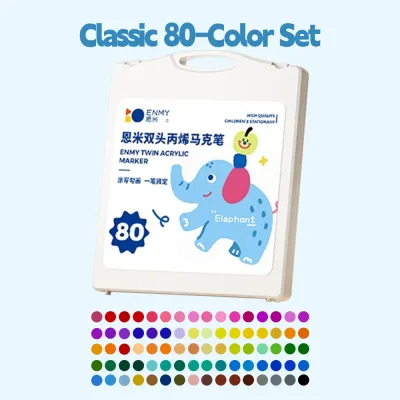
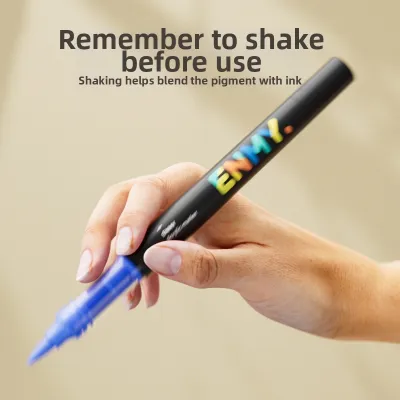
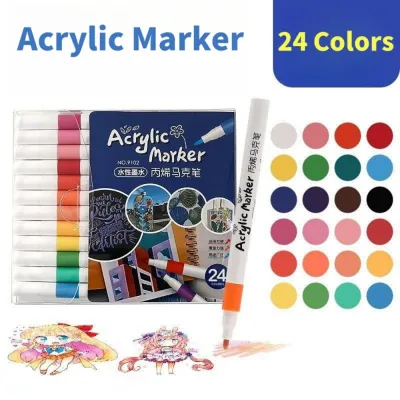
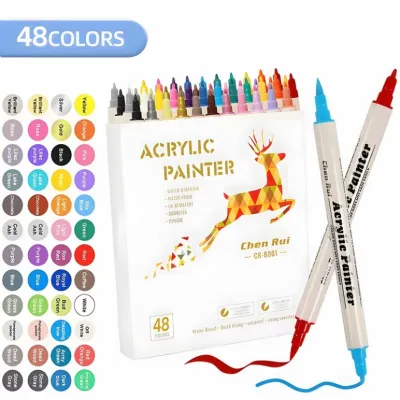
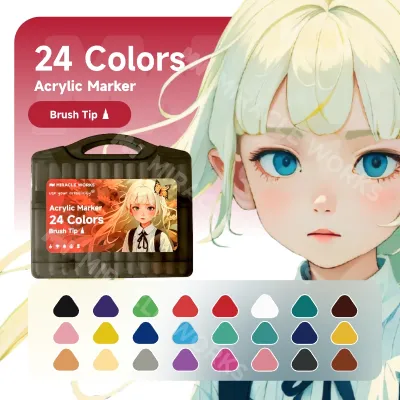
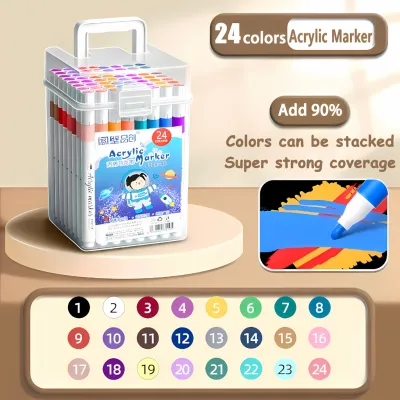
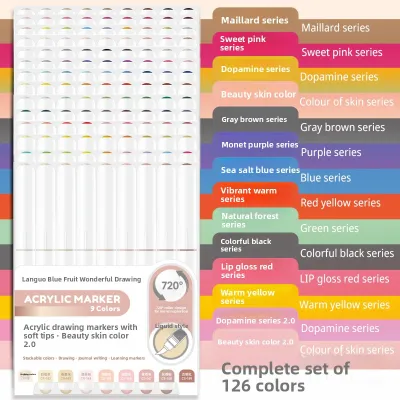
Prices are valid at publication and may change. Please refer to the product page for the latest price.
The tip of the marker is another critical point of failure for young artists, who often apply intense downward pressure. Look for broad, durable bullet or block tips that are structurally reinforced to withstand heavy stamping and pressing without fraying or retracting into the barrel. Delicate brush tips or fine plastic nibs will quickly deform under a preschooler’s enthusiastic grip.
Finally, washability is a paramount concern for parents managing creative spaces at home. While standard acrylic paint is notoriously permanent once dry, many formulations designed for young children feature water-based, washable inks. Always verify washability claims on the packaging, checking whether the ink can be easily cleaned from skin with mild soap and warm water, and washed out of common clothing fabrics during a standard laundry cycle.
Elementary School Artists
As children enter elementary school, their fine motor control improves significantly, transitioning from a full-hand grip to a mature tripod grasp. This developmental shift allows them to handle standard-sized marker barrels with greater precision. For this age group, look for markers featuring ergonomic grips—such as triangular barrels or soft, rubberized grip zones—which encourage proper finger placement and prevent slipping during longer drawing sessions or school poster projects.
Elementary-aged artists also begin to experiment with varied line weights, coloring in larger areas while attempting basic outlining. Dual-tip acrylic markers are highly beneficial here, offering a medium bullet tip on one end for solid coloring and a finer tip on the other for details. This versatility allows children to explore basic shading, layering, and lettering techniques without needing to switch between different marker sets.
At this stage, the visual quality of the ink becomes more important to the child. Seek out markers that deliver vibrant, highly opaque ink that covers surfaces smoothly in a single pass. The ink should perform reliably on standard school mediums, including construction paper, cardboard, and basic wooden craft shapes, without bleeding excessively through the page or leaving streaky lines.
Pre-Teens and Advanced Crafters
Pre-teens and advanced young artists often move beyond paper to customize personal items like canvas shoes, tote bags, plastic phone cases, and smooth stones. To support these intricate projects, focus on markers with fine or extra-fine tips, typically ranging from 0.7mm to 1mm. These precise nibs allow for detailed outlining, intricate patterns, hand lettering, and clean borders that standard children’s markers cannot achieve.
For advanced techniques, the consistency of the ink flow is critical. Older children will appreciate valve-action markers, which require a gentle shake and pump to saturate the tip, ensuring a steady, rich flow of paint that does not skip or pool. This consistent flow is essential for blending colors directly on the surface or creating smooth gradients before the acrylic paint cures.
Additionally, pre-teens benefit from a more sophisticated color palette. Look for expanded sets that go beyond primary colors to include subtle pastels, rich earth tones, and metallic options like gold, silver, and bronze. These specialized colors allow older kids to add professional-looking highlights and depth to their mixed-media artwork, elevating their creative output.
Key Features to Verify Before Purchasing
Before purchasing any acrylic marker set, it is essential to look past marketing buzzwords and systematically evaluate the physical specifications and product labels. This ensures the markers are not only functional but also safe and comfortable for your child’s specific needs.

Tip Design and Material
The tip, or nib, determines how the paint is applied to the surface. Bullet tips are the most common and versatile, offering a consistent line width that is ideal for coloring and outlining. Chisel tips allow artists to create both broad strokes and thin lines by changing the angle of the marker, making them excellent for calligraphy and filling large areas. Brush tips, made of flexible nylon, mimic a traditional paintbrush, allowing for expressive, variable lines based on hand pressure. For younger children, rigid polyester bullet tips are highly recommended for durability, while older kids will appreciate the flexibility of nylon brush tips.
Ink Properties and Composition
Acrylic marker ink should be water-based, pigment-rich, and fast-drying. Water-based formulas are generally low-odor and easier to clean up while wet compared to solvent-based alternatives. Check the label for drying times; fast-drying ink is crucial for preventing accidental smudging, especially for left-handed children. Opacity is another key factor—high-quality acrylic ink should be opaque enough to cover dark surfaces or layer lighter colors over darker ones once the base layer has dried completely.
Ergonomics and Barrel Construction
The physical design of the marker directly impacts how long a child can draw comfortably. Round, smooth plastic barrels can become slippery, especially in the tropical climate of the Philippines where hands can get sweaty. Triangular barrels are an excellent ergonomic choice because they naturally guide fingers into a comfortable grip and prevent the markers from rolling off desks or tables. Additionally, consider the weight of the marker; lightweight plastic barrels are easier for younger hands to maneuver, while slightly heavier markers can provide stability for older kids executing precise lines.
Safety Marks and Certifications
Never rely solely on online product descriptions that claim an item is “safe” or “non-toxic.” Instead, inspect the physical packaging or official product specifications for recognized safety certifications. Look for standards such as ASTM D-4236 (which indicates that the art material has been evaluated by a toxicologist and labeled for chronic health hazards) or the EN71 certification (the European standard for toy safety, which includes strict limits on heavy metal migration). These marks provide objective verification that the product is safe for children’s use.
Building Your Shortlist in the Philippines
Navigating the local market requires a strategic approach, whether you are browsing the aisles of a physical bookstore in Manila or scrolling through online marketplaces. To get the best value and ensure product safety, use these practical steps to build your shopping shortlist.
First, compare the price per marker (in ₱) across different set sizes to determine the actual value for money. A large set of 48 markers might seem like a bargain, but if the individual cost is exceptionally low, the ink quality or tip durability may be compromised. Conversely, premium professional sets can be prohibitively expensive for casual children’s crafts. Compare the cost per unit (total price divided by the number of markers in the set) across different brands to find a mid-range option that offers a balance of quality and affordability within your budget, keeping in mind that a standard set of 12 to 24 colors is usually sufficient for most children’s projects.
Second, read verified buyer reviews on e-commerce platforms specifically for real-world feedback on drying time, tip durability, and actual washability. Look for comments from parents who mention how the markers perform in tropical conditions. In the Philippines, high humidity can affect drying times, while intense summer heat can cause poorly sealed markers to dry out prematurely in storage. Search reviews for keywords like “dry,” “leak,” “washable,” and “smudge” to identify potential quality issues before making a purchase.
Third, check seller ratings and product authenticity guarantees when buying from online stationery shops to avoid counterfeit items. The local digital market contains many counterfeit or sub-standard stationery items that mimic popular brands but use inferior, potentially unsafe inks. Look for official brand stores, authorized distributors, or sellers with high ratings and positive feedback history. Check if the seller offers an authenticity guarantee or a clear return policy in case the markers arrive damaged or dried out.
Fourth, inspect physical packaging in brick-and-mortar stores for seal integrity, ensuring the markers have not been exposed to air or extreme heat. Ensure the plastic shrink-wrap or box seal is completely intact. In tropical climates, exposure to ambient heat in non-air-conditioned warehouses or storefronts can degrade the ink quality over time. Avoid buying sets that show signs of fading packaging, cracked plastic caps, or leaking ink, as these are clear indicators of poor storage conditions or manufacturing defects.
Safe Usage and Maintenance for Kids
To maximize the lifespan of your acrylic markers and ensure a safe creative environment, establish clear usage and maintenance routines with your children. Proper care not only saves money by preventing dried-out pens but also keeps your home clean and organized.
First, ensure adequate ventilation when using acrylic markers in enclosed spaces for extended periods. While water-based acrylic inks are generally low-odor and non-toxic, using them in small, enclosed rooms for extended periods can still cause mild discomfort or headaches from concentrated fumes. Open windows or turn on a fan to maintain a steady flow of fresh air in the crafting area.
Second, teach children to recap markers immediately after use to prevent the acrylic paint from drying out in the tip. Acrylic paint dries quickly when exposed to air, and leaving a marker uncapped for even fifteen minutes can cause the paint to cure inside the porous tip, rendering the marker unusable. Instruct kids to listen for the distinct “click” that indicates the cap is securely sealed.
Third, store markers horizontally to keep the ink evenly distributed and the tips properly saturated. Storing them vertically can cause the heavy pigments to settle either at the bottom of the barrel (making the ink faint) or pool entirely in the tip (causing leaks and clogs). A horizontal storage container keeps the ink evenly distributed throughout the marker body.
Fourth, use protective coverings for workspaces, as dried acrylic ink becomes permanent on most porous surfaces and fabrics. Cover the work area with old newspapers, a plastic table protector, or a silicone craft mat. Encourage children to wear old clothes or a dedicated art apron to protect their garments from accidental splatters, as dried acrylic paint is incredibly difficult to wash out once it cures.
Frequently Asked Questions (FAQ)
Are acrylic markers safe for young children? (FAQ)
Yes, water-based acrylic markers are generally safe for children, provided they carry recognized non-toxic certifications like ASTM D-4236 or EN71. However, parental supervision is essential, especially for younger kids, to prevent them from putting the markers in their mouths or drawing on their skin. While the ink is non-toxic, it is not designed for ingestion or prolonged skin contact. If ink accidentally gets into a child’s eyes or mucous membranes, flush the area immediately with clean, lukewarm water and seek medical advice if irritation persists. Always store markers out of reach of toddlers when not in use.
How do you revive a dried-out acrylic marker? (FAQ)
If an acrylic marker tip has dried out because the cap was left off, you can often revive it if the internal paint reservoir is still liquid. Gently remove the tip from the barrel using tweezers and dip it into a small cup of warm water for a few seconds to loosen the dried paint. Pat the tip dry with a paper towel, reinsert it into the marker, cap it tightly, and store it tip-down for about ten minutes. If the paint inside the main reservoir has completely cured and hardened, the marker cannot be salvaged and must be discarded.
Can acrylic markers be used on fabric or clothes? (FAQ)
Yes, acrylic markers can be used on fabric, but because acrylic paint is permanent once dry, any accidental marks on clothing will be very difficult to remove. If your child is intentionally customizing a fabric item like a canvas bag or t-shirt, place a thick piece of cardboard inside the item to prevent the ink from bleeding through to the other side. Once the design is completely dry, you can help set the paint by placing a piece of parchment paper over the design and running a warm iron over it, following the manufacturer’s specific guidelines for heat-setting.

Community discussion
Share your experience or ask a question. Comments are reviewed before publication.