
The best big number stickers for bullet journaling are those that match your notebook’s grid size (typically 5mm dot grid), offer high legibility from a distance, and use materials like low-tack washi paper or matte PET that blend seamlessly with your pages without causing bulk or ink smudging. Selecting the right sticker involves balancing physical dimensions, typography, and material properties so that your monthly calendars and weekly logs remain both highly functional and visually cohesive.
Using stickers is an efficient way to set up your journal spreads without spending hours on hand-lettering. However, choosing the wrong size or material can quickly clutter your pages, make writing difficult, or even ruin your paper. By understanding how to match these adhesive elements to your specific layout needs, you can create beautiful, organized spreads that keep you productive all month long.
Matching Sticker Dimensions to Your Grid and Layout
Before purchasing any sticker sheet, you must compare the physical dimensions of the stickers against the grid system of your notebook. Most popular bullet journals utilize a standard 5mm dot grid pattern. A standard A5-sized page typically features 26 to 28 grid squares horizontally and 38 to 40 squares vertically. Knowing these measurements allows you to calculate exactly how much space a big number sticker will occupy on your page.
Products mentioned in this guide
Prices are valid at publication and may change. Please refer to the product page for the latest price.
For a monthly calendar spread, you generally divide the page into a grid of boxes, with each box representing a single day. A typical monthly calendar box in an A5 journal spans 4×4 or 5×5 grid squares, which translates to 20mm by 20mm or 25mm by 25mm. If you select a big number sticker that is 15mm tall and 15mm wide, it will consume more than half of the available space in a 20mm box. This leaves very little room for writing down appointments, deadlines, or daily events. For monthly grids, look for numbers that do not exceed 10mm in height, allowing ample writing space below or beside the date.
Margin requirements are equally critical for maintaining a clean, professional aesthetic. When a sticker is placed too close to the border of a calendar box or a weekly column, the layout can look cramped and disorganized. Ideally, you should maintain at least a 2.5mm (half a grid square) margin of empty space around each sticker. This buffer zone prevents the numbers from touching box borders or overlapping with your daily task lists, ensuring that your eyes can easily distinguish between the date and your written notes.
Furthermore, you must evaluate the consistency of the sizing across the entire number set. Some decorative sticker sheets feature irregular, hand-drawn styles where a “0” or an “8” is significantly wider than a “1” or a “7”. While this variation adds artistic charm, it can disrupt visual alignment when you line up dates in a horizontal row or a vertical column. For structured layouts, look for sticker sheets that maintain a uniform width and height across all digits from 0 to 9, which ensures that your weekly headers and monthly grids remain perfectly aligned.
In tropical climates where humidity levels are frequently high, paper can absorb moisture and expand slightly. This subtle change makes precise sticker placement even more challenging, as paper that has softened from humidity is more prone to wrinkling under heavy adhesive. Choosing stickers with a small footprint and applying them with light pressure helps prevent the paper from warping or buckling over time.
Choosing Font Styles for Quick Readability
The typography of your number stickers plays a dual role in your bullet journal, serving as both a functional tool for rapid scanning and a key design element that sets the tone for your entire spread. When selecting a font style, you must balance your personal aesthetic preferences with the practical need for immediate date recognition. If you have to squint or pause to figure out whether a number is a 1 or a 7, the sticker fails its primary organizational purpose.

Minimalist and sans-serif fonts are the gold standard for clean, modern monthly spreads. These fonts feature straight lines, uniform stroke widths, and no decorative flourishes, making them incredibly easy to read at a single glance. Sans-serif numbers are highly efficient for busy professionals or students who use their bullet journals primarily for rapid logging and task management. Because these designs are understated, they do not compete visually with your handwriting or color-coded highlighters, allowing your actual tasks to remain the focal point of the page.
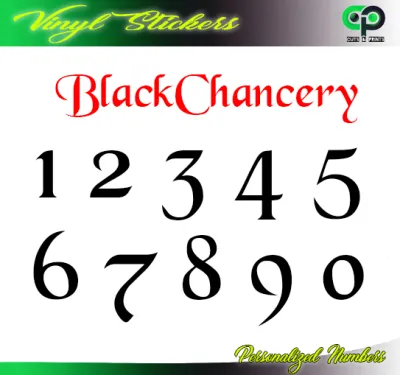
Conversely, serif, handwritten, or calligraphy styles are excellent for thematic or highly decorative weekly logs. These fonts feature elegant curves, varying stroke thicknesses, and artistic details that can elevate a simple layout into a beautiful work of art. If you enjoy dedicating time to theme-based journaling, a bold calligraphy number can serve as the central design element of your weekly spread, reducing the need for additional drawings or decorative washi tapes. However, keep in mind that highly stylized cursive or gothic fonts can sometimes be difficult to read quickly, so they are best reserved for large weekly headers rather than small, crowded monthly grids.
You must also verify the stroke thickness and contrast of the font to ensure the numbers remain legible against your journal’s paper. If you prefer using light-colored or pastel backgrounds, thin-stroke black or dark gray numbers offer excellent contrast without looking too harsh. If you enjoy using dark-themed journals, such as those with black or kraft paper, you will need high-contrast white, gold, or silver foil stickers. Always check that the font’s lines are thick enough to stand out against any background patterns, such as dots, lines, or watercolor washes, that you might apply underneath the sticker.
Selecting Colors and Material Finishes
The color palette and material finish of your stickers should complement your journal’s overall theme and the specific writing instruments you use daily. Choosing the wrong material can lead to frustrating issues like ink smudging, paper tearing, or stickers peeling off at the corners.
Neutral, monochrome, and muted color palettes—such as beige, slate gray, olive green, and dusty rose—are incredibly versatile. They blend seamlessly into minimalist setups and allow you to introduce color through your pens and highlighters without creating visual chaos. On the other hand, vibrant, color-coded sticker sets are highly effective for tracking different areas of your life. For example, you might use blue numbers for work-related spreads, green for personal habits, and pink for social events. This color association helps your brain categorize information instantly as you flip through your journal.
When it comes to material finishes, you generally have three main options, each with distinct characteristics:
- Matte Washi Paper: These stickers are made from traditional Japanese paper, giving them a soft, textured feel and a semi-translucent quality. They blend beautifully with the journal page, almost looking as if they were printed directly onto the paper. Washi paper is highly forgiving because it is easy to write on with almost any pen, and it can usually be peeled off and repositioned without damaging the page.
- Glossy PET (Polyethylene Terephthalate): PET stickers are made of a thin, durable plastic. They offer incredibly vibrant colors, sharp details, and are completely waterproof. However, because the surface is non-porous, water-based inks will not dry on them, making them unsuitable if you plan to write directly over or very close to the sticker.
- Transparent Backing: These stickers feature designs printed on a clear plastic or vinyl sheet. They are perfect for layering over watercolor washes, colored marker strokes, or patterned washi tapes, as the background design shows through the clear areas of the sticker, creating a beautiful layered effect.
Ink compatibility is a crucial factor that many journalers overlook. If you love writing with gel pens (such as the Pilot G2 or Pentel EnerGel) or water-based brush markers (such as Tombow Dual Brush Pens), you should avoid glossy PET or vinyl stickers. The water-based ink will pool on the plastic surface and smudge easily, ruining your hard work. For these pens, matte washi paper is the best choice. If you do use plastic-based stickers, stick to oil-based ballpoint pens or permanent fineliners (such as the Sakura Pigma Micron) and allow a few seconds for the ink to dry completely.
To avoid ruining a completed page, always perform an observable trial: apply a spare sticker or a piece of the sticker sheet border to a test page in the back of your journal, write on or near it with your favorite pen, and wait 30 seconds to verify if the ink smudges or bleeds.
Building a Shortlist for Monthly and Weekly Spreads
To build a practical collection of number stickers, you should categorize them based on the specific layouts you plan to create. Different spreads demand different physical shapes and configurations to maximize both utility and style.
For vertical weekly logs, where the page is divided into tall, narrow columns representing each day of the week, space is at a premium. In this layout, you want to maximize the vertical writing area for your daily tasks. Therefore, the ideal stickers for vertical weeklies are narrow, tall numbers (for example, 15mm high but only 5mm wide). These slim dimensions allow the date to stand out at the top of the column without eating into the horizontal width, leaving you plenty of room to write out your daily schedule.
For horizontal monthly calendars, the requirements are reversed. Because monthly calendar boxes are typically square or wide rectangles, you need wide, compact numbers (such as 10mm high by 10mm wide). Placing a compact, square-shaped number sticker in the extreme top-left or top-right corner of each calendar box ensures that the rest of the square remains completely open for logging events, birthdays, and deadlines.
When shopping for sticker sheets, look for versatile sets that include both large primary numbers and smaller secondary digits. A versatile sheet might feature large 15mm numbers for your main weekly headers, alongside smaller 6mm numbers that you can use for habit trackers, mood logs, or secondary calendar grids on the same page. Having multiple sizes in the same font and color palette ensures that your entire monthly setup looks cohesive and professionally designed.
Additionally, consider how local environmental factors might influence your choice. In warm, humid regions, adhesives can behave differently than in cool, dry climates. High humidity can soften the adhesive on some cheap sticker sheets, causing the edges to curl upward over time. Matte washi stickers tend to perform exceptionally well in humid conditions because the paper fibers breathe and adapt to the ambient moisture, whereas heavy vinyl stickers may lift if the journal page expands or flexes.
Verifying Specifications Before Buying Online
Purchasing stationery from online marketplaces and e-commerce platforms offers an incredible variety of designs, but it also requires careful verification to avoid disappointing mismatches. Because you cannot physically hold the sticker sheets, you must rely on specific product details and user feedback to make an informed decision.
First, always read the product description for exact millimeter dimensions rather than relying on the listing photos. Sellers often use close-up macro photography or digitally superimposed mockups that make the stickers look much larger or smaller than they actually are. A sticker sheet that appears to fill an entire page in a photo might actually be the size of a business card in reality. Look for a detailed specification list that states the exact height and width of the individual stickers, and use a physical ruler against your journal page to visualize how they will fit.
Second, spend time reading buyer reviews and looking at user-uploaded photos. These reviews provide invaluable, real-world feedback on the actual quality of the product. Look for comments regarding:
- Adhesive Strength: Does the sticker stay flat on the page, or do the corners start lifting after a few days?
- Paper Bleed-Through: If the stickers are made of thin paper, does ink written on top bleed through to the other side of the page?
- Cutting Precision: Are the stickers accurately die-cut? Poorly aligned die-cuts can result in white borders being unevenly distributed around the numbers, or worse, cutting off parts of the digits entirely.
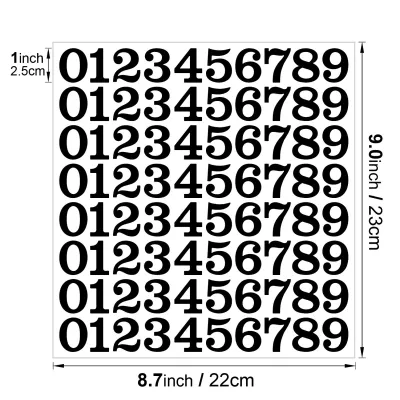
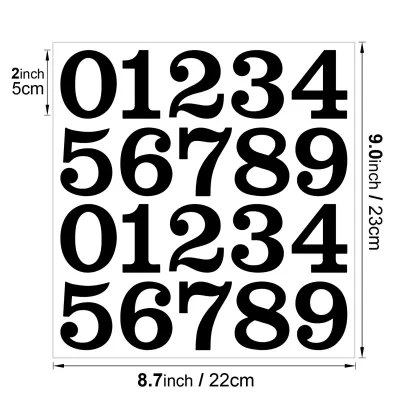
Finally, confirm the exact contents of the sticker sheet to ensure you do not run out of essential digits. A standard monthly spread requires thirty-one individual dates. However, many generic decorative sticker sheets only provide a single set of digits from 0 to 9. To set up a full month, you will need multiple copies of the numbers 1, 2, and 3 (specifically, you need thirteen 1s, twelve 2s, and four 3s to complete a 31-day month). Ensure that the product listing explicitly states that the sheet is a “date sticker set” designed for journaling, which typically includes multiple sheets or a layout that guarantees you have enough of every digit to complete at least one full month.
Frequently Asked Questions (FAQ)
Can I reposition big number stickers without tearing the journal page?
Whether you can reposition a sticker depends heavily on the sticker material, the adhesive type, and the quality of your journal’s paper. Low-tack washi paper stickers are specifically designed to be removable and repositionable, making them highly forgiving if you make a mistake during alignment. In contrast, PET and vinyl stickers often utilize stronger, permanent acrylic adhesives that bond quickly to paper fibers, making them very difficult to remove without causing damage.
To safely remove a sticker, use a pair of fine-tipped tweezers or a craft knife to gently lift one corner. Slowly peel the sticker back at a sharp 45-degree angle, keeping it close to the page surface rather than pulling straight up. If you are working in a highly humid environment, be extra cautious, as the moisture can make your journal’s paper fibers softer and more susceptible to tearing.
How do I store leftover number stickers to prevent them from losing stickiness?
To preserve the adhesive quality and material integrity of your leftover stickers, you must store them in a flat, cool, and dry environment away from direct sunlight. High temperatures and humidity can cause the adhesive backing to degrade, melt, or lose its tackiness, while direct sunlight can fade the printed colors and yellow the paper.
Keep your sticker sheets flat inside a protective plastic sleeve, a dedicated sticker book, or their original packaging. Storing them flat prevents the sheets from curling, which can cause individual stickers to lift off the backing paper. Additionally, keeping them sealed protects the exposed adhesive edges from accumulating dust, pet hair, and lint, which can quickly ruin their stickiness and prevent them from adhering properly to your journal pages in the future.

Community discussion
Share your experience or ask a question. Comments are reviewed before publication.