
Selecting suitable gem stickers for bullet journal decorating requires balancing visual appeal with practical usability. Because bullet journals are frequently closed, carried, and written in, bulky or heavy embellishments can create pressure points that dent adjacent pages, strain the binding, or make writing on the reverse side of the sheet difficult. In warm, humid climates like the Philippines, selecting stickers with moisture-resistant adhesives is crucial to prevent the gems from sliding off the page or leaving a sticky, oily residue over time. By focusing on flat-back designs under three millimeters in diameter and pairing them with appropriate paper weights, you can add a touch of dimension and sparkle to your layouts without compromising the structural integrity of your journal.
Integrating these small, reflective elements into your planning routine offers a creative way to highlight key tasks, track habits, or frame artistic monthly covers. However, not all craft gems are created equal, and choosing the wrong type can quickly turn a beautiful layout into a bulky, impractical notebook. Understanding how different materials, sizes, and adhesives interact with paper fibers is the key to maintaining a functional, flat-writing surface while still enjoying the visual variety that dimensional stickers provide.
Key Factors for Evaluating Gem Stickers
When browsing for a suitable gems sticker, the base material plays a significant role in both the weight of your journal and how the pages lie when closed. Acrylic is the most common material used for craft gems; it is highly rigid, offers excellent light refraction, and comes in a wide array of faceted cuts that mimic real gemstones. While acrylic gems are visually striking, they tend to be slightly heavier and harder than resin alternatives. Resin gem stickers, on the other hand, are often lighter and possess a minor degree of flexibility, allowing them to conform slightly better to the natural curve of a turning page. Basic plastic stickers are the most budget-friendly option, but they often lack the crisp facets and clarity of acrylic or resin, sometimes appearing dull or cloudy under indoor lighting.
Products mentioned in this guide
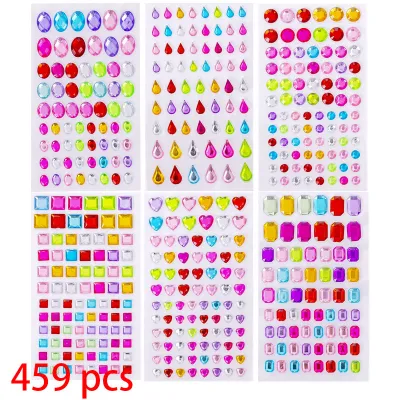
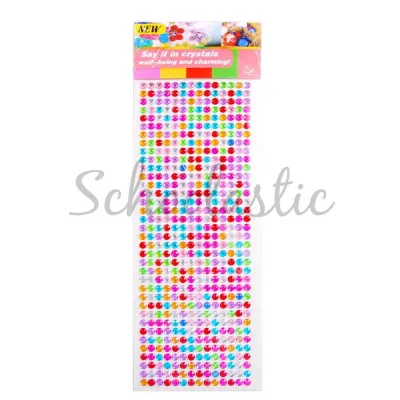
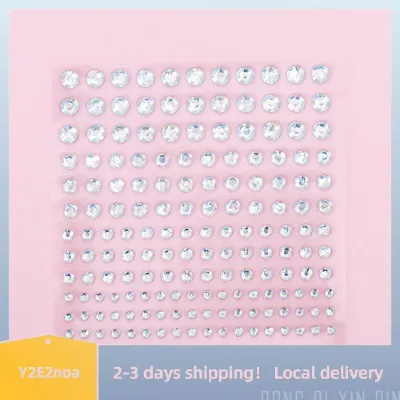
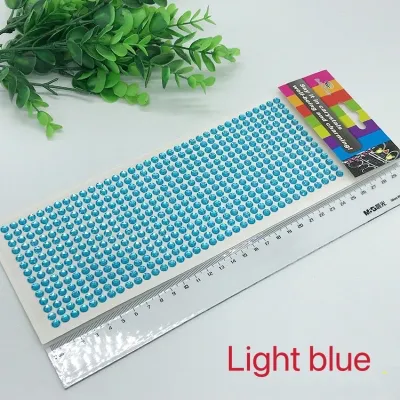
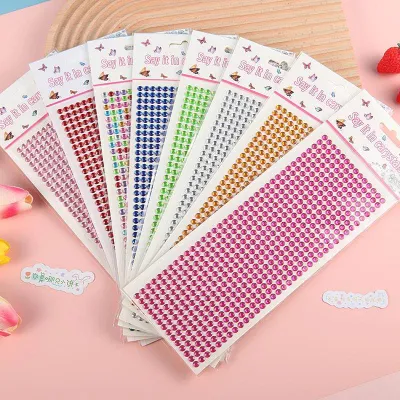
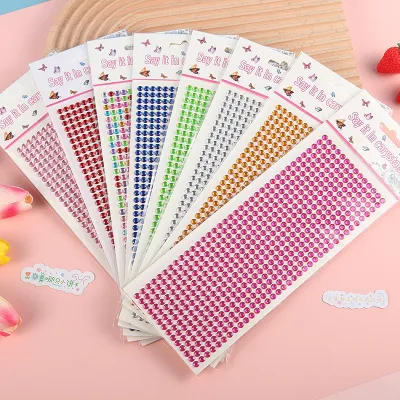
Prices are valid at publication and may change. Please refer to the product page for the latest price.
Size and thickness are critical physical dimensions to evaluate before sticking anything into your journal. Standard bullet journal grids are typically five millimeters apart, meaning any gem larger than four millimeters will spill over the grid lines and dominate the surrounding space. For daily planning and tracking, ultra-miniature gems measuring one to two millimeters are highly practical because they sit flush enough with the paper to minimize bulk. When a journal containing thick, five-millimeter gems is closed, the concentrated pressure can emboss the opposite page, leaving permanent circular indentations and making it difficult to write smoothly on the next several sheets. Keeping the thickness of your gems under one and a half millimeters ensures your notebook retains its flat profile and remains comfortable to write in from cover to cover.
The finish of the gem sticker determines how it interacts with your page designs and ambient light. Holographic and iridescent finishes reflect a spectrum of colors depending on the angle of the light, making them excellent for dynamic, whimsical layouts that catch the natural tropical sunlight. Opaque gems, which feature solid, non-translucent colors, provide high contrast and work beautifully on dark or kraft paper spreads where transparent stickers would simply disappear. Transparent or tinted gems offer a softer, more delicate look, allowing the underlying grid lines, watercolor washes, or ink strokes to remain partially visible. Choosing the right finish is a matter of balancing the visual weight of the sticker with the existing elements on your page so that the embellishments complement rather than clutter your layout.
Paper Compatibility and Adhesion Checks
The success of using dimensional stickers in a bullet journal depends heavily on the weight and quality of the paper, measured in grams per square meter (GSM). Standard notebooks with thin paper, such as 80 GSM to 100 GSM, have very little structural rigidity and are highly susceptible to sagging, tearing, or warping under the weight of heavy embellishments. If you prefer using gem stickers regularly, opting for a journal with 120 GSM to 160 GSM paper provides the necessary thickness to support the added weight without the pages drooping when held upright. Thicker paper also acts as a buffer, absorbing the physical pressure of the gems when the book is closed and reducing the severity of indentations on subsequent pages.

Before committing to a full layout, it is essential to perform an adhesion test on an inconspicuous page, such as the very back index or a swatch sheet. The high humidity levels common in tropical environments can severely affect how adhesives behave over time, sometimes causing cheap glues to liquefy, slide, or lose their grip entirely. To test a sticker, apply it to your sample page, press down firmly for five seconds, and leave the journal closed for twenty-four hours. Check the page the next day to see if the gem has shifted, if the adhesive has seeped through to the reverse side of the paper, or if the edges of the sticker are beginning to lift. A high-quality self-adhesive backing should remain firmly in place without creating greasy halos or wet-looking spots around the perimeter of the gem.
Another critical factor to verify is how the sticker’s adhesive interacts with the inks you use for writing and drawing. Some strong chemical adhesives can react with the solvents in fountain pen inks, gel pens, or alcohol markers, causing the ink underneath or directly adjacent to the sticker to bleed, discolor, or fade over time. To prevent ruining hours of careful hand-lettering, establish a simple spot-test routine: write a few lines with your favorite pens on a scrap piece of journal paper, let the ink dry completely for at least an hour, and then place a test gem directly over the ink. After a few days, inspect the area to ensure the ink lines remain sharp and clear, with no signs of feathering or chemical degradation caused by the adhesive backing.
Matching Gem Stickers to Journal Layouts
Integrating gem stickers into your bullet journal layouts requires a thoughtful approach to design and spacing to ensure the pages remain functional. Large, shaped, or highly faceted gems are best reserved for pages that do not require a lot of writing on the reverse side, such as monthly cover pages, major section dividers, or yearly future logs. Placing a cluster of larger gems around a hand-lettered title or using them to frame a decorative border adds a beautiful, tactile element to the page without interfering with your daily writing space. Because these pages are typically turned past quickly, the extra thickness is less likely to disrupt your planning flow.
For highly active spreads like habit trackers, mood trackers, and daily task lists, small and uniform gems are incredibly effective. You can use tiny two-millimeter gems as physical checkboxes that you place on the page once a task is completed, providing a satisfying, tactile reward for finishing your chores. In a mood tracker, assigning different colored gems to represent different emotions allows you to build a sparkling, mosaic-like visual representation of your month as the days progress. Because these gems are small and evenly distributed across the grid, they distribute the physical bulk more evenly across the page, preventing a single, massive lump from forming in the middle of your notebook.
If you prefer a clean, minimalist aesthetic but still want to introduce texture to your spreads, low-saturation or completely transparent gem stickers are an excellent choice. Clear, diamond-like gems can be scattered sparingly across a weekly layout to mimic dew drops or stardust, adding a subtle shimmer that only catches the eye when the page is turned. Using these neutral options allows you to experiment with three-dimensional elements without introducing loud, distracting colors that clash with a simple black-and-white ink layout. This approach keeps your journal looking professional and organized while still incorporating a touch of personal creativity.
What to Check Before Buying Gem Stickers Online
Shopping for stationery supplies on e-commerce platforms requires a careful eye to ensure you receive products that are suitable for paper crafting. When reading product descriptions, look closely for terms like “self-adhesive,” “peel-and-stick,” or “pre-glued backing.” Avoid listings that describe the items as “flat-back rhinestones” without explicitly mentioning an adhesive layer, as these are typically loose gems intended for nail art or fabric crafting that require manual application of liquid glue. Additionally, check if the listing specifies the thickness of the gems; if this information is missing, you can often estimate the profile by looking closely at the product photos or asking the seller directly.
Buyer reviews and uploaded photos are invaluable resources for verifying how the stickers are packaged and shipped. Gem sheets that are rolled up, folded, or stuffed into small mailing envelopes often arrive with bent backing sheets, which can cause the individual gems to pop off their adhesive bases or crease the carrier plastic, rendering them useless. Look for reviews that confirm the seller ships the sticker sheets flat between pieces of protective cardboard. This packaging method ensures the adhesive layer remains intact, flat, and fully protected from dust and debris during transit, which is especially important for maintaining stickiness in humid shipping conditions.
Finally, take a moment to calculate the cost-per-piece to ensure you are getting a fair deal on your purchase. Prices on online marketplaces can vary widely, so dividing the total cost of the item—including any local shipping fees—by the total number of gems on the sheet will give you a clear picture of the value. For example, a sheet priced at ₱120 containing 300 individual gems costs approximately ₱0.40 per gem, whereas a smaller sheet priced at ₱80 with only 80 gems costs ₱1.00 per piece. Comparing listings using this simple metric helps you identify which options offer the best value for your budget while ensuring you stock up on enough sizes and colors to last through several monthly setups.
Frequently Asked Questions (FAQ)
Can I use regular craft gems instead of gem stickers in my journal?
Using regular, loose craft gems that require manual glue application is generally not recommended for bullet journals due to the high risk of paper damage. Liquid craft glues, even those labeled as quick-drying, contain water that can easily saturate and warp standard journal paper, leaving unsightly wrinkles and puckers around the embellishment. Furthermore, controlling the amount of liquid glue applied to a tiny gem is incredibly difficult; excess glue often squeezes out from the sides, sticking adjacent pages together when the journal is closed or leaving a messy, shiny residue that ruins the look of your layout. Factory-applied self-adhesive backings provide a highly flat, dry, and consistent bond that keeps the paper smooth and pristine.
How do I remove gem stickers without tearing my journal pages?
If you need to reposition or remove a gem sticker, rushing the process will almost certainly tear the delicate paper fibers of your journal. To safely lift a sticker, slide a very thin, flat tool—such as a plastic ruler edge, a craft spatula, or even a clean fingernail—gently beneath the flat edge of the gem, applying slow, upward pressure. If the adhesive is stubborn or has bonded deeply with the paper, you can use low heat from a hairdryer held at least thirty centimeters away from the page for a few seconds to soften the glue. Always perform a quick test on a scrap page first to ensure the heat does not cause your journal’s ink to run or the paper to warp, and never pull the sticker straight up, as peeling it back at a sharp angle minimizes the risk of tearing.

Community discussion
Share your experience or ask a question. Comments are reviewed before publication.