
Pop-out art projects offer an engaging way for elementary school students to transition from flat, two-dimensional drawings to three-dimensional spatial design. In the Philippines, where classroom environments often face high relative humidity and varying levels of resources, selecting the right pop-out art supply sets requires careful planning. Teachers must balance creative appeal with practical classroom constraints, ensuring that the materials can withstand tropical weather while remaining safe and easy for young hands to manipulate.
Choosing the best pop-out kits involves evaluating the paper quality, the complexity of the assembly, and the safety of the materials. By focusing on durable cardstock, clear pre-cut lines, and non-toxic certifications, educators can provide a rewarding hands-on experience that fits neatly within a standard class period. This guide outlines the essential criteria for selecting, purchasing, and managing pop-out art supplies for elementary classrooms.
What Makes a Pop-Out Set Suitable for Elementary Students?
When selecting pop-out craft sets, matching the structural complexity of the kit to the developmental stage of the students is critical. Lower primary students in Grades 1 to 3 are still developing fine motor coordination and spatial reasoning. For these younger learners, pop-out sets should feature large, pre-perforated pieces that do not require scissors, utilizing wide tabs and deeply pre-creased folding lines. Upper primary students in Grades 4 to 6 can handle more intricate paper engineering, such as accordion folds, internal support structures, and interlocking tabs that require precise alignment.
Products mentioned in this guide
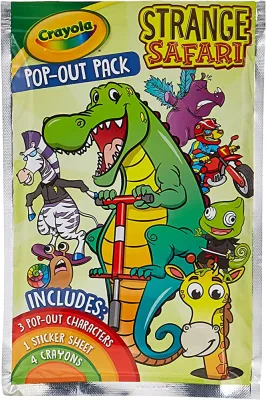
Prices are valid at publication and may change. Please refer to the product page for the latest price.
Material safety is another paramount consideration in a school environment. Before purchasing any pop-out kits, inspect the packaging for recognized safety standards and non-toxic labels. Look for certifications such as ASTM D-4236, which indicates that the materials have been evaluated for chronic hazards, or EN71, the standard for toy safety. Because students will have prolonged skin contact with the paper, dyes, and adhesives, ensuring that all components are acid-free, solvent-free, and lead-free is essential for maintaining a safe classroom.
Time efficiency is a practical constraint that teachers must manage, as standard art classes in many schools range from 40 to 60 minutes. A suitable pop-out set must have a clear, predictable assembly path that fits within this timeframe, including setup and cleanup. If a project requires multiple gluing steps with long drying times, it can disrupt the lesson flow. Prioritizing kits that use interlocking slots or quick-bonding tabs allows students to see immediate progress and complete their structures before the class period ends.
Types of Pop-Out Craft Kits for Classroom Projects
Pop-up greeting cards serve as an excellent introduction to basic paper engineering. These kits typically feature a single folded sheet of cardstock as a base, with pop-out elements attached to internal V-folds or parallel box folds. This style is highly effective for teaching basic geometry, symmetry, and spatial relationships. Students can easily personalize these cards for holidays, family events, or school celebrations, making them a versatile and cost-effective option for teachers looking to introduce 3D concepts.

3D paper models and dioramas allow students to build miniature scenes, buildings, or ecosystems. In a Philippine educational context, these kits can be seamlessly integrated into social studies or science lessons. For example, students can assemble a pop-out model of a traditional bahay kubo, a historical landmark, or a tropical rainforest ecosystem. These dioramas provide a tangible, tactile way to explore complex topics, helping visual and kinesthetic learners grasp spatial layouts and structural design.
Interactive educational tools are pop-out sets designed to function as active learning aids. These include pop-out maps with raised geographical features, interactive timeline wheels, or storybook elements where characters pop out as the pages turn. These kits combine art with literacy and geography, allowing students to construct their own learning materials. The process of building the tool reinforces the educational content, making the lesson more memorable and engaging.
What to Check Before Buying Pop-Out Supplies in Bulk
Before placing a bulk order for an entire grade level, verify what tools are necessary to complete the projects. Some pop-out sets are completely self-contained, requiring no extra tools, while others assume the classroom is equipped with scissors, scoring boards, or specific adhesives. For elementary classrooms, prioritize “punch-out” or “die-cut” designs that allow students to push the pieces out of the backing sheet with their fingers. This eliminates the safety risks and slow progress associated with young children using scissors or craft knives.
Paper specifications are critical, especially in humid tropical climates where moisture can soften paper fibers. Standard copy paper, which typically ranges from 70 to 80 GSM, is too thin and will quickly sag or warp when exposed to wet glue or humid air. For structural pop-out elements, look for sturdy cardstock with a weight of at least 180 GSM to 250 GSM. The paper should have a smooth, matte finish that accepts school-grade coloring mediums—such as crayons, colored pencils, or washable markers—without bleeding, pilling, or tearing.
Bulk art supplies are often stored in school cabinets for months, making storage and packaging an important consideration. High humidity can cause paper to absorb moisture, leading to mold, warping, or sheets sticking together. Ensure the bulk sets are packaged in resealable, moisture-resistant plastic sleeves. The packaging dimensions should fit comfortably within standard classroom shelving or storage bins, allowing teachers to keep the materials organized, flat, and dry until they are ready to be used.
When procuring supplies for a school, budgeting must be calculated on a per-student basis. To find the true cost, divide the total price of the bulk pack in ₱ by the number of usable templates or student sheets included. Beware of kits that seem inexpensive but require additional purchases of specialized glues, tape, or coloring tools. A self-contained kit, even if slightly higher in initial price, often represents better value for money by eliminating hidden accessory costs and simplifying classroom preparation.
Tips for Running Pop-Out Art Sessions Smoothly
Even with pre-cut kits, a little preparation can save valuable class time and reduce student frustration. For younger students, teachers can pre-score the fold lines using a bone folder or a clean, empty ballpoint pen against a ruler before the lesson begins. This ensures clean, straight folds and prevents the cardstock from cracking along the seams. Grouping materials into individual student trays or envelopes before class starts also reduces confusion and keeps the distribution process orderly.
Managing glue is often the biggest challenge in a paper craft session. Liquid white school glue is strong but contains a high water content, which can easily warp cardstock and weaken fold lines in humid weather. Teach students to apply glue sparingly, using toothpicks or cotton buds to place tiny dots of glue on the tabs rather than squeezing it directly from the bottle. Alternatively, high-tack glue sticks or double-sided tape can provide an instant bond without introducing moisture, keeping the paper flat and dry.
Once assembled, 3D pop-out projects are fragile and susceptible to crushing. Designate a specific area in the classroom, such as a flat counter or a series of shallow plastic trays, where projects can sit undisturbed to dry. When it is time for students to take their artwork home, instruct them on how to fold the structures flat if the design allows. For non-folding 3D models, encourage students to bring a shallow recycled cardboard box, such as a shoebox, to school to transport their creations safely without damage in their school bags.
Frequently Asked Questions (FAQ)
What adhesives work best for pop-out paper crafts?
For structural pop-out crafts, double-sided tape and high-quality glue sticks are generally the most reliable options, especially in humid conditions. Double-sided tape provides an immediate, strong bond with zero drying time, which prevents the paper from warping or sliding out of alignment. If using liquid white glue, it should be applied very sparingly with a small applicator to avoid oversaturating the paper fibers, which can cause the joints to buckle and lose their spring.
How should unfinished pop-out projects be stored?
Unfinished pop-out projects should be stored flat to prevent gravity and humidity from warping the partially assembled structures. Teachers can use labeled, heavy-duty paper folders or flat plastic document cases for each student. If the project has already been partially assembled into a 3D shape, store them in shallow, rigid plastic trays or cardboard box lids stacked carefully on shelves, ensuring that no heavy objects are placed on top of the delicate paper mechanisms.

Community discussion
Share your experience or ask a question. Comments are reviewed before publication.