
Protecting your essential paperwork from the unpredictable tropical weather of the Philippines requires a deliberate approach to selecting document storage. Heavy downpours, high relative humidity, and accidental spills can easily ruin paper, causing ink to bleed and documents to deteriorate. To find the best waterproof documents envelope, you must evaluate the base synthetic material, the physical closure mechanism, and the overall dimensions relative to your files. By focusing on these core specifications rather than generic marketing labels, you can ensure your critical certificates, land titles, and contracts remain completely dry and intact.
Understanding Waterproof Materials for Document Protection
When browsing for protective envelopes, you will encounter several synthetic materials, each offering different levels of water resistance, flexibility, and durability. The most common materials used in stationery manufacturing are Polyvinyl Chloride (PVC), Polyethylene (PE), and Thermoplastic Polyurethane (TPU). Understanding the physical properties of these plastics is the first step in choosing an envelope that matches your specific environmental risks.
Polyvinyl Chloride (PVC) is widely used because it is highly flexible, transparent, and cost-effective. It provides excellent protection against surface splashes and light rain, making it a popular choice for everyday school and office folders. However, standard PVC can become brittle over time when exposed to heat, and it often contains plasticizers that can react with certain inks.
Products mentioned in this guide
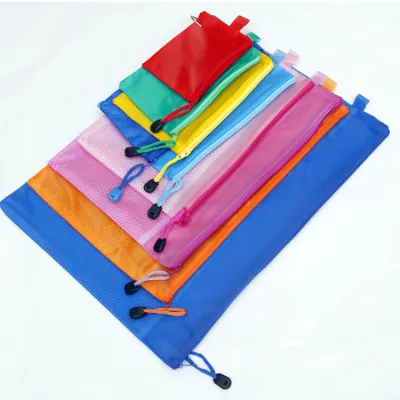
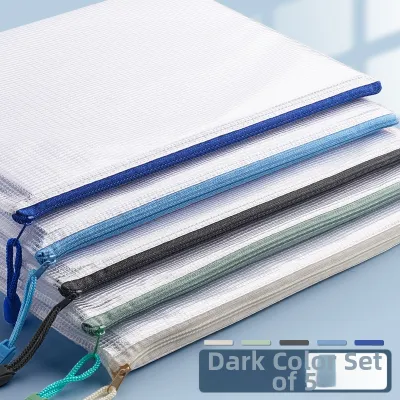
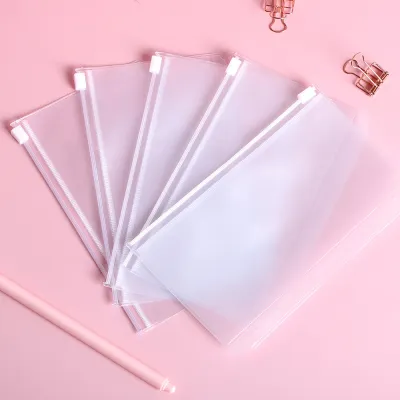
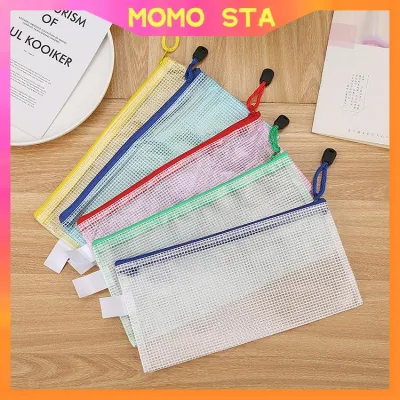
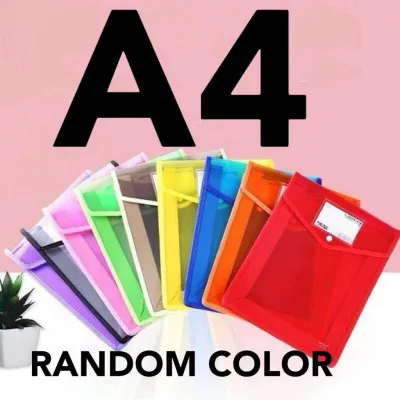
Prices are valid at publication and may change. Please refer to the product page for the latest price.
Polyethylene (PE), including its high-density (HDPE) and low-density (LDPE) variants, is highly resistant to water penetration and chemically inert. PE envelopes are generally lighter than PVC and do not emit strong chemical odors, making them safer for long-term document contact. While they may feel slightly stiffer or more crinkly than PVC, they offer excellent moisture barrier properties.
Thermoplastic Polyurethane (TPU) represents the premium tier of document protection. TPU is exceptionally durable, highly resistant to punctures and tears, and remains flexible across a wide temperature range. It is completely waterproof and does not degrade or yellow easily under tropical sun exposure. If you need maximum security for irreplaceable documents, TPU is the most reliable material choice.
It is crucial to distinguish between “water-resistant” and “waterproof” labels on stationery packaging. Water-resistant envelopes are designed to repel light moisture, such as a brief walk through a light drizzle or a minor coffee spill that is wiped away immediately. Fully waterproof envelopes, on the other hand, are constructed to prevent water ingress even when subjected to heavy, driving rain or temporary submersion in water.
The thickness of the material, typically measured in microns or mils, directly dictates its tear resistance and structural longevity. Thin envelopes (under 100 microns) are prone to stretching, puncturing from sharp paper corners, or splitting along the seams under pressure. For reliable protection, look for envelopes with a material thickness of at least 150 to 300 microns, which provides a sturdy barrier capable of handling daily wear and tear.
Evaluating Closure Mechanisms for Complete Sealing
A waterproof material is only as effective as the closure mechanism that seals the envelope shut. Water is highly opportunistic and will quickly find its way through any gaps, needle holes, or loose seals. Evaluating how an envelope closes is critical to determining its actual performance in wet conditions.

Zip-lock and slider closures are highly popular for their convenience and speed. A dual-track zip-lock provides a relatively tight seal against dust and splashes, but standard plastic sliders can easily derail or wear out with frequent use. For enhanced protection, some heavy-duty envelopes feature a roll-top design secured by a zip-lock, which forces water to travel through multiple folds before it can reach the interior.
Snap-button closures are incredibly convenient for quick access, but they offer very limited protection against liquid ingress. The button mechanism itself does not create an airtight seal, and water can easily seep through the sides of the flap or around the button housing if the envelope is exposed to heavy rain. Snap-button folders are best reserved for indoor organization or as secondary protection inside a larger waterproof bag.
Velcro, or hook-and-loop fasteners, should never be relied upon as a primary waterproof seal. While they keep flaps securely closed, the fibrous nature of the material allows water to pass through effortlessly. If an envelope features a Velcro closure, it must only serve as an outer flap protector over an underlying, fully sealed zip-lock or waterproof zipper.
The construction of the envelope’s edges is just as important as the closure itself. Stitched seams introduce thousands of tiny needle holes that act as pathways for water. True waterproof envelopes utilize high-frequency heat welding or thermal sealing to fuse the plastic edges together, creating a seamless, continuous bond that is completely impervious to moisture.
When evaluating an envelope, inspect the flap overlap and the seal integrity near the corners. A generous flap that folds deeply over the opening provides an extra physical barrier against wind-driven rain. Ensure that the welded seams extend all the way to the edge of the closure mechanism, leaving no unsealed gaps where water could pool and eventually seep inside.
Matching Envelope Sizes and Formats to Your Documents
Choosing the correct envelope size is essential to prevent your documents from bending, creasing, or sustaining edge damage. In the Philippines, standard paper sizes vary across academic, professional, and legal sectors, making it necessary to match your files to the correct envelope dimensions.
The most common paper formats you will need to accommodate include Letter (8.5 x 11 inches), A4 (8.27 x 11.69 inches), Legal (8.5 x 14 inches), and F4 or Folio (8.5 x 13 inches). It is a common mistake to purchase standard “A4” envelopes expecting them to fit Philippine Legal or Folio documents. Always check the precise internal dimensions of the envelope rather than relying solely on generic size labels.
When reviewing dimensions, distinguish between external and internal measurements. A waterproof envelope must be slightly larger than the paper size it is designed to hold to allow for easy insertion and removal. For example, an envelope intended for A4 paper should ideally have internal dimensions of at least 33 centimeters by 24 centimeters to prevent the edges of the paper from catching on the zipper or sealing tracks.
The internal layout of the envelope also affects its utility. Single-compartment envelopes are highly robust and easier to seal completely because they have fewer internal seams and joints. However, if you need to organize multiple document types—such as separating certificates from receipts—a multi-pocket or expanding accordion-style design is highly useful, provided each compartment is protected by the main waterproof seal.
For thick stacks of paper, bound booklets, passports, or land titles with thick protective covers, flat envelopes are often inadequate. Forcing bulky items into a flat envelope stretches the seams and can cause the closure to pop open. In these cases, look for gusseted or expandable envelopes that feature expandable sides of at least 2 to 3 centimeters, allowing the envelope to expand naturally without putting undue stress on the seals.
Building Your Shortlist: Scenarios and Recommended Types
To help you build a practical shortlist, it is helpful to match specific waterproof envelope designs to your daily routines and storage environments. Different scenarios demand different balances of accessibility, durability, and sealing strength.
For daily commuting and student use, the primary requirements are lightweight construction, flexibility, and quick access. Students and commuters frequently need to retrieve and store notebooks, handouts, and homework sheets throughout the day. For this scenario, a flexible PE or medium-thickness PVC envelope with a smooth slider-zip closure is ideal. These envelopes slide easily into backpacks, protect contents from sudden afternoon downpours, and allow for rapid access during classes or transit.
For the long-term storage of critical, irreplaceable documents—such as land titles, birth certificates, marriage contracts, and passports—the focus shifts entirely to maximum security and durability. For this purpose, choose heavy-duty TPU or thick, archival-safe PE envelopes featuring a multi-stage closure, such as a roll-top zip-lock or a heavy-duty waterproof zipper protected by a fold-over flap. These documents are rarely accessed, so ease of opening is secondary to absolute seal integrity. Once sealed, these envelopes should be stored in a dark, dry place, such as a home safe or filing cabinet.
For office filing, archiving, and managing active business paperwork, organization and capacity are paramount. Office environments require systems that can hold thick stacks of paper while remaining easy to label and retrieve. For this scenario, look for expandable, gusseted envelopes made of rigid polypropylene or heavy-duty PE with built-in external label holders. These designs allow you to systematically file documents on shelves or in drawers, protecting active archives from dust, humidity, and accidental office spills.
Verifying Quality and Testing Your Envelopes
Before trusting any waterproof envelope with your irreplaceable documents, it is essential to verify the manufacturer’s claims through practical, at-home testing. This ensures that any manufacturing defects or shipping damages are identified before your papers are put at risk.
To perform a safe, at-home water test, place a dry sheet of scrap paper, such as newspaper or plain bond paper, inside the envelope and seal it completely. Submerge the sealed envelope in a basin of water for several minutes, or hold it directly under a running faucet to simulate a heavy tropical downpour. After the test, thoroughly dry the exterior of the envelope with a towel before opening it, then inspect the scrap paper inside for any signs of dampness, water spots, or moisture ingress.
Next, conduct a thorough physical inspection of the envelope’s construction. Run your fingers along the welded seams and edges to check for any gaps, uneven melting, or weak spots where the plastic might split under pressure. Gently pull on the zipper or slider mechanism to ensure it operates smoothly without catching, splitting, or separating from the main body of the envelope.
Finally, pay attention to any strong chemical odors emanating from the plastic. A pungent, sweet, or chemical smell often indicates the presence of unstable plasticizers or volatile organic compounds, which are common in low-grade PVC. Over time, these chemicals can migrate from the plastic and react with document inks, causing laser-printed text to lift off the page, photos to stick to the plastic, or thermal receipts to fade completely. If an envelope has a strong chemical odor, avoid using it for direct, long-term contact with sensitive papers.
Purchasing Tips and Delivery Checks
When purchasing waterproof document envelopes from online marketplaces or ecommerce platforms, taking a few precautionary steps can save you from receiving substandard products. Focus on finding reliable sellers and verifying the product immediately upon arrival.
Start by searching for established stationery sellers with high ratings and positive customer feedback. When reading reviews, filter for comments that specifically mention “waterproof,” “zipper quality,” “seam durability,” or “material thickness.” Pay close attention to photos and videos uploaded by actual buyers, as these often provide a more realistic representation of the product’s thickness and construction than polished promotional images.
As soon as your package arrives, perform an immediate physical check. Inspect the packaging for any signs of damage during transit that might have punctured the envelopes. Test the closures multiple times to ensure they seal tightly and operate smoothly. If you notice any split seams, broken zippers, or punctures, do not attempt to use the envelope.
Always keep your digital receipts, order screenshots, and the original packaging intact until you have completed your initial quality checks and dry-paper water tests. If the product fails to meet your expectations or fails the water test, initiate a return or exchange through the platform immediately. Taking these steps ensures you secure a reliable product that will genuinely protect your valuable documents when you need it most.
Frequently Asked Questions (FAQ)
Can I store thermal receipts or photos in plastic waterproof envelopes long-term?
Storing thermal receipts or photographs directly inside standard PVC waterproof envelopes for extended periods is not recommended. PVC contains plasticizers that can migrate over time, chemically reacting with the sensitive coatings on thermal paper and photographic prints, which causes images to fade and text to disappear. To safely preserve these items, first place them inside acid-free, archival-safe polyester (PET) or polypropylene sleeves before inserting them into your waterproof envelope.
How do I clean and maintain a waterproof document bag?
To clean a waterproof document envelope, wipe the exterior surfaces with a soft microfiber cloth dampened with water and a small amount of mild dish soap. Avoid using harsh chemical solvents, alcohol, or abrasive scrubbing pads, as these can degrade the waterproof coatings, cloud the transparent plastic, or weaken the welded seams. Always allow the envelope to air-dry completely in a shaded, well-ventilated area before sealing it or storing papers inside, as trapping residual moisture can lead to mold and mildew growth.

Community discussion
Share your experience or ask a question. Comments are reviewed before publication.