
Bullet journaling in the Philippines requires a thoughtful approach to selecting stationery, especially when incorporating decorative elements like science stickers. The local tropical climate, characterized by high humidity and seasonal temperature shifts, directly impacts how adhesives behave and how paper surfaces react to different materials. Finding the right science-themed stickers involves balancing visual appeal—such as vintage botanical illustrations, sleek chemical structures, or vibrant cosmic charts—with practical material performance. To build cohesive, functional layouts that do not warp, peel, or bleed over time, journalers must evaluate how different sticker backings, adhesives, and print finishes interact with their specific notebook setups.
Key Criteria for Evaluating Science Sticker Sets
When selecting science stickers for your bullet journal, the material and finish of the sticker are paramount. Matte paper stickers are highly versatile because they allow you to write directly over them using gel pens, fineliners, or pencils. This makes them excellent for labeling diagrams or adding notes directly onto the sticker surface. Glossy finishes, while offering vibrant colors and sharp details, repel water-based inks, requiring permanent markers or specialized pigment liners if you plan to write on them. Synthetic materials like vinyl or polyethylene terephthalate (PET) provide excellent durability and resistance to moisture, which is particularly useful in tropical climates where ambient humidity can soften standard paper backings.
Adhesive properties are equally critical to protect the integrity of your journal pages. High-quality stickers should feature a balanced adhesive that holds edges down firmly without seeping through thin paper. Repositionable adhesives are ideal for planning layouts, allowing you to adjust a molecular diagram or a planetary phase tracker without tearing the delicate pages of your notebook. In humid environments, low-grade adhesives can either dry out and peel off or become overly gummy, leaving a sticky residue that attracts dust and ruins adjacent pages when the journal is closed. Checking for acid-free and photo-safe adhesives ensures that the stickers will not discolor your pages over time.
Products mentioned in this guide
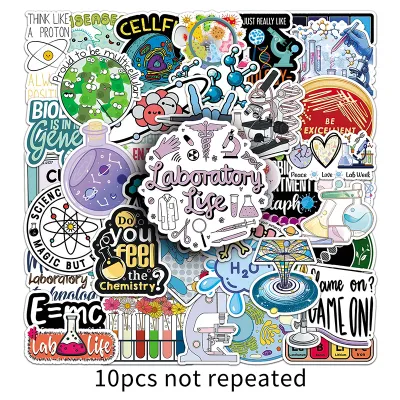
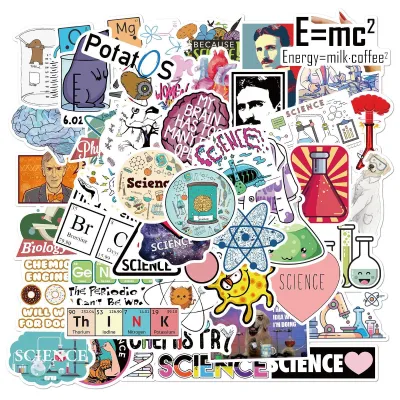
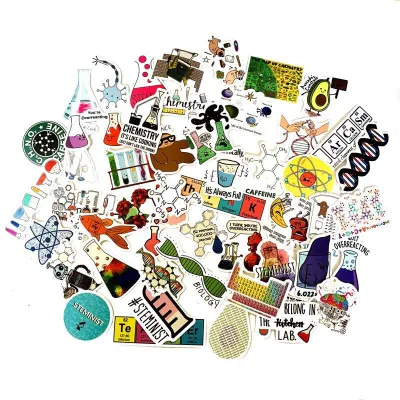
Prices are valid at publication and may change. Please refer to the product page for the latest price.
Size and layout compatibility must match your standard journal formats, such as A5, B6, or Traveler’s Notebook sizes. Large decorative sheets might overwhelm a compact B6 page, while tiny individual stickers can get lost in a spacious A5 layout. Look for sticker sets that offer a mix of functional headers, small icon stickers (like test tubes or atoms), and larger focal illustrations (like vintage anatomical drawings or telescope diagrams) to maintain visual balance. Choosing sheets with varied sizes allows you to use smaller elements for daily tracking and larger designs for monthly cover pages.
Print clarity and die-cut precision are essential for intricate scientific illustrations. Detailed designs, such as chemical formulas, cell structures, or star maps, require high-resolution printing to remain legible. Fuzzy lines or misaligned colors can ruin the technical aesthetic of a science-themed spread. Furthermore, precise die-cutting ensures that delicate elements, like the rings of Saturn or the flagella of a bacterium, peel away cleanly from the backing sheet without tearing. Inspecting the edges of the stickers on the sheet can help you identify if the cuts are clean and centered.
Popular Science Themes for Journal Spreads
Selecting a specific scientific discipline allows you to establish a clear visual theme for your weekly or monthly spreads. By matching the sticker style to your journal’s color palette and layout structure, you can create pages that are both highly functional and visually engaging.

Biology and Botany
Botanical illustrations and anatomical diagrams bring an organic, vintage feel to bullet journal spreads. Detailed drawings of plant cells, leaf veins, skeletal structures, and vintage medical illustrations work exceptionally well for tracking daily habits, water intake, or sleep cycles. When choosing biology-themed sets, look for designs that feature clear, legible labeling of specimens, which adds an authentic academic touch to your pages.
The color palettes of these sets often lean toward muted earth tones, sepia, forest greens, and warm ochres. These natural shades are highly compatible with cream-colored journal paper and kraft paper accents. You can use large botanical stickers as corner frames for your weekly layouts, while smaller cellular icons can serve as bullet points or custom keys. If you prefer a modern look, seek out stylized, colorful illustrations of microorganisms or DNA strands that use bright, contrasting colors to make your spreads pop.
To verify the suitability of biology stickers, check if the paper material allows for layering. Many journalers like to layer botanical stickers over washi tape or torn paper scraps. Matte paper stickers work best for this technique, as they blend seamlessly with other paper textures and do not create a bulky, plastic-like buildup on the page.
Chemistry and Physics
For those who prefer structured, geometric layouts, chemistry and physics themes offer clean lines and minimalist aesthetics. Molecular models, structural formulas, laboratory glassware, and mathematical equations can be used creatively to organize your thoughts. For instance, a row of graduated beakers can function as a creative hydration tracker, where you color in each beaker to represent a glass of water. Physics diagrams, such as wave patterns, magnetic fields, or vector grids, provide excellent geometric frameworks for boxing in daily tasks or highlighting important notes.
When selecting these stickers, pay close attention to the legibility of microscopic text, chemical symbols, and subscripts. Fine-line black ink designs on transparent backings are particularly effective here, as they blend seamlessly into dotted journal grids without creating harsh white borders. This transparency allows the grid lines of your journal to show through, maintaining the clean, mathematical feel of the layout.
Additionally, consider how these stickers interact with your daily writing instruments. If you use gel pens or fountain pens, matte paper chemistry stickers will absorb the ink quickly, preventing smudges. If you choose transparent PET stickers for their sleek look, remember to allocate space around them for your notes, or use a permanent pigment liner if you need to write directly on top of the sticker elements.
Astronomy and Space
Celestial themes are incredibly popular for creating dramatic, dark-themed journal spreads. Star charts, lunar phases, constellations, and deep-space nebulae add a sense of wonder to monthly cover pages and weekly logs. To make these cosmic elements stand out, verify the opacity of the stickers, especially if you plan to use them on dark or black journal paper. Low-quality transparent stickers will lose their color vibrancy and disappear against a dark background, whereas high-opacity paper or white-backed vinyl stickers will retain their brilliant blues, purples, and metallic gold accents.
Look for sets that maintain a cohesive design language—such as matching line weights and color temperatures—so that your planetary phases and constellation maps look unified across your entire monthly setup. Some astronomy sets include metallic foil accents, which catch the light beautifully and add a premium feel to your pages. When using foiled stickers, check that the foil is bonded securely to the sticker surface and does not flake off when rubbed.
For functional tracking, lunar phase stickers are excellent for monitoring sleep patterns or mood cycles over a month. You can align a series of moon stickers along the top of your habit tracker, creating a visual connection between your personal routines and the lunar cycle.
How to Verify Quality When Shopping Online
When sourcing science stickers from online marketplaces in the Philippines, you cannot physically inspect the items before purchase. To avoid disappointment, you must learn to decode product listings and leverage user-generated content. Start by cross-referencing the seller’s material claims with actual photos uploaded by previous buyers in the review section. Sellers often use idealized digital mockups that make stickers look thicker or more vibrant than they actually are. Real-world photos will reveal the true finish of the sticker—whether it has an unwanted high-gloss glare or a smooth, writable matte texture—and show how the sticker looks when applied to actual paper.
Next, inspect user reviews specifically for complaints regarding die-cut alignment and color accuracy. If multiple reviews mention that the cuts are off-center, resulting in white borders being chopped off or the illustration itself being sliced, it is best to look for another seller. Pay attention to comments about color discrepancies; some prints may arrive looking washed out or overly saturated compared to the listing images. Reading reviews from buyers who use similar journals can also give you insight into how the stickers perform on specific paper types.
The tropical climate and shipping conditions in the Philippines also demand careful consideration of packaging. During the rainy season, high humidity and sudden downpours can ruin paper stationery in transit if it is not properly protected. Look for reviews that praise the seller’s packaging methods. Ideally, sticker sheets should be shipped in rigid cardboard mailers, backed by thick cardstock, or wrapped in protective plastic sleeves to prevent bending, creasing, or water damage during delivery. Avoid sellers who ship sticker sheets loose in standard paper envelopes, as these are highly susceptible to damage.
Finally, review the seller’s shipping origins and estimated delivery times. While international sellers on major ecommerce platforms may offer a wider variety of niche scientific designs, local boutique stationery shops often provide faster shipping and more reliable customer service. Balancing your desire for unique designs with practical shipping timelines will ensure your stickers arrive in perfect condition exactly when you need them for your next monthly setup.
Practical Tips for Applying and Storing Stickers
Working with intricate science stickers—such as delicate constellation lines, thin chemical bonds, or tiny botanical labels—requires a steady hand and the right tools. Instead of using your fingers, which can transfer natural oils to the adhesive and weaken its bond, use a pair of fine-tipped crafting tweezers to peel and position small stickers. This tool allows for precise placement on dotted grids and prevents the edges of delicate die-cut designs from curling or tearing during application.
Before committing a sticker to your main journal page, always perform a quick adhesive test on a scrap page or an inconspicuous back page of your notebook. This is especially important if you are using lightweight journal paper, such as 52 gsm or 68 gsm paper. Apply a small sticker, let it sit for a few minutes, and then attempt to peel it off. Observing how the adhesive behaves will tell you whether the sticker is truly repositionable or if it will tear the paper fibers upon removal.
Proper storage is essential for maintaining the quality of your sticker collection, particularly in the warm, humid climate of the Philippines. High humidity can cause sticker backings to curl and adhesives to degrade over time. To protect your investment, organize your sticker sheets in clear plastic sleeves inside a binder or a dedicated sticker book. Grouping your collection by scientific discipline—such as biology, chemistry, and astronomy—not only keeps the sheets flat and protected from moisture but also makes it incredibly easy to retrieve the exact design you need when planning your next spread. Keep your storage binder in a cool, dry place away from direct sunlight to prevent the colors from fading.
Frequently Asked Questions (FAQ)
Can I use standard paper stickers on thin journal pages without bleeding?
Yes, standard paper stickers can be used safely on thin journal pages, but you must verify the paper’s weight, measured in grams per square meter (gsm). Journals with thin paper, such as 52 gsm or 68 gsm, are highly sensitive to heavy adhesives and wet inks. While the sticker adhesive itself rarely bleeds through the paper, it can cause the page to crinkle or ghost if the adhesive is too wet or aggressive. To prevent this, choose lightweight matte paper stickers rather than heavy vinyl options. Always test a small sticker on a back page first, observing if it causes the paper to warp or show through on the reverse side before decorating your main layouts.
Are waterproof science stickers suitable for fountain pen ink?
Waterproof science stickers, typically made from vinyl or PET plastic, are generally not suitable for standard water-based fountain pen inks. Because these synthetic surfaces are non-porous, water-based inks cannot penetrate the material to dry, resulting in severe smudging, pooling, or complete ink rejection. If you want to write or draw over waterproof stickers, you must use specialized pigment-based inks, permanent markers, or oil-based ballpoint pens. Always conduct a quick trial on a spare sticker to observe the drying time and smudge resistance of your chosen pen before writing important notes on your journal spreads.

Community discussion
Share your experience or ask a question. Comments are reviewed before publication.