
Finding the right Four Candies mechanical pencil set for long writing sessions depends heavily on your personal grip style, hand size, and the specific triggers that cause your hand fatigue. Because ergonomic comfort is highly subjective, there is no single universal winner for every writer. Instead, selecting the ideal set requires evaluating key physical factors such as grip material, weight distribution, barrel diameter, and lead mechanism. This guide provides a structured framework to help you assess available options, interpret product specifications, and identify the configuration that best supports your extended writing needs without causing strain.
In tropical climates like the Philippines, where high humidity and warm temperatures can lead to sweaty hands during long study or work sessions, choosing the right writing instrument becomes even more critical. A pencil that slips easily or requires excessive gripping force can quickly lead to writer’s cramp and muscle fatigue. By understanding how different design elements interact with your writing habits, you can make an informed decision that ensures comfort and productivity, whether you are taking board exams, drafting detailed sketches, or taking extensive lecture notes.
Key Factors for Comfort During Extended Writing
When preparing for hours of continuous writing, the physical design of your mechanical pencil plays a decisive role in how long you can write before fatigue sets in. The first and most immediate point of contact is the grip. Grip materials generally fall into two main categories: soft elastomeric or silicone cushions, and textured or knurled metal surfaces. In humid environments, a soft silicone grip can provide a comfortable, yielding surface that absorbs pressure, making it excellent for those who hold their pencils with a tight, high-pressure grasp. However, silicone can sometimes retain heat or feel slightly slippery if your hands sweat. On the other hand, a knurled metal grip offers exceptional traction and ventilation for your fingertips, preventing slippage even during intense, fast-paced writing. The trade-off is that a hard metal texture can feel abrasive over several hours if you tend to squeeze the barrel tightly.
Products mentioned in this guide
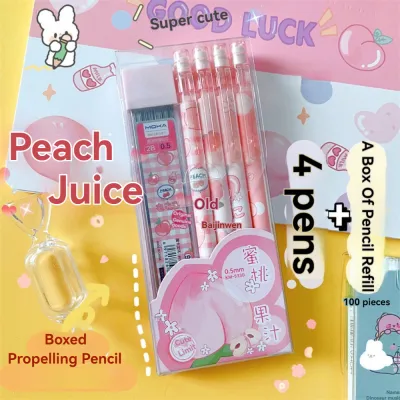
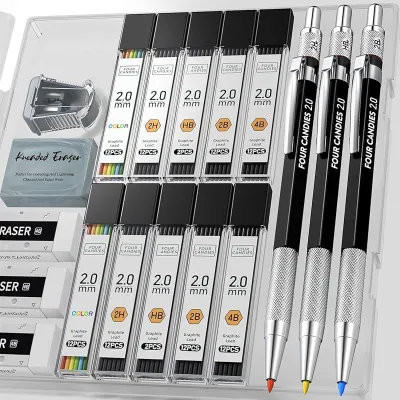
Prices are valid at publication and may change. Please refer to the product page for the latest price.
Weight distribution and the pencil’s center of gravity are equally vital for reducing muscular effort. A mechanical pencil with a lower center of gravity—meaning the weight is concentrated closer to the tip—naturally falls forward toward the paper. This design minimizes the amount of stabilizing force your hand muscles must exert to keep the pencil upright and aligned. When the center of gravity is too high or balanced toward the rear, the pencil can feel top-heavy, forcing your hand to constantly work to prevent the tool from tipping backward. Over a long session, this subtle, continuous muscle tension in your thumb and index finger accumulates, leading to premature fatigue and stiffness.
The overall barrel diameter and shape also dictate how your hand behaves during extended use. Standard thin-barreled pencils often force your fingers into a tight, closed pinch, which can restrict blood flow and cause rapid cramping, particularly for writers with larger hands. Thicker or contoured barrels allow for a more open, relaxed hand posture, distributing the gripping force across a larger surface area. If you find yourself frequently shaking out your hand or experiencing stiffness in your palm, transitioning to a pencil set that features a slightly wider or ergonomically shaped barrel can provide immediate relief by encouraging a more natural, tension-free grip.
Evaluating Four Candies Mechanical Pencil Sets by Grip and Weight
To select the most suitable Four Candies mechanical pencil set, you must carefully evaluate how the specific design features of each set align with your personal writing habits. When browsing online marketplaces, pay close attention to the product descriptions and images detailing the grip section. If you employ a traditional tripod grip—resting the pencil on your middle finger while securing it with your thumb and index finger—a moderately thick, gently contoured silicone grip can help distribute pressure evenly. If you use an overhand or alternative grip style, you may prefer a uniform, non-contoured barrel that allows you to place your fingers anywhere along the shaft without being forced into pre-molded grooves.

The overall weight of the pencil should complement your natural writing pressure. Lightweight plastic-bodied pencils are highly agile and require very little effort to move across the page, making them ideal for rapid note-taking, quick calculations, or writers who naturally apply very light pressure. However, if you tend to write with a heavy hand, a lightweight pencil might cause you to press down even harder to achieve dark, consistent lines, which increases fatigue. Conversely, a heavier pencil with a metal core or weighted tip allows the mass of the tool itself to apply the necessary downward force. In this scenario, your hand’s primary job is simply to guide the pencil across the paper, reducing the need to actively press down.
Before purchasing a set, it is highly beneficial to establish a practical verification checklist to ensure the specifications meet your expectations. First, check the listed barrel diameter, which typically ranges from 8 mm to 12 mm; a difference of just 1 mm can significantly alter how a pencil feels in your hand. Second, verify the material composition of both the body and the grip to confirm whether it uses lightweight ABS plastic, heavier brass components, or a hybrid construction. Finally, look for detailed dimensions regarding the length of the grip section itself, ensuring it is long enough to accommodate your fingers comfortably without forcing you to hold the bare threads of the pencil body.
Lead Size and Mechanism Considerations for Long Sessions
Beyond the external ergonomics, the internal mechanics and lead specifications of your mechanical pencil set directly influence the continuity of your writing. The choice between 0.5 mm and 0.7 mm lead sizes is not merely a matter of line width; it fundamentally affects writing resistance and breakage. A 0.5 mm lead produces fine, precise lines that are excellent for detailed work or small handwriting, but it is inherently more fragile. If you write quickly or apply uneven downward pressure during long sessions, a 0.5 mm lead may snap frequently, interrupting your flow and causing frustration. A 0.7 mm lead offers a thicker, more robust point that resists breakage under pressure, providing a smoother, gliding sensation on the paper that can make long-form writing feel significantly less taxing.
To mitigate the risk of lead breakage, some mechanical pencils incorporate shock-absorbing or spring-loaded cushioning mechanisms within the tip. These internal systems allow the lead to retract slightly into the sleeve when excessive vertical or diagonal pressure is applied, absorbing the shock instead of allowing the lead to snap. For students and professionals who write continuously under tight time constraints, such as during exams or timed essays, a cushioning mechanism ensures an uninterrupted writing flow, saving you from the constant cycle of clicking to extend broken lead.
Additionally, the physical effort required to advance the lead should not be overlooked. Over a multi-hour session, you may actuate the click mechanism hundreds of times. If the top button or side-click mechanism has a stiff, high-resistance spring or an excessively long travel distance, it can place repetitive strain on your thumb or index finger. A smooth, low-resistance click mechanism that advances the lead by a precise, consistent increment—typically around 0.5 mm per click—minimizes this repetitive motion strain, allowing you to maintain your focus entirely on the task at hand.
Building Your Ideal Four Candies Pencil Setup
Completing your writing setup involves more than just selecting the pencil itself; you must also ensure long-term compatibility and practical usability. When choosing a Four Candies mechanical pencil set, cross-reference the contents of the package to verify the inclusion of essential consumables. A comprehensive set should ideally include a generous supply of lead refills in your preferred hardness (such as HB or 2B) and compatible replacement erasers. Standardizing your refills ensures that you do not run out of supplies mid-session, and verifying that the pencil accepts standard, widely available lead sizes prevents you from being locked into proprietary refills that may be difficult to source locally.
Before finalizing your purchase on an online marketplace, take the time to thoroughly analyze buyer feedback, filtering specifically for terms like “grip wear,” “weight balance,” and “long-term durability.” Pay close attention to reviews from users who mention using the pencils for extended study sessions, board exam preparation, or professional drafting. These real-world accounts often reveal how the materials hold up under tropical humidity, whether the silicone grip becomes sticky over time, or if the internal clutch mechanism maintains a firm hold on the lead after months of continuous use.
Once your new mechanical pencil set arrives, conduct a systematic trial to test its ergonomic fit before committing to a long writing session. Begin by writing a few paragraphs on your standard notebook paper to observe how the pencil balances in your hand and whether the grip material feels secure. If you experience any immediate pinching, muscle tension, or discomfort, adjust your finger placement or try a different pencil from the set if it includes multiple body styles. Always verify the seller’s return or exchange policies beforehand, allowing you to return the set safely if the physical dimensions do not align with your hand structure during the initial trial period.
Frequently Asked Questions (FAQ)
Does a heavier mechanical pencil always reduce hand fatigue?
No, a heavier mechanical pencil does not universally reduce hand fatigue, as its effectiveness depends entirely on your natural writing pressure and grip style. For writers who naturally apply very light pressure, a heavier pencil can be highly beneficial because the tool’s own mass provides the downward force needed to create dark lines, allowing the hand to relax and simply guide the pencil. However, if you naturally grip your writing instruments tightly or apply heavy downward pressure, a heavier pencil can actually accelerate fatigue. In this case, your hand muscles must work much harder to stabilize, lift, and control the extra mass of the pencil, leading to rapid cramping and strain in the fingers and wrist.
Can I replace the grip on a Four Candies mechanical pencil if it wears out?
Whether you can replace the grip depends on the specific model design within your Four Candies set. Many mechanical pencils feature permanently molded or integrated grips that cannot be removed without damaging the structural integrity of the barrel. Before attempting to remove a grip, consult the manufacturer’s specifications or product documentation to verify if it is designed to be detachable. If the original grip wears out or becomes sticky due to humidity and hand oils, and official replacements are unavailable, you can often slide a compatible third-party silicone grip sleeve over the existing barrel. Keep in mind, however, that adding an external sleeve will increase the overall barrel diameter and may alter the pencil’s original weight distribution and balance.

Community discussion
Share your experience or ask a question. Comments are reviewed before publication.