
Setting up a home office in the Philippines requires a reliable system to manage physical paperwork. From monthly utility bills and tax receipts to official government documents, loose papers can quickly clutter your workspace. Plastic envelope organizers offer a lightweight, durable, and moisture-resistant solution to keep your documents sorted and protected. In a tropical climate where humidity and dust are constant challenges, choosing the right plastic organizer is essential for preserving important papers.
To build an efficient filing system, you must evaluate key physical attributes like size compatibility, material durability, and closure types. Matching these features to your daily workflow ensures your documents remain accessible, secure, and undamaged over time.
Key Features to Evaluate in Plastic Envelope Organizers
In the Philippines, document sizes vary widely. Standard office papers typically use A4 (210mm x 297mm) or Letter size (8.5 x 11 inches). However, many official government forms, contracts, and legal documents are printed on Legal size (8.5 x 14 inches) or the local “long” bond paper size (8.5 x 13 inches). Before purchasing any plastic envelope, verify the exact internal dimensions. A standard A4 envelope will crease or damage legal-sized documents. Look for organizers explicitly labeled as “Long” or “Legal” if you handle contracts, land titles, or notarized deeds. Ensure there is at least a half-inch of clearance on all sides to allow easy insertion and retrieval without bending the edges of your papers.
Products mentioned in this guide
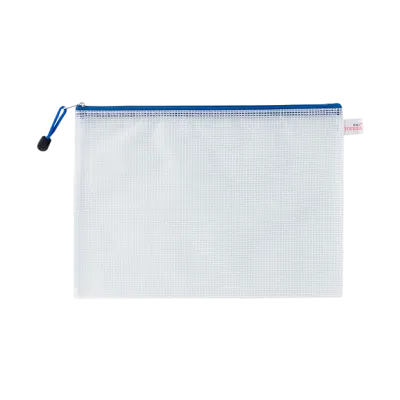
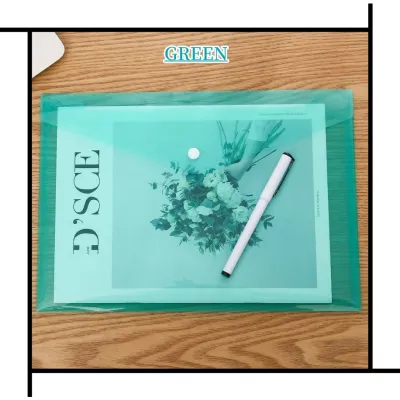
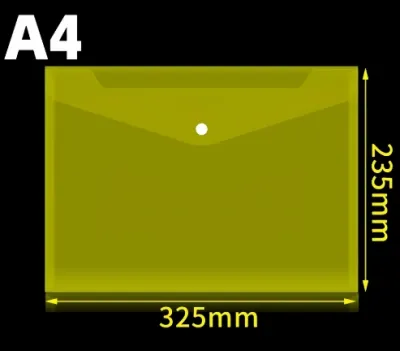
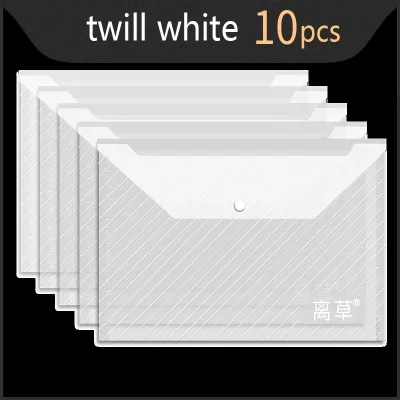

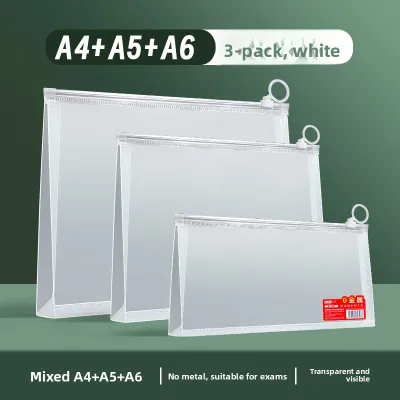
Prices are valid at publication and may change. Please refer to the product page for the latest price.
The durability of a plastic envelope depends heavily on its material composition and thickness, usually measured in microns or millimeters. Polypropylene (PP) is the preferred choice for home office filing. It is acid-free, archival-safe, and highly resistant to tearing. Unlike polyvinyl chloride (PVC), polypropylene does not emit harmful gasses or stick to printed text, preventing ink transfer from your documents onto the plastic over long periods. Transparency is another critical factor. Clear or highly translucent envelopes allow you to identify contents at a glance without opening them. Opaque or tinted envelopes are better suited for confidential documents, such as bank statements, tax filings, or personal identification records, as they shield sensitive information from casual view.
The weakest points of any plastic envelope are its edges. High-quality organizers feature heat-sealed or reinforced stitched seams that prevent the sides from splitting when the envelope is filled to capacity. Examine the corners and edges for double-welding or fabric binding. Fabric-trimmed edges not only add structural integrity but also prevent the sharp plastic corners from scratching your desk or tearing other storage containers.
How you secure your envelope affects both access speed and security. Plastic snap buttons are the most common closure. They offer quick, one-handed access and are ideal for documents you need to retrieve frequently. However, overstuffing the envelope can put strain on the snap, causing it to pop open or crack the surrounding plastic over time. Zippered envelopes provide a more secure, wrap-around seal that prevents loose items like receipts, business cards, or flash drives from falling out. They are excellent for mobile filing but can add bulk to your storage boxes. Hook-and-loop fasteners offer flexibility and can accommodate varying document thicknesses, though they can collect dust or lint over time. Some expanding files use elastic cords that loop over buttons, allowing the envelope to expand naturally while keeping the cover securely closed.
Matching Organizer Styles to Your Home Office Workflow
If your daily workflow involves handling active, short-term paperwork, standard single-pocket plastic envelopes are highly efficient. These are perfect for sorting daily receipts, incoming mail, active invoices, or monthly utility bills before they are permanently archived. Because they are thin and lightweight, you can easily keep a few on your desktop or in a shallow drawer to catch loose papers. They act as the “inbox” of your filing system, keeping clutter off your desk surface until you have time to sort them.

For multi-category projects, annual tax preparation, or client-specific records, expanding accordion files are the ideal choice. These organizers feature multiple internal pockets separated by built-in dividers. A single accordion file can hold an entire year’s worth of household expenses, categorized by month or utility type (such as electricity, water, and internet bills). The expandable gussets allow the file to grow as you add more documents, saving space when the file is relatively empty. Look for models with at least 12 to 24 pockets if you plan to use them for monthly archiving or comprehensive tax record-keeping.
If you frequently move your work between a dedicated desk, the dining table, or external meetings, consider portable plastic organizers with built-in handles or rigid, stand-up bases. Handled plastic briefcases or expanding cases protect your documents from sudden tropical downpours during transit. Stand-up gusseted envelopes can sit upright on your desk, functioning as a vertical sorting station. This design keeps your active files within arm’s reach and visible, preventing the “out of sight, out of mind” issue that often leads to forgotten tasks.
Building Your Shortlist: Pre-Purchase Verification Checks
Before purchasing a set of plastic envelopes, measure the physical dimensions of your home office furniture. Check the width, depth, and height of your desk drawers, filing cabinets, shelf units, or plastic storage bins. Many standard plastic envelopes, especially those designed for legal-sized paper, are wider than typical drawer openings. Ensure that the outer dimensions of the envelopes—including the closures and reinforced edges—will fit comfortably inside your intended storage spaces without bending or forcing the plastic, which can warp the envelopes and damage the papers inside.
Read product descriptions and labels carefully to verify the safety and durability of the plastic. Look for terms like “acid-free,” “archival-safe,” and “non-toxic polypropylene.” Avoid cheap, unmarked plastics that have a strong chemical odor, as these are often made of low-grade PVC that can degrade quickly in warm climates, release oily plasticizers, and permanently fuse to your printed documents or photographs.
A filing system is only as good as its retrieval speed. Check if the plastic envelopes include built-in label pockets on the front or spine. For expanding files, verify that they come with customizable index tabs and pre-cut paper inserts. Having clear, visible labels prevents you from having to open multiple envelopes to find a specific document. If the envelopes do not have built-in pockets, ensure the plastic surface is smooth enough to accept adhesive labels or write-on tape without peeling off.
Integrating Envelopes into a Complete Filing System
Color-coding is one of the most effective ways to streamline your home office filing. Assign specific colors to different categories of your life or business. For example, use blue envelopes for financial records and bank statements, green for property and vehicle documents, yellow for personal identification and medical records, and red for urgent, active projects. Combine this with a consistent labeling convention, such as “YYYY_Category_Subcategory” (e.g., “2026_Taxes_Income”), to make searching for files intuitive for anyone in your household.
To prevent your plastic envelopes from overstuffing and stretching out of shape, establish a routine maintenance schedule. Set aside time quarterly or annually to review the contents of your organizers. Shred or discard expired documents, such as old receipts that are no longer needed for warranties or tax purposes. Move long-term archival documents, like historical tax returns or property deeds, to deep storage boxes, freeing up your active desktop envelopes for current paperwork.
While plastic envelopes are excellent for grouping related papers, they can become floppy or slide around when stored loosely on a shelf or in a deep drawer. To keep them upright and organized, pair them with rigid secondary storage solutions. Place your labeled plastic envelopes inside sturdy magazine holders, plastic crates, or drawer dividers. This hybrid approach combines the dust and moisture protection of plastic envelopes with the structural support of rigid containers, keeping your home office looking neat and professional.
Frequently Asked Questions (FAQ)
Can plastic envelope organizers protect documents from high humidity?
Standard plastic envelopes offer excellent protection against surface splashes, spills, and dust, but they are not completely airtight or waterproof. In the humid tropical climate of the Philippines, moisture in the air can still find its way inside through snap closures, zipper seams, or open tops. To protect highly sensitive papers, certificates, or historical documents from mold and humidity damage, place a small silica gel packet or desiccant pouch inside each envelope. Additionally, store your filled envelopes in a well-ventilated room or inside a sealed plastic storage box with a moisture absorber, and avoid placing them directly against external concrete walls where condensation can build up.
How should I clean and maintain plastic document envelopes?
To keep your plastic envelopes clear and free of dust, wipe them down periodically with a dry or slightly damp microfiber cloth. For stubborn smudges, fingerprints, or sticky residue from old labels, use a small drop of mild dish soap mixed with water on a soft cloth, then wipe dry immediately. Never use rubbing alcohol, acetone, or harsh chemical solvents on polypropylene or PVC envelopes, as these substances can permanently cloud, melt, or weaken the plastic. Keep your organizers away from direct sunlight and heat sources, such as window sills or computer exhaust vents, to prevent the plastic from warping, becoming brittle, or causing the ink on your documents to transfer to the envelope walls.

Community discussion
Share your experience or ask a question. Comments are reviewed before publication.