
Marking vehicle tires for identification, maintenance, or aesthetic customization requires a writing instrument that can withstand some of the harshest environmental conditions. Standard permanent markers, while excellent for paper or cardboard, quickly fail when applied to rubber. Rubber is a highly flexible, porous, and chemically active material that constantly expands and contracts with temperature changes, flexes under load, and is subjected to road debris, water, and intense sunlight.
To achieve a clean, long-lasting white mark on a tire sidewall, you must select a marker specifically engineered for rubber or non-porous outdoor surfaces. This guide explores the critical ink formulations, tip mechanisms, and surface preparation steps necessary to ensure your tire markings remain bright and intact under demanding road conditions.
Key Specifications to Look for in a White Tire Marker
The primary factor in marker longevity is the ink type. Standard markers use dye-based inks dissolved in alcohol or water. These dyes are transparent and absorb into porous surfaces, making them virtually invisible on black rubber. For tires, you need pigment-based paint markers, specifically oil-based or specialized acrylic formulations. Oil-based paint creates a durable, opaque film that sits on top of the rubber. This film acts as a physical barrier, resisting water and UV degradation. When evaluating a marker, check the product label or specifications for terms like “oil-based paint” or “pigmented paint.”
Products mentioned in this guide
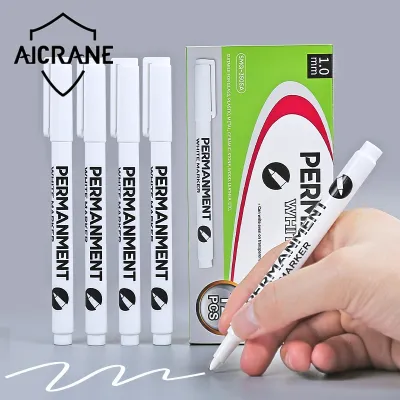
![[MORLY] 1.5mm White Marker Pen Waterproof Permanent Oily Marker for Tire Painting Graffiti Drawing Supplies](https://img.lazcdn.com/g/p/2cc3b66f0765fed1ff71cbc460b3da05.jpg_400x400q80.jpg_.webp)
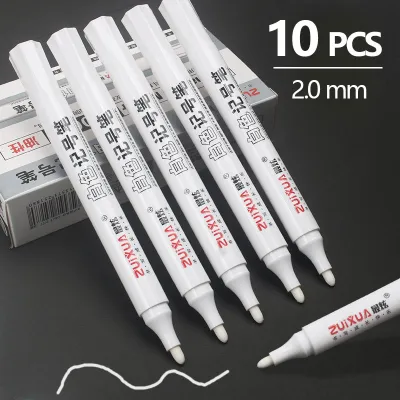
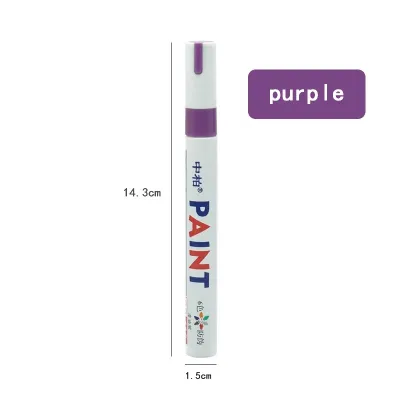
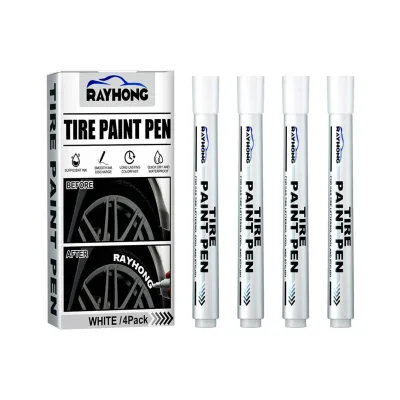
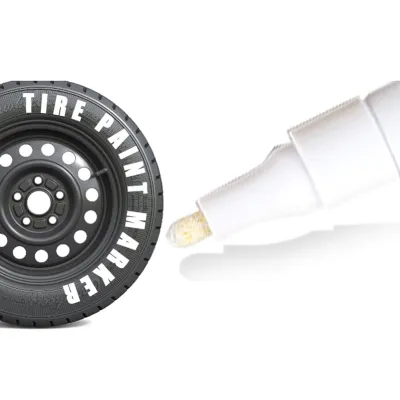
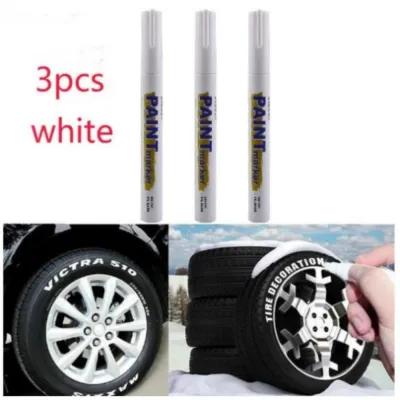
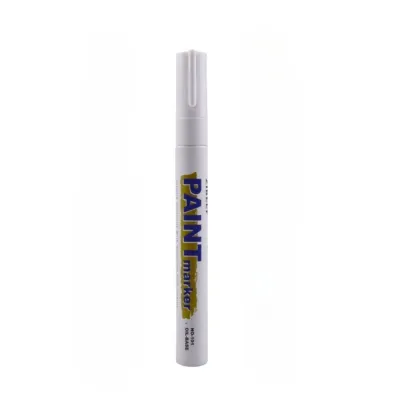
Prices are valid at publication and may change. Please refer to the product page for the latest price.
The tip mechanism is another critical specification. Standard felt-tip markers rely on capillary action to draw ink to the tip. If left uncapped, they dry out rapidly, and they cannot deliver the thick, viscous paint required for rubber. Instead, look for valve-action markers. These pens feature an internal valve and a spring-loaded tip. To use them, you shake the marker to mix the pigment and solvent, then press the tip down on a hard surface to open the valve and saturate the nib. This mechanism allows you to control the paint flow, ensuring a rich, consistent application even on textured or vertical tire sidewalls.
Achieving a bright white mark on a pitch-black tire requires high opacity. The paint must contain a high concentration of white pigment, typically titanium dioxide. Lower-quality markers often use diluted pigments, resulting in a translucent, watery grey mark that requires four or five coats to look white. Look for markers that specify “high opacity” or “excellent coverage.” A simple test on a dark piece of scrap plastic or cardboard can help you verify the paint’s opacity before applying it to your tires.
Additionally, consider the tip material and shape. Acrylic or polyester fiber tips are highly durable and resist fraying when used on rough, textured rubber. Bullet tips are generally preferred for tire lettering as they provide a consistent line width, while chisel tips offer versatility for both thick lines and fine details.
Comparing Marker Types for Rubber Tire Applications
Dedicated tire paint markers are specifically formulated for automotive use. The binders in these paints are designed to remain flexible after curing, allowing the mark to bend and stretch as the tire sidewalls flex during driving. They also contain UV inhibitors to prevent the white paint from yellowing under intense tropical sunlight. While they are often more expensive, their specialized formulation makes them a highly reliable choice for long-term durability on active vehicles.

Industrial paint pens, often found in hardware and stationery stores, are designed for marking metal, glass, wood, and concrete. Many of these pens use robust oil-based paints that perform exceptionally well on rubber. However, because they are not exclusively designed for tires, you must verify their compatibility. Check the manufacturer’s technical data sheet or product packaging to ensure rubber is listed as an approved surface. Some industrial solvents can react with rubber compounds, causing the paint to crack or the rubber to degrade slightly over time.
Standard permanent markers are the common markers used in offices and schools. They are entirely unsuitable for tire marking. The dye-based ink is too thin to cover the black rubber, and the flexible nature of the tire causes the dried ink to crack and flake off almost immediately. Furthermore, tires contain compounding agents like antiozonants that migrate to the surface over time (a process called blooming). These chemicals easily bleed through standard marker inks, turning your white marks into a dull brown or yellow smudge within days.
Specialized multi-surface markers fall somewhere in between. These markers are designed for a wide variety of crafts and DIY projects. While they may work temporarily on rubber, they often lack the industrial-grade binders needed to survive the friction, heat, and moisture of daily driving. If you choose a multi-surface marker, ensure it explicitly lists rubber compatibility and weather resistance on the packaging.
How to Prepare Tires and Apply Marks for Maximum Durability
The secret to a long-lasting tire mark lies almost entirely in the preparation. Tires are coated with mold release agents during manufacturing, and they accumulate road grime, brake dust, and silicone-based tire shine products during use. Paint cannot adhere to these contaminants. Begin by scrubbing the tire sidewall thoroughly with a stiff-bristled brush and a strong degreaser or dish soap. After rinsing and drying, wipe the specific area you plan to mark with isopropyl alcohol. This removes any remaining oils and leaves a clean, high-tack surface for the paint.
Before writing, shake the valve-action marker vigorously for at least 30 seconds to ensure the pigment is fully suspended in the solvent. Prime the tip on a clean piece of scrap cardboard by pressing it down repeatedly until the white paint begins to wet the nib. When applying the paint to the tire, use light, even strokes. It is highly recommended to apply two or three thin coats rather than one thick, heavy layer. Thick layers of paint are prone to cracking as the tire flexes, whereas thin coats bond more securely and retain flexibility. Allow the paint to dry to the touch between coats.
Once the final coat is applied, patience is critical. While the paint may feel dry to the touch within a few minutes, it requires time to fully cure and bond with the rubber. Check the manufacturer’s instructions on the marker packaging for specific curing times. In humid tropical environments, curing may take longer. Avoid driving the vehicle, exposing the tires to water, or applying tire shine products for at least 24 hours after application to ensure the bond is fully set.
To maintain the markings over time, avoid harsh wheel cleaners or high-pressure washers directly on the painted areas. When washing your vehicle, gently clean the marked sections with a soft sponge and mild car shampoo to preserve the paint’s integrity and brightness.
Finding and Verifying Authentic Tire Markers Online
When shopping on online marketplaces in the Philippines, the abundance of options can be overwhelming. To avoid counterfeit products—which often suffer from poor opacity, dried-out tips, or weak adhesion—always look for official brand stores or authorized stationery distributors. These sellers typically carry badges indicating their official status. Purchasing from reputable sources ensures you receive fresh stock with active solvents and proper pigment suspension.
Do not rely solely on search terms like “permanent white marker.” Read the detailed product descriptions carefully. Look for explicit mentions of “rubber,” “tire marking,” or “weather-resistant paint.” Authentic manufacturers will provide detailed specifications regarding the ink base (such as oil-based) and the recommended surfaces. If a listing uses generic terms without specifying the ink type or surface compatibility, it is likely a standard utility marker unsuitable for tires.
Compare prices across different listings. While a very low price under ₱30 may be tempting, high-quality, durable paint markers generally cost more due to the cost of specialized pigments and solvents. Read user reviews specifically from buyers who have used the marker on tires or outdoor equipment. Look for uploaded photos showing the marker’s opacity on black rubber and comments regarding how well the marks survived rain, car washes, and daily driving. This real-world feedback is invaluable for verifying the product’s performance before making a purchase.
Additionally, check the seller’s return policy and customer service rating. Reliable sellers are more likely to address issues such as receiving a dried-out marker or the wrong tip size, ensuring a smoother purchasing experience.
Frequently Asked Questions (FAQ)
Can I use a standard permanent marker on my tires in a pinch?
Using a standard permanent marker on tires is not recommended, even for temporary use. The thin, dye-based ink will not provide enough contrast against the black rubber, resulting in a faint, barely visible mark. Additionally, the ink will quickly wash away when exposed to rain or road moisture, and the natural flexing of the tire will cause any remaining pigment to flake off. If you only need a temporary mark for an indoor display or a brief event, a specialized water-based chalk marker or a temporary grease pencil is a much better alternative, as they can be easily wiped clean without damaging the rubber.
How do I remove or correct a mistake made with a tire paint marker?
If you make a mistake while marking your tires, act quickly before the paint fully cures. Check the marker’s label or the manufacturer’s website for recommended solvents. For fresh oil-based paint, a small amount of isopropyl alcohol or a mild adhesive remover applied to a microfiber cloth can gently lift the paint. Always test the solvent on a small, inconspicuous area of the tire first to ensure it does not discolor or degrade the rubber. Avoid using harsh chemicals like acetone, gasoline, or strong paint thinners, as these can break down the rubber compounds, compromising the tire’s structural integrity and safety.

Community discussion
Share your experience or ask a question. Comments are reviewed before publication.