
Selecting a suitable coloring book for an elementary school student requires balancing their physical motor skills with their cognitive development. For younger children in Grades 1 to 3, coloring books featuring bold, thick outlines and large, uncomplicated shapes accommodate developing hand-eye coordination. As students transition to Grades 4 to 6, their artistic needs shift toward intricate patterns, smaller details, and themes that align with their academic subjects or personal hobbies. Choosing the right book ensures that art activities remain a source of creative joy and skill development rather than frustration.
Matching Coloring Books to Elementary Developmental Stages
Children grow rapidly during their elementary school years, and their artistic tools must evolve alongside them. A coloring book that is too complex can discourage a younger child, while one that is too simple will quickly lose the interest of an older student. By aligning the book’s design with the child’s developmental stage, parents and teachers can foster sustained focus, spatial awareness, and a genuine love for creative expression.
Lower Elementary (Grades 1 to 3): Building Fine Motor Skills
In the early years of elementary school, children are still refining their fine motor skills and grip strength. Coloring books designed for Grades 1 to 3 should feature bold, thick outlines that act as physical and visual boundaries, helping young artists practice staying within the lines. Large, uncluttered spaces are essential because they allow children to use broader strokes with wax crayons or thick colored pencils without feeling overwhelmed by tiny details.
Products mentioned in this guide
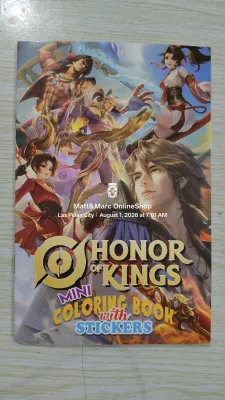
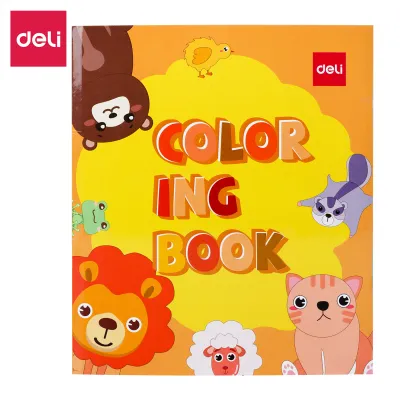
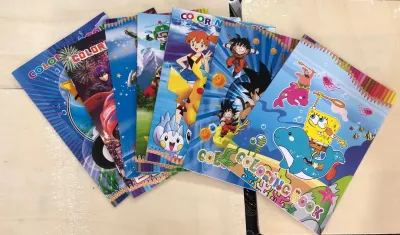
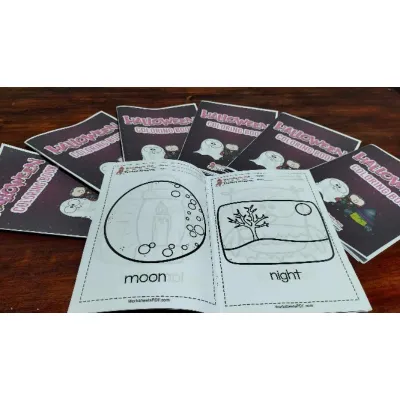
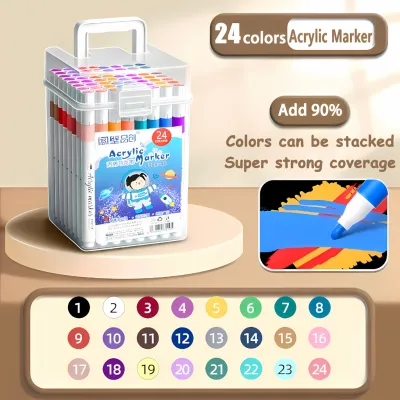
Prices are valid at publication and may change. Please refer to the product page for the latest price.
Simple, easily recognizable themes are highly effective for holding the attention of younger students. Look for illustrations of familiar animals, everyday objects, and basic nature scenes that spark immediate recognition and storytelling. Complex geometric patterns or abstract designs should be avoided at this stage, as they can lead to cognitive fatigue and physical hand strain during extended coloring sessions.
Furthermore, the physical layout of the pages should be straightforward. Single-subject pages with minimal background clutter help children focus on one task at a time, building their concentration span gradually. This structural simplicity ensures that coloring remains a relaxing, confidence-boosting activity rather than a source of frustration.
Upper Elementary (Grades 4 to 6): Encouraging Detail and Focus
As students enter upper elementary school, their fine motor control is highly developed, and they are capable of sustained, detailed work. Coloring books for Grades 4 to 6 should offer a higher level of complexity, featuring finer lines and smaller, more intricate spaces. Themes like mandalas, detailed landscapes, historical scenes, or architectural drawings provide the right level of challenge to keep older children engaged.
At this stage, coloring books can also serve as an introduction to advanced artistic concepts. Look for books that encourage the exploration of shading, color theory, and light sources. Some advanced coloring books even include light grayscale shading on the illustrations to guide students in creating depth and dimension with their colored pencils or fine-tip markers.
Thematic content should reflect the maturing interests of older students and can even complement their school curriculum. Books featuring botanical illustrations, anatomical diagrams, or historical maps bridge the gap between art and academic subjects like science and social studies. This alignment makes coloring feel like a mature, purposeful hobby rather than a preschool pastime.
Evaluating Paper Quality and Book Construction
The physical construction of a coloring book directly impacts how enjoyable it is to use, especially in tropical climates where high humidity can affect paper behavior. Excess moisture in the air can make thin paper wavy or cause ink to bleed more easily, making paper selection even more critical. When evaluating a coloring book, checking the manufacturer’s specifications for paper weight is the first step in ensuring durability.

Paper weight is typically measured in grams per square meter (gsm). For basic coloring with wax crayons or standard colored pencils, a paper weight of 80 gsm to 100 gsm is usually sufficient. However, if the child plans to use water-based markers, gel pens, or light watercolor washes, look for heavier paper of at least 120 gsm to 150 gsm to prevent the paper from warping, wrinkling, or tearing under wet conditions.
The binding of the book is another critical factor for classroom usability. Perfect-bound books with glued spines often resist lying flat, forcing the child to hold the pages down with one hand while coloring with the other. Spiral-bound or lay-flat bound books are often recommended for school desks, as they allow the child to focus entirely on their coloring strokes without fighting the book’s spine.
Perforated pages are an excellent feature to look for, especially if the child frequently submits their artwork for school projects or displays it on the family refrigerator. Perforations allow for clean, tear-free removal of pages without damaging the rest of the book. If the book lacks perforations, tearing pages out often results in jagged edges and can compromise the integrity of the entire binding.
Finally, always verify whether the book features single-sided printing or a built-in bleed-through barrier. Single-sided pages, where the back of each drawing is left blank, are ideal because they prevent ink from ruining a second illustration on the reverse side. If a book has double-sided illustrations, placing a loose sheet of heavy cardstock behind the active page is a practical way to protect the subsequent drawings from bleed-through.
Ensuring Compatibility with Common School Art Supplies
A coloring book must perform well with the specific art supplies required by the school or preferred by the child. Different coloring mediums interact uniquely with various paper textures, or “tooth.” For example, colored pencils and wax crayons require a paper with a slight texture or tooth to shave off the pigment and hold it on the page. If the paper is too smooth or glossy, wax crayons will slide across the surface without leaving vibrant color.
Conversely, markers, brush pens, and gel pens perform best on smoother paper. Rough paper can cause fiber buildup on marker tips, wearing them down prematurely, and can lead to feathering, where the ink spreads outward along the paper fibers. To ensure compatibility, match the paper texture to the primary coloring tool the child will use in class.
Because paper and ink formulations vary widely, establishing a simple verification method for bleed-through and feathering is highly recommended. Before starting a major project, have the child perform a small test stroke in an inconspicuous area, such as the margin of a back page or an unused test sheet. Observe how quickly the ink dries, whether it spreads beyond the line, and if any shadow or wet ink appears on the reverse side of the page.
It is also important to review any manufacturer warnings or guidelines regarding incompatible mediums. Some coloring books explicitly state they are not suitable for alcohol-based markers or wet paints, which can dissolve certain printing inks or cause extreme bleed-through. Adhering to these guidelines prevents ruined artwork and preserves the life of the child’s coloring tools.
Lastly, consider the physical dimensions of the coloring book in relation to standard school storage. In the Philippines, students often use standard plastic envelopes or specific backpack compartments to keep their school supplies organized. A coloring book that is oversized or oddly shaped may not fit into these standard storage solutions, leading to bent corners, torn covers, and unnecessary clutter in the school bag. Standard letter or A4 sizes are generally the most practical for daily transport.
A Practical Selection Checklist for Your Next Purchase
To make an informed choice when shopping for a coloring book, follow this structured, step-by-step framework to evaluate your options:
- Step 1: Verify the Age and Grade Recommendations. Check the product packaging or online description for age guidelines. Ensure the complexity of the lines and the themes align with your child's current developmental stage, keeping in mind that lower grades need simpler layouts while upper grades benefit from intricate designs.
- Step 2: Inspect the Physical Construction. If shopping in a physical retail store, feel the thickness of the paper between your fingers and check the binding. Look for spiral bindings or lay-flat designs that will sit comfortably on a school desk, and verify if the pages are perforated for easy removal.
- Step 3: Read Specifications and Reviews Online. When purchasing from online marketplaces, pay close attention to the listed paper weight (gsm) and read customer reviews. Look for specific feedback regarding bleed-through, paper texture, and how well the book handles markers or colored pencils.
- Step 4: Align with Personal Interests and School Subjects. Choose a theme that excites the child, whether it is science, nature, history, or fantasy. A coloring book that connects with their personal interests or current school lessons will sustain their engagement and make art activities more meaningful.
Frequently Asked Questions (FAQ)
How many pages should a good coloring book have for school use?
For school use, a coloring book with 30 to 50 single-sided pages offers a practical balance between longevity and portability. Thicker books with over 100 pages can be heavy and bulky, adding unnecessary weight to a child’s backpack. Additionally, a very thick book can feel overwhelming to a student, whereas a moderately sized book provides a satisfying sense of completion as they finish page after page over the school term.
Are coloring books with educational facts better for older students?
Yes, coloring books that incorporate educational facts, diagrams, or short descriptions are highly beneficial for older students in Grades 4 to 6. These books turn coloring into a multi-sensory learning experience, reinforcing classroom lessons in science, history, or geography during independent study time. However, ensure that the educational text is placed neatly at the bottom or on the facing page, so it does not overcrowd the coloring area or distract from the creative process.

Community discussion
Share your experience or ask a question. Comments are reviewed before publication.