
Choosing the right art medium for elementary school art classes involves balancing curriculum requirements, a child’s developmental stage, and practical classroom management. The Crayola Pop Out series offers a unique, self-standing packaging design that addresses the common classroom struggle of rolling art tools and cluttered desks. To determine which set—markers, crayons, or colored pencils—is most suitable for your child, you must evaluate their current motor skills, the specific paper types used in local schools, and how well the medium performs under tropical classroom conditions.
Quick Guide: Matching Art Mediums to Grade Levels
Lower elementary students, typically from Kindergarten to Grade 2, focus heavily on developing fine motor skills and hand-eye coordination. For these early stages, art tools with thicker barrels and softer application properties are highly beneficial. Thicker grips allow young hands to hold the tool comfortably without experiencing early muscle fatigue. Washable formulations are also essential at this stage, as younger students are more prone to accidental marks on skin, desks, and school uniforms. The primary goal here is basic color recognition and broad application rather than precise detailing.
Upper elementary students, spanning Grade 3 to Grade 6, transition to more structured art curricula that require finer control, shading, and color blending. Students in these grades require tools with finer tips and harder cores, such as standard colored pencils or fine-line markers. These mediums allow them to complete detailed diagrams in science class, map-coloring activities in social studies, and complex art projects that require layering and gradient effects. Their developed grip strength allows them to manipulate thinner barrels with ease.
Products mentioned in this guide
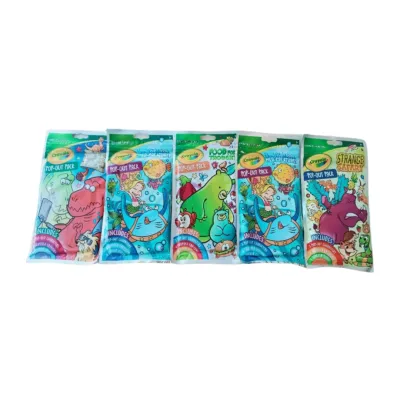
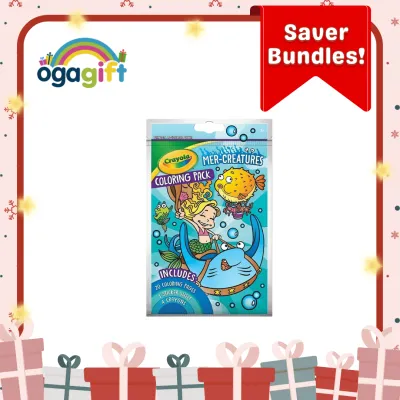
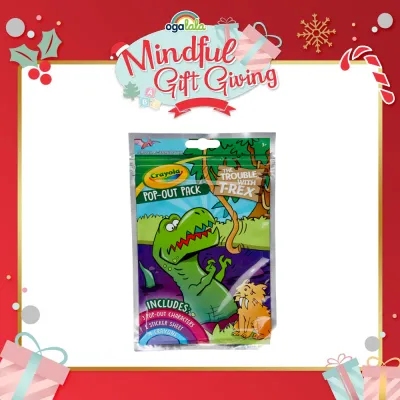
Prices are valid at publication and may change. Please refer to the product page for the latest price.
The pop-out packaging format serves as a practical organizational tool in busy classroom environments. Traditional flat boxes often take up significant desk space, leading to accidental spills and lost items during fast-paced lessons. The pop-out design stands upright on the desk, keeping every marker, crayon, or pencil visible and easily accessible. This vertical arrangement is particularly useful on small, shared school desks, as it minimizes the physical footprint of the art supplies and allows students to clean up quickly before the next subject begins.
When to Choose Crayola Pop Out Markers
Markers are highly suitable for art projects that demand vibrant, saturated colors, bold outlines, and rapid coverage of large areas. In classrooms where students frequently create posters, slogan boards, and visual aids on cartolina or poster paper, markers provide the high-contrast visibility required for classroom displays. The quick-drying nature of marker ink is a significant advantage in humid tropical climates, as it reduces the risk of smudging when students move their hands across the paper.

When selecting a marker set, parents must carefully verify the product labels to ensure compatibility with school policies. The most critical distinction is between washable and permanent inks. Washable markers are highly recommended for elementary students to ensure easy cleanup from skin and clothing. Additionally, parents should check the tip style: broad-line conical tips are versatile because they can create both thick strokes for coloring and thin lines for outlining, whereas fine-line tips are designed specifically for detailed drawing and writing. Cap security is another essential feature to inspect; caps should snap firmly in place to prevent air exposure.
Despite their vibrant output, markers have specific storage limitations that require attention. In warm, non-air-conditioned classrooms, the rate of solvent evaporation increases significantly if a marker is left uncapped. If the pop-out container is not sealed properly or if a student forgets to snap the caps back on tightly, the markers can dry out rapidly, rendering them unusable. Furthermore, marker ink can bleed through thin paper types, such as standard newsprint or low-gsm drawing books, so parents should verify that the school’s art paper is thick enough to handle wet mediums.
When to Choose Crayola Pop Out Crayons
Crayons remain the classic choice for early childhood art education due to their unique tactile feedback and versatility. They are ideal for texture rubbing exercises, color layering, and projects that involve blending colors through physical pressure. For younger students who are still developing their pencil grasp, crayons provide the necessary resistance against the paper to build hand strength. The wax-based medium does not bleed through thin paper, making it highly compatible with standard school pad paper and inexpensive coloring books.
When purchasing crayons, the label details provide crucial information regarding durability and suitability. Standard-sized crayons are appropriate for older children with developed grip control, while jumbo or triangular crayons are better suited for younger learners who need a more substantial grip surface. Parents should look for break-resistant formulas, as dropped crayons are a frequent occurrence in active classrooms. Color vibrancy is another factor to verify; high-quality wax formulations deliver smooth, consistent color without requiring excessive downward pressure, which helps prevent hand fatigue and minimizes crayon breakage.
However, crayons have distinct practical limitations in an elementary art setting. They are inherently less suitable for fine, detailed work or precise outlining because the tips dull quickly with use. In the high-temperature environment of tropical classrooms, wax crayons can soften or become slightly sticky, which affects their application smoothness and makes them more susceptible to breaking under heavy pressure. They also do not blend as seamlessly as colored pencils, meaning students cannot easily achieve subtle gradients or realistic shading techniques.
When to Choose Crayola Pop Out Colored Pencils
Colored pencils are often mandated by upper elementary art curricula because they offer unparalleled precision and control. They are the preferred medium for detailed illustrations, botanical drawings, map labeling, and shading techniques like hatching and cross-hatching. As students progress to more advanced art concepts, colored pencils allow them to experiment with color theory by layering different hues to create custom shades and realistic textures.
To ensure the colored pencils withstand daily classroom use, parents should inspect several key specifications on the packaging. The thickness and break resistance of the lead core are critical; a thicker, high-quality core is less likely to snap when subjected to heavy writing pressure. The quality of the wood casing is equally important, as poorly constructed casings can split during sharpening, leading to wasted lead and frustration. Choosing a pre-sharpened set is highly practical, as it allows the student to use the pencils immediately on the first day of class without needing to spend time preparing them.
The primary classroom limitation of colored pencils is their maintenance requirement. Unlike crayons and markers, colored pencils require regular sharpening to maintain their precision. This process can disrupt class time, especially if the student must walk to a communal sharpener or if the lead repeatedly breaks inside a low-quality sharpener. To mitigate this, students should carry a compact, dual-hole manual sharpener with a built-in shavings receptacle to keep their workspace clean and minimize classroom distractions.
Pre-Purchase Checklist for Classroom Requirements
Before finalizing any purchase, parents should cross-reference the school’s official supply list with the specifications of the chosen pop-out set. Teachers often specify not only the medium but also the exact color count required for the curriculum. Purchasing a 24-count set when only an 8-count or 12-count set is requested can lead to unnecessary weight in the student’s backpack and may exceed the storage limits of individual classroom cubbies.
The physical durability of the pop-out packaging must also be evaluated. School supplies undergo rigorous daily transport, often packed tightly into heavy backpacks and subjected to bumpy commutes on jeepneys, tricycles, or school buses. The pop-out mechanism must be sturdy enough to remain securely closed during transit to prevent the contents from spilling and getting damaged inside the bag. Parents should check that the latching or folding mechanism of the case is robust and easy for a child to operate independently.
Finally, confirm that the selected set aligns with the specific paper types used in the classroom. If the art teacher primarily utilizes thin sketchpads or standard intermediate paper, markers may cause excessive bleed-through, making crayons or colored pencils a more practical choice. Conversely, if the curriculum focuses heavily on poster-making on thick poster board, a marker set will provide the necessary coverage and visual impact.
Frequently Asked Questions (FAQ)
How do I keep markers from drying out in the pop-out case?
To maximize the lifespan of your markers, always ensure that each cap is pushed down until you hear a distinct clicking sound, which indicates an airtight seal. When storing the pop-out case, keep it in a cool, dry place away from direct sunlight and heat sources, such as classroom windows or bags left in warm vehicles. While the pop-out case is designed to stand vertically during use, storing the markers horizontally when not in class helps maintain an even ink distribution to both ends of the fiber tip.
Are washable markers completely stain-proof on school uniforms?
Washable markers are formulated to wash easily from skin and most machine-washable clothing, but they are not guaranteed to be completely stain-proof on all fabric types. Synthetic fibers, delicate fabrics, and untreated cotton blends may retain some pigment if the ink is allowed to set. For the best results, treat accidental marks on school uniforms immediately by rinsing the stained area with cold water before washing, and avoid using hot water or drying the garment in a dryer until the stain is completely removed, as heat can permanently set the ink.
Can I refill or replace individual colors in a pop-out set?
The standard Crayola Pop Out sets are designed as pre-packaged, non-refillable collections, meaning individual replacement slots are not sold separately within the same packaging format. However, if a highly frequently used color like black or blue runs out, you can purchase standard individual markers, crayons, or colored pencils of the same brand to place inside the pop-out slots. Comparing the cost of buying single replacements versus a completely new set is advisable; if multiple colors are depleted or worn down, purchasing a new pop-out set is often more cost-effective and ensures consistent performance across all colors.

Community discussion
Share your experience or ask a question. Comments are reviewed before publication.