
Choosing the right erasable pen depends on matching the ink technology and tip size to your daily writing environment. Whether you are a student taking rapid lecture notes, a bullet journaler designing intricate layouts, or an office professional drafting meeting agendas, the ideal pen must balance smooth ink flow with clean, smudge-free erasability. Understanding how these pens interact with different paper types and environmental conditions is the key to finding a reliable writing tool that fits your workflow.
Understanding Erasable Pen Mechanisms and Ink Types
Modern erasable pens primarily utilize thermo-sensitive gel ink, a technology that relies on friction-generated heat to turn the ink transparent. When you rub the specialized silicone tip of the pen against the paper, the friction raises the temperature of the ink to approximately 60°C, causing the color pigments to become invisible. This is a significant departure from older erasable pen technologies, which used pressurized liquid ink and abrasive rubber erasers to physically scrape the ink off the paper fibers, often leaving tears, smudges, and eraser shavings behind.
Because thermo-sensitive ink relies on temperature changes, it is highly sensitive to environmental conditions. In tropical climates with high ambient temperatures, notebooks left in warm rooms, sunny windows, or closed vehicles can experience accidental fading. Conversely, exposing the faded paper to extreme cold can cause the pigment to reappear.
Products mentioned in this guide
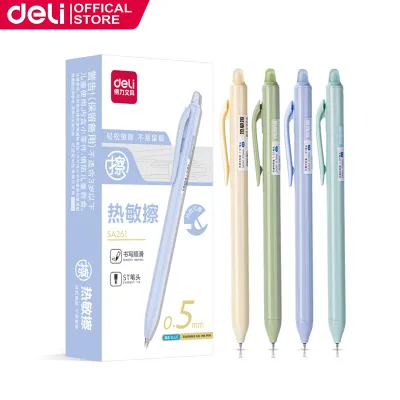
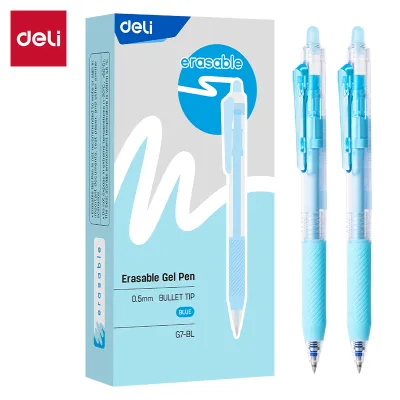
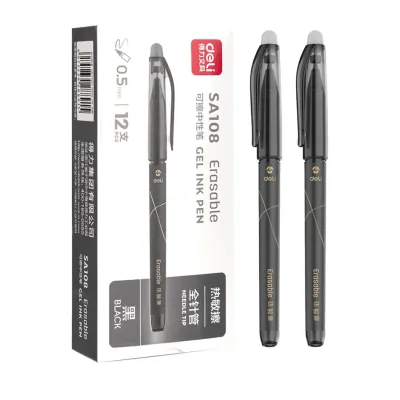
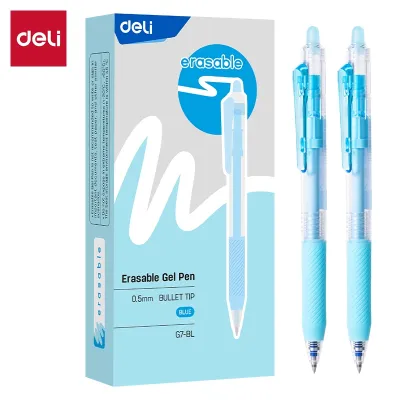
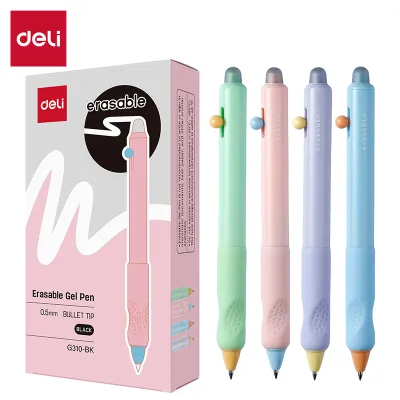
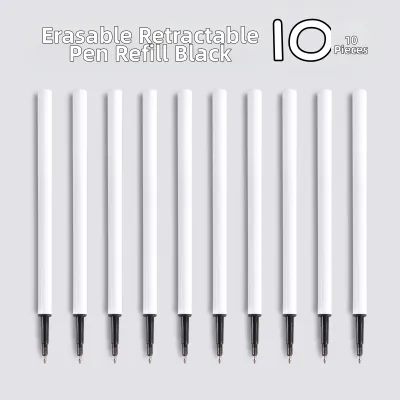
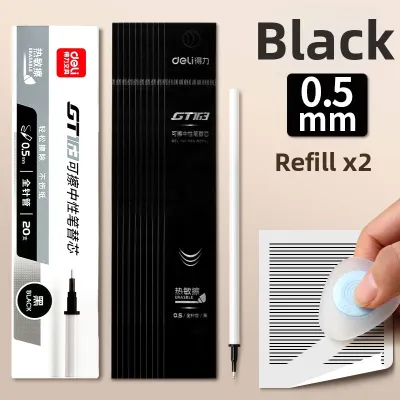
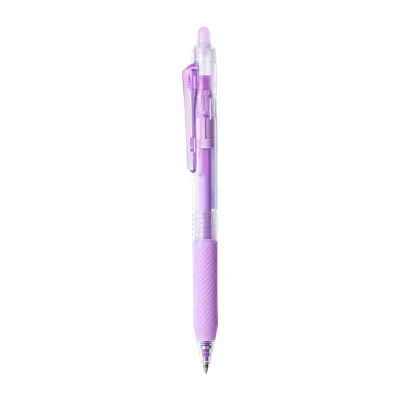
Prices are valid at publication and may change. Please refer to the product page for the latest price.
In terms of writing performance, gel-based erasable inks flow more smoothly than traditional ballpoint alternatives, but they often require a slightly longer drying time. This makes paper compatibility and drying speed critical factors to evaluate, as slower-drying inks are prone to smudging, especially on non-porous or highly calendered paper surfaces.
Matching Erasable Pens to Your Primary Writing Scenario
Aligning your pen’s specifications with the physical demands and aesthetic goals of your writing environment is essential. A pen that excels in a creative journal might fail during a fast-paced university exam or a formal corporate meeting.

Schoolwork and Students: Focus on Durability and Quick Drying
Students need pens that can keep up with rapid, continuous note-taking during lectures and exams. Quick-drying ink is a primary requirement to prevent smudging, particularly during timed writing sessions or for left-handed students whose hands naturally drag across the freshly written page.
Tip durability is another major consideration for academic use. Conical tips are generally more robust and can withstand heavy writing pressure without bending or fraying, making them ideal for students who tend to press down hard. In contrast, delicate needle tips offer excellent precision but require a lighter touch to avoid damaging the point.
Ergonomics play a vital role in preventing hand fatigue during long study sessions. Look for pens featuring soft rubber or textured grips that cushion the fingers, helping to maintain legibility and comfort over hours of writing.
Bullet Journaling: Precision, Aesthetics, and Paper Compatibility
Bullet journalers often work with compact grids, habit trackers, and detailed illustrations, making fine or extra-fine tips (such as 0.38mm to 0.5mm) highly desirable. These smaller sizes allow for precise lettering and intricate layouts without crowding the page or causing the ink to pool.
Color variety and ink opacity are also crucial for visual organization and creative expression. High-quality erasable gel pens should deliver consistent, vibrant lines that remain visible without requiring multiple passes, allowing you to color-coding tasks, events, and notes effectively.
Paper weight is a critical variable in journaling. Journalers should always test erasable pens on their specific notebook paper—typically ranging from 80gsm to 120gsm—to check for ghosting (where ink is visible on the reverse side) or bleed-through, as well as to ensure the paper can withstand the friction of erasing without tearing or pilling.
Office and Professional Notes: Clean Lines and Document Safety
For professional environments, medium tips (0.5mm to 0.7mm) are ideal. They produce bold, highly legible lines that are easy to read during presentations, quick reviews of meeting notes, or collaborative brainstorming sessions.
However, document safety is paramount in a professional setting. Thermo-sensitive erasable pens must never be used on legal documents, contracts, checks, official exam sheets, or archival records. Because the ink reacts to heat, critical signatures or records could easily disappear if exposed to warm office equipment, laminators, or direct sunlight.
Aesthetically, professional settings call for sleek, minimalist pen body designs. Choosing pens with understated barrels, matte finishes, or metal accents allows you to enjoy the convenience of erasable ink while maintaining a formal, corporate appearance in the boardroom.
Key Features to Check Before Buying
- Tip size and shape: Match the millimeter size to your natural handwriting scale. If you write small and tightly, a 0.38mm or 0.4mm tip prevents letters from bleeding together. If you have large, sweeping handwriting, a 0.7mm tip offers a smoother, more satisfying glide.
- Eraser mechanism: Evaluate whether the pen features a built-in friction tip on the cap or end, or if it requires a separate dedicated eraser. Built-in erasers are highly convenient for quick corrections, but they must be made of durable, non-wearing silicone that does not leave debris or smudge the paper.
- Refill availability: Before committing to a specific pen model, verify if compatible ink refills are widely available on online marketplaces or local stationery stores. Using refills significantly reduces long-term costs—often saving you ₱50 to ₱100 per refill compared to buying a completely new pen—and minimizes plastic waste.
- Paper testing: Always perform a quick trial on your preferred paper. Write a few lines to observe the drying time, then erase them to check if the paper fibers pill or if a faint ghost image of the ink remains.
Best Practices for Using and Storing Erasable Pens
To maintain consistent ink flow, store your erasable pens horizontally or tip-down in a pen cup. Storing them tip-up can cause air pockets to form near the nib, leading to skipping or dry lines.
Protect your written work from environmental heat. Avoid leaving notebooks, planners, or loose-leaf papers in hot cars, near sunny windows, or close to heat-emitting office appliances, as temperatures exceeding 60°C will cause the ink to turn transparent.
When correcting mistakes, use a gentle but rapid back-and-forth friction motion. Applying excessive downward pressure can crease or tear the paper, whereas quick, light strokes generate the necessary heat to erase the ink cleanly without damaging the page surface.
Frequently Asked Questions (FAQ)
Can I use an erasable pen on glossy or coated paper?
Thermo-sensitive gel inks require porous paper fibers to absorb the liquid carrier and dry properly. On glossy planners, photo paper, or coated labels, the ink cannot penetrate the surface, leading to severe smudging, slow drying times, and a high likelihood that the friction eraser will simply smear the wet ink rather than erase it cleanly.
How do I recover erased ink if my notebook was left in the heat?
If your notes have faded due to heat exposure, you can often restore them by subjecting the paper to extreme cold. Place the affected notebook or document inside a sealed plastic bag to protect it from moisture, then leave it in a standard household freezer (around -10°C to -18°C) for about 15 to 20 minutes. The cold temperature triggers the chemical reaction that brings the color pigment back, though the restored lines may appear slightly fainter or show a minor ghosting effect.

Community discussion
Share your experience or ask a question. Comments are reviewed before publication.