
Managing multiple subjects in school requires a reliable system to keep handouts, syllabus sheets, and exam papers organized. In the Philippines, students face unique challenges, from high-humidity classrooms that make standard paper limp to sudden monsoon downpours during transit. Finding the right folder organizer is not just about choosing a favorite color; it is about selecting a durable, structurally sound tool that fits your daily commute, bag space, and academic workload. By focusing on material specifications, capacity limits, and closure mechanisms, you can secure an organizer that keeps your academic documents crisp and accessible throughout the semester.
Core Dimensions for Evaluating Multi-Subject Folders
To find a folder organizer that can withstand a demanding school year, you must first evaluate its physical and structural specifications. The most critical factor is paper size compatibility. In local schools and universities, instructors distribute materials in various formats, primarily A4, Letter (short bond paper), and Legal (long bond paper). While many standard organizers accommodate A4 and Letter sizes easily, Legal-sized documents often stick out of the top or sides of smaller folders, leading to bent corners and torn edges. When browsing options, check the exact dimensions listed on the packaging or product description to ensure there is at least a half-inch margin clearance around your largest expected documents, especially if you plan to store hole-punched sheets that require extra width.
Compartment depth and gusset expansion limits dictate how much paper the folder can hold before it bulges or deforms. A gusset is the folding fabric or plastic material on the sides of an expandable folder that allows it to stretch. If you are taking lecture-heavy courses with thick printed modules, look for folders with reinforced, flexible gussets that expand uniformly. A folder with rigid, non-expanding sides will pinch your papers at the bottom, making it difficult to slide documents in and out without wrinkling them.
Products mentioned in this guide
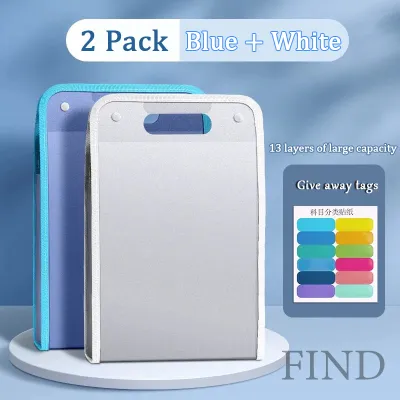
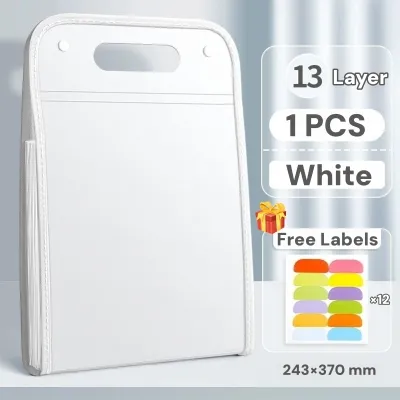
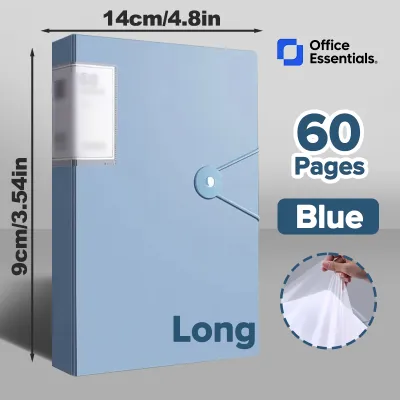
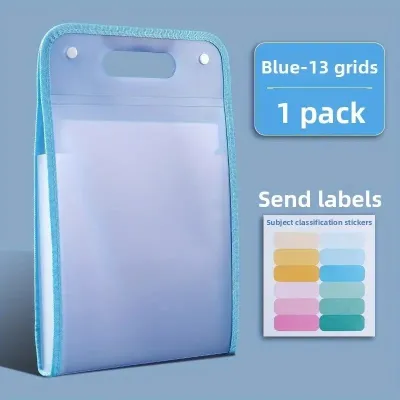
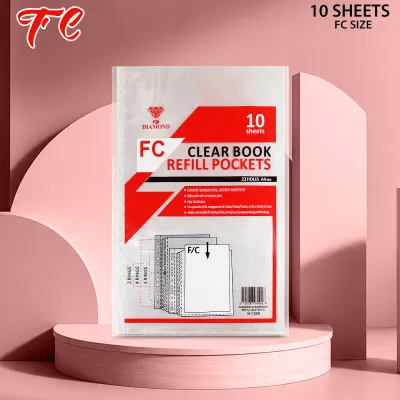
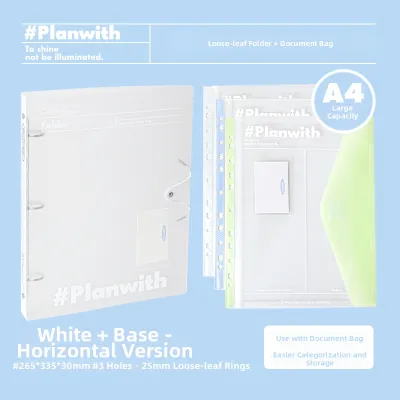
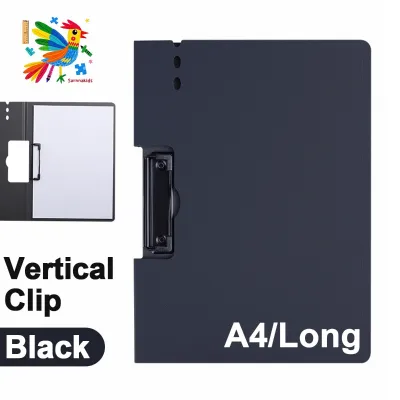
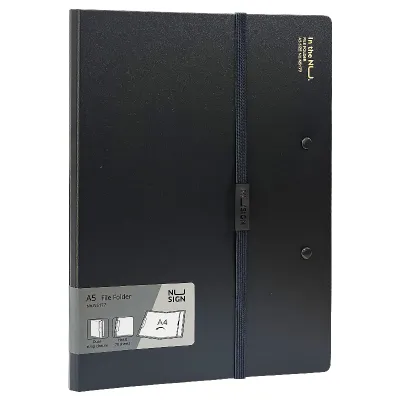
Prices are valid at publication and may change. Please refer to the product page for the latest price.
Material thickness is another key indicator of longevity. Polypropylene (PP) is the standard plastic used for durable folders, and its thickness is often measured in millimeters or microns. For daily student use, an outer shell thickness of at least 0.5mm to 0.7mm provides a rigid barrier against bending inside a packed backpack. Spine reinforcement is equally important; look for folders with fabric-bound edges or double-welded plastic seams along the spine, as these areas bear the most stress when the folder is fully loaded and repeatedly pulled from a bag.
Matching Folder Styles to Your Daily Carry Routine
Your choice of folder style should align directly with how you travel to school and how often you need to retrieve documents during class transitions. Different structural formats offer distinct advantages depending on whether you prioritize quick access, high capacity, or maximum protection.

Expandable File Folders and Accordions
Expandable file folders, often called accordion folders, are designed for high-volume document storage and rapid sorting. These organizers feature multiple internal pockets, typically ranging from 5 to 13 sections, which expand outward from a central spine. The primary advantage of this style is tab visibility. Most accordion folders come with customizable tab inserts, allowing you to write subject names clearly and locate the correct section in seconds during a fast-paced class transition.
When choosing an accordion folder, consider the closure mechanism. Flap closures secured by an elastic band or a plastic button offer excellent security, preventing loose sheets from sliding out when the folder is tilted inside your bag. However, if you frequently move between classrooms and need to slip papers away quickly, an open-top accordion folder without a flap provides faster access, though it requires a snug fit inside your backpack to prevent documents from spilling.
Keep in mind that fully loaded accordion folders can suffer from structural sag. When every pocket is filled with thick readings, the weight distributes downward, causing the bottom of the folder to bow. To prevent this, look for models with a rigid base plate or reinforced plastic feet that help the folder maintain its shape and stand upright on a desk or floor.
Multi-Pocket Portfolios and Ring Binders
Multi-pocket portfolios and ring binders are ideal for students who need to integrate loose-leaf writing paper with printed handouts and modules. Portfolios typically feature bound plastic sleeves or clear pockets where you can slide documents back-to-back. This setup is excellent for protecting reference sheets, syllabi, and project guidelines that you need to view frequently without removing them from the folder.
For ring binders, ring capacity and mechanism smoothness are paramount. Standard round rings (O-rings) are common, but D-ring mechanisms allow pages to lie flat and accommodate a higher volume of paper without tearing the hole punches. Ensure the rings align perfectly when closed; even a tiny gap can catch paper edges, leading to frustrating jams and ripped documents.
Pocket placement within these portfolios also affects usability. Horizontal pockets are easier for quick document insertion, but vertical pockets or those with top-loading flaps offer superior security against document slippage when you carry the portfolio upright in a tote bag or backpack. If you use a standard three-hole puncher, verify that the binder’s ring spacing matches your paper punch to avoid having to manually punch misaligned holes in your handouts.
Zippered and Enclosed Document Cases
For students who face long commutes on public utility vehicles like jeepneys, buses, or tricycles, zippered and enclosed document cases offer the highest level of protection. These cases feature a continuous zipper track around three sides, sealing your documents completely from dust, wind, and sudden rain showers. The zipper track must be robust; look for thick nylon zippers with metal pulls, as fine plastic zippers are prone to splitting under pressure when the case is overfilled.
Many enclosed cases also feature internal organization panels, including elastic loops for pens, mesh pockets for flash drives, and dedicated slots for calculators or index cards. This multi-functional design can eliminate the need for a separate pencil case, streamlining your daily carry.
The main trade-off with zippered cases is access speed. Unzipping a case fully to retrieve a single worksheet takes more time and desk space than pulling a sheet from an open-top folder. However, for students carrying sensitive project drafts, certificates, or expensive drawing paper, the peace of mind provided by a fully enclosed, weather-resistant barrier outweighs the slight delay in retrieval.
Building a Condition-Based Shortlist for Your Subjects
Instead of buying the first folder you see on a shelf, build a personalized shortlist based on your specific semester workload and budget. Start by categorizing your subjects by document volume. For example, lecture-heavy courses like History, Literature, or Science often generate dozens of printed readings and syllabus sheets, requiring a dedicated, deep compartment. Conversely, practical courses like Mathematics or Art may rely more on physical workbooks or sketchpads, meaning you only need a slim pocket for occasional worksheets. Assign your compartments based on this volume; a 5-pocket folder may suffice for a light semester, while a 12-pocket accordion is better suited for heavy modular learning.
Next, establish a realistic budget ceiling. High-quality folder organizers in the Philippines typically range from ₱100 for basic plastic portfolios to ₱500 or more for heavy-duty zippered cases with reinforced frames. When browsing online marketplaces, do not rely on promotional buzzwords like “indestructible” or “premium quality.” Instead, filter listings by verified material specifications, such as polypropylene thickness, zipper material, and customer photos that show the actual stitching and seam strength.
Finally, create a checklist of non-negotiable features based on your physical constraints. Measure the interior of your school bag before purchasing. A folder that is too wide will stretch your backpack’s zippers, while one that is too tall might prevent the bag from closing entirely. If your daily schedule involves rapid transitions between buildings, a lightweight, quick-access folder with tab dividers should be at the top of your checklist.
Pre-Purchase Checks for Durability and Paper Compatibility
Before finalizing your purchase, whether in a physical bookstore or through an online store, perform a few critical quality checks. If you are shopping in person, inspect the corners of the folder. The corners are the most common failure points; they should be rounded rather than sharp, as rounded corners are less likely to crack or puncture your bag’s lining. Run your fingers along the heat-sealed edges of plastic pockets to ensure there are no loose seams or sharp plastic burrs that could cut your fingers or snag your clothes.
If you are purchasing online, scrutinize the product images for double-stitched fabric borders and reinforced metal rivets at stress points, such as where handles or elastic bands attach to the folder body. Check the manufacturer’s specifications for weight limits or material density. A flimsy 0.2mm plastic folder will warp quickly under the weight of multiple school modules, so aim for thicker options whenever possible.
Lastly, verify the seller’s return policy regarding sizing and compatibility. Some folders have internal pockets that are slightly narrower than standard paper sizes due to wide seam welds. Confirming that you can return or exchange the folder if it fails to accommodate your specific binder clips, thick cardstock, or plastic sheet protectors will save you from wasting money on an unusable organizer.
Frequently Asked Questions (FAQ)
How many compartments are practical for a standard semester load?
For a typical semester of six to eight subjects, a folder organizer with 8 to 10 compartments is highly practical. This allows you to assign one dedicated pocket to each of your core academic subjects, preventing notes from getting mixed up. The remaining two to three pockets can be used for general utility, such as storing blank filler paper, ongoing project drafts, and administrative documents like registration forms or permission slips.
Avoid the temptation to buy a massive 24-compartment organizer unless you are managing multiple semesters of archives. Over-segmentation often leads to unused pockets, which add unnecessary bulk and weight to your school bag. A compact, well-utilized folder is much easier to carry and navigate during a busy school day.
Should I prioritize water resistance for daily commuting?
Yes, prioritizing water resistance is highly recommended for students in the Philippines due to the unpredictable tropical weather and high humidity. During the rainy season, even a short walk from the jeepney stop to the school gate can expose your bag to heavy downpours. A folder made from water-resistant polypropylene will protect your essential school documents from getting soaked if water seeps through your backpack’s fabric.
While polypropylene folders are inherently water-resistant, they are not completely waterproof if they have open tops or fabric seams. For maximum protection, look for folders with full zipper closures or fold-over flaps. If you must use a standard paperboard folder, consider placing highly sensitive documents, like certificates or graded exams, inside individual plastic sheet protectors before filing them away.

Community discussion
Share your experience or ask a question. Comments are reviewed before publication.