
Finding the right pencil trainer for your child is not about picking the most popular or colorful option on an online marketplace. Instead, the ideal tool must align with your child’s current fine motor development, hand size, and specific grip challenges. A well-matched trainer acts as a temporary physical guide, helping your child build muscle memory and hand endurance without causing frustration or physical strain. By focusing on observable writing mechanics rather than generic age recommendations, you can select a tool that supports natural hand development.
Assessing Your Child's Hand Size and Writing Stage
Before purchasing any writing aid, spend a few minutes observing your child during a typical drawing or writing session. Watch for physical signs of hand fatigue, such as your child frequently shaking out their hand, pressing down excessively hard on the paper, or holding the pencil very close to the tip. Awkward finger placement, such as wrapping the thumb tightly over the index finger or gripping the pencil with a white-knuckled fist, often indicates that the hand muscles are working harder than necessary to maintain control.
Next, evaluate your child’s physical hand span and current grasp pattern. Younger children naturally start with a primitive fist grasp, gradually transitioning to a four-finger grasp, and eventually developing an immature tripod grasp where the fingers are still relatively stiff. If your child’s fingers are small or their grip strength is still developing, a heavy or overly complex trainer can actually hinder their progress.
Products mentioned in this guide
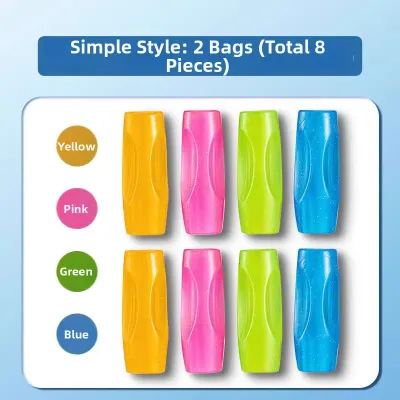
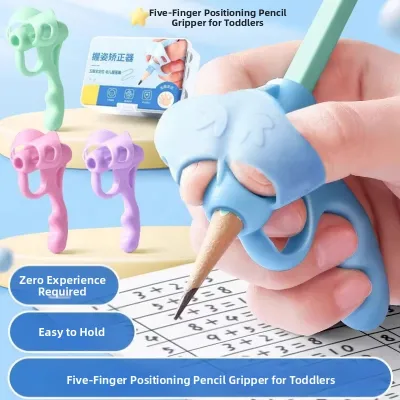
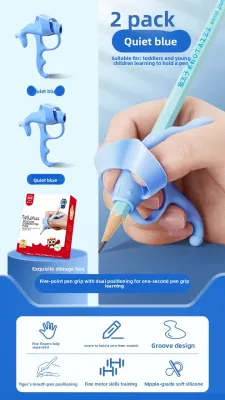
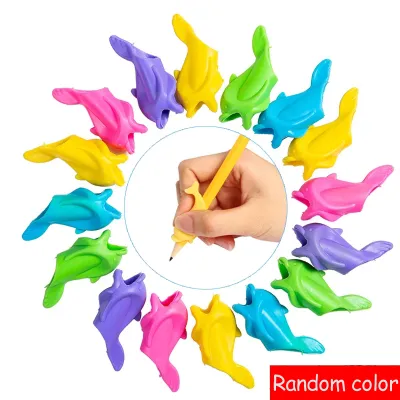
Prices are valid at publication and may change. Please refer to the product page for the latest price.
It is also essential to recognize whether a physical trainer is truly necessary. If your child simply needs occasional reminders to reposition their fingers but otherwise writes comfortably, simple verbal cues or using shorter, thicker pencils may suffice. Physical trainers are best reserved for children who show persistent discomfort, struggle to maintain a functional grip despite guidance, or experience hand fatigue that cuts their writing sessions short.
Comparing Grip Styles for Different Needs
Pencil trainers come in several distinct structural designs, each engineered to address specific developmental stages and grip challenges. Understanding how these shapes interact with your child’s hand will help you narrow down the options.

Tripod Grip Trainers
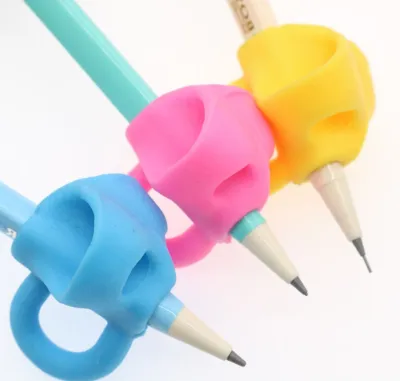
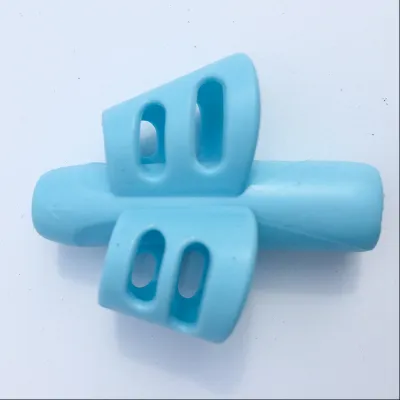
Tripod grip trainers are designed to guide the hand into the standard three-finger pinch, which is widely considered the most efficient position for fluent writing. These trainers typically feature molded, ergonomic grooves or indentations that naturally position the thumb, index finger, and middle finger in a balanced triangle. By placing their fingers directly into these pre-shaped slots, children receive constant tactile feedback on where their hands should rest.
This style is highly suitable for children who already possess basic finger strength and hand coordination but struggle with consistent finger placement. It acts as a gentle physical reminder, helping them transition from an immature grip to a functional tripod position without completely restricting their hand movement.
However, tripod trainers have notable limitations. If your child’s fingers are significantly smaller or larger than the pre-molded slots, the trainer can force their hand into an unnatural, cramped position. Additionally, if a child lacks the underlying finger strength to maintain the pinch, they may simply slide their fingers out of the grooves, defeating the purpose of the tool.
Claw and Wrap-Around Designs
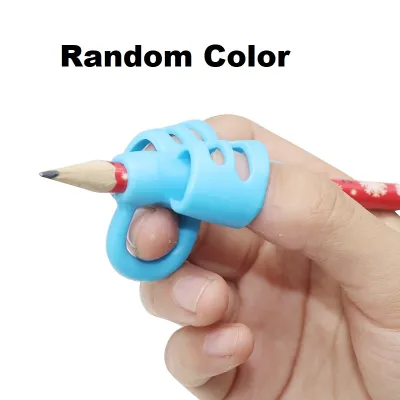
Claw and wrap-around designs offer a more structured approach by physically securing the fingers in place. These trainers often feature individual finger cups or flexible loops that wrap entirely around the thumb, index, and middle fingers. By physically anchoring each finger to its designated spot on the pencil shaft, these tools prevent the fingers from crossing over each other or slipping down toward the lead.
This high level of physical boundary is incredibly useful for children who frequently lose their grip position mid-sentence or whose fingers tend to slide off the pencil entirely. It is particularly beneficial for kids who struggle with motor planning, as the physical loops eliminate the need to constantly think about finger placement.
The primary trade-off with wrap-around designs is the potential for frustration. Because these trainers highly restrict finger movement, some children may find the rigid structure uncomfortable during extended writing sessions. If the material is too stiff or the fit is too tight, it can cause localized pressure points, making the child resist using the tool altogether.
Cylindrical and Bulbous Shapes
Cylindrical, egg-shaped, or bulbous trainers do not force individual finger placement; instead, they significantly increase the overall diameter of the writing tool. These thick, rounded add-ons are designed to make the pencil easier to hold by reducing the amount of fine motor precision required to grip the shaft.
These shapes are highly beneficial for beginners, very young children, or those with weaker hand muscles and low muscle tone. When a child is transitioning away from a primitive fist grasp, a larger, bulbous surface area allows them to hold the pencil securely using their whole hand without needing to pinch their fingers tightly together. This reduces muscle strain and helps build confidence during early writing attempts.
When using bulbous trainers, it is important to plan for an eventual transition. These tools are meant to be a stepping stone; as your child’s hand strength and coordination improve, you should gradually introduce slightly slimmer grips before transitioning to a standard pencil.
Evaluating Materials: Silicone, Plastic, and Foam
The material of a pencil trainer directly impacts its comfort, durability, and practicality, especially in a warm and humid tropical climate like the Philippines.
Silicone is one of the most popular materials because it is soft, flexible, and provides excellent natural friction. This high-friction surface prevents fingers from slipping, even when hands become sweaty during warm school days. However, silicone has a natural tendency to attract dust, lint, and eraser shavings. In humid environments, this debris can stick easily to the grip, requiring frequent washing with mild soap and water to maintain its hygienic, non-slip texture.
Hard plastic or rubber trainers are exceptionally durable and easy to wipe clean with a damp cloth, making them highly practical for busy classrooms. However, hard plastic is completely unforgiving on finger pressure; if your child tends to grip their pencil too tightly, a hard plastic trainer can cause discomfort or calluses. Furthermore, when hands become sweaty, hard plastic can become incredibly slippery, causing the child’s fingers to slide out of position.
Foam grips offer a highly cushioned, comfortable feel that is ideal for children with tactile sensitivities who dislike the firm feel of plastic or silicone. The soft texture can encourage a lighter grip pressure. The main drawback of foam is its lack of durability; it is highly prone to tearing, absorbing sweat, and degrading over time with heavy daily use, meaning you will need to replace foam grips much more frequently than silicone or plastic alternatives.
When choosing a material, physically test the friction level with your own fingers and consider your child’s sensory preferences. If your child is sensitive to sticky or dusty textures, a smooth, high-quality rubber or a frequently washed silicone grip may be the most suitable option.
Compatibility, Fit, and Safety Checks
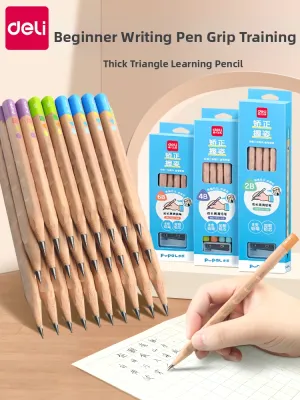
Before purchasing a set of pencil trainers, which are widely available in local currency ₱, it is crucial to verify their physical compatibility with your child’s writing tools. Not all grips fit every writing instrument. You must check that the inner diameter of the trainer matches the specific tools your child uses, whether they are standard hexagonal wooden pencils, round colored pencils, or thicker beginner pencils. Forcing a small grip onto a thick pencil can split the material, while using a loose grip will cause it to slide frustratingly during writing.
Left-hand compatibility is another critical factor. Many molded tripod trainers feature asymmetrical grooves designed specifically for right-handed writers. If a left-handed child uses a right-handed grip, the asymmetrical shape will force their wrist into an awkward, hooked angle, leading to joint strain and poor visibility of their writing. Always check the product packaging or online specifications to ensure the trainer is explicitly labeled as ambidextrous or left-hand compatible.
Safety must always be a priority, especially for younger children. Inspect the trainer for any small, detachable parts or loops that could easily be bitten off and pose a choking hazard. If your child has a habit of chewing on the ends of their pencils, look for non-toxic, food-grade silicone indicators on the product label. For children with sensory processing differences who frequently chew on objects, ensuring the material is completely safe and free from harmful chemicals is essential for peace of mind.
Decision Framework: Matching the Trainer to the Child
To make the final selection easier, use this conditional framework to match the trainer to your child’s specific needs:
- Choose a tripod style if your child has adequate hand strength and can easily pinch their fingers together, but simply needs a consistent physical reminder of where to place their thumb and index finger on the pencil.
- Choose a claw or wrap-around style if your child's fingers constantly slip off the pencil, cross over each other, or if they struggle with motor planning and need physical boundaries to keep their fingers in place.
- Choose a cylindrical or bulbous shape if your child is a beginner, has low hand muscle tone, or is currently transitioning away from a primitive fist grasp and needs a larger surface area to hold.
- Verify first if your child has specific sensory aversions to certain textures, requires left-handed accommodations, or has received specific recommendations from a pediatric occupational therapist or school educator.
Frequently Asked Questions (FAQ)
Are pencil trainers suitable for left-handed children?
Yes, but you must select the design carefully. While symmetrical, bulbous, or cylindrical shapes are naturally ambidextrous and work perfectly for both left- and right-handed children, many molded tripod grips are highly asymmetrical. If a left-handed child uses a right-handed molded grip, it will force their fingers into an unnatural position and often cause them to hook their wrist to see the paper. Always verify the manufacturer’s label for explicit left-hand compatibility before purchasing, and observe your child’s wrist angle during use to ensure they can write comfortably without strain.
When should a child transition away from a pencil trainer?
A child is ready to transition away from a pencil trainer when they can consistently maintain a functional, comfortable tripod grip on a standard pencil without any physical prompts. You can test this by having them write short sentences without the grip; if their fingers naturally find the correct position and they do not complain of hand fatigue, the tool has done its job. If your child continues to struggle, experiences pain, or reverts to an awkward grip after an extended period of using the trainer, it is highly recommended to consult a pediatric occupational therapist or educator for personalized guidance.

Community discussion
Share your experience or ask a question. Comments are reviewed before publication.