
Choosing the right Zootopia stickers for your bullet journal depends entirely on your layout style, paper quality, and how you interact with your pages. While vinyl offers vibrant durability, paper provides a classic writable surface, and washi delivers seamless artistic blending. In the tropical climate of the Philippines, where humidity can affect paper tension and adhesive performance, selecting the correct material ensures your creative spreads remain intact over time. By matching the physical traits of these sticker materials to your specific journaling habits, you can create beautiful, long-lasting layouts featuring your favorite characters like Judy Hopps, Nick Wilde, and Flash the Sloth without damaging your notebook.
Understanding Zootopia Sticker Materials
To build a cohesive bullet journal spread, you must understand how different sticker materials interact with your journal’s paper. Stickers are not merely decorative elements; they introduce new physical layers to your notebook. The three primary materials—vinyl, paper, and washi—each possess distinct chemical compositions, thicknesses, and adhesive properties. These characteristics dictate how flat your journal will lay, how well the pages will resist warping, and how the colors of the Zootopia characters will appear under different lighting conditions.
Vinyl Zootopia Stickers
Vinyl stickers are made from a synthetic plastic polymer (polyvinyl chloride), which gives them a thick, robust, and highly durable profile. They are available in both glossy and matte finishes, offering exceptional color saturation and contrast. This makes them perfect for bold, eye-catching focal points, such as a large illustration of the Zootopia skyline or a detailed portrait of Chief Bogo. The colors remain vivid and do not fade easily, even when exposed to light.
Products mentioned in this guide
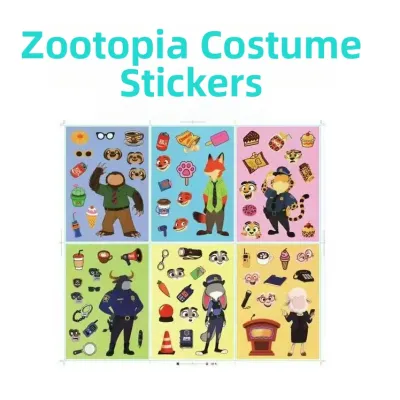
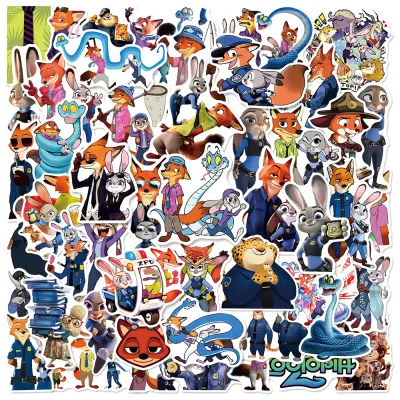
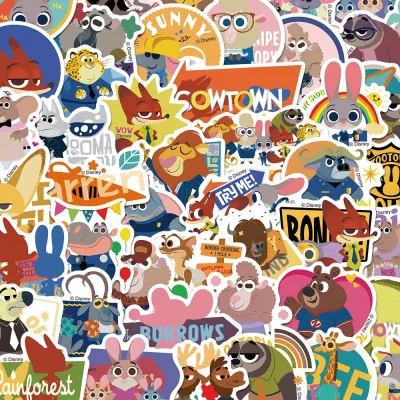
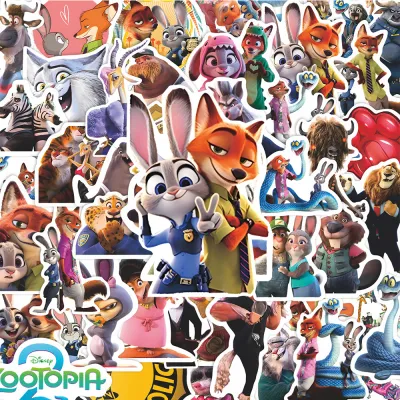
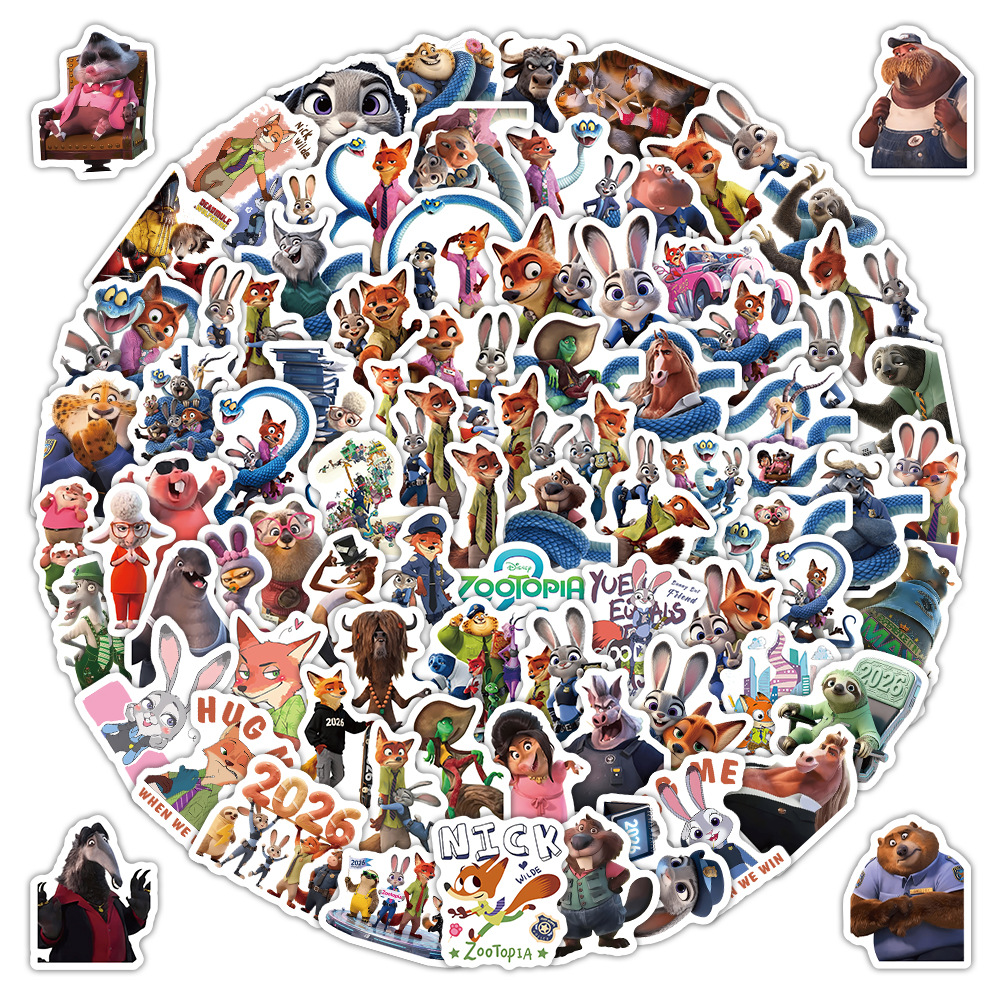

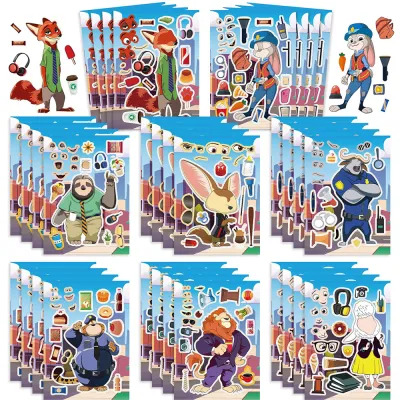
Prices are valid at publication and may change. Please refer to the product page for the latest price.
However, this durability comes with added thickness. If you regularly use vinyl stickers across multiple pages, your bullet journal can quickly develop “alligatoring”—a condition where the spine stretches and the book fails to close flat. Furthermore, vinyl stickers utilize strong, permanent acrylic adhesives. In standard journals, especially those with paper weights below 100 GSM (grams per square meter), attempting to peel or reposition a vinyl sticker will almost certainly tear the paper fibers. In the warm, humid climate of the Philippines, high-quality vinyl adhesives remain stable, but cheaper alternatives may slide or leave a sticky, gummy residue along the edges over time.
Paper Zootopia Stickers
Paper stickers offer a classic, traditional look that integrates naturally with the texture of your journal pages. Typically made from uncoated or lightly coated wood pulp, these stickers have a completely matte finish and a very thin profile. Their primary advantage is writability; you can easily write over them using ballpoint pens, gel pens, or fine-liners, allowing you to incorporate character art directly into your daily logs or habit trackers.
The main limitation of paper stickers lies in their porous nature. Because they absorb moisture, they are highly susceptible to ink bleeding or feathering if you use wet writing instruments like fountain pens or heavy ink markers. The success of writing on a paper sticker depends on the exact combination of the sticker’s surface coating and your pen’s ink type. To prevent ruining a layout, always perform an observable trial on a scrap sticker first. Additionally, while paper stickers are easier to peel from their backing sheets than vinyl, their standard adhesive becomes permanent quickly, meaning they cannot be easily repositioned without tearing.
Washi Zootopia Stickers
Washi stickers are crafted from traditional Japanese paper fibers, such as mulberry or gampi, resulting in an ultra-thin, semi-transparent texture. This transparency is their greatest artistic asset, allowing them to blend seamlessly into your journal pages without leaving harsh, visible white borders. When you place a washi sticker of Judy Hopps onto a dotted page, the dot grid remains subtly visible underneath, giving the impression that the character was printed directly onto the page.
This material is highly tearable by hand, offering a rustic, textured edge that is perfect for layering and collage styles. Washi stickers utilize a low-tack, pressure-sensitive adhesive. This allows you to gently peel and reposition the sticker if you make a placement mistake during your layout setup. However, this low adhesive strength means that in highly humid environments, the edges of washi stickers may begin to lift over time. To ensure long-term adhesion in tropical climates, you may need to verify the stickiness of the brand or reinforce the edges with a thin swipe of a clear glue tape runner.
Matching Sticker Types to Your Journaling Style
Your choice of Zootopia stickers should align with how you use your bullet journal daily. Different journaling methodologies require different physical properties from stationery.

For functional planners who prioritize clean, readable daily logs, habit trackers, and calendar boxes, paper stickers or thin matte vinyl are highly recommended. These materials lay flat, do not interfere with writing, and can be easily integrated into structured grids. You can use small paper stickers of carrot icons or pawpsicles as custom bullet points or task markers without adding unnecessary bulk to your weekly spreads.
If you prefer scrapbook and collage styles, washi and layered paper stickers are the ideal choices. These materials allow you to build rich, textured scenes of Zootopia’s diverse districts. You can layer semi-transparent washi stickers of the Rainforest District’s lush foliage over paper cutouts of Nick and Judy, creating depth and dimension without making the page excessively heavy or stiff.
For minimalist setups that rely on clean lines and ample negative space, small die-cut vinyl stickers serve as excellent focal points. A single, high-contrast vinyl sticker of Flash the Sloth placed in the corner of a weekly layout adds a touch of personality without cluttering the clean aesthetic.
| Sticker Material | Thickness | Writability | Transparency | Repositionability | Best Journaling Style |
|---|---|---|---|---|---|
| Vinyl | Thick | No (requires permanent marker) | Opaque | Low (Permanent) | Minimalist focal points, cover decoration |
| Paper | Medium-Thin | Yes (most pens/pencils) | Opaque | Low | Functional planning, daily logging, trackers |
| Washi | Very Thin | Limited (requires specific pens) | Semi-Transparent | High (Low-Tack) | Scrapbooking, layering, artistic collages |
Essential Checks Before Buying Zootopia Stickers
Before purchasing Zootopia stickers, conducting a few quality and compatibility checks will save you from ruined pages and wasted stationery.
First, verify your bullet journal’s paper compatibility. The paper weight, measured in GSM, determines how well your journal handles adhesives. Standard notebooks with 80 GSM paper are highly sensitive to heavy vinyl stickers, which can cause the pages to sag, wrinkle, or warp. If you prefer thick vinyl designs, ensure your journal features at least 120 GSM to 160 GSM paper, which provides the structural integrity needed to support heavier materials without ghosting or adhesive show-through.
Second, consider the size and scale of the stickers relative to your journal’s layout. Most bullet journals utilize a standard 5mm dot grid. Before buying, check the dimensions of the sticker sheet or individual die-cuts. A sticker that measures 5cm or larger will dominate a standard A5 page, making it more suitable for monthly cover pages. For weekly layouts or habit trackers, look for micro-sticker sheets where characters and decorative props measure between 1cm and 2cm, allowing them to fit neatly within your grid lines.
Third, check the adhesive type specified by the manufacturer. If you enjoy changing your mind or adjusting your layouts, look for stickers explicitly labeled as “repositionable” or “removable.” If you want permanent, long-lasting placement that won’t peel in warm weather, opt for standard permanent adhesives, but be prepared to commit to your initial placement.
Finally, pay close attention to licensing and authenticity. Official Disney Zootopia merchandise guarantees high-quality printing, accurate character proportions, and safe, acid-free adhesives that won’t yellow your journal pages over time. To identify authentic stickers, check the product packaging for official holographic licensing labels, clear copyright notices (such as “© Disney”), and crisp, high-resolution print details. Unauthorized prints often feature blurry lines, distorted colors, or chemical-smelling adhesives that can degrade your journal paper.
Where to Source Authentic Zootopia Stationery
Finding high-quality, authentic Zootopia stickers requires sourcing from reputable retailers. To ensure you are purchasing officially licensed stationery, look for authorized brand storefronts and licensed distributors on major online marketplaces. Avoid listings with generic titles, unusually low prices (such as large bulk packs sold for only a few pesos), or blurry product photos, as these are common indicators of counterfeit, low-quality prints.
When shopping online, always evaluate seller ratings and read customer reviews. Pay close attention to user-uploaded photos to verify the print sharpness, color accuracy, and material thickness before making a purchase. If you prefer a hands-on approach, visit local craft stores or specialty stationery shops in major shopping centers across the Philippines. Inspecting the stickers in person allows you to feel the paper weight, check the adhesive backing, and ensure the colors match your aesthetic expectations before spending your money.
Frequently Asked Questions (FAQ)
Can I use vinyl stickers on thin bullet journal paper?
Using thick vinyl stickers on thin bullet journal paper, such as 52 GSM or 80 GSM sheets, is generally not recommended. The strong acrylic adhesive and heavy weight of the vinyl can cause thin pages to wrinkle, warp, or pull tight, making the paper feel stiff and difficult to turn. If you want to use a vinyl sticker in a lightweight journal, test a single sticker on a back page first to observe how the paper reacts. Alternatively, stick the vinyl design onto a piece of cardstock, cut it out, and tip it into your journal using a milder adhesive tape.
Are washi stickers reusable if I make a mistake?
Yes, washi stickers are designed with a low-tack adhesive that allows for gentle repositioning shortly after application. If you place a character sticker crookedly, you can usually peel it up slowly and adjust its position without damaging your journal page. However, keep in mind that repeated peeling will stretch the delicate natural fibers of the washi paper, weaken the adhesive grip, and potentially lift the fibers of your journal page. For best results, limit repositioning to one or two adjustments immediately after placement.
Do paper stickers smudge when used with gel pens?
Paper stickers can smudge when written on with gel pens, depending on the sticker’s surface coating and the drying speed of the ink. Uncoated paper stickers absorb water-based gel inks relatively well, but they still require a few moments of drying time, especially in humid climates. Coated or semi-glossy paper stickers do not absorb ink easily, which can lead to severe smudging. To prevent smearing your Zootopia layouts, use quick-drying pigment ink pens, or perform a quick smudge test on an unused corner of the sticker sheet before writing on your actual layout.

Community discussion
Share your experience or ask a question. Comments are reviewed before publication.