
When comparing erasable ballpens available in the Philippines, there is no single brand that perfectly balances writing smoothness, erasing cleanliness, and long-term durability. Erasable ink relies on thermo-sensitive technology, which inherently requires trade-offs in color saturation and archival stability. Instead of looking for a universal winner, this guide provides a structured framework to evaluate ink flow, friction-erasing performance, and paper compatibility, helping you choose the right pen based on your specific note-taking or drafting needs.
In our local climate, where high humidity and elevated temperatures are common, understanding how these pens behave on different paper types is essential. Whether you are a student preparing review notes or a professional drafting temporary layouts, selecting the right tool requires looking closely at how the ink interacts with paper fibers and how well it withstands daily wear.
Understanding Erasable Ink Technology and Its Trade-offs
To make an informed choice, it helps to understand how erasable ink actually works. Unlike traditional pencils that deposit graphite on top of paper fibers to be physically lifted by a rubber eraser, erasable pens use thermo-sensitive ink. This ink contains specialized microcapsules containing a leuco dye, a color developer, and a temperature regulator. When you rub the built-in silicone tip against the paper, the resulting friction generates heat. Once this heat reaches a specific threshold—typically around 60°C—the temperature regulator prevents the dye and developer from binding, rendering the ink completely transparent.
Products mentioned in this guide
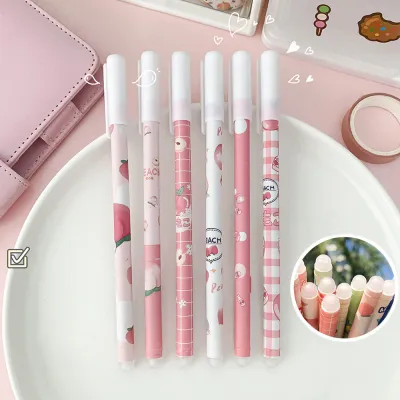
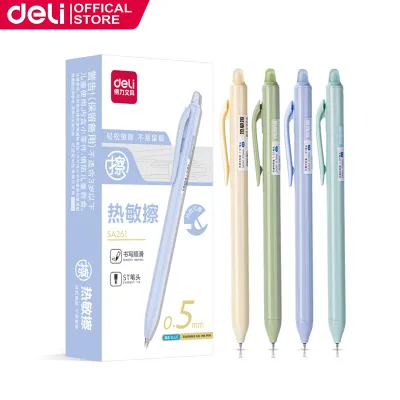
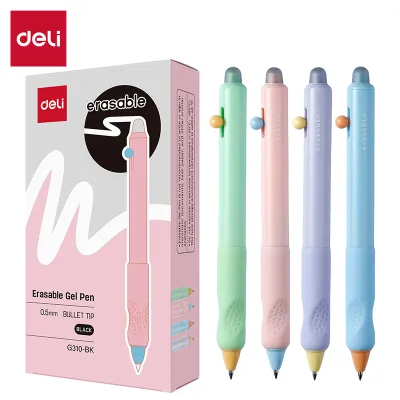
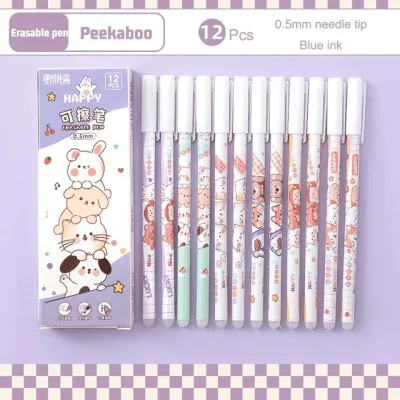
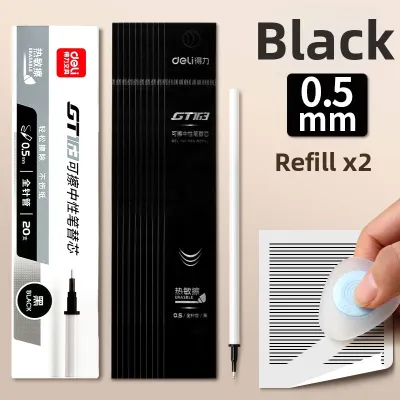

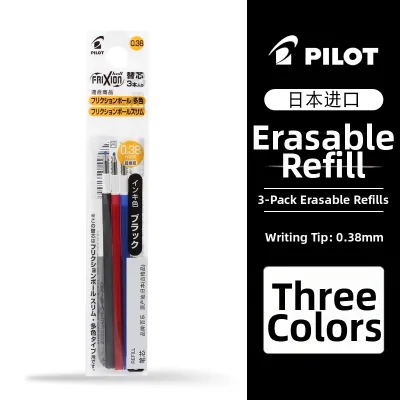
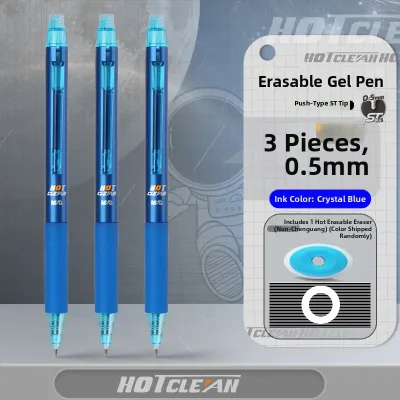
Prices are valid at publication and may change. Please refer to the product page for the latest price.
This chemical process introduces several inherent trade-offs. Because the ink must remain sensitive to temperature changes, the pigments cannot achieve the deep, rich color saturation found in standard gel or ballpoint pens. Erasable inks often appear slightly muted, with black ink sometimes looking dark grey and blue ink appearing less vibrant. Additionally, the formulation requires a higher viscosity to prevent premature bleeding, which can occasionally result in a slightly draggy writing experience compared to ultra-smooth permanent gel pens.
Environmental sensitivity is another critical factor, particularly in a tropical country like the Philippines. Written notes left inside a parked car under the midday sun, or even placed near a hot laptop exhaust, can easily reach the temperature threshold required to turn the ink transparent. While the writing is not physically destroyed, it becomes invisible, which can be a major issue if you rely on those notes for long-term reference.
Key Dimensions for Comparing Erasable Ballpens
When evaluating different erasable pens in local stationery shops or online marketplaces, you should focus on three primary performance dimensions: writing smoothness, erasing cleanliness, and durability.

Writing smoothness and ink flow depend heavily on the pen’s tip design and ink delivery system. A high-quality erasable pen should glide across the page without requiring excessive downward pressure. You should watch out for common issues like skipping, where the ink flow momentarily cuts out, or blobbing, where excess ink accumulates at the tip and leaves dark spots on your paper. Consistent ink flow is crucial for maintaining a neat handwriting style during long writing sessions.
Erasing cleanliness refers to how well the ink disappears without leaving a trace or damaging the paper. Some pens require significant friction heat to clear the ink, which can lead to paper thinning, pilling, or tearing, especially on thin notebook paper. You should also look for ghosting, which is the faint, shadow-like outline of the original writing that remains visible even after thorough erasing. A clean erase should leave the paper surface smooth and ready to be written over immediately.
Durability and fade resistance determine how well your written work holds up over time under normal storage conditions. Because the ink is sensitive to environmental factors, exposure to ambient humidity and indirect sunlight can cause the pigments to fade gradually. Evaluating how well the ink maintains its legibility over several weeks of storage in standard tropical conditions will help you determine if a specific pen is suitable for your primary notebook.
How to Test and Verify Erasable Pen Performance
Before purchasing erasable pens in bulk or investing in expensive multi-color sets, conducting a few simple, observable tests on your preferred paper can save you time and money.
First, perform a paper compatibility check. Local school notebooks and standard copy paper vary widely in weight and texture, often ranging from 50 gsm to 80 gsm. Write a few lines on your target paper and observe if the ink feathers (spreads outward along the paper fibers) or bleeds through to the back of the page. Thinner, highly absorbent papers are more prone to bleeding and are also more fragile when subjected to the friction of erasing.
Second, observe the erasing residue and paper texture. Write a sentence, wait a few seconds for the ink to dry completely, and then use the pen’s silicone eraser to clear it. Examine the paper closely under good lighting. If you notice the paper fibers starting to pill or lift, the friction required is too high for that specific paper weight. A compatible combination of pen and paper should allow you to erase the same spot multiple times without compromising the structural integrity of the page.
Finally, evaluate the tip size and ink type. Erasable pens are commonly available in needle tips and conical tips, with widths ranging from 0.5mm to 0.7mm. Needle tips offer excellent precision for tight spaces and fine diagrams, but they can feel scratchy on rough paper. Conical tips are generally sturdier and provide a smoother glide, making them better suited for rapid note-taking. A 0.5mm tip typically lays down less ink, which dries faster and erases more easily, while a 0.7mm tip offers a bolder line at the cost of slightly longer drying times and more effort to erase cleanly.
Decision Framework: Matching Erasable Pens to Your Writing Needs
Choosing the right erasable pen depends on matching its specific characteristics to your daily writing tasks and paper preferences.
If your work involves detailed calculations, compact grid notebooks, or drawing precise diagrams, finer-tip gel models (such as 0.5mm or smaller) are highly suitable. These models minimize the amount of ink deposited on the page, which reduces drying times and allows for clean, precise erasing with minimal ghosting. They work exceptionally well on standard student notebooks where space is limited and neatness is a priority.
If your main priority is writing speed, comfort, and reducing hand fatigue during long lectures or brainstorming sessions, broader-tip or ballpoint-style models (such as 0.7mm) are a better fit. The wider tip provides a smoother, more cushioned writing experience that glides easily over various paper textures. However, keep in mind that these models require a bit more friction heat to erase fully due to the larger volume of ink embedded in the paper fibers.
Before using these pens, always verify your intended application. Erasable pens are excellent for temporary tasks like solving crossword puzzles, drafting initial sketches, or keeping daily planners that are subject to frequent schedule changes. However, they are not a suitable replacement for permanent ink if you require archival quality, high color saturation, or if your documents will be exposed to high temperatures.
Practical Tips for Maintaining and Storing Erasable Pens
To get the longest lifespan and most consistent performance out of your erasable pens, proper storage and maintenance are essential.
Temperature control is the most critical aspect of preserving thermo-sensitive ink. Never store your pens or written notebooks in hot environments, such as inside a car parked in the sun, near windows, or close to heat-generating electronic devices. If a pen is exposed to extreme heat, the ink inside the cartridge may turn transparent, making it appear as though the pen has run dry. If this happens, placing the pen in a cool environment or a refrigerator for a short period can sometimes restore the ink’s color.
Nib maintenance is also important for ensuring smooth ink flow. Always replace the cap securely or retract the tip when the pen is not in use to prevent the ink from drying out at the point. Additionally, keep the silicone eraser nub clean. Over time, the eraser can accumulate dust, skin oils, or graphite residue from your desk. Rubbing a dirty eraser on your paper can leave dark smudges that are difficult to remove, so wipe the eraser tip periodically with a clean, damp cloth.
Finally, consider the economics of refills. Purchasing replacement ink cartridges instead of buying entirely new pen bodies is both environmentally friendly and cost-effective. Many local stationery shops and online marketplaces offer multi-pack refills for popular erasable pen models. Refills typically cost significantly less than a complete pen—often ranging from ₱40 to ₱80 per refill depending on the pack size—allowing you to reuse the high-quality plastic pen body multiple times while reducing plastic waste.
Frequently Asked Questions (FAQ)
Can erased ink reappear if the paper gets cold?
Yes, erased thermo-sensitive ink can reappear if the paper is exposed to sufficiently cold temperatures. Because the erasing process relies on a reversible chemical reaction triggered by heat, cooling the paper down to approximately -10°C or lower (such as placing it in a household freezer) will cause the ink pigments to transition back to their visible state. However, the restored text may not look as sharp or vibrant as the original writing, and any smudges or ghost marks from the erasing process may also become visible. This reversibility means that erased information is never permanently destroyed, which is an important consideration for document privacy.
Are erasable pens allowed in board exams or legal contracts?
No, erasable pens are strictly prohibited in standardized examinations, professional board exams, and legal contracts. Because the ink can be easily altered or made invisible by heat, using these pens on official documents poses a significant security risk. Furthermore, official papers are often processed through high-speed scanners or laminating machines that generate substantial heat, which can accidentally erase entire pages of written work. For any document requiring long-term validity, legal security, or official grading, you must use permanent ink, such as standard ballpoint or archival-grade gel pens.

Community discussion
Share your experience or ask a question. Comments are reviewed before publication.