
When planning a signage or display project, choosing between corrugated plastic board and foam board depends entirely on your environment, expected lifespan, and installation method. There is no universal winner; corrugated plastic excels in moisture resistance and long-term durability, while foam board offers a lightweight, cost-effective solution for short-term indoor use. This guide breaks down the structural differences, environmental limits, and practical handling of both materials so you can match the right board to your specific display needs.
In tropical climates where humidity levels fluctuate significantly, selecting the wrong material can lead to warped signs, peeling graphics, or structural failure within days. Understanding how these materials behave under physical stress, moisture exposure, and different printing methods ensures your display remains professional and intact throughout its intended run.
Core Differences in Structure and Composition
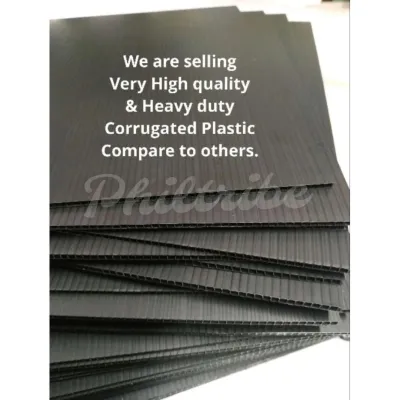
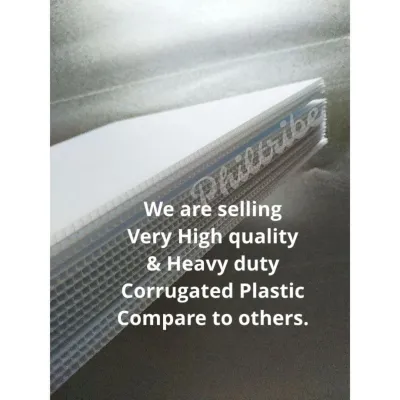
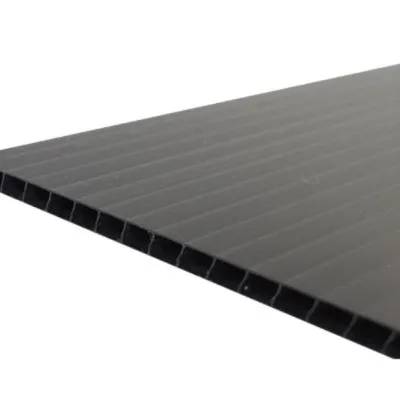
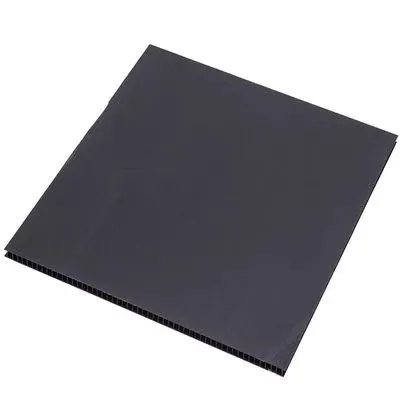
To choose the right material, you must first understand how their physical makeup dictates baseline handling, rigidity, and weight. Corrugated plastic board is extruded from polypropylene copolymer, creating a twin-wall plastic sheet separated by hollow ribs or flutes. This structural design mimics the engineering of corrugated cardboard but utilizes a durable, non-porous plastic material that resists tearing and crushing.
Products mentioned in this guide
168 Lazada user ratings
Quality:Long-lasting and weather-resistant, Durable and sturdy material, Convenient pack sizes available, Excellent for DIY projects, Appear…Read full reviewShow less
Quality:Long-lasting and weather-resistant, Durable and sturdy material, Convenient pack sizes available, Excellent for DIY projects, Appearance:Convenient pack sizes available, Long-lasting and weather-resistant, Excellent for DIY projects, Durable and sturdy material, Excellent for DIY projects, Durable and sturdy material, Convenient pack sizes available, Long-lasting and weather-resistant,
All items arrived in good and excellent condition; packaged well. Complete and correct variation. Thank you so much seller and Lazada. Will …Read full reviewShow less
All items arrived in good and excellent condition; packaged well. Complete and correct variation. Thank you so much seller and Lazada. Will order again if needed. Used it kaysa plywood. Maganda.
Ideal for construction and packaging, Excellent for DIY projects, Great for heavy-duty use,
High-quality black color, Great for heavy-duty use, Long-lasting and weather-resistant,
High-quality black color, Versatile size options available,
81 Lazada user ratings
Durability:High-quality material, Durable and long-lasting, Versatile and multipurpose, Excellent for crafting projects, Perfect for signage…Read full reviewShow less
Durability:High-quality material, Durable and long-lasting, Versatile and multipurpose, Excellent for crafting projects, Perfect for signage, Lightweight and portable,
salamat po seller and couriers 🫰🫰🫰🫰🫰 dumating ng maayos item🫰🫰🫰🫰🫰🫰 Durable and long-lasting, Great for outdoor use,
Easy to cut and shape, Sturdy construction, Great for outdoor use, very good very good very good very good
Easy to cut and shape, Sturdy construction,
250 Lazada user ratings
Durability:The corroplast boards are sturdy enough to be used as sliding doors for a small open kitchen shelf. They are rigid enough to be m…Read full reviewShow less
Durability:The corroplast boards are sturdy enough to be used as sliding doors for a small open kitchen shelf. They are rigid enough to be mounted upright on rails. Eco-friendliness:There is very little wastage and is easily cut by sharp scissors or an xacto knife. Being made of plastic, cutting will not result in sawdust or small particles that we may inhale. Size Options:The size was adequate to cover the two shelves and the side panels of our open kitchen cabinet. Aside from being used for signages and school projects, the board can also be used for other DIY projects.
Durability:I used the boards as sidings for our open cabinets. They are also sturdy enough to use as sliding doors for the upper and lower s…Read full reviewShow less
Durability:I used the boards as sidings for our open cabinets. They are also sturdy enough to use as sliding doors for the upper and lower shelves. Eco-friendliness:Cutting the boards does not result in residual dust particles. Size Options:The 4 boards I ordered were enough to finish the sides of the open shelf. My first order were utilized to make the sliding doors for the shelf. I will order the boards again for my other DIY projects.
Vibrant colors for eye-catching displays, Smooth surface for easy printing, Great value for the price, Perfect size for various projects,
All good, very well packaged in bubble wrap and cardboard. Nice satin finish. Thank you 😊🙏
Will use this for dividers inside the tuffcase for led lights and cables.
Prices are valid at publication and may change. Please refer to the product page for the latest price.
In contrast, standard foam board consists of an extruded polystyrene foam core sandwiched between two sheets of clay-coated paper or plastic liner. This composition results in a perfectly flat, smooth surface with uniform thickness across the entire sheet. Because the foam core is mostly air, foam board is exceptionally lightweight, making it easy to transport and handle in large formats.
These structural differences directly affect how each board handles physical forces. The fluted design of corrugated plastic provides directional stiffness; the board is highly rigid along the direction of the flutes but more flexible when bent across them. Foam board, however, offers uniform rigidity in all directions, meaning it resists bending equally across its entire surface until it reaches its breaking point.
Weight differences also influence your choice of mounting hardware and shipping logistics. While both materials are lightweight compared to wood or metal, foam board is generally lighter and easier to hang using simple adhesives or pins. Corrugated plastic, being denser and heavier, requires more robust mounting solutions, especially when used in larger dimensions.
Durability and Environmental Resistance
Evaluating how each material survives its intended environment is crucial to preventing premature display degradation. In regions with high humidity or frequent rainfall, moisture resistance is often the deciding factor. Corrugated plastic board is completely waterproof and impervious to water absorption, meaning it will not warp, swell, or delaminate when exposed to tropical downpours or humid storage areas.

Foam board is highly vulnerable to moisture and humidity. Standard paper-faced foam boards absorb water vapor from the air, which often causes the paper liners to expand at a different rate than the foam core, leading to severe bowing or warping. If exposed directly to liquid water, the paper facing can peel away entirely, ruining the printed graphics and compromising the structural integrity of the display.
Physical impact and tear resistance also differ dramatically between the two materials. Foam board is delicate; its soft polystyrene core is easily dented by minor impacts, and its corners can crush if dropped or bumped during transport. If bent too far, foam board will snap cleanly. Corrugated plastic is highly resilient, absorbing impacts without denting and bending under extreme pressure rather than snapping, though it may retain a permanent crease if folded completely.
Outdoor exposure limits require careful consideration of ultraviolet (UV) light and temperature fluctuations. Standard corrugated plastic boards can withstand outdoor conditions for several months, but prolonged exposure to intense sunlight can eventually cause the plastic to become brittle and fade. For long-term outdoor installations, you must verify with the manufacturer if the board contains UV stabilizers. Foam board, even when treated, is strictly limited to indoor environments or very brief, dry outdoor events, as wind and sun will quickly degrade its structure.
Printability, Finishing, and Display Suitability
Your choice of material must support your design, printing, and physical assembly requirements to ensure a professional finish. Foam board is highly favored by graphic designers and printers for its ultra-smooth, clay-coated paper surface. This smooth face allows for high-resolution direct flatbed printing, sharp text, and vibrant color reproduction without any surface texture showing through the ink.
Corrugated plastic board features a ribbed surface caused by the internal flutes, which can create subtle visible lines across printed graphics. Direct printing on corrugated plastic requires specialized UV-curable inks to ensure proper adhesion to the non-porous polypropylene surface. Alternatively, many users print their designs on self-adhesive vinyl sheets and then mount them onto the plastic board to achieve a smoother, high-gloss finish.
Cutting, scoring, and folding techniques vary based on the material’s composition. Foam board is incredibly easy to cut, score, and bevel using a standard utility knife, allowing for clean, sharp edges and intricate 3D shapes. Corrugated plastic requires more effort and a very sharp blade; cutting parallel to the flutes is straightforward, but cutting perpendicular to them requires steady pressure to slice through the internal ribs without leaving jagged edges.
Mounting and installation options must match the physical properties of each board. Foam board is easily mounted using double-sided tape, hook-and-loop fasteners, or push pins, making it ideal for temporary gallery walls, presentations, and indoor retail displays. Corrugated plastic is compatible with more rugged mounting methods, such as metal grommets inserted through the plastic, heavy-duty adhesives, or wire step stakes (H-stakes) slid directly into the hollow flutes for outdoor lawn placement.
Cost, Lifespan, and Value Assessment
Balancing your project budget against the required lifespan of the display ensures you get the best return on investment. In the local market, standard paper-faced foam board generally presents a lower upfront cost in Philippine Pesos (₱) per sheet compared to corrugated plastic. This makes foam board the most economical choice for short-term presentations, school projects, and one-time indoor events.
However, when evaluating reusable displays, corrugated plastic board often provides superior long-term value. Because it resists water, tearing, and denting, a single corrugated plastic sign can be stored, transported, and reused across multiple events or seasons. Foam board displays rarely survive repeated transport and storage without sustaining corner damage or surface dents, often requiring costly reprints.
To set a realistic budget, classify your project into one of three categories: a single-day event, a seasonal promotion, or a permanent fixture. For single-day indoor events, foam board is almost always the most cost-effective option. For seasonal promotions that may face outdoor elements or high-traffic handling, corrugated plastic is a safer investment. Permanent indoor fixtures can utilize high-quality, thick foam boards, while permanent outdoor signage requires more durable materials altogether.
Decision Framework: Which Material Should You Choose?
To finalize your material selection, evaluate your project parameters against this conditional decision path:
Choose corrugated plastic board if:
- The display will be placed outdoors, even temporarily, where it might encounter rain, wind, or direct sunlight.
- The display is intended for long-term use, repeated transport, or storage in non-air-conditioned environments.
- You plan to mount the sign using ground stakes, grommets, or heavy-duty outdoor adhesives.
- The slight texture of the flutes will not detract from the overall visual impact of your graphics.
Choose foam board if:
- The project is strictly for indoor use in a dry, temperature-controlled environment.
- You require high-resolution, photographic-quality printing with a perfectly smooth, matte, or glossy finish.
- The display is for a short-term presentation, exhibition, or temporary retail sign.
- You are working under a tight initial budget and want to minimize upfront material costs.
Before purchasing, always verify if your display involves complex 3D shaping, exposure to extreme heat sources, or specific local fire-retardant requirements. Check the manufacturer’s product labels and technical data sheets to ensure the specific grade of board you select matches these specialized safety and performance criteria.
Frequently Asked Questions (FAQ)
Can foam board be used outdoors if it is laminated?
Lamination protects the printed face of a foam board from minor splashes and surface scratches, but it does not make the board suitable for extended outdoor use. The vulnerable part of a laminated foam board is the exposed foam core along the cut edges. Moisture from rain, dew, or high humidity will wick into these edges, causing the paper liners to swell, warp, and eventually delaminate from the foam core. For any outdoor application, you should check the product label for an explicit outdoor rating or choose corrugated plastic instead.
How do I safely cut corrugated plastic board without tearing?
To cut corrugated plastic board cleanly and safely, always use a fresh, sharp utility knife blade rather than standard scissors, which will crush the flutes. Place the board on a self-healing cutting mat and use a heavy metal straightedge as a guide, keeping your non-cutting hand safely behind the straightedge. When cutting parallel to the flutes, guide your blade smoothly down the channel. When cutting perpendicular to the flutes, score the top surface lightly first to establish your line, then make a second, firmer pass to cut through the internal ribs and bottom layer.

Community discussion
Share your experience or ask a question. Comments are reviewed before publication.