
Finding a high-quality Death Note notebook in the Philippines requires balancing your love for the anime with practical stationery standards. Whether you want a highly accurate cosplay prop to display on your shelf or a durable daily journal that can withstand the tropical humidity, the local market offers several distinct options. By evaluating paper weight, binding durability, and seller authenticity on major e-commerce platforms, you can secure a notebook that looks iconic and performs beautifully under your favorite pens.
Because these themed notebooks serve different purposes—ranging from casual novelty items to serious writing tools—understanding what to look for before making a purchase is essential. The right choice depends on how you plan to use the book, the writing instruments you prefer, and how well the materials can endure local environmental conditions. Taking the time to inspect the specifications ensures your notebook remains a prized part of your collection for years to come.
Exploring the Types of Death Note Notebooks on the Market
When browsing online marketplaces and specialty hobby shops in the Philippines, you will generally encounter three main categories of Death Note notebooks. The first category consists of officially licensed merchandise. These items are produced under authorized partnerships and often feature high-definition character art, official manga panels, or the classic silhouette of Ryuk. Because they are licensed, they carry official copyright marks and are typically sold by established anime specialty stores in major metropolitan areas.
Products mentioned in this guide
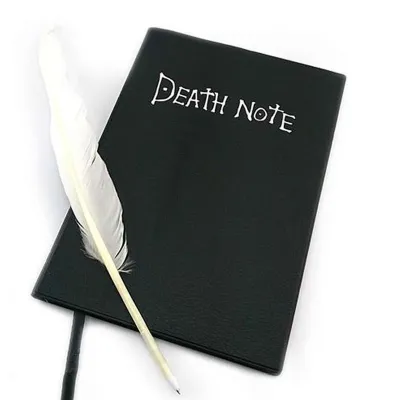
Prices are valid at publication and may change. Please refer to the product page for the latest price.
The second category includes fan-made or custom-printed notebooks created by independent local artists and designers. These notebooks are highly popular at local pop-culture conventions and art markets. They often showcase unique artistic interpretations, such as watercolor illustrations of Light and L, minimalist cover designs, or stylized layouts that differ from the standard anime prop. Choosing these supports local creators while giving you a highly distinctive piece of stationery that stands out from mass-produced alternatives.
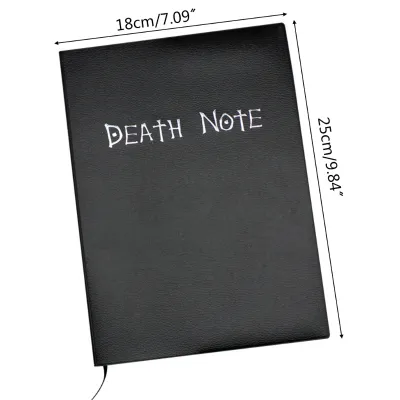
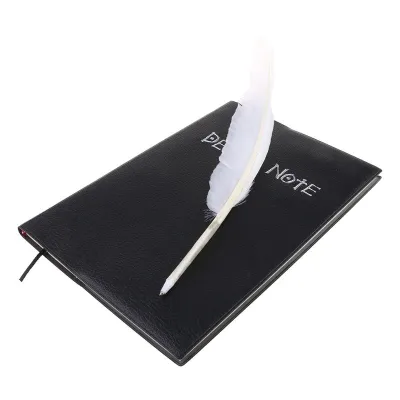
The third category is the classic black replica notebook, designed specifically to mimic the prop from the series. These notebooks feature the iconic white “Death Note” font on a black cover and usually include the detailed “How to Use It” rules printed on the first few pages, followed by blank or lined sheets. These are highly sought after by cosplayers and collectors who want an authentic-looking prop for events or display shelves. They range from budget-friendly paperbacks to premium hardcover editions wrapped in textured materials.
Key Stationery Specs to Check Before You Buy
To ensure your notebook is more than just a decorative piece, you must evaluate its physical construction. The first specification to check is the paper weight, measured in grams per square meter (GSM). Standard notebook paper is typically around 70 to 80 GSM, which is fine for basic ballpoint pens but prone to ink bleeding and ghosting if you use gel pens, rollerballs, or markers. For a better writing experience, look for notebooks featuring 100 GSM or higher, which provides a sturdier surface and resists ink penetration.

In the Philippines, the high relative humidity can affect paper fibers, making them more absorbent and prone to ink feathering. Choosing a notebook with slightly thicker, coated paper helps mitigate this issue, keeping your handwriting sharp and clean. If the product listing does not specify the GSM, you can often ask the seller directly or look for customer reviews that mention paper thickness and ink compatibility.
Binding is another critical factor that dictates the notebook’s durability and usability. Cheaply made replicas often use perfect binding, where the pages are simply glued to the spine. Over time, especially in warm tropical climates, this glue can dry out, become brittle, and cause pages to fall out. Instead, look for thread-sewn or case-bound bindings. These methods allow the notebook to lay completely flat when open, making it much easier to write or draw across the entire page without damaging the spine.
Cover materials also require careful consideration. Many replica notebooks feature faux leather (polyurethane or PU) covers to replicate the look of the original prop. However, low-grade PU leather can degrade, peel, or become sticky when exposed to heat and humidity. If you prefer a faux leather cover, look for listings that specify high-grade, water-resistant PU. Alternatively, a sturdy hardcover made of thick cardboard or a laminated softcover can offer excellent durability without the risk of material peeling.
Finally, examine the internal page layout to ensure it matches your writing habits. While some replicas feature ruled lines, others come with blank pages or dotted grids. If you plan to use the notebook for daily journaling or sketching, blank or dotted pages offer the most creative freedom. Ensure that any pre-printed thematic elements, such as the rule pages at the front, do not interfere with the usable writing space if you intend to use the book for school or work.
How to Verify Authenticity and Seller Reliability
Navigating online marketplaces requires a cautious approach to avoid low-quality counterfeits and misleading listings. To verify if a product is officially licensed, look for specific licensing marks, holographic stickers, or official distributor badges in the product photos. Genuine merchandise from reputable brands will always display clear copyright information on the back cover or packaging, referencing the original publishers and creators.
When shopping on e-commerce platforms, always evaluate the seller’s overall rating and history. A reliable seller should have a high positive feedback rate and a history of selling stationery or anime merchandise. Dive into the customer review section and look for uploaded photos and videos from local buyers. These real-world images are invaluable for verifying the actual texture of the cover, the clarity of the printed text, and the overall build quality of the notebook.
Pay close attention to reviews that mention how the item was packaged for shipping. Because paper products are easily damaged during transit, reliable sellers will wrap the notebook in protective bubble wrap or place it inside a sturdy cardboard box to prevent bent corners or creased pages. If multiple reviews complain about poor packaging or items arriving damaged, it is best to look for an alternative seller.
Be wary of common red flags, such as listings that use stock promotional images exclusively without showing the actual product. Unusually low prices can also indicate a sub-par bootleg made with thin paper and blurry cover printing. If a listing has a vague description that lacks details about paper weight, page count, or cover materials, send a message to the seller to clarify these specifications before placing your order.
Matching the Notebook to Your Daily or Collection Needs
To get the most value out of your purchase, align the notebook’s design with your primary use case. If you are a collector or cosplayer, visual accuracy and presentation should be your top priorities. Look for replicas that feature precise cover fonts, the correct silver or white foil stamping, and the complete set of printed rules at the front. Some premium collector editions even come in dedicated presentation boxes, which help keep the notebook in pristine condition on your display shelf.
For students and professionals who want to use the notebook for daily school or office work, functionality is key. Choose a standard size like A5 or B5, which fits easily into backpacks, messenger bags, or tote bags. Prioritize durable thread-sewn bindings that can withstand being opened and closed multiple times a day, and opt for ruled pages to keep your notes organized and legible.
If your goal is creative journaling or bullet journaling, look for a notebook that combines thematic aesthetics with high-quality paper. A dotted grid layout is ideal for creating custom spreads, trackers, and layouts. Ensure the paper is thick enough to handle decorative elements like colored gel pens, mildliners, or small stickers without ghosting through to the other side of the page. A lay-flat design is also essential here, as it allows you to work comfortably across two-page spreads.
Frequently Asked Questions (FAQ)
Can I use fountain pen ink on themed notebook paper?
Using fountain pen ink on themed notebooks depends entirely on the paper’s weight and quality. Many budget-friendly replica notebooks use standard 70 to 80 GSM paper, which is highly susceptible to feathering, ghosting, and bleed-through when paired with wet fountain pen inks. To ensure compatibility, look for notebooks that specify a paper weight of 100 GSM or higher, preferably with a smooth, coated finish. Before writing extensively, always perform a simple spot test by drawing a small line with your fountain pen on an inconspicuous corner of a back page to see how the paper reacts to the ink.
How do I protect a faux leather cover from humidity?
Faux leather (PU) covers can degrade, peel, or become sticky over time when exposed to the high humidity and warm temperatures typical of the Philippine climate. To protect your notebook, store it in a cool, dry place away from direct sunlight, which can accelerate the breakdown of synthetic materials. Avoid storing the notebook in airtight plastic bags where moisture can get trapped. Instead, if you keep your collection in closed drawers or storage boxes, place a few silica gel packets inside to absorb excess moisture and prevent mold growth.

Community discussion
Share your experience or ask a question. Comments are reviewed before publication.