
Choosing between Deli clay dough and other modeling clays depends entirely on your specific project requirements, the age of the user, and the desired finishing characteristics. Deli clay dough is widely recognized for its accessibility, vibrant colors, and user-friendly texture, making it a popular choice for school activities, early childhood sensory play, and casual crafting. However, other specialized modeling clays—such as polymer clays that require oven baking or professional-grade oil-based clays that never harden—serve entirely different artistic and industrial purposes. To make the right purchase, you must evaluate the curing method, safety certifications, and physical behavior of each material under local conditions.
In the Philippines, environmental factors play a significant role in how modeling materials behave. The high relative humidity and warm tropical temperatures can accelerate or delay drying times, affect the stickiness of the dough, and influence how long opened packages remain usable. Understanding how different clay formulations interact with these ambient conditions is essential for preventing premature hardening or mold growth. By examining the packaging labels and verifying the specifications of each product, you can select a material that remains workable throughout your creative process.
Before purchasing any modeling material, it is helpful to establish a clear set of criteria based on who will be using the clay and what the final product is intended to be. A classroom setting demands non-toxic, easily cleanable, and highly malleable doughs that do not require specialized equipment to cure. Conversely, a hobbyist creating detailed figurines or jewelry will need a medium that can hold fine details, withstand sanding or painting, and achieve a durable, permanent finish. By comparing Deli clay dough against alternative options along these functional lines, you can ensure a successful crafting experience.
Products mentioned in this guide
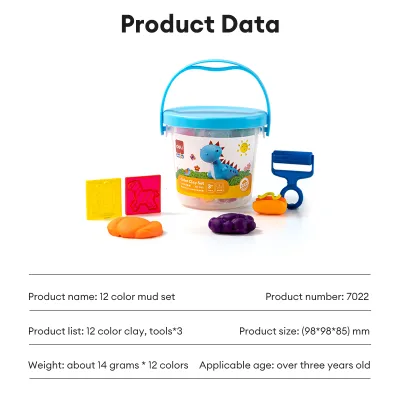
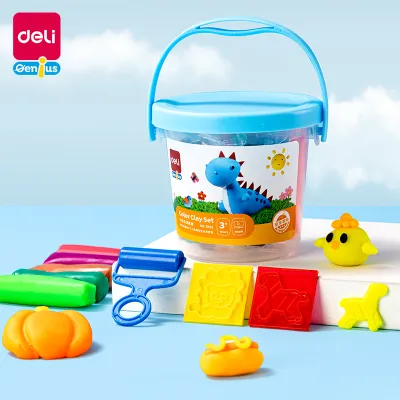
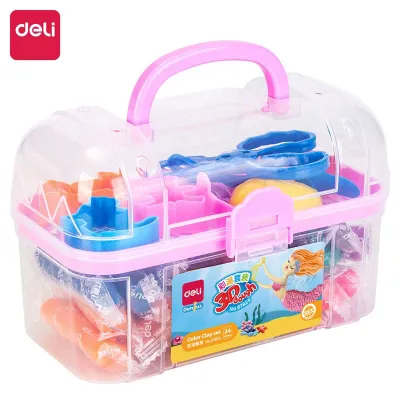
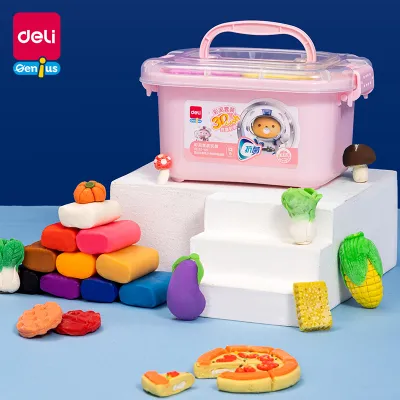
![Deli Play Dough 24 Colour with Mold & Container 67825 [Plasticine] [Clay Modelling]](https://img.lazcdn.com/g/p/918a8090567eba9557041e6ddd942e35.jpg_400x400q80.jpg_.webp)
Prices are valid at publication and may change. Please refer to the product page for the latest price.
Understanding Clay Categories and Curing Methods
To make an informed decision, you must first distinguish between the primary categories of modeling materials available in local stationery stores and online marketplaces. These materials are generally grouped into three main types based on their chemical composition and how they harden: air-dry clay (which includes many Deli clay dough products), polymer clay, and oil-based modeling clay. Each category serves a distinct user group and requires specific handling techniques to achieve the desired results.
Air-dry clay and lightweight clay doughs, such as those produced by Deli, rely on water evaporation to cure. When exposed to the air, the moisture within the dough gradually escapes, causing the material to shrink slightly and harden into a solid, lightweight structure. This process requires no external heat source, making it exceptionally safe for young children and classroom environments. However, because the curing process begins as soon as the clay is exposed to air, users must work relatively quickly or keep unused portions tightly sealed to prevent the material from drying out mid-project.
Polymer clay, on the other hand, is a synthetic material composed of polyvinyl chloride (PVC) binders and liquid plasticizers. Unlike air-dry options, polymer clay will not harden at room temperature, regardless of how long it is left exposed to the air. To cure polymer clay, it must be baked in a dedicated home oven or toaster oven at specific temperatures, typically ranging from 110°C to 135°C, depending on the manufacturer’s instructions. This baking process fuses the plastic particles together, resulting in a highly durable, water-resistant, and slightly flexible plastic object that can be drilled, sanded, and painted.
Oil-based modeling clay, often referred to as plastiline or traditional modeling clay, is formulated with oils, waxes, and clay minerals. Because it contains no water, it does not dry out when exposed to air, and because it contains no plastic binders, it cannot be cured in an oven. Instead, oil-based clay remains permanently pliable and reusable. It is highly favored by sculptors, animators for stop-motion films, and industrial designers who need to constantly modify their models. When comparing these categories, always read the product descriptions and packaging labels carefully to identify the exact curing mechanism required for your project.
Key Specifications to Compare Before Buying
When evaluating Deli clay dough against alternative brands, you should systematically compare the specifications printed on the product packaging. The first and most critical detail to verify is the safety certification. Look for clear labels indicating that the product is non-toxic, such as the ASTM D-4236 standard in the United States or the EN71 certification in Europe, which are widely recognized globally and often printed on imported stationery in the Philippines. Additionally, check the manufacturer’s minimum age recommendation, as some clay doughs are formulated specifically for toddlers, while others contain small parts or chemical binders suitable only for older children and adults.

For air-dry variants, drying times and shrinkage rates are vital performance indicators that vary significantly between brands. Standard lightweight clay doughs typically dry to the touch within a few hours, but complete curing can take anywhere from 24 to 48 hours depending on the thickness of the model and the ambient humidity. Because water loss causes air-dry clays to shrink, you should check user feedback or manufacturer specifications regarding the shrinkage rate. High shrinkage can lead to cracking, warping, or the distortion of fine details, especially when the clay is molded around a rigid internal support or armature.
Color fastness and mixability are additional specifications that impact the visual quality of your finished work. High-quality clay doughs should allow you to blend different colors smoothly to create custom shades without leaving streaks or staining your hands. Check the packaging or product documentation for information on color fastness, which indicates how well the clay retains its color when exposed to light over time. Some budget-friendly clays may fade quickly under direct sunlight or bleed color when they come into contact with moisture, which can ruin a completed project.
Finally, pay close attention to the described texture and density of the clay. Lightweight clay doughs, often marketed as “super light clay,” have a soft, airy, and almost foamy texture that is highly elastic and easy for small hands to manipulate. Traditional air-dry clays are denser, mimicking natural earth clays, and require more hand strength to knead and shape. By comparing these physical properties through product labels and verified user reviews, you can select a clay that matches the physical capabilities of the user and the structural demands of the model.
Matching the Material to Your Project Needs
Selecting the right clay formulation requires matching the material’s inherent properties to the specific goals of your project. For early childhood education, sensory play, and primary school crafts, the priorities are safety, ease of use, and simple cleanup. Deli clay dough and similar lightweight modeling doughs excel in this category. Their soft, non-sticky texture does not adhere aggressively to hands, clothing, or desks, and any residue can usually be wiped away with a damp cloth. These doughs are highly forgiving, allowing children to roll, stamp, and cut shapes with minimal frustration.
For detailed sculpting, miniature making, and long-term display pieces, the requirements shift toward structural integrity, detail retention, and post-cure workability. If your project involves intricate details, such as fine facial features on a figurine or delicate petals on a clay flower, polymer clay or premium dense air-dry clay is generally more suitable than lightweight dough. These materials hold sharp edges without slumping or melting under their own weight. Furthermore, once fully cured, dense clays can be sanded to a smooth finish, carved with precision tools, and painted with acrylics or sealed with protective varnishes.
If your goal is temporary modeling, prototyping, or practicing sculpting techniques, a non-hardening oil-based clay is the most practical choice. Because oil-based clay never cures, you can reuse the same block of material indefinitely, making it highly cost-effective for students and hobbyists who want to practice anatomy or form without keeping the final result. It is also excellent for building temporary armatures or molds for resin casting. By identifying the ultimate purpose of your creation—whether it is a temporary learning exercise, a child’s play session, or a permanent piece of art—you can narrow down your choices to the most appropriate clay type.
Evaluating Packaging, Value, and Storage Conditions
To ensure you are getting the best value for your money, you should evaluate the packaging design and calculate the cost efficiency of each option. When comparing prices on online marketplaces or in local department stores in the Philippines, do not rely solely on the retail price per box. Instead, check the net weight of the clay and calculate the price per gram (in ₱). A larger, multi-color set may seem expensive initially, but it often provides a much lower cost per gram compared to individual small tubs or single-color packs.
The design of the packaging is also critical for preserving the quality of the clay over time, especially in tropical climates. Because air-dry clay and clay doughs cure through moisture loss, any exposure to air inside the packaging will cause the material to harden prematurely. Look for brands that package their clay in airtight plastic tubs with secure lids, vacuum-sealed foil pouches, or high-quality resealable zip-top bags. If a brand sells its clay in simple plastic wrap that cannot be resealed after opening, you will need to factor in the additional cost and effort of sourcing airtight storage containers.
When purchasing clay online, always verify the seller’s ratings, shipping conditions, and stock availability. Clay dough that has been sitting in a hot warehouse for an extended period may arrive dry, crumbly, or sticky due to moisture separation. Read recent customer reviews to check if other buyers received fresh, pliable material. Additionally, consider how the product is packaged for transit; secure bubble wrapping is essential to prevent plastic tubs from cracking during delivery, which would expose the clay to air and render it unusable before it even reaches your home.
Decision Framework: Which Clay Should You Buy?
To finalize your purchase decision, use a structured framework that weighs your immediate project needs, budget, and environmental conditions. Choose Deli clay dough if you are looking for an affordable, highly accessible, and safe material for children’s crafts, school projects, or casual hobby work. Its lightweight, soft texture is ideal for users who want an easy-to-knead medium that dries without the need for baking, and its wide availability in local stationery shops makes it a convenient option for quick purchases.
You should opt for alternative brands or specialized clay types if your project demands professional-grade durability, high-precision detailing, or specific finishing techniques. For instance, if you plan to create wearable jewelry, detailed gaming miniatures, or items that must withstand handling, polymer clay from specialized brands is the superior choice due to its strength and water resistance after baking. Similarly, if you require a reusable medium for sculpting practice or mold-making, look for dedicated oil-based modeling clays rather than air-dry doughs.
Finally, always consider the specific environment in which the clay will be used and stored. In high-humidity regions of the Philippines, air-dry clays may take longer to cure completely, and finished pieces must be kept away from moisture to prevent them from softening or developing mold. If you are working in a classroom with very young children, prioritize products with explicit non-toxic certifications and age-appropriate labels. By matching these specific conditions to the verified specifications of each product, you can confidently select the perfect modeling material for your creative endeavors.
Frequently Asked Questions (FAQ)
Can I mix Deli clay dough with other brands of air-dry clay?
It is generally recommended to check the manufacturer’s guidelines before mixing different brands of air-dry clay or clay dough. Because different manufacturers use unique chemical binders, water content ratios, and fiber additives, blending them together can lead to unpredictable results. Mixing incompatible formulations may cause the clay to dry unevenly, resulting in severe cracking, warping, or a loss of structural integrity. If you must combine different brands, perform a small test batch first to observe how the mixture behaves during kneading, shaping, and the full drying process.
How should I store opened modeling clay to prevent it from drying out?
To prevent opened air-dry clay or clay dough from drying out, you must store it in a strictly airtight environment. Remove the clay from its original non-resealable packaging, wrap it tightly in plastic cling wrap to minimize air contact, and place it inside a heavy-duty resealable plastic bag or an airtight plastic container. For long-term storage in warm, tropical climates, adding a slightly damp paper towel inside the outer container—without letting it directly touch the clay—can help maintain the necessary humidity levels. Always follow the specific storage instructions provided on the product label to maximize the shelf life of your modeling materials.

Community discussion
Share your experience or ask a question. Comments are reviewed before publication.