
Choosing the right color pencil Deli product line depends on whether you are packing a pencil case for school assignments or blending complex gradients for an art portfolio. For students and everyday classroom tasks, Deli’s student-grade lines are the most practical choice, offering durable, break-resistant cores that withstand heavy hand pressure at an affordable price point. For detailed art projects, illustrations, and serious hobby work, Deli’s premium or professional-grade lines are far superior, featuring richer pigment concentrations and softer cores designed for seamless blending and layering.
In the Philippines, where high tropical humidity can affect paper texture and stationery storage, selecting the correct formula is essential. Using the wrong pencil can lead to torn paper, constant lead breakage, or dull colors that do not meet your project requirements. By understanding the distinct categories Deli offers, you can make an informed purchase that fits both your creative goals and your budget.
How to Choose the Right Deli Colored Pencil Line
To find the ideal color pencil Deli line, you must first understand the fundamental differences between student-grade and artist-grade pencils. The performance of any colored pencil is determined by three main components: the pigment (which provides the color), the binder (which holds the pigment together), and the fillers. Student-grade pencils contain more fillers and wax binders with less pigment, resulting in a harder core that keeps its sharp point longer but delivers lighter color payoff. Artist-grade pencils feature a much higher concentration of premium pigments and softer binders, allowing for rich, vibrant color laydown with minimal hand pressure.
Products mentioned in this guide
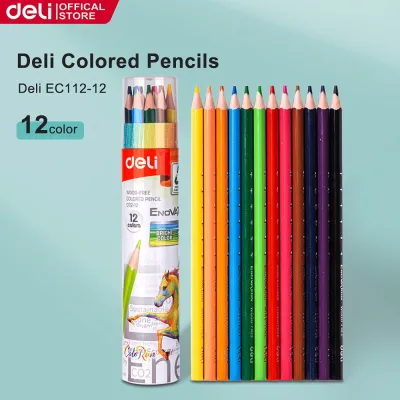
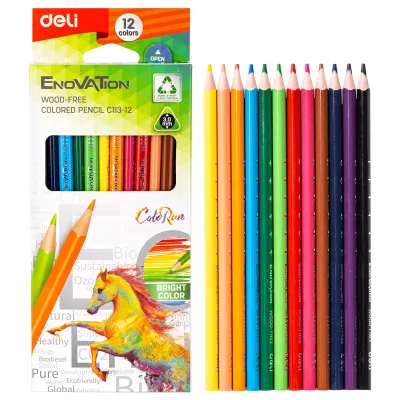
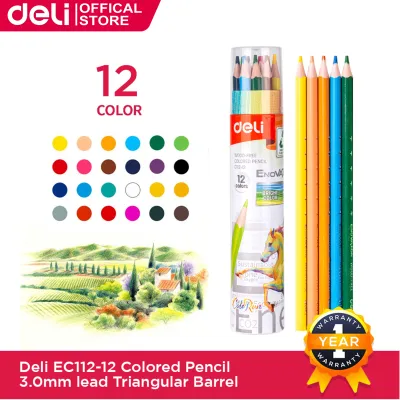
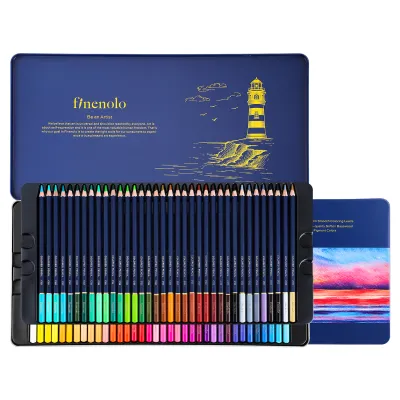
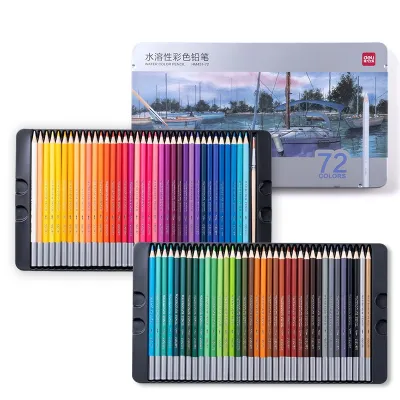
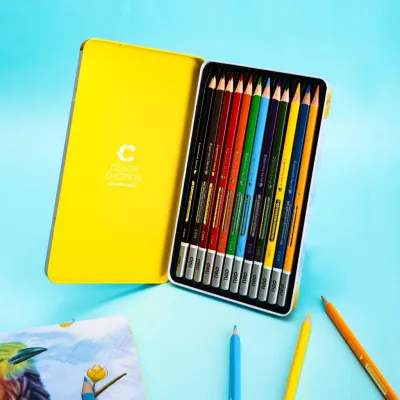
Prices are valid at publication and may change. Please refer to the product page for the latest price.
Reading Deli packaging labels carefully is the easiest way to identify which line fits your needs. Look for specific keywords on the box; scholastic and student lines are often labeled “School,” “Scholastic,” or feature kid-friendly cartoon designs and clear age recommendations. Premium and professional lines typically feature minimalist designs, metal tin packaging, and terms like “Professional,” “Artist Quality,” or “High Pigment.”
Matching the pencil to your drawing style and paper type is equally critical. If your work involves simple coloring, sketching, or color-coding notes, a firm student-grade pencil is highly efficient. However, if your projects require advanced techniques like layering multiple colors to create custom shades, blending gradients, or burnishing (applying heavy pressure to fill the paper’s tooth completely), you will need the soft, highly pigmented cores of Deli’s premium lines.
Furthermore, consider the paper you plan to use. Student-grade pencils perform well on smooth, thin papers like standard school notebooks or copy paper because their hard cores do not deposit excessive wax that can smudge. Artist-grade pencils require paper with a slight texture or “tooth”—such as cartridge paper or mixed-media paper—to grab the soft pigment from the core. In the humid Philippine climate, paper naturally absorbs moisture from the air, making thin sheets fragile; using a hard-core pencil with heavy pressure on damp paper can easily cause tears, making a soft-core pencil or dry, light strokes on quality paper a much safer option.
Recommended Deli Lines for School and Everyday Assignments
Deli’s standard student and scholastic colored pencil lines are engineered specifically for the classroom and everyday home activities. The defining feature of these pencils is their exceptionally durable, firm core, which is designed to resist breaking even when subjected to the heavy, uneven hand pressure typical of younger students. This break resistance ensures that students can focus on their schoolwork rather than spending half their class time at the pencil sharpener.

These scholastic lines are highly practical for daily carry. They are most commonly sold in compact, portable sets of 12, 24, or 36 colors, packaged in lightweight cardboard boxes or slide-out plastic trays that slide easily into school backpacks. These set sizes provide a sufficient color spectrum for geography maps, biology diagrams, and primary school art classes without adding unnecessary weight or taking up too much desk space.
Safety is a primary consideration for school supplies, and Deli’s student lines carry clear non-toxic safety certifications. When purchasing, verify the packaging for standards such as EN71 (the European toy safety standard) or ASTM D-4236. These certifications guarantee that the pencils are free from harmful heavy metals and toxic chemicals, making them safe for children who may have a habit of holding pencils near their mouths.
While these student lines are excellent for general use, they do have distinct creative limitations. Because they contain a higher ratio of wax binder to pigment, attempting to blend multiple colors will quickly result in “wax bloom”—a shiny, slippery layer on the paper that prevents any additional color from adhering. They are not suitable for heavy layering or professional-grade shading, but for clean lines, bright basic colors, and reliable daily performance, they offer outstanding value.
Recommended Deli Lines for Art Projects and Detailed Work
For high school art electives, university design courses, or detailed personal illustrations, upgrading to Deli’s premium or artist-grade lines is highly recommended. These pencils are characterized by a significantly higher pigment concentration, which translates to deep, saturated colors that pop off the page with very little effort. The binders used in these lines are much softer, allowing the pencil to glide smoothly across the paper surface like butter.
This soft-core formulation is essential for executing complex artistic techniques. When working on detailed portraits, landscapes, or still-life drawings, you need to build up multiple layers of color to create realistic depth, shadows, and highlights. Deli’s premium pencils allow you to layer different tones seamlessly without the wax buildup that ruins student-grade drawings, and they respond beautifully to blending tools or colorless blender pencils.
To ensure you are selecting from Deli’s higher-tier products, look for indicators on the packaging such as “Artist Quality,” “Professional,” or “Superb Nuance.” These lines are frequently housed in sturdy metal tins or elegant cardboard gift boxes, which protect the soft leads from external impact during transport. They are also available in much larger color assortments, ranging from 48 to over 120 colors, giving you access to subtle intermediate shades that make realistic shading much easier to achieve.
However, working with premium soft-core pencils involves practical trade-offs. Because the cores are soft and highly pigmented, they wear down much faster than student pencils, requiring more frequent sharpening to maintain a fine point for detailed line work. They are also more delicate; dropping a soft-core pencil onto a hard tiled floor can easily fracture the pigment core along its entire length inside the wooden casing, rendering it difficult to sharpen without the tip constantly falling out. In warm, humid environments, the wax binders can also soften slightly, so storing these pencils in a cool, dry place is necessary to preserve their structural integrity.
Watercolor vs. Oil-Based: Matching the Formula to Your Style
Within Deli’s creative lineup, you will encounter two distinct binder formulas: water-soluble (watercolor) pencils and oil- or wax-based pencils. Understanding how these formulas behave is key to matching the medium to your personal artistic style.
Water-Soluble (Watercolor) Pencils
Deli’s watercolor pencils offer incredible versatility by combining drawing and painting in a single tool. When used dry, they behave similarly to standard colored pencils, allowing you to sketch and shade normally. However, the moment you apply a wet paintbrush over your drawing, the binder dissolves, transforming the pencil lines into smooth, fluid watercolor washes. This makes them perfect for mixed-media projects, soft background gradients, and expressive, painterly illustrations where you want to cover large areas quickly.
Oil/Wax-Based Pencils
Traditional dry colored pencils rely on wax or oil binders that are completely water-resistant. Deli’s oil-based or premium wax-based pencils are designed for dry blending and precision. They allow you to build up highly controlled, crisp details, sharp edges, and solid, opaque color fields that will not smudge or run if they accidentally come into contact with moisture. If your style focuses on sharp realism, botanical illustrations, or high-contrast portraits, these are the ideal choice.
Choosing Your Formula
To decide between the two, use a simple framework: choose watercolor pencils if you enjoy paint-like effects, want to experiment with wet techniques, or need a portable way to paint without carrying heavy tubes of pigment. Choose traditional oil/wax-based pencils if you prefer dry drawing techniques, require absolute control over fine details, and want to build up deep, rich layers of color gradually.
Always double-check the product descriptions and icons on the Deli box before buying. Because the physical pencils look almost identical inside their packaging, it is easy to mistake one for the other. Look for a small paintbrush icon or the word “Water-soluble” on the box to confirm you are getting the watercolor formula, or “Oil-based” / “Colored Pencils” for the dry-only formula.
Quick Comparison: Deli Colored Pencil Categories at a Glance
To help you quickly identify the best option for your specific school or art needs, this table summarizes the key characteristics of Deli’s primary colored pencil categories:
| Pencil Category | Best For | Core Hardness | Key Packaging Indicators |
|---|---|---|---|
| Student / Scholastic | School assignments, basic coloring, daily classroom tasks | Firm / Hard | "School", "Scholastic", cartoon graphics, cardboard boxes, EN71 safety marks |
| Professional / Artist | Detailed art projects, shading, layering, realistic illustrations | Soft | "Professional", "Artist Quality", metal tins, larger color counts (48-120+) |
| Watercolor (Water-Soluble) | Mixed media, paint-like washes, expressive blending | Medium | "Water-soluble", "Watercolor", paintbrush graphic on the packaging |
When you are ready to buy, you can easily verify local stock, available set sizes, and pricing at major stationery chains and school supply stores across the Philippines. If you prefer shopping online, check the official Deli brand stores on reputable e-commerce platforms to ensure you are purchasing genuine products. Always read customer reviews regarding packaging quality to ensure your pencils are shipped with sufficient bubble wrap to prevent core damage during transit.
Frequently Asked Questions (FAQ)
How do I prevent my Deli colored pencils from breaking inside the wood casing?
To minimize internal core breakage, always use a high-quality manual or electric sharpener with a sharp, undamaged blade. Dull blades pull and twist the wood unevenly, putting immense torque on the pigment core and causing micro-fractures inside the casing. When sharpening, try rotating the sharpener around the pencil rather than twisting the pencil itself to reduce stress on the lead. Additionally, store your pencils in a padded pencil wrap or a dedicated tin rather than letting them rattle loosely in a school backpack, and avoid dropping them on hard surfaces.
Can I use Deli student-grade pencils for professional art if I am on a budget?
Yes, you can use student-grade pencils for art projects, but you must adapt your technique to their limitations. Because student pencils have a lower pigment load and a harder wax binder, they require more pressure to achieve vibrant colors, and they do not layer or blend easily. You can use them successfully for initial underpaintings, quick sketches, or fine, hard-edged details where a sharp point is required. If your budget is limited, consider using student-grade pencils for your base layers and investing in a smaller, high-quality set of professional pencils to handle the final blending and top layers.
What type of paper works best with Deli watercolor pencils?
If you plan to use Deli watercolor pencils with water, you must use heavyweight, textured paper designed to handle moisture, such as cold-pressed watercolor paper with a minimum weight of 200 gsm (preferably 300 gsm). Standard copy paper, notebook paper, or thin sketchbook pages will buckle, warp, and pill (tear into small fibers) as soon as water is applied. If you plan to use these watercolor pencils completely dry, a medium-weight drawing paper or cartridge paper (150 gsm to 200 gsm) with a slight texture will work beautifully.

Community discussion
Share your experience or ask a question. Comments are reviewed before publication.